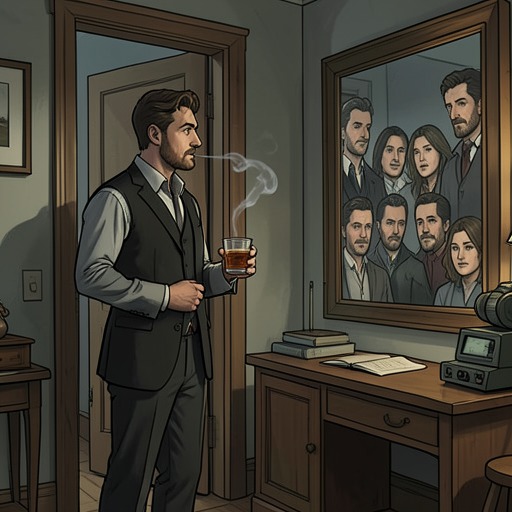
Chinaski’s guilt and moral crisis
WomenChinaski’s guilt and moral crisis mark the point at which his habitual cynicism and self-protective humor fail to contain his recognition of the harm he causes. His reckoning is not a clean conversion: he remains entangled in selfish choices, but can no longer convincingly describe them as harmless pleasure or artistic research. The conflict surfaces in his thoughts about Debra, his call to Sara, and the eventual admission that he has made other Thanksgiving plans with a belly dancer arriving from Canada.
The Conduct Behind the Crisis
Chinaski’s self-examination begins while he waits at Debra’s home after she has left for work. He is troubled by the Thanksgiving commitment he plans to break and considers whether he might later tell her he can come after all. The longer he stays, the more the delay feels like prolonging an ordeal. Rather than accept the excuse that he is conducting a study of women, he recognizes that he has been allowing events to unfold for selfish, immediate pleasure, without considering their effects on other people.
His judgment grows more severe as he sees the imbalance between his self-presentation and his behavior. He thinks of himself as worse than a prostitute because, in his comparison, a prostitute takes money while he interferes with other people’s lives and feelings. He also calls himself a counterfeit good man: his apparent respectability has helped him enter people’s lives through their trust, while he acts against the image they believe in. He names this pattern through the title “The Love Tale of the Hyena,” turning the phrase into a bitter description of the person he fears he has been.
The Collapse of His Defenses
The crisis is not simply a sudden feeling of shame. Chinaski tries to explain guilt away as a sickness and imagines that people who lie, cheat, and take shortcuts are the ones who succeed. He invokes Cortez and Vince Lombardi as examples of decisive men who do not hesitate, but the comparison brings no relief: he continues to feel bad. His wish to treat confession as a practical reset reveals how readily he reaches for a system that promises absolution without first undoing the conduct that produced the guilt.
The emotional change becomes visible when Chinaski sits on the edge of the bed and cries. He is surprised by the intensity of the experience and describes himself as feeling sane even as his thoughts whirl. Later, after Sara ends their phone call, he pours another glass of wine and names what he believes he has lost: sophistication, worldliness, the hard shell that once protected him, and his ability to joke about other people’s problems. He wants those defenses back, yet recognizes that they will not return immediately. His sense of guilt leaves him feeling exposed rather than newly secure in a moral identity.
Other People’s Judgments and His Pattern of Excuses
The wider relationship evidence complicates any account of the crisis as an isolated awakening. Lydia bluntly calls Chinaski a drunk after telling him that he has made a fool of himself. When he seeks a place for her and her children, Mrs. O’Keefe calls Lydia crazy and too young for him; Chinaski acknowledges her instability but insists that he cares for her and that she has good qualities. These exchanges show him recognizing other people’s damage or disapproval without necessarily changing the arrangements that keep him involved with them.
His relationships also expose a recurring gap between his claims and his conduct. When Lydia’s tone calms during a call, Chinaski takes it as a sign that she has given up and identifies her as his ex to Mindy. He describes himself as often jealous but says that, when circumstances turn against him, he withdraws; he sees Lydia, by contrast, as someone who reacts. The distinction is revealing: he can frame his own retreat as detached judgment while treating another person’s response as part of a violent relational contest.
Chinaski’s thoughts about women disclose another contradiction. He says that he wants to keep what remains of his soul and fears that a good woman will eventually demand it, yet he also longs for a gentle, good partner. He describes seeking women who make no personal demands and whose departure would cost him nothing, while admitting that neither this desire nor its opposite resolves his conflict. This reflection does not excuse his behavior; it clarifies the self-protective logic that stands beside his stated yearning for intimacy.
Recognition, Confession, and the Unresolved Ending
The Thanksgiving decision gives the crisis a concrete consequence. After telling himself that guilt might be only a sickness, Chinaski phones Debra’s office and speaks with Tessie, then waits for Debra to return. When Debra arrives carrying groceries for the dinner she has promised to cook, he puts his arms around her and begins to tremble and cry. The planned meal becomes part of the scene’s painful contrast: she has come home prepared to care for him, while he has been waiting to disclose that he will not be with her for the holiday.
Chinaski finally explains that a belly dancer is flying from Canada to spend Thanksgiving with him. He names himself as a “GIANT HUNK OF SHIT,” and reports that guilt produces a painful spasm. The confession makes the cause of his anguish explicit, but it does not establish that he has repaired the relationship or renounced the choice. His tears carry more than one impulse: he says that most of him means them while another part is running away. The ending therefore leaves the moral crisis unresolved. He has lost the comfort of believing himself harmless, but recognition and confession have not yet become a demonstrated change in behavior.