Tammie’s housing insecurity
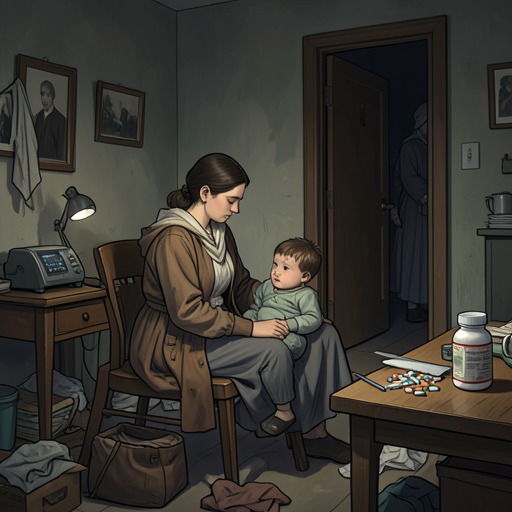
WomenTammie’s housing insecurity is not a single eviction notice but an ongoing condition shaped by rent arrears, an unresponsive owner, and Tammie’s refusal to treat ordinary rules as binding. The novel shows both the material threat of losing her home and the contrary habits that intensify it: she says she has money but dislikes paying, while her landlord’s representative makes clear that the demand to leave is real. Her housing crisis also unfolds amid the instability of her relationships and household, rather than apart from them.
Rent Arrears and the Eviction Notice
The financial strain is established before the formal notice arrives. In an earlier exchange, Tammie says she is a month behind on rent. She expects to manage the problem because the landlord lives in the front part of the property and, she says, she can hold him off. That confidence does not amount to a resolution: it reveals that rent is already overdue and that she is relying on delay and personal negotiation rather than a settled arrangement.
The problem later becomes explicit. Tammie comes downstairs with an envelope and tells Henry Chinaski that the manager has served her with an eviction notice. Henry reads it carefully and concludes that the threat is serious. Tammie explains that she offered to pay the back rent, but the manager told her that they wanted her out. The distinction matters: her offer to clear the arrears does not, in her account, reverse the landlord’s decision. The notice has turned a strained tenancy into an immediate risk of displacement.
Tammie asks Henry for the owner’s phone number, hoping to contact the person with authority over the property. He does not have it. The owner is absent from the day-to-day dispute, while the manager remains the visible enforcer of the notice. The gap between an inaccessible owner and a manager who stands by the eviction leaves Tammie with little practical leverage in the exchange shown.
Tammie’s Response to Rules and Consequences
Tammie’s statement that she has the money but simply does not like to pay gives the crisis a particular tension. The evidence does not suggest that arrears arise only from inability to pay; instead, her own account links them to a resistant attitude toward payment. The housing threat therefore reflects both material vulnerability and her refusal to comply readily with ordinary financial expectations.
That refusal recurs beyond rent. Tammie’s car is unregistered, its plate tabs have expired, and she drives without a license. She leaves it parked in restricted or otherwise prohibited spaces and tears up the parking tickets she receives. When stopped while drunk, high, or without identification, she talks to the police, who, as Henry recounts it, let her go. These episodes do not resolve the rent dispute, but they establish a broader pattern: Tammie repeatedly disregards rules and treats the resulting penalties as something to evade or dismiss. Against that pattern, the eviction notice is a consequence she cannot simply tear up or talk away.
Her behavior is described as contrary, but the immediate circumstances also show a narrow practical effort to respond. She says she has money and had offered to pay the back rent; she also tries to obtain the absent owner’s number. The account presents these efforts alongside her resistance rather than as proof that the crisis has been settled. The manager continues to stand behind the notice, and the owner remains out of reach.
Household Instability and Departure
The pressure around Tammie’s housing sits within a household that is gradually becoming less secure. As the days pass, the property owner remains invisible and the manager maintains the eviction notice. Bobby, who has been part of the household’s social environment, becomes less visible as well. He eats television dinners, smokes marijuana, and listens to his stereo; he tells Henry that he dislikes Henry’s girlfriend and blames her for damaging his friendship with him. This change does not directly determine the eviction, but it shows the household’s social life thinning as the dispute continues.
Henry’s response is practical rather than decisive: he goes to a market to get empty cardboard cartons. Their presence suggests preparation for a move, though the evidence does not say that the eviction is carried out at this point. The action nevertheless gives the threat a physical form. The notice is no longer merely an argument about rent; packing materials enter the scene while the owner stays absent and the manager’s position remains unchanged.
A further disruption pulls Tammie away. Her sister Cathy, in Denver, has lost a lover and is described as having gone into crisis. Tammie has to go to see her, accompanied by Dancy. Henry drives them to the train depot and puts them on the train. The departure is a concrete change in Tammie’s circumstances, but the account does not state that she has surrendered her home or that the eviction has been completed. It ends this portion of the housing story with unresolved pressure: the notice stands, the cartons have been gathered, and Tammie leaves to attend to a family emergency.
Significance and Limits of the Episode
The episode defines housing insecurity through a sequence of ordinary, specific pressures rather than through an abstract account of poverty: a month of unpaid rent, an eviction envelope, a manager who will not withdraw the demand, an owner who cannot be reached, and cardboard cartons collected for a possible move. Tammie’s insistence that she has the money complicates a simple explanation of the crisis, while her repeated disregard for regulations shows how her habitual defiance can coexist with genuine exposure to loss.
The account also keeps the outcome open. Henry’s attempt to help is limited to reading the notice, lacking the owner’s number, and gathering boxes; Tammie’s trip to Denver interrupts the immediate sequence without resolving the tenancy. Her housing insecurity therefore remains a precarious state rather than a neatly concluded eviction: the threat is credible, the household is unsettled, and the available evidence does not say where Tammie lives afterward.