Chinaski’s performance anxiety
WomenChinaski’s performance anxiety is a recurring strain surrounding his public poetry readings: he anticipates them with tension and physical distress, but proceeds to perform, often transforming the signs of fear into part of his public persona. The contrast between private dread and practiced stage presence makes the anxiety a persistent condition of performance, not a simple obstacle that disappears once he begins.
Origins and Recurring Symptoms
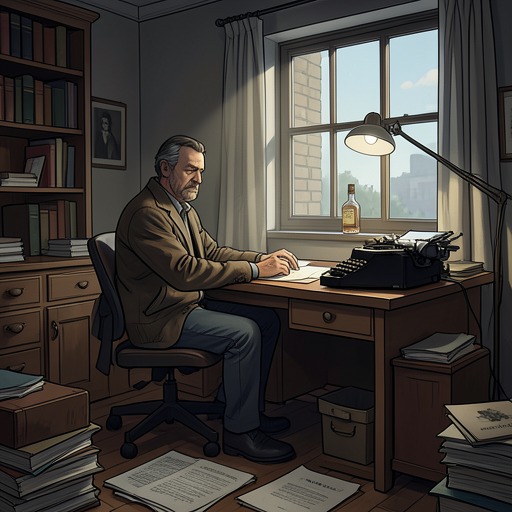
The fear is visible early in Chinaski’s attempts to establish himself as a writer. While working on his first novel after leaving a twelve-year job as a postal clerk, he wrote through the night amid heavy drinking, cigars, and classical music. He set himself a ten-page goal, then discovered the results only the next morning, after vomiting; the drafts might run to seventeen, eighteen, twenty-three, or twenty-five pages, much of them requiring revision or disposal. That intense, unstable writing routine culminated in a first novel completed in twenty-one nights. His creative labor is therefore established alongside physical distress and uncertainty, conditions that recur in a more public form at readings.
Before a reading at St. Mark’s Church, Chinaski describes himself as almost always nervous, tense, and unhappy, and says he almost always vomits. On this occasion, the distress becomes an awkward collision between the literary event and its setting: after Marshall shows him the small cement tombstones in the churchyard, Chinaski vomits on one of the graves. Marshall identifies the grave as Peter Stuyvesant’s. The episode makes the anxiety concrete without resolving it; the reading remains ahead, and Chinaski returns to the dressing room where Tammie is still arranging her hair.
Taking the Stage
Despite the nausea, Chinaski walks out with Tammie at his elbow as the audience applauds. He sees the familiar public persona taking hold, calling it the old Chinaski performance. He then reads from a mixture of old and new poems, with many beers in an ice bucket, and judges that he cannot miss. The confidence of this assessment follows rather than precedes the scene of distress: the reading’s apparent ease is produced alongside anxiety, not proof that the anxiety was absent.
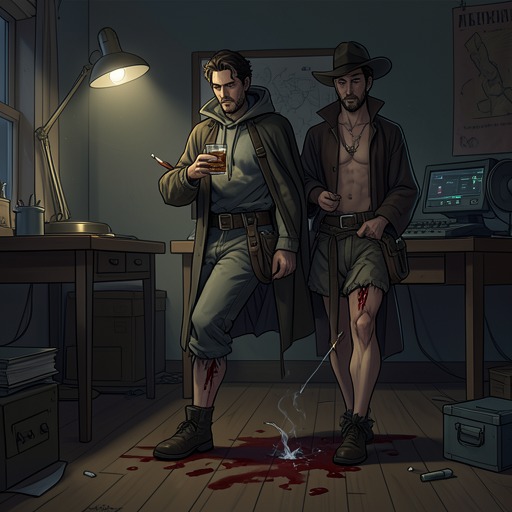
His manner onstage can also rely on comic invention. At a Houston reading, Chinaski appears sober because a heavily bandaged leg is being treated with antibiotics, and his doctor has warned that drinking would counteract their benefit. When someone in the audience asks why he is not drunk, he replies that Henry Chinaski could not make it and that he is his brother Efram. The joke allows him to acknowledge the audience’s expectations while presenting sobriety as a comic interruption to the familiar act. The performance remains possible even when one of its usual props is unavailable.
Public Persona and Private Strain
Chinaski’s stage identity is only one instance of the larger distinction he draws between performance and private life. He tells Lydia that he is a loner and a recluse, and that he needs to live that way in order to write; she counters that he cannot learn about people without meeting them. His account of the disagreement emphasizes how strongly he associates writing with withdrawal. The reading asks him to enter a social space that his preferred working identity resists, even as public attention helps sustain the writer persona.
That persona also has a swaggering, invented side. In conversation with a young journalist who asks what Dee Dee’s husband does, Chinaski claims to run a stable of fighters, specifying four Mexican fighters and one Black fighter, and asks the visitor’s weight before offering him a place as a southpaw lightweight. The boast is not a reading, but it reveals a comic readiness to improvise a public identity. Read alongside the stage persona at St. Mark’s, it shows how bravado can coexist with the recurring fear attached to being publicly seen.
Anxiety, Alcohol, and Control
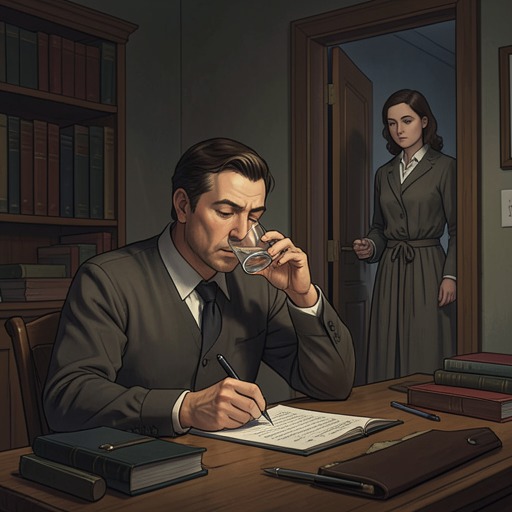
Alcohol appears in the evidence as part of Chinaski’s coping routine, but not as a reliable answer to anxiety or distress. During the novel-writing period, drinking is built into his nights of work. In a separate crisis with Lydia, he writes her a four-page letter, signs it in blood, and drinks; after a later confrontation ends with Lydia driving away, he waits for the liquor store to open and buys another pint. These episodes show drinking recurring under emotional pressure, while the Houston reading supplies a contrasting instance in which medical treatment temporarily prevents him from using it at a performance.
Chinaski himself describes the circular logic that keeps drinking available for every circumstance: bad events invite drinking to forget, good ones invite drinking to celebrate, and uneventful times invite drinking to make something happen. That formulation helps explain why the reading ritual can include beer, but it does not establish that alcohol cures his stage fright. At St. Mark’s, the defining pattern is that he is distressed before the performance and steps out to read anyway; the applause and stage persona follow the anxiety without erasing its recurrence.
Aging and the Stakes of Being Seen
The pressure surrounding public exposure connects to Chinaski’s broader unease about age and desirability. While waiting at the airport for Mindy, he questions why he continues seeking new affairs, noting that their initial excitement gives way as flaws and madness emerge. He calls himself old and ugly and wonders whether being with younger women is an attempt to outpace death or to avoid feeling old. This reflection is not a direct account of stage fright, but it clarifies the vulnerability beneath his cultivated confidence: public and intimate encounters both put his self-image at risk.
The reading persona consequently works through a tension rather than a resolution. Chinaski can appear assured, joke with an audience, and read a sequence of poems, while his recurring preparation includes nausea, tension, and unhappiness. The contrast makes performance a repeated act of entering exposure with no guarantee that fear has passed. His anxiety remains part of the event even when the audience sees the act succeed.