Wilson's New Freedom
1919Wilson's New Freedom functions in the narrative as both a promise and a measure of political reversal. Randolph Bourne first sees in it the prospect of a reformed democracy; as the United States enters the war, the ideal is recast in the language of conscription, financial protection, patriotic mobilization, and punishment of objectors. Its significance lies not in a detailed account of a policy program, but in the widening distance between democratic reform as an aspiration and the state’s wartime demands.
An ideal Bourne could believe in
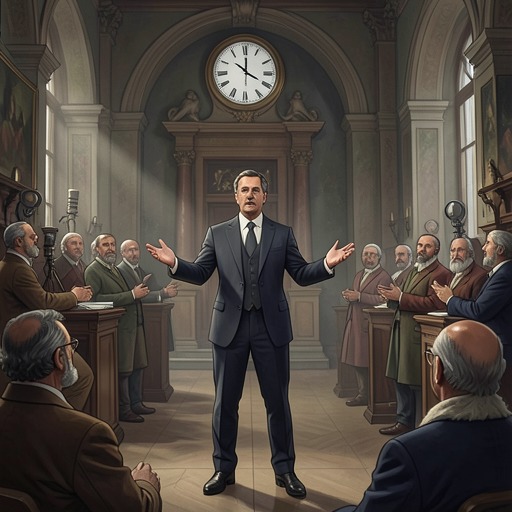
Bourne’s attachment to the idea grows out of his engagement with the intellectual climate at Columbia University. The narrative describes him as taking the ideas circulating there with unusual intensity and finding, through John Dewey’s teaching, a clear prospect of democratic reform within what it calls a confused body of thought. Wilson’s New Freedom names that prospect: a shining political future in which reform and democracy appear to point in the same direction.
The emphasis is on Bourne’s act of interpretation. The idea reaches him as something he can work through, not merely a slogan to repeat. The account portrays him as intellectually exacting: once he has formed an optimistic view of democratic reform, he follows its political implications far enough to test them against what the government and its supporters actually demand. The coming conflict therefore does not simply make him lose faith in a phrase. It makes him confront the difference between the ideal’s promise and the conduct performed in its name.
The contrast is sharpened by the account of Bourne’s personal vitality. Though physically frail, poor, and estranged from his family, he loves music, food, conversation, and company. The scene of his final illness recalls his delight in the color of an eggnog even as fever and delirium overtake him. That detail belongs to the portrait of a man for whom hope and pleasure remain real; it also keeps his political disappointment from being reduced to abstract argument. The democratic future he first sees is something he wants to inhabit.
The reversal of reform into wartime demands
The decisive turn comes in the spring of 1917, when Bourne becomes unpopular at The New Republic. The narrative sets out a series of substitutions: the New Freedom gives way to conscription; democracy becomes winning the war; reform becomes safeguarding Morgan loans. The language of progress, civilization, education, and service is made to lead instead toward buying a Liberty Bond, denouncing the enemy, and jailing objectors. The sequence presents not a careful policy history but a pointed political diagnosis: words associated with improvement and public purpose are being enlisted to authorize mobilization and discipline.
That reversal makes the ideal legible through its opposites. The New Freedom had promised reform; now, in Bourne’s account, the practical tests of loyalty include accepting conscription and condemning those who refuse. Democracy is invoked, but dissenters face imprisonment. The narrative’s compressed list turns that transformation into a rhetorical mechanism: each promised value is set beside the wartime instruction that displaces it. The result is not merely Bourne’s disappointment with particular decisions. It is the collapse of his confidence that the administration’s democratic language guarantees democratic outcomes.
Dissent and its costs
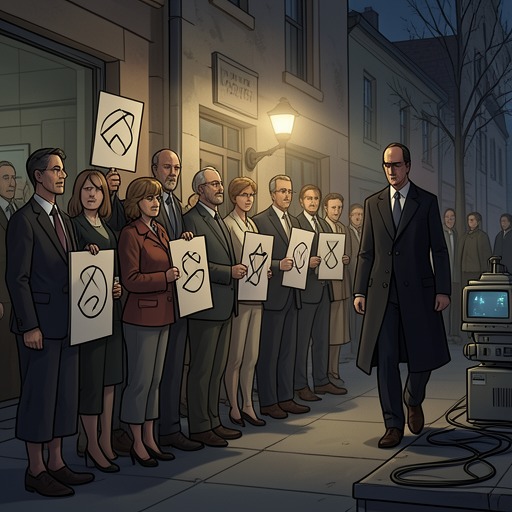
Bourne resigns from The New Republic. The Seven Arts is the only publication identified as willing to print his articles against the war, and even that outlet’s support proves vulnerable: its backers take their money elsewhere. His position also alters his relations with people around him. Friends dislike being seen with him, while his father writes asking him not to disgrace the family name. The political break thus reaches beyond editorial disagreement into professional security, public association, and family pressure.
The narrative describes the future Bourne had imagined as bursting like a soap bubble. That image gives the New Freedom’s failure a particular shape: not a slow adjustment of the ideal, but the sudden loss of its apparent solidity when tested against events. Other accounts of wartime America make the pressure on dissent concrete. Joe Williams, picked up in New York amid enforcement of draft registration, is told that even an exempt merchant seaman must register; Ben Compton is arrested after speaking against a war he says benefits bankers and munitions makers, then held and questioned before being offered release on condition that he report for military training. These episodes do not establish that the New Freedom caused such actions. They show the coercive wartime setting against which Bourne’s contrast between democratic promise and the treatment of dissenters acquires force.
Political meaning in the narrative
The account places Bourne’s break with wartime liberalism alongside the movement of liberals toward Washington and the appeals of friends who urge him to join Woodrow Wilson’s cause. Their appeal makes the conflict personal as well as ideological: accommodation is offered as a route back into accepted political company, while refusal leaves Bourne exposed to estrangement. The image of war directed from swivel chairs further undercuts the claim that mobilization is simply a unified popular undertaking; it suggests distance between those administering the war and those required to serve its purposes.
Wilson’s New Freedom therefore survives in the narrative chiefly as a standard against which wartime politics can be judged. Bourne begins by seeing democratic reform as a plausible future, but his scrutiny reveals how readily its vocabulary can be turned toward conscription, financial interests, patriotic conformity, and the punishment of objection. The passage does not supply a full account of the program’s policies or a later resolution of the political conflict. Instead, it records the break itself: an ideal that once clarified the possibility of reform becomes a name for the distance between reformist language and wartime practice.