The 1945 Soviet invasion of Manchuria
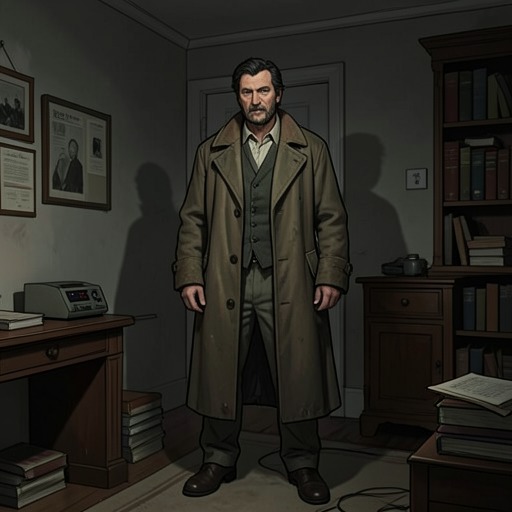
1Q84The 1945 Soviet invasion of Manchuria is the turning point that ends Tengo’s father’s precarious life as a settler and forces his return to Japan. The account makes that escape the product of both a warning and a narrow chance: told that the Japanese army could not resist, he abandons his possessions, reaches the railway on horseback, and boards the penultimate train for Dairen. Of his companions, he alone returns safely that year.
Background: poverty and settlement
Tengo’s father had been the third son of a farming family in Tohoku. Poverty and hunger, rather than belief in the government’s promise that Manchuria was a prosperous “paradise governed by virtue,” drove him and other men from the same region to join the Manchurian and Mongolian settlement program. They received basic instruction in using firearms if necessary, learned rudimentary facts about farming there, and departed after ceremonial farewells.
At the edge of Manchuria and Mongolia, the settlers were given land, farm tools, and a rifle. Their reality was harsher than the official promise: the soil was poor and stony, winter froze the ground, and food was so scarce that they sometimes ate stray dogs. Government assistance helped them survive the first years, but their prospects remained fragile.
Invasion and escape
In August 1945, just as the settlers were beginning to glimpse an easier life, Soviet forces renounced the neutrality pact and invaded Manchuria. The Soviet military had transferred much of its strength to the Far East after the war in Europe ended and had prepared to cross the border. A Japanese official secretly warned Tengo’s father that the weakened Kwantung Army would not be able to resist and that he should flee, leaving everything behind.
Once he learned the Soviet army had crossed the border, Tengo’s father acted on the warning. He rode a horse to the station and boarded the penultimate train bound for Dairen. The detail of that nearly-last departure gives the escape its narrow margin: among his fellow settlers, he was the only man to reach Japan safely that year.
Aftermath and significance
The invasion ended the father’s attempt to make a living in Manchuria and left him repatriated to Japan without money. His later hardship in Tokyo belongs to the aftermath rather than the battle itself: he tried black-market work and an apprenticeship in carpentry without success, and struggled to feed himself. In autumn 1947, while making a delivery for a sake merchant in Asakusa, he encountered the same official who had warned him before the invasion. That reunion eventually led to a suggestion that he become an NHK fee collector, linking the wartime escape to the work that would shape Tengo’s childhood.
The episode situates the father’s later life within a history of poverty, state-sponsored settlement, and sudden military collapse. His survival is not presented as triumph over the invasion so much as a costly flight made possible by advance warning and a final train; the only immediate certainty is that he returned alive while his companions did not make it back with him that year.