Le suicide de Tamaki Ootsuka
1Q84Tamaki Ootsuka’s suicide, after prolonged abuse by her husband, is both a death concealed by a public account of domestic normality and the rupture that redirects Aomamé’s life. The final letter Tamaki sends her friend exposes the isolation behind the marriage and Aomamé’s inability to reach her in time; grief gives way to a decision to punish the man she believes may harm someone else.
Background and concealed abuse
The violence began early in Tamaki’s marriage and worsened over time. Her husband was violent and sadistic, and his behavior approached paranoia. Tamaki found herself unable to leave, as though trapped in a nightmare, and did not tell Aomamé what was happening. She expected that Aomamé, who had warned her against the marriage, would urge her to leave immediately. That advice, however, could not make escape feel possible to Tamaki.
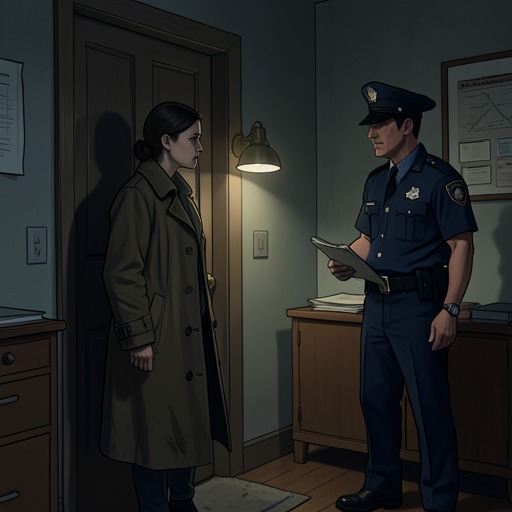
The abuse was not wholly unknown to those around her. Tamaki’s parents were more or less aware of her situation, and the police inferred something from the state of her body. Yet the circumstances never became public. Her husband was away on a business trip in Hokkaido when she died; since her death was treated as a suicide and he was not present at the time, he faced no criminal charge. Tamaki’s younger brother later disclosed this account to Aomamé in confidence, supplying the truth that the public explanation had suppressed.
Death and the false account
Tamaki died at home in late autumn, three days after her twenty-sixth birthday. The wind was strong that day. She hanged herself and was discovered the following evening, when her husband returned from his business trip. He told the police that there was no problem in their household, that he had never heard her complain, and that he could not understand why she had taken her life. Her parents gave the same account. Their statements concealed the sustained abuse behind the appearance of a marriage without warning signs.
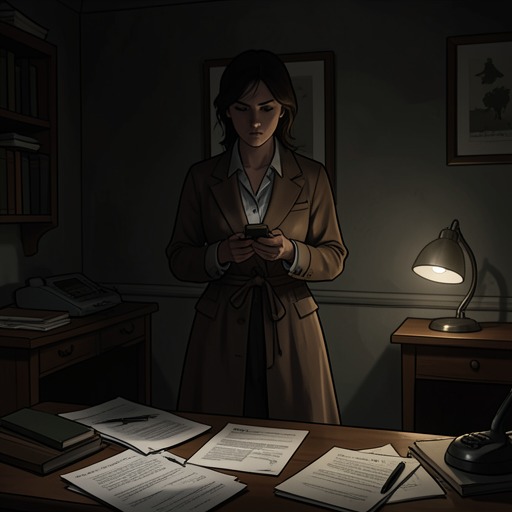
In the final days before her death, Tamaki wrote Aomamé a long letter. She began and ended by admitting that she had been wrong from the beginning and that Aomamé had been right. She described daily life as unbearable and herself as unable to escape, even unsure where she could go if escape were possible. She understood her entrapment as something she had entered and locked herself into; she also believed that the deeper problem lay within her, not only in her husband or marriage. This self-blame coexisted with her plain recognition that marrying him had been a mistake.
The letter also made clear how singular Aomamé’s place in Tamaki’s life had been: she named her as her only friend and the one person in whom she had been able to trust. She asked Aomamé to remember her and imagined that they might have played softball together forever. That wish looks back to their shared friendship and to an ordinary future that the letter can no longer make possible.
Aomamé’s missed arrival and response
After reading the letter, Aomamé trembled and repeatedly tried to call Tamaki’s home, but each attempt reached a recorded message. She took the train to Tamaki’s house in Okusawa, in Setagaya Ward. The large residence stood behind a high fence. Aomamé rang the gate intercom and received no answer; only a dog barked. She left without knowing that Tamaki was dying inside at that very moment. The phone and entrance chime rang unanswered in the silent house, making Aomamé’s attempted contact a final, unwittingly futile approach.
When Aomamé later learned that Tamaki had died, she was hardly surprised; somewhere in her mind, she had expected it. She did not experience immediate sadness. Instead, she cut off the telephone and sat down, then remained there as time passed and she felt emptied of her bodily fluids. She did not get up for a long while. She told her workplace that she was unwell and would take several days off, shut herself in, and barely ate or slept, drinking only a little water. She did not attend the funeral.
Consequences and significance
Aomamé understood the death as an inward rupture: something in her had broken and been replaced, and she had crossed a boundary after which she would not be the same. The contrast between her apparent efficiency—turning off the phone, sitting down, arranging leave—and the prolonged withdrawal that followed gives the aftermath its shape. Her response does not undo the missed visit or restore the friendship; it marks how decisively the loss has altered her.
Aomamé’s next thought turns grief toward action. She decides to punish Tamaki’s husband, reasoning that unless he is made to face an ending, he will repeat his behavior against someone else. The resolution makes Tamaki’s concealed suffering consequential beyond the household: what was publicly left without a criminal charge becomes, for Aomamé, the cause of a private pursuit of retribution. The episode also joins friendship to belated knowledge: Tamaki’s final testimony reaches the person she trusted, but only when she can no longer be helped.