Inmaculada
2666Inmaculada, known to Lola as Imma, becomes Lola’s companion on the journey from Barcelona toward San Sebastián and the Mondragón asylum. She appears at the Amalfitano home just before dawn with a small knapsack and a firm sense of urgency; in Lola’s later letters, she is the experienced traveler who knows how to move through uncertain circumstances. Yet Inmaculada remains visible chiefly through Lola’s account and Oscar Amalfitano’s observations, so the novel gives her practical presence and suggestive history without making her inner life fully available.
Identity and Introduction
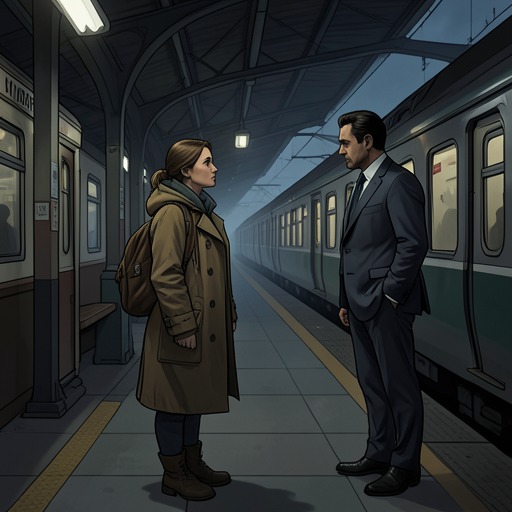
Inmaculada arrives at the apartment after Lola and Amalfitano have waited through the night. A faint voice at the intercom insists that it is her, and Amalfitano lets her in. She is a small woman, less than five feet tall, who offers him only a brief greeting before passing directly through the apartment to the kitchen, as if she already knows Lola’s habits. The immediacy of her entrance contrasts with the long, strained night of explanations that preceded it: Lola is leaving to visit the poet confined in the asylum, and Inmaculada’s arrival turns that intention into a departure.
Her name and nickname carry a small but telling domestic dispute. Inmaculada tells Amalfitano that her name is Inmaculada and that she likes to be called Imma. Lola uses that name; Amalfitano prefers Inma for phonetic reasons, but Lola scolds him whenever he uses it, until he avoids addressing the friend by name. The exchange places Inmaculada within the household before she has said much: Lola’s insistence on her preferred name marks an intimacy between the women, while Amalfitano’s hesitation reflects his position as an observer of their bond.
Departure from Barcelona
Inmaculada’s knapsack is smaller than Lola’s, almost miniature, and so light that Amalfitano imagines it contains little more than two shirts and another pair of black trousers. The detail gives their departure a material scale: the women leave with few visible belongings, while Lola’s larger bag carries the poet’s books. When Inmaculada says they must get moving before there is no way out of Barcelona, she speaks as though the city were under siege. Amalfitano thinks the comparison excessive, but her urgency shapes the scene; after Lola kisses him on both cheeks, she and Inmaculada are gone.
A week later, a letter postmarked Pamplona supplies the first account of their travels. Lola reports that she and Inmaculada have had experiences that were mostly pleasant, though she also suggests that the unpleasant ones were not surprising to her companion. For two days they work at a roadside restaurant in Lerida for a man who also owns an apple orchard. The orchard is already bearing green apples, and its owner asks them to stay until the harvest. Inmaculada speaks with him about the arrangement while Lola reads one of the Mondragón poet’s books beside their Canadian tent, pitched under the orchard’s only poplar near an unused garage. The next day the women leave for the highway and hitchhike away without saying goodbye to anyone.
Inmaculada’s Network and Past
The same letter takes the travelers to Zaragoza, where they stay with one of Inmaculada’s old university friends. Lola, tired, goes to bed early and hears Inmaculada and her friend talking late into the night. Their subjects include their younger days, resistance to Franco, a women’s prison in Zaragoza, and a female commando group. Lola also recalls talk of a deep pit associated with extracting oil or coal and an underground jungle. The passage gives Inmaculada a political and social history, but only in fragments overheard by Lola; it does not establish what role Inmaculada herself played in those activities.
Lola’s letter also reflects her own uneasy effort to explain the relationship. She insists that she is not a lesbian, then describes Inmaculada as a lesbian and as someone who knows the truth of what Lola is trying to say. Inmaculada, in Lola’s telling, can help, but the letter does not clarify what that help consists of. The abrupt shifts in Lola’s account make her companion legible less through direct speech than through Lola’s recurring claim that she understands more than Lola can express.
The Asylum and the Road Back
In a later letter from San Sebastián, Lola says that she and Inmaculada have gone to the asylum at Mondragón to visit the poet. They are not allowed inside: the guards, whom Lola describes as priests disguised as security guards, refuse them entry. In San Sebastián they stay briefly with Edurne, a Basque former member of an ETA commando who gave up armed struggle when democracy came. Edurne’s husband, Jon, is unsettled by the guests, and the women leave after one night. They find a cheap boardinghouse and return by hitchhiking to Mondragón.
The second attempt to see the poet also fails. Unable to enter the asylum, Lola and Inmaculada study it from outside, taking note of its gray walls, the dirt and gravel roads, the contours of the land, and the routes taken by inmates and caretakers. They watch from a distance, then sit beside the road and eat cheese sandwiches brought from San Sebastián. Their careful attention cannot overcome the institution’s boundary: the women can observe the asylum and its surroundings, but they cannot reach the person they came to see. Inmaculada’s journey therefore remains tied to Lola’s unsuccessful effort to approach the poet, while her own character emerges through the steadiness with which she travels, makes arrangements, and accompanies Lola when the doors remain closed.
Narrative Presence
Inmaculada is not given an independent narrative account in these episodes. Readers meet her first through Amalfitano’s view of her arrival and then through Lola’s letters, whose vivid assertions and abrupt turns disclose as much about Lola’s unsettled self-understanding as they do about her companion. That mediated presence is consequential: Inmaculada is repeatedly presented as capable and clear-sighted, but the evidence for those qualities comes from her actions and from Lola’s interpretation rather than from an extended explanation of her own motives.
The movement from the apartment to the orchard, the highway, friends’ homes, a boardinghouse, and finally the roadside outside the asylum defines Inmaculada through passage and access. She helps Lola keep moving, yet their destination remains inaccessible. Her role is thus neither simply that of a guide nor that of a background companion: she is the practical presence beside Lola as the journey continues, while the novel preserves a gap between the woman’s apparent competence and what can actually be known about her.