Piero Morini
2666Piero Morini is an Italian German-literature scholar, translator, and devoted reader of Benno von Archimboldi, whose elusive career draws him into a close circle with Jean-Claude Pelletier, Manuel Espinoza, and Liz Norton. His life moves between the patient labor of interpretation and disruptions he cannot master: diagnosed with multiple sclerosis and left permanently wheelchair-bound after an accident, he nevertheless travels independently to London and to visit Edwin Johns. His eventual relationship with Norton gives emotional consequence to a long-standing intimacy that the circle’s shared literary obsession had both sheltered and obscured.
Identity and Literary Work
Born in 1956 in a town near Naples, Morini encountered Archimboldi’s work in 1976, four years before Pelletier did. Yet his first translation of the German writer appeared only in 1988: Bifurcaria Bifurcata. By then Archimboldi had already been translated into Italian by others. The Leather Mask had appeared in an Italian translation in 1969, followed by Rivers of Europe, Inheritance, and Railroad Perfection; a Rome publisher had also issued a collection of war stories called The Berlin Underworld in 1964. This early publication history made Archimboldi known in Italy, but not successful: his books were remaindered, forgotten in warehouses, or pulped.
Morini did not treat the lack of readers as a reason to abandon the author. After translating Bifurcaria Bifurcata, he published two studies in journals in Milan and Palermo. One examined fate in Railroad Perfection; the other considered conscience and guilt in Lethaea and Bitzius, setting a seemingly erotic novel beside a short work of less than a hundred pages. His critical attention helped make Archimboldi legible to Italian readers, and a second Morini translation, Saint Thomas, appeared in 1991. The sequence establishes Morini not simply as a translator of books but as an advocate whose essays help sustain an author whose reputation had not yet caught up with his work.
By 1991 Morini was teaching German literature at the University of Turin. His scholarly vocation and physical circumstances had become sharply intertwined: doctors had diagnosed multiple sclerosis, and a strange, spectacular accident had left him permanently wheelchair-bound. The novel records these facts without making his intellectual life disappear into them. Morini continues to read, translate, teach, travel, and participate in the group’s life; the wheelchair is a practical part of that life, not a reason to reduce him to illness.
Friendship and the Archimboldi Circle
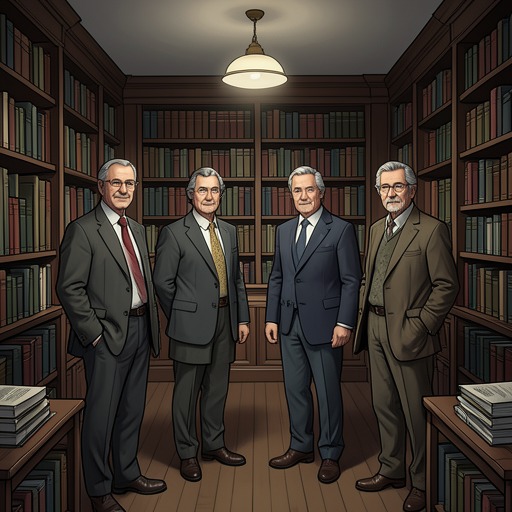
Morini belongs to a four-person fellowship with Pelletier, Espinoza, and Norton, bound by Archimboldi but not reducible to a professional association. At the postwar European literature colloquium in Avignon at the end of 1994, Morini and Norton attend as spectators while Pelletier and Espinoza present papers. The gatherings after the sessions make the group’s closeness visible in ordinary movements through the city: Norton pushes Morini, with the two men walking beside them; at other times Pelletier takes the wheelchair while Norton walks ahead, laughing. The group also walks abreast, stops beside the river, and talks about its shared German-literature obsession, with silences that neither conversation nor rain breaks.
That fellowship is tested when Norton becomes involved with both Pelletier and Espinoza. Morini is the last of the group to know. He had sensed that Norton might begin an intimate relationship, not because he had detected a particular attraction in Pelletier but because he read her general detachment as a sign that she could become close to someone who came along. He did not anticipate Espinoza. When Norton tells him about the two relationships, he is surprised, though he conceals it. His delayed knowledge places him at a distance from the others’ changing intimacy, even as he remains part of their circle.
The friends’ own response to the situation eventually deepens rather than destroys their bond. Pelletier and Espinoza come to understand Norton not as the force that has ruined their friendship but as someone who has made them recognize a generosity they had already possessed. They seal that recognition in an unspoken promise of lasting friendship. Morini’s place in this development is not to arbitrate between them: he learns of the relationships later and processes the news privately. The novel thus distinguishes the men’s friendship from their separate feelings for Norton, allowing loyalty to persist without pretending that jealousy and surprise never existed.
Journeys, Body, and Encounter
Morini’s travel to London marks a departure from his usual routine. Ordinarily he travels for conferences or meetings, with transportation and accommodation paid for by the sponsoring organization. A week after a dream involving Norton, he interprets it in at least four ways and goes to London on his own account, paying for the trip himself. He has no professional pretext and is not answering a request for help: he had spoken with Norton four days earlier and told her he planned to visit a city he had not seen for a long time.
Norton welcomes him and offers him a place to stay, but Morini says he has already booked a hotel. She meets him at Gatwick. They have breakfast near the hotel, spend the day apart, and meet again for dinner at her apartment. Their first conversation concerns Archimboldi’s increasing renown and the gaps that remain in his story; later, they turn to personal memories and talk until three in the morning. Norton helps Morini into the building’s old elevator and down six steps. The visit is therefore both a continuation of their shared intellectual life and a private approach to a relationship neither has yet named.
During the interval between breakfast and dinner, Morini initially scarcely dares to leave his room. Boredom eventually takes him out to Hyde Park, where he wanders without noticing the people around him. Some look after him with curiosity because of the determination and steady pace with which he moves in his wheelchair. The episode gives his mobility a specific, everyday dimension: his route through the park is not presented as a cure or a symbolic triumph, but as an act of going out and moving through a public place on his own terms.
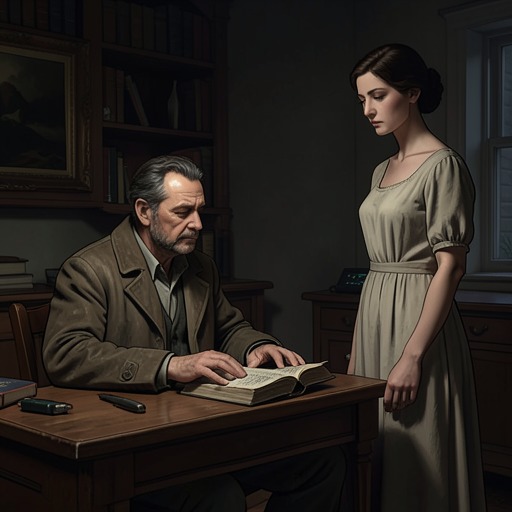
A different journey brings Morini, Pelletier, and Espinoza to the Swiss asylum where Edwin Johns is staying. After formalities and red tape, a nurse leads them through the large grounds to a cottage at the rear. It is furnished as a comfortable place to live, with armchairs, a fireplace, an oak table, books in several languages, a computer and modem, and a shower. In the conversation with Johns, Morini asks why he mutilated himself. The question identifies what Morini has come seeking: not just an account of an artist’s work, but an answer about the decision behind it. Johns responds by asking whether Morini intends to publish their conversation, leaving the sought-for explanation unsettled.
Love, Recognition, and Ending
The story of Morini’s attachment to Norton unfolds unevenly. He is not the first to know about her relationships with Pelletier and Espinoza, and his independent London trip follows a dream that he knows cannot simply be altered by interpretation. Yet the visit gives him and Norton time together beyond their usual conversations about Archimboldi. The narrative lets that shared history change meaning retrospectively: the relationship that had seemed to belong to the circle’s friendship becomes a love neither of them had fully acknowledged.
That recognition is stated directly when Norton asks Morini how it could have taken her so long to realize that he loved her and that she loved him. Morini answers that it is his fault: he is hopeless at such things. His reply makes no grand claim of transformation; it offers a modest explanation for the delay, consistent with a character who has remained emotionally present but difficult to read. The mutual declaration turns their closeness into an explicit partnership and gives a new significance to the earlier journeys, conversations, and shared silences.
Morini’s arc does not resolve the uncertainty surrounding Archimboldi or produce an answer from Johns. Instead, it brings his literary pursuit into contact with questions of fate, chance, and the limits of explanation, while his personal story arrives at a form of recognition. His wheelchair, teaching, translation, travel, and love remain parts of one life rather than separate allegories: the book shows a man continuing to act and form attachments amid physical constraint and unanswered questions. In the final movement supplied here, what changes most decisively is not his condition or his literary mission but the name he and Norton can give to what has been between them.