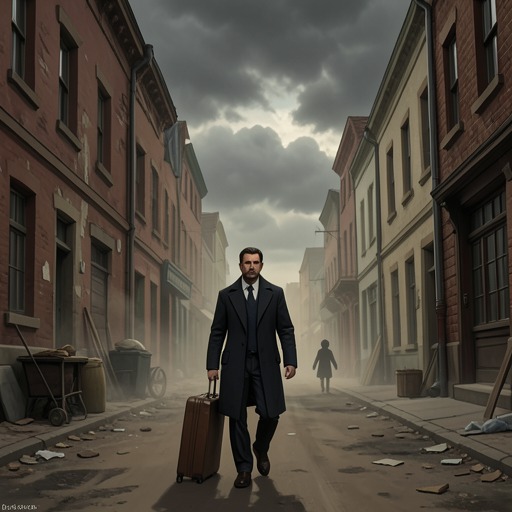
Juan Corona
2666Juan Corona appears in the Santa Teresa section as a member of the group around Chucho Flores and Charly Cruz. First introduced at a boxing match, he is described as someone Fate has not seen before, probably another reporter. He later appears with Rosa Mendez and, at Charly Cruz’s house, becomes the person whose attempt to intervene turns Fate’s effort to take Rosa Amalfitano away into an armed confrontation. Corona remains a deliberately limited figure: the narrative gives him a few telling actions and a consequential presence, but little background or independent explanation of his motives.
Introduction at the boxing match
At the arena, Chucho Flores introduces Corona to Oscar Fate along with Rosa Amalfitano and Charly Cruz. Fate understands Corona may be a reporter, but the text presents this as an impression rather than a confirmed profession. The group is notably well dressed, as though the evening will continue at a formal gathering, and Fate joins them after Chucho gestures him over. The introduction places Corona inside a socially connected circle that includes a sportswriter, a video entrepreneur, and the visiting journalist, without clarifying how Corona knows them.
That first meeting is framed by the fight and its audience. In the crowded arena, Fate sees the circle gathered while the surrounding spectators celebrate and sing. Corona is not given a distinct account of his reaction to the match; his significance emerges through the company he keeps and what happens after the group leaves the public venue. The shift from arena to nightclub and then private house moves him from the edge of Fate’s social encounter into its decisive conflict.
The night out
Fate’s recollection of the night is uncertain: he remembers several clubs, but cannot settle on their number. At one point he sees Corona kissing Rosa Mendez, his hand on her breast. When she opens her eyes and looks at Fate, she seems not to recognize him. This moment establishes Corona and Mendez as physically intimate companions during the evening, though the passage offers no account of their relationship beyond the scene itself.
Later, while a birthday song is being sung, Fate notices a man striking a woman in a corner of the room and tries to move toward them. He is stopped, and the narrative then places Corona beside Mendez: his arm is around her shoulders, and she periodically lifts his hand to her mouth and bites his finger. These details do not explain Corona’s response to the assault or establish that he witnessed every part of it. Instead, they set the group’s party atmosphere against the violence occurring nearby, while Fate’s effort to approach the injured woman is interrupted.
At Charly Cruz’s house
The group eventually arrives at Charly Cruz’s house, a large, bunker-like two-story building with a garage. Fate remembers that Corona is there and that he and Chucho Flores are arguing behind a door. Fate cannot make out what the argument is about. He suspects they may both want Rosa Amalfitano, but also considers that they might be arguing about him; the uncertainty belongs to Fate’s interpretation, not to a confirmed explanation of Corona’s purpose.
When Fate enters, Chucho points him toward a corner where Rosa Amalfitano is sitting and using cocaine. Fate asks her to come with him, and she takes his hand. As they leave, Corona grabs Fate’s arm and raises his free hand, which seems to hold a blunt object. Fate strikes him with an uppercut. Corona falls, and only afterward does Fate realize Corona had been holding a gun. Fate takes the weapon and turns to Chucho to ask what he intends to do. The reversal is immediate: what first appears to be a physical attempt to block their departure is revealed to involve a firearm, making Corona’s brief intervention the episode’s central escalation.
Role and limits of the portrayal
After Corona falls, Chucho raises his hands and says he is not jealous. Rosa asks whether Corona is dead, but Fate looks at the motionless body without giving her a definite answer, then decides they should leave. The account establishes no further outcome for Corona: it does not confirm his death, describe his recovery, or explain what follows for him after Fate and Rosa depart. The distinction matters because the scene ends with the group escaping the immediate confrontation, not with a settled account of Corona’s condition.
Corona’s narrative function is therefore defined less by disclosed biography than by a series of appearances: the probable reporter at the fight, Mendez’s companion during the night out, and the armed man who tries to stop Fate at the house. His position links the public, performative sociability of the arena and clubs to the more dangerous private gathering at Charly Cruz’s home. The novel supplies enough to make his actions consequential, while withholding the background that would turn him into a fully explained participant.