Tom Stone and Tomboy shot down and rescued on the Kola Peninsula
AfterburnSeven months before the events in the present narrative, Matt “Tombstone” Magruder and Joyce “Tomboy” Flynn were shot down over the Kola Peninsula during an attack on a Russian Typhoon submarine base. Their rescue was a race against a larger Russian force, but the episode’s lasting significance lies equally in what happened between the two fliers: they saved one another, and Magruder refused to leave Flynn behind. Remembered later as both a combat ordeal and the beginning of an unusually deep bond, the incident complicates the distinction between professional trust, emotional intimacy, and the possibility of romance.
Mission and Downing
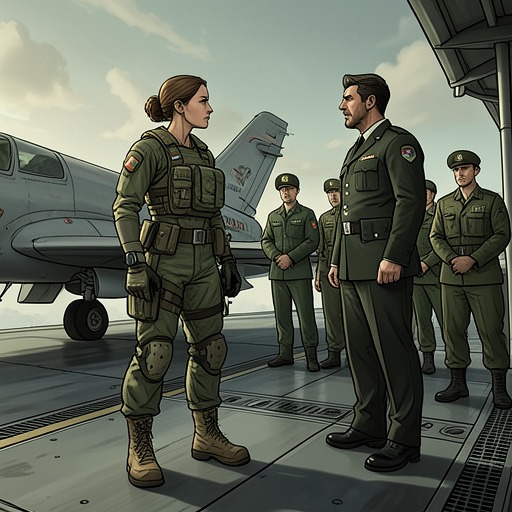
Flynn had flown as Magruder’s radar intercept officer when his squadron was short-handed and needed to mount an alpha strike against the submarine base. The mission placed them together in a dangerous operation on the Kola Peninsula; the available account identifies the target and the two fliers’ roles, but does not specify the mechanics of their aircraft’s loss. Its abrupt result was that both were downed in hostile territory, turning an offensive mission into a struggle to survive and avoid capture.
The incident is recalled seven months later, when Magruder learns that Flynn has returned to duty. This retrospective placement makes the episode more than an isolated action report: information about it emerges through the significance Magruder assigns to their shared past. The remembered details are selective but decisive. They had been shot down, faced an armed opponent, and depended on each other before help arrived. The narrative does not describe the entire escape or offer a precise sequence for every exchange; it makes the bond and the peril legible through the choices the two made under pressure.
Resistance and Rescue
At the point of greatest immediate danger, both used their service pistols before their opponent could bring an AK into action. Their resistance bought them the chance to survive, but rescue remained uncertain: a United States Marine Corps reconnaissance force was racing a large Russian unit to the downed fliers. The Marines reached them only two minutes ahead of the Russians. That narrow margin gives the rescue its particular force. The two were not simply recovered after the fighting had passed; a small difference in arrival time separated them from the approaching unit.
The rescue was therefore both a reversal and a reprieve. Magruder and Flynn had already acted to protect themselves, but their survival also depended on the Marines winning that race. The episode places personal courage inside a larger military contest over access to the downed crew: the fliers’ immediate actions mattered, yet could not by themselves guarantee extraction. The account identifies the rescuers as a reconnaissance force and emphasizes the opposing unit’s size and the two-minute margin, without claiming that either circumstance erased the danger of their position.
A Bond Forged Under Fire
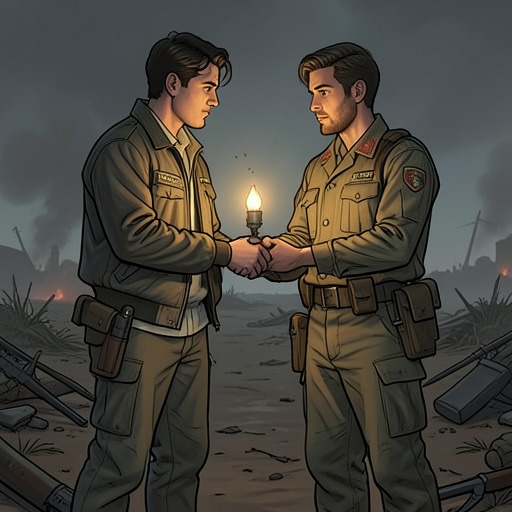
Magruder’s recollection resists reducing what passed between them to a single label. He understands their connection as the camaraderie of warriors who have faced fire and death together, and more specifically as the bond of people who owe one another their lives. That distinction matters: their closeness is rooted not in an ordinary workplace partnership but in an ordeal where each depended on the other’s actions. The memory makes the relationship concrete through reciprocal survival rather than through a declaration of feeling.
The defining choice comes when Flynn demands that Magruder leave her and save himself. He refuses. That refusal is not presented as a detached tactical calculation; in Magruder’s later understanding, it confirms a bond as deep as it is undeniable. The episode establishes a mutual obligation, but does not make their relationship a conventional romance. Magruder recognizes that it is not sexual, even as he can imagine that it might become so. The possibility remains an unresolved edge to the memory, not an outcome the episode confirms.
Return and Narrative Significance
When Will Grant tells Magruder that Flynn is among the returning pilots, Magruder’s eyes widen at the news that Tomboy is there. Grant notes that Magruder does not seem pleased. Magruder clarifies that he was happy to see her, then strikes his palm against his desk and shifts to his doubts about women in combat, prompted by what Flynn had told him about another lieutenant. His reaction holds two responses together: the prospect of seeing Flynn matters to him, while the story of her service also activates his concerns about women facing combat danger. The earlier rescue supplies the personal history behind this tension without resolving it.
Flynn’s leg has healed by the time of her return, making her reappearance a concrete sign that she has recovered enough to fly again. For Magruder, however, the seven-month-old incident has not settled into a closed chapter. He remembers the downing, the near arrival of the Russian unit, their exchange of lives, and the moment he would not leave her; those facts make her return emotionally charged. The episode’s narrative work is to give that charge a history. It shows how a shared combat emergency can create intimacy and obligation while leaving their future relationship open, and how rescue can be both a completed event and a memory that continues to shape the present.