Yalta assassination attempt on General Boychenko
AfterburnThe Yalta assassination attempt on General Boychenko exposes the lethal vulnerability of a public political appearance amid a military crisis: an armed assault breaks into the ceremony, and Matt “Tombstone” Magruder’s rapid intervention helps keep the attackers from killing Boychenko. The scene’s decisive reversal is immediate: the security detail is slow to react, while a watching officer recognizes the threat and acts before the gunmen can finish their attack.
A Public Appearance Under Strain
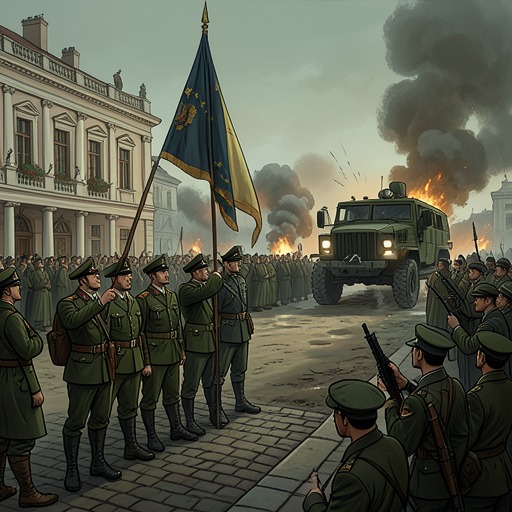
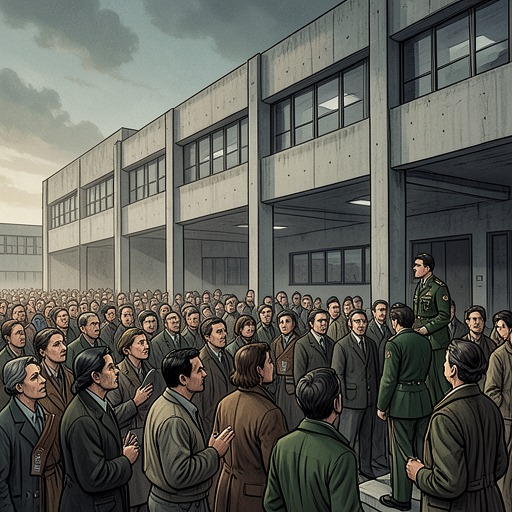
The attempt unfolds as the United Nations has obtained operational authority over U.S. forces in the Crimean mission, an arrangement that had long been politically contentious. Washington had directed U.S. forces not to enter the fighting between the Red and Blue Russian factions, even as the Jefferson went to Poti to add its air wing to the United Nations’ position. The President, meanwhile, was taking criticism over foreign policy and the prospect of another intervention abroad. Against that unsettled backdrop, General Boychenko addresses a crowd in Yalta. As the speech drones on, Magruder watches the reporters rather than the speaker; that shift in attention lets him notice movement among the closely packed people before anyone else does. Three men detach themselves from the crowd, and the political gathering becomes a security emergency.
The Attack and Magruder’s Intervention
The men moved before the people around them understood what was happening. One assailant displayed a handgun; another had a weapon concealed beneath a trench coat. Abdulhalik lunged toward the stage, fumbling inside his jacket for his own weapon, while the other security men reached for theirs too slowly. Whitehead remained stunned. Magruder, closer to General Boychenko than anyone else, had only the seconds he had gained by watching the reporters instead of the speech.
He hurled himself at Boychenko from behind, driving the general forward into the podium and its crowded forest of microphones. The impact toppled both the man and the podium in a splintering crash. The move pulled Boychenko out of the attackers’ line of fire just as the men in trench coats opened up with automatic weapons. Bullets snapped overhead and struck nearby; the attack had turned the stage, intended for a public address, into a point of concentrated danger.
The gunmen sprayed the VIPs seated along the front row, killing or wounding eight or ten people in a single burst. Captain Whitehead fell from the back of the stage with his face bloodied, and Admiral Tarrant and Sandoval were also hit. The violence did not end when the first attackers were stopped: one man with a pistol was still able to approach Boychenko to within five feet. He pulled the trigger, but the weapon failed to fire. Magruder was on his feet at once, seized an overturned metal chair, and hurled it at the gunman, interrupting the final close-range threat.
Consequences and Aftermath
Once the immediate attack was broken, soldiers moved the captured gunman away, half-dragging and half-carrying him. Matt “Tombstone” Magruder returned to the stage and reached Admiral Tarrant, who had been shot high in the chest and was unconscious. The assault had failed to kill General Boychenko, but its burst of fire had left senior figures among the wounded and turned the ceremony’s security failure into an urgent command problem.
The consequences extended beyond the stage. Later, as officers asked what would happen to the chain of command, Captain Brandt—Admiral Tarrant’s flag captain—had received a brevet promotion to admiral, confirmed through Naples about fifteen minutes earlier. The succession makes the attack’s institutional cost visible: the danger was not confined to the intended target or the casualties in the front row; it also disrupted the leadership responsible for the operation.
Command, Information, and the Wider Crisis
The attack’s institutional significance sits within a mission already burdened by divided authority and failures of coordination. The United Nations had requested, and Washington had granted, operational authority over U.S. forces in the Crimean Peacekeeping Operational Zone; officers were told to operate under United Nations command until the President said otherwise, while recognizing him as commander in chief. That arrangement made the chain of command an active question rather than a settled backdrop. When officers later asked what would happen to it, the answer came amid the practical consequences of Admiral Tarrant’s wound: Captain Brandt, his flag captain, had received a brevet promotion to admiral, confirmed through Naples about fifteen minutes earlier.
The ceremony’s danger also belongs to a wider pattern of military action conducted with incomplete information. Two days earlier, a Navy jet had shot down a U.S. Army helicopter on a United Nations mission; the available account identified a failure to notify the aircrew that Army helicopters were operating in Georgia with the United Nations team. The novel does not establish that this earlier breakdown caused the Yalta attack, but the incidents place lethal danger beside communication failures and overlapping responsibilities. At the ceremony, the security men’s delayed response left Magruder to act in the narrow interval between recognition and gunfire. The scene thus makes political vulnerability immediate while leaving its consequences in the hands of a command structure already struggling to coordinate forces and replace a wounded senior officer.