Yalta White Palace Evacuation
AfterburnThe Yalta White Palace Evacuation turned the palace from a defended position into a point of extraction and retreat. Under cover of a heavy air strike against rebel positions in the mountains above Yalta, American helicopters landed and removed a large number of people; after they departed, the rebel forces abandoned the palace as well, retreating along the coast road.
Background and Covering Action
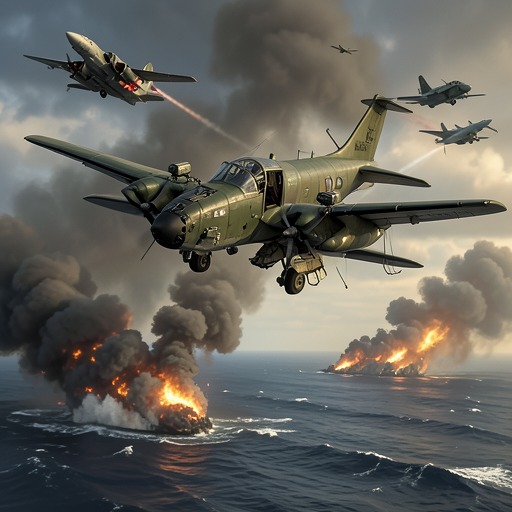
By the time the evacuation began, the situation around Yalta was becoming more dangerous by the day. The Americans launched a heavy air strike against positions in the mountains above the city, using it as cover for helicopters sent to the White Palace. The evacuation was therefore not an isolated transport operation: it unfolded within an active assault on the forces holding the surrounding heights.
Landing and Extraction
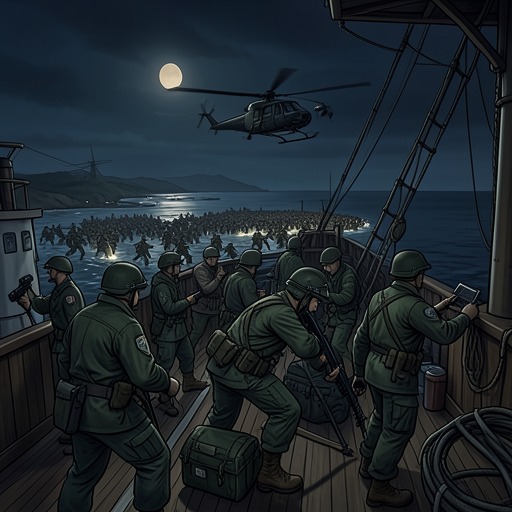
Five CH-53 Sea Stallions from the USS Guadalcanal arrived at the beach and landed in quick succession. Marines and sailors guided them in with flashlights serving as landing signal wands; the aircraft's rotor wash threw up sea spray and sand. The aircraft took aboard a large number of evacuees. Admiral Tarrant, still unconscious, was carried up the ramp first, a particularly stark measure of the operation's urgency.
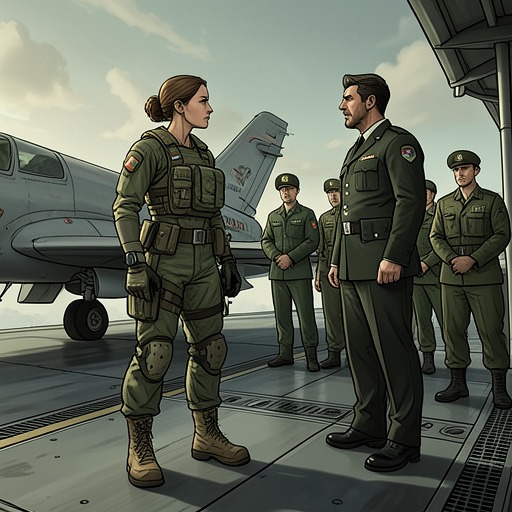
The scene also distinguishes sharply between those being carried out and those who remained behind. Joyce “Tomboy” Flynn was gone, while Pamela Drake was still at Admiral Tarrant's side. The evacuation thus appears not as a single, orderly departure, but as a hurried extraction amid separate and unresolved personal circumstances.
Withdrawal and Consequences
The helicopters' departure was followed by the rebels' evacuation of the palace. A report to Dmitriev described them as retreating up the coast road; the news struck him like a physical blow. The sequence matters: the air operation removed a large number of people, but it also coincided with the defenders' abandonment of the site, converting the palace's loss from an American extraction into a wider reversal of control.
The evacuation's immediate significance lies in this double movement: people were flown out under air cover, and the rebel force then withdrew overland. The palace was no longer the center of a stand; it became a waypoint in a retreat whose consequences extended beyond the aircraft's departure.