International Paper
BarkskinsInternational Paper is the buyer that enters Breitsprecher-Duke’s story at the moment the family timber concern is ready to sell. Its purchase ends the old company’s independent course, leaving its papers and portraits behind while a separate seedling business remains.
The Expanding Timber Market
The novel’s commercial history begins with the search for resources that might sustain wealth beyond the fur trade’s cycles of surplus and scarcity. Charles Duquet concludes that forests could provide a seemingly lasting supply of timber for ships, houses, and fuel, and he begins to imagine a business capable of expanding across markets. That early confidence in forest abundance anticipates the later companies’ pursuit of timber on a far larger scale.
The extractive system described in New Zealand makes the costs of that expansion explicit. Logging camps also function as trading posts for flax, spars, and lumber, supported by warehouses, sawmills, and small shipyards. As operators move from one promising site to another, they leave waste and burned forest behind. International timber commerce thus carries a contrast central to the novel: distant markets receive wood as a commodity, while the places supplying it bear the damage of extraction.
From Overseas Supply to a Proposed Sale
By the time Duke & Breitsprecher sends its first shipload of pine to Sydney, Australia, the firm is seeking customers beyond its established markets. Lawyer Flense meets an English buyer, Harry Blustt, who wants a decade-long supply contract for Michigan pine and is also interested in kauri from New Zealand. Blustt seeks a partner to establish efficient logging camps there; Flense welcomes the prospect of another overseas wood supply. International Paper’s later approach belongs to this continuing expansion of the timber business into international markets.
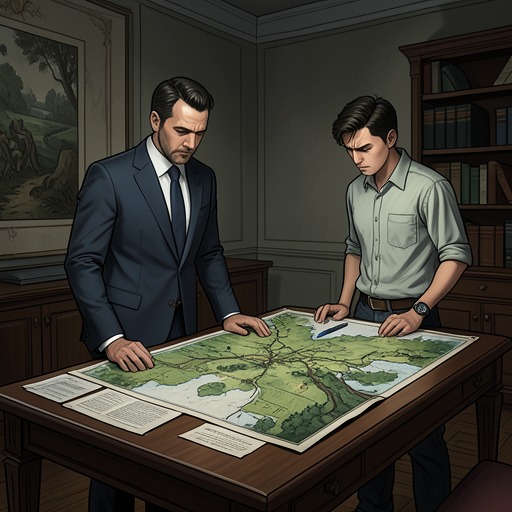
At the later family-company meeting, Harkiss proposes accepting International Paper’s offer, dividing the proceeds, and reorganizing the shareholders’ lives. He notes that most of those active in the company are nearing retirement and sees the offer as a timely exit. James Bardawulf objects that a sale would not resolve the threat posed by the purported heirs: even after the company was sold, he argues, they could pursue the individual family members.
The Acquisition and What Remains
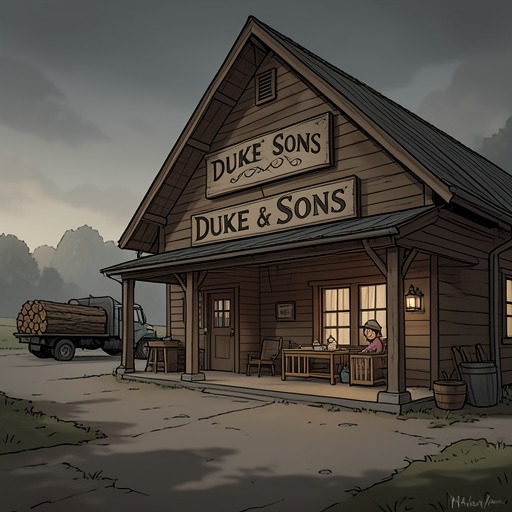
Despite that concern, the decision to proceed with the sale is eventually confirmed. The narrative presents the transition as a change of ownership rather than a restoration of the company’s former fortunes: Breitsprecher-Duke has risen and fallen over the centuries, and now International Paper takes its place. The old company is reduced to boxes of papers and several portraits, material remnants of a family enterprise that once organized its identity around timber.
The ending is not quite total erasure. Breitsprecher Seedlings remains as a separate entity after the acquisition, preserving a distinct business beyond the old company’s sale. International Paper therefore marks both an endpoint and a reorganization: it takes over the historic concern, while the seedling operation stands apart from the accumulated family papers and portraits left behind.