Breitsprecher Tree Project
BarkskinsThe Breitsprecher Tree Project is a forest-replanting and research initiative that converts a family timber enterprise’s concern with future wood supplies into hands-on ecological restoration. Its work joins planting, long-term monitoring, and study of damaged sites, while its multiregional partnerships place forest repair in the hands of people with close ties to forested places and Indigenous communities.
Origins and Purpose
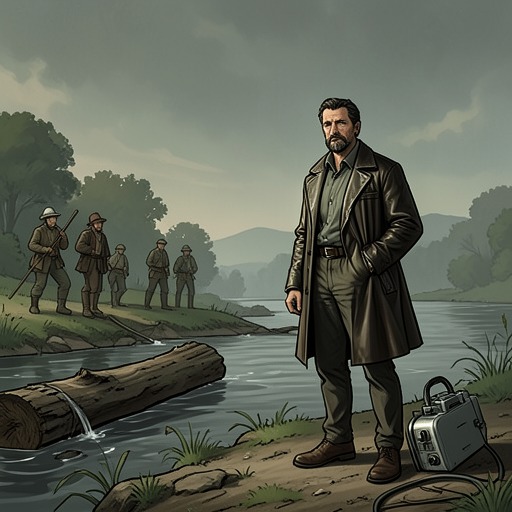
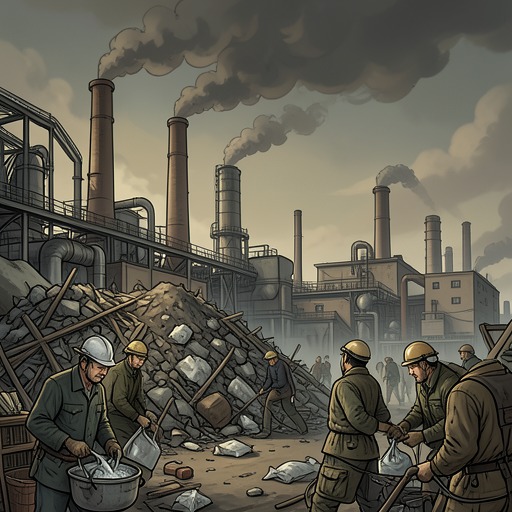
The Project’s name carries the legacy of a business that first saw forests chiefly as abundant commodities. Early in his career, Charles Duquet rejected beaver, fish, seals, game, and birds as unreliable sources of lasting wealth, and settled on the forest as a resource he believed could supply timber indefinitely. The novel later shows the destructive consequences of that assumption: logging camps and trading posts stripped valuable trees, moved on, and left waste and burned ground behind.
A different time horizon emerges in the work of Dieter Breitsprecher, who argued that timber would become scarce and valuable and that cutover lands should be managed and replanted rather than sold off. He urged the company to think in decades, pointing to older planted lands as evidence that restoration could also secure future value. His conviction that seeds should be planted for the health of the world, including for people not yet born, gives the Project’s later work its ethical as well as practical purpose.
Structure and Fieldwork
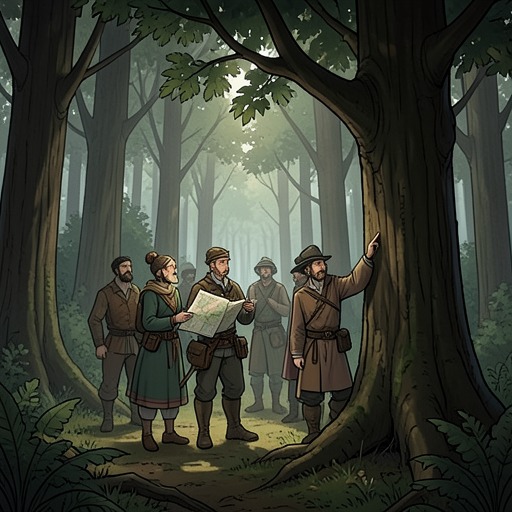
The Project works in connection with as many as thirty conservation groups, often taking part in their programs. In the Nova Scotia season described in the novel, a six-person crew is the only team working in the province, with the possibility of more participants joining later. The project supplies room and board, travel, tools, and equipment; crews may stay in tents, hotels, or with host families, and share cooking and cleanup as well as fieldwork.
The team plants trees and monitors test plots for as long as ten years. Its work includes assessing chlorosis, comparing site conditions, and studying the role of mycorrhizal fungi, which help seedlings take up nutrients and minerals. Burned soil may lack these fungi, so planting is not treated as a matter of simply putting a tree into the ground: soil, site preparation, and the biological conditions for growth all matter.
For the Nova Scotia crew, the planting program includes spruce, birch, fir, maple, and hemlock on logged-over and burned plots. The work also involves visiting distinct ecoregions and learning how geography, soils, and hydrology vary from place to place. Staff members bring different expertise, including knowledge of wildfire, deforestation, and planting techniques; medicinal plants may be included when they naturally belong to a site, with their ecological uses extending beyond human medicine.
Knowledge, Responsibility, and Restoration
The Project’s approach reflects an earlier practical problem identified by Conrad Breitsprecher: bare-root seedlings often failed on rough logged-over sites, and leaving a few trees to seed a cleared area produced poor regeneration. After studying forestry, he concluded that companies would need to prepare sites and pay for that work if replanting were to succeed. His decision to offer site preparation as a service linked restoration to the economics of the timber industry rather than treating planting as an isolated gesture.
The later project also insists on learning from particular places. Its staff examine soils and test how seedlings respond to conditions such as burned ground, rather than assuming a single planting method will work everywhere. Even the possibility of replenishing forests through fire is approached as a question of which species thrive in burned sites and how invasive grasses and other plants affect them. Restoration is thus presented as inquiry and adjustment as well as labor.
The Project’s account of who does this work broadens its significance. Its crew includes Mi’kmaw participants as well as people from Iceland, Mexico, and the American South. Sapatisia Sel explains that forest restoration in many countries is undertaken by descendants of Indigenous forest residents—people whose communities have been dispossessed from places they inhabited for millennia, and who may bring deep understanding of how to heal those environments. The Project does not reduce that knowledge to a single identity or a single region; it presents repair as collaborative work shaped by people and landscapes across the world.
A Future Beyond One Lifetime
The Project’s ambition is measured against the slow return of ancient forests. A mature forest may take thousands of years to reappear, and those planting seedlings will not live to see the full result. The work remains necessary nonetheless: the crew aims to restore tree cover and the diversity that damaged landscapes have lost, sometimes with only a small number of people carrying buckets of seedlings.
This long view revises the timber company’s older faith in seemingly inexhaustible supply. The Project still depends on practical knowledge, organized crews, and sustained partnerships, but it measures success not only by what can be harvested or sold. Its central commitment is to plant and care for forests whose eventual health will benefit people beyond the present generation—and to recognize that forests possess their own capacities for recovery.