Tetrazinni Search Services
BarkskinsTetrazinni Search Services is a firm specializing in tracing missing and unknown heirs. Hired decades earlier by Lavinia Duke to investigate the Duke family’s ancestry, it identified living descendants of Charles Duquet’s biological line, whose claim to the family fortune could challenge the established inheritance of the adopted sons’ descendants. The firm’s later pursuit of the case, and the death of its founder, revive the question of who has a legitimate claim to the family’s accumulated property.
Origins and Heir Search
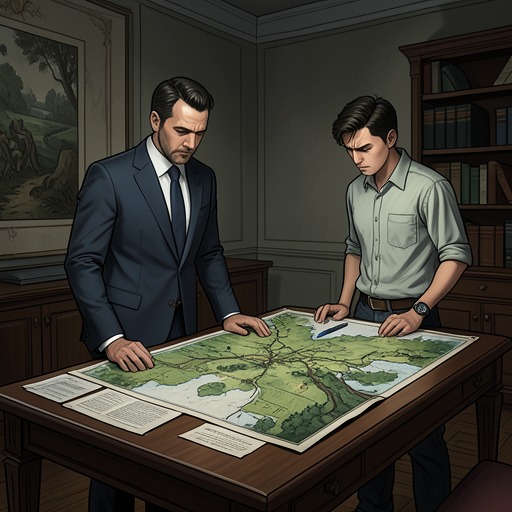
Lavinia Duke initiated the investigation into the Duke family’s heirs, and R. R. Tetrazinni reported its results to her. He explained that Charles Duquet had adopted Nicolaus and Jan from an Amsterdam orphanage and Bernard from the streets of La Rochelle; although the adoptions were informal, Duquet treated the boys as sons and divided his goods equally among them. Lavinia’s own line descended from Nicolaus, but Tetrazinni’s account made clear that this was an adopted, not biological, connection.
The report traced Duquet’s biological descendants through his legitimate son Outger Duquet, who had a daughter, Beatrix Duquet. Beatrix remained in Maine when her father moved to Leiden and later married Kuntaw Sel. Their sons, Josime Sel and Francis-Outger Sel, became the source of the living bloodline descendants Tetrazinni identified. He had not yet established the names and locations of those descendants; doing so would require travel to Canada and contact with Indigenous communities.
Inheritance and the Company’s Exposure
Tetrazinni distinguished between inheritance through adoption and inheritance by blood. In his view, the descendants of Josime and Francis-Outger were the rightful heirs if biological relationship was the deciding criterion. He nevertheless favored the adopted sons’ descendants as having a stronger claim to the fortune, invoking the practical force of possession. His report therefore supplied both a genealogical finding and an argument about how that finding might—or might not—alter control of the family property.
Decades later, James Bardawulf Breitsprecher contacted the firm, which was then headed by Tetrazinni’s son, Chandler. The younger Tetrazinni searched the files and said the case was not dead. James feared that his inquiry had revived an otherwise forgotten matter and alerted the firm to the possibility of financial gain. He understood that it worked for a percentage of an inheritance and might approach the heirs with a champertous contract, under which it would pursue the claim in return for a share.
Unresolved Claim and Limits of the Search
When the family discussed the report, the possible heirs were described as Mi’kmaq, but their present-day names and whereabouts remained unknown. The old investigation had not established whether the line was still living. Hazelton Culross emphasized the practical obstacles: Tetrazinni would have to locate descendants, persuade them that their claim was worth pursuing, and bear the expense of the work before any case could proceed. A Canadian connection added another difficulty, while the Duke and Breitsprecher enterprise had operated for generations as the accepted owner of its properties.
These uncertainties leave the report consequential without making the heirs’ claim a completed legal challenge. James warned that selling the company would not necessarily prevent the heirs from making claims against individuals. The question thus outlasts the original family investigation: an archival discovery becomes a possible liability, but the identities, intentions, and legal prospects of the descendants remain unsettled.
Founder’s Death and Narrative Significance
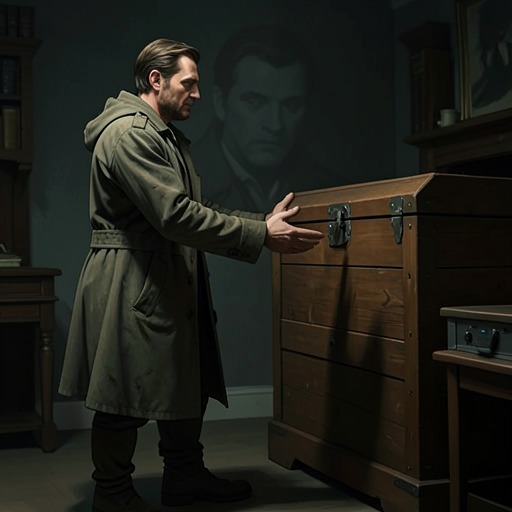
The later family learns that R. R. Tetrazinni has died during a fight with a burglar. The report arrives through Hazelton Culross, who tells James Bardawulf that the firm’s office was wrecked, its files disturbed, its safe open, and Tetrazinni shot. At that point the family does not know whether anything connected with the heir search has been taken. His death interrupts the person and business at the center of the renewed inquiry, but it does not resolve the underlying question of descent or inheritance.
The firm links two forms of record-keeping: a genealogical account of adoption and bloodline, and the present-day corporate anxiety that follows from treating ancestry as a possible basis for ownership. Its findings expose how the established family story depends on which relationships count. By tracing the biological line back through Beatrix Duquet and Kuntaw Sel, Tetrazinni Search Services makes the descendants omitted from the company’s familiar succession history newly relevant, while leaving the practical outcome open.