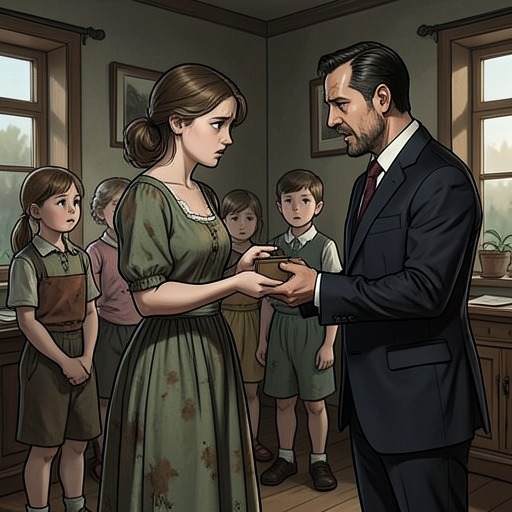
The Perrigues’ Foster Home
BlondeThe Perrigues’ Foster Home is the Van Nuys residence on Reseda Street where an orphaned adolescent is placed with a local couple under social-services care. The home’s circumstances become part of the story of that placement: its neglected surroundings and the violence later shown within it sharpen the contrast between formal care and the vulnerable conditions in which the girl is living.
Setting and household
The residence stands on a poor stretch of Reseda Street, among shacks and barren lots. The foster father runs a used-vehicle business, keeping cars, vans, motorcycles, and assorted salvage on a lot behind the house. When Sidney Haring later visits, he sees a dilapidated building, a patchy front lawn, and a yard that looks like a dump. The visible disorder shapes his judgment of the home as an unsuitable place for an adolescent in need of protection.
The girl’s placement and outside visitors
Frank Widdoes learns that the girl is an orphan under social-services care and living with a foster couple in Van Nuys. He picks her up near her high school and sometimes gives her a small amount of money, no more than five dollars, to buy something for herself. He frames his attention as pity, while acknowledging the legal, professional, and marital risks he associates with becoming involved in her life. He does not offer to take her into his own home, citing the demands and expense of his children.
The placement also draws Sidney Haring back to Reseda Street after the girl has left his class. Hoping to catch even a brief glimpse of her, he drives to the house and finds its condition troubling. His visit connects the setting to a wider question raised by the story: whether an official placement can provide meaningful safety when the circumstances of the home appear so precarious.
Danger within the home
A later scene shifts attention from the house’s exterior to the vulnerability of its residents. After the others have gone to bed, Elsie Pirig wakes to a man returning late and entering her room; the scene establishes that violence occurs within the household. The episode gives the foster home a darker significance than Haring’s first inspection alone could convey: it is not merely a poor and neglected setting, but a place where the promise of shelter coexists with danger.