Maine
BlondeMaine is the setting for the summer at Galapagos Cove, where the rented Captain’s House gives Norma Jeane Baker and the Playwright a place beside the ocean that feels at once sheltering and precarious. The coast’s quiet and the old house’s storybook character offer Norma Jeane a counterpoint to the hospital and the remembered threat of death, but the refuge does not protect her from loss: after a fall at the house, she miscarries at fifteen weeks and is taken to a hospital in Brunswick.
Setting and Place
Galapagos Cove lies on the coast of Maine, eighty kilometers north of Brunswick. The narration introduces it as an enchanted island, giving the summer retreat the quality of a removed world even as the setting remains connected to roads, traffic, and a nearby town. Norma Jeane and the Playwright have been married for more than a year and have travelled together, yet she remains, in his view, someone he is still discovering. The cove becomes the setting for that continuing intimacy, a place where the marriage can seem newly exploratory rather than settled.
The house they rent is known locally as Captain’s House, and sometimes as Yeager House. Built in 1790 on a headland above the ocean for a long-serving sea captain, it is screened from the busy summer traffic of Route 130 by a tall lilac hedge. The approach holds two kinds of exposure in tension: the house stands high above the sea, while the hedge partly shields it from the road. Maine is not simply a remote wilderness here. The sounds of the waves coexist with the muffled noise of the highway, and that mixture helps define the retreat’s particular calm.
The Captain’s House
The house is a two-story New England building of wood and stone, weathered by salt air. Its steep roofs, narrow mullioned windows, elongated rectangular rooms, and small, drafty upstairs bedrooms preserve an older domestic scale. Stone fireplaces are large enough for a person to stand inside; braided rope rugs cover the wooden floors, and handmade baseboards and stair rails sit among plain, handcrafted furniture. Seventeenth-century New England pieces, folk-art seascapes and portraits, crocheted cushions, and hand-sewn quilts give the rooms an air of austerity and restraint.
The old clocks make the passage of time visible in a distinctive way: pendulum and ship’s clocks, German mechanisms in glass cases, musical clocks, and porcelain and black-enamel pieces have all stopped at different hours. Yet the kitchen, bathrooms, and electrical fittings are comparatively modern, evidence of repeated and costly renovations. The house therefore combines adaptation with decay. Its rooms still work as a modern rental, but the salt-worn surfaces and old furnishings make time feel accumulated rather than erased. The narration describes its atmosphere as carrying both the ravages and the wisdom of time.
Refuge and Unease
For Norma Jeane, the house’s appeal lies not only in its appearance but in its landscape. She likes the old building’s resemblance to a house in a fairy tale and the way it seems to loom over her because the lawn slopes sharply. The grounds run to the cliff and then down to coarse, pebbly sand. The place is peaceful, though not silent: ocean waves and highway traffic reach it as softened sounds that seem protective rather than intrusive. This quiet differs sharply from what she remembers of waking in the hospital, a place she associates with the Kingdom of the Dead, and from the unfamiliar English doctor who questioned her about the barbiturates she had taken and addressed her as Miss Monroe. Against that memory, the subdued sounds of the coast register as a form of safety.
The grounds also resist an entirely romantic reading. Norma Jeane walks carefully among toy fragments, metal pieces, and scraps of wood. The lawn beneath the porch is strewn with bones and food remains left by previous tenants; she wonders whether they might have been placed there deliberately to hurt her, but the account presents this as her suspicion, not an established fact. During the summer, she continues feeding the thin, hungry cats that come each morning. Her persistence becomes one of the things the Playwright recognizes as a formidable strength: in essential matters, he knows, she can overcome him, even if he feels superior in lesser ones. The rented retreat is therefore both picturesque and disorderly, its calm shaped by the everyday work of caring for vulnerable creatures and moving cautiously through its neglected corners.
The Loss at Brunswick
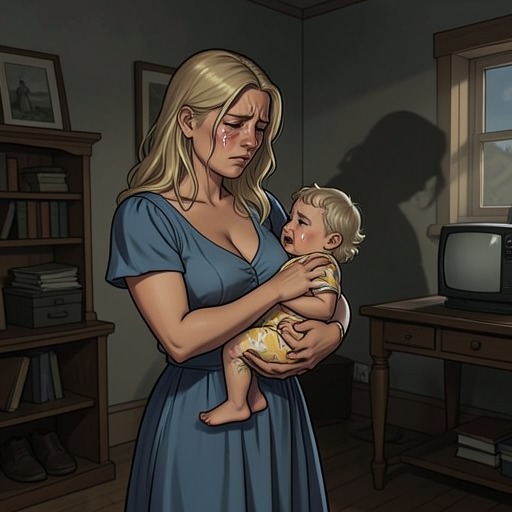
The Maine summer ends in a sudden domestic emergency. The Playwright is upstairs writing when he hears a cry and runs downstairs. He finds Norma Jeane at the foot of the cellar stairs, groaning and writhing, with the flashlight she dropped casting its beam into the cellar’s indistinct darkness. She begs him to save her and the baby, then grips and pulls at his hands as though asking him to deliver the child. He calls an ambulance, and she is taken to the hospital in Brunswick.
The miscarriage occurs at fifteen weeks of pregnancy; the date given is August 10. The scene binds the landscape’s earlier promise of refuge to an outcome it cannot prevent. The house has offered distance from the road, the restorative rhythm of waves, and a temporary sense of protection from the hospital memory. But its cellar stairs become the site of an abrupt bodily crisis, and the journey out leads back to medical care. Maine’s significance in this episode rests on that contrast: a summer place of old rooms and softened sounds becomes inseparable from the loss that ends the couple’s stay.