Galapagos Cove
BlondeGalapagos Cove is the Maine coastal setting of a brief idyll that becomes inseparable from grief. The Playwright brings Norma Jeane Baker to an island-like refuge about eighty kilometers north of Brunswick, where their rented summer home overlooks the Atlantic. The place first promises privacy, discovery, and a life together; after Norma Jeane’s miscarriage, it returns as a sensory trace of what was lost and as the setting of a later, uncertain fear about pregnancy.
Setting and the Captain’s House
The couple’s house is known locally as Captain’s House, and sometimes as Yeager House. Built in 1790 on a promontory above the ocean for a long-distance sea captain, it stands behind a tall lilac hedge that screens it from the heavy summer traffic on Route 130. The house is a weathered New England structure of wood and stone, shaped by salt air: two stories, steep roofs, narrow mullioned windows, and long, oddly proportioned rooms. Upstairs, the small bedrooms are drafty; downstairs, great stone fireplaces, handmade stair rails, braided rope rugs, and old-fashioned furniture give the rooms a reserved, almost Puritan character.
Its interior holds evidence of many eras rather than a single preserved past. Folk-art paintings of ships and awkwardly rendered people hang beside crocheted cushions and hand-sewn patches. German clocks, ship’s clocks, pendulums, musical clocks, and porcelain clocks sit stopped at different times. The kitchen, bathrooms, and electrical fittings have been modernized at considerable expense, but the house still carries the smell and atmosphere of age: not simply decay, but the accumulated weight of time. This contrast makes Captain’s House more than a picturesque rental. It is a lived-in, altered place whose old surfaces seem to keep their own history.
Arrival and Married Life
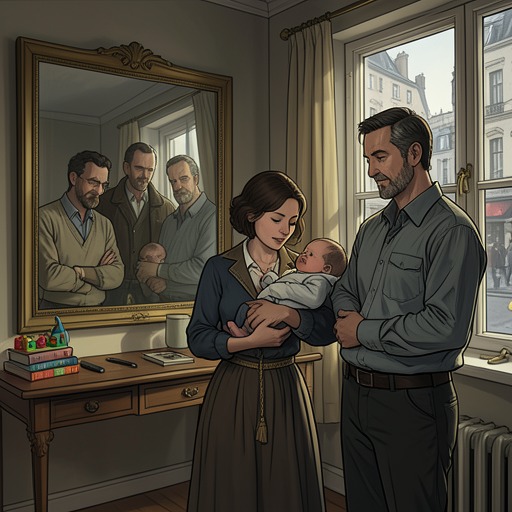
Although they have been married for more than a year and have traveled together, the Playwright still experiences Norma Jeane as a sweetheart he has not entirely won. He enjoys the continuing sense of discovery and says he has learned to manage her moods. When she sees the house and the ocean below it, she responds with childlike excitement, embracing and kissing him and pleading to remain there forever. He receives her enthusiasm as a gift of love, and his affection carries an almost parental sense of responsibility, intense enough to unsettle his own sense of identity.
The coastline gives their private life a physical setting. The Atlantic changes in color from slate gray to deep blue and green, with white breakers and patches of yellow seaweed; its shifting surface is visible from the house and at the rocky shore below. Norma Jeane descends the cliff among mossy rocks and ocean debris, where the beach is more gravel than sand. Her pale trousers become wet and muddy at the hem, her blond hair blows in the wind, and spray and tears glisten on her face. The Playwright dislikes how precipitously she has gone down, but chooses not to call out or alarm her. He recognizes that scolding her would revive the damaging pattern in which he takes a fatherly corrective stance toward her self-destructive behavior. The scene holds affection and apprehension together: he wants to protect her but is wary of turning protection into control.
The Miscarriage
At the end of July, while the Playwright is away fishing with a friend from town, Norma Jeane is alone in Captain’s House and speaks aloud to Baby, her unborn child, whom she treats as her best friend. She is in unusually good spirits and has not gone down to the cellar for days. The quiet solitude makes the house a temporary enclosure for mother and child, even as the cellar remains an acknowledged source of fear that she has been trying to resist.
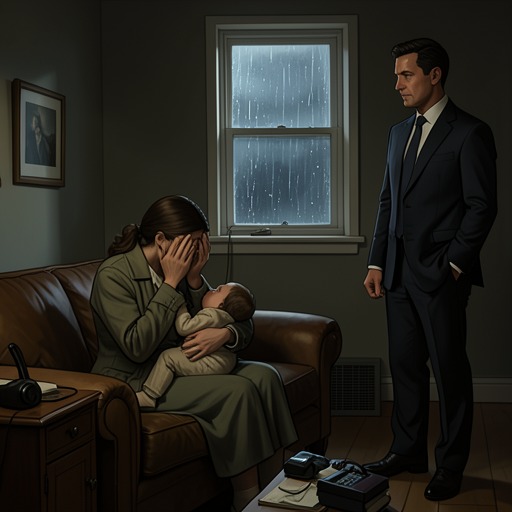
That retreat ends in crisis. Norma Jeane cries out for the Playwright to save her and the baby, and, when he bends over her, pulls at his hands as though asking him to deliver the child. He calls an ambulance; she is taken to the hospital in Brunswick. The pregnancy ends in a miscarriage at fifteen weeks on August 10. The journey from the house to the hospital marks the decisive change in the meaning of the place: what had seemed like a refuge for a married couple and their hoped-for family becomes the starting point of an irreversible separation. The loss also gives the surrounding sea and house a painful emotional charge that outlasts the summer itself.
Recollection and Afterlife
Years later, Galapagos Cove returns through Norma Jeane’s bodily memory. After her period stops in mid-July, she examines her breasts, trying to determine whether they resemble those of a pregnant woman. The sensation is linked to the smell of the Atlantic and to Galapagos Cove, at once vivid and remote, like a film watched long ago in an unusually heightened state. She considers a pregnancy test but refuses to make time for it, fearing that doctors or analysts might betray her confidence or invent secrets about her. Her uncertainty about pregnancy becomes entangled with fear of medical authority and with the remembered intensity of the Maine summer.
The later passage moves from suspicion into a terrifying imagined or unstable scene: intruders enter her home, render her unable to move, carry her away, and a surgeon removes the President’s child on the pretext that it is malformed. The account does not establish this as an event at Galapagos Cove, nor does the earlier miscarriage confirm the later fear. Instead, the cove’s return as a remembered smell and image connects a documented loss to a later, uncertain terror of reproductive violation. Its narrative significance lies in that double association: the Maine refuge once held the couple’s hope for a child, while its sensory imprint resurfaces when Norma Jeane fears that pregnancy, memory, and control over her own body can no longer be separated.