Verdugo Gardens
BlondeVerdugo Gardens is the Mission Hills apartment complex in which Norma Jeane Baker’s early marriage to Bucky Glazer takes shape as a daily practice of domestic work, hoped-for security, and care for others. In the ground-floor apartment at 2881 La Vista Street, a young bride tries to become perfect for her husband; nearby, she also tends to Harriet and Irina. The noisy, crowded complex offers little privacy, but its ordinary rooms become the setting for Norma Jeane’s intense effort to make a home—and for the abrupt departures that undo it.
Setting and Domestic Life
The Glazers’ apartment stood on the ground floor of Verdugo Gardens, in Mission Hills, California. The first months of their marriage are remembered as dreamy, but the surroundings were anything but quiet: children shouted in the street, infants cried in neighboring apartments, and radios played loudly. Norma Jeane kept her own radio on, unable to remain alone in the apartment for more than a few minutes without it. The complex’s bustle formed the background to a home life she tried to order through repetitive tasks.
The young couple could not yet afford a vacuum cleaner. Norma Jeane instead worked over a roughly two-by-three-meter royal-blue carpet, a store remnant bought for eight dollars and ninety-eight cents, pushing a carpet sweeper back and forth. Her attention settled on each mark of dirt as it disappeared. She also swept, mopped, and scrubbed; in the bathroom she worked at the faded linoleum, sink, tub, shelves, and toilet, though some grime left by previous tenants would not come clean. She aired the mattress and pillows, carried laundry to the nearest laundromat, and hung the still-wet clothes in the bungalow’s inner courtyard.
Domestic care extended to mending and knitting. Norma Jeane repaired Bucky’s socks, shirts, trousers, undershirts, and boxer shorts, and began a moss-green sweater from a pattern supplied by Mrs. Glazer. She repeatedly unraveled her work because she was dissatisfied with how it was turning out, and never finished it. The carpet sweeper, broom, mop, and plastic bucket—some of them wedding gifts from Bucky’s relatives—were not incidental furnishings: they were the tools through which Norma Jeane pursued her ambition to be a perfect wife.
Marriage and the Promise of Security
At Verdugo Gardens, Norma Jeane’s domestic labor is tied to a belief about being wanted. She would later recall that a man’s desire seemed to promise safety, even against the deeper wound of having been unwanted by her father. The apartment’s chores therefore carry more than practical meaning: they belong to her attempt to make herself worthy of Bucky and to turn marriage into a reliable shelter.
Her work also offered absorption in the action itself. The repeated movement of the sweeper, the scrubbing, and the mending could draw her wholly into the task. Yet the home’s comforts remained provisional. Even the promised vacuum cleaner had not arrived, and Norma Jeane’s determination to make things immaculate met the stubborn dirt of a rented apartment. The contrast between her hopeful effort and what could not be repaired or cleaned gives the apartment’s domestic routine a fragile quality: she could impose rhythm on the rooms, but not guarantee permanence or perfection.
Harriet, Irina, and a Shared Courtyard World
Verdugo Gardens was also where Norma Jeane’s care reached beyond her marriage. Harriet lived in an apartment shared with two other wives whose husbands were away. When Norma Jeane took Irina for walks in the park, Harriet often remained lying on a battered couch in the darkened living room, with no radio playing. Norma Jeane, by contrast, could scarcely tolerate silence at home. The difference in their responses to the empty hours marks two forms of isolation within the same complex.
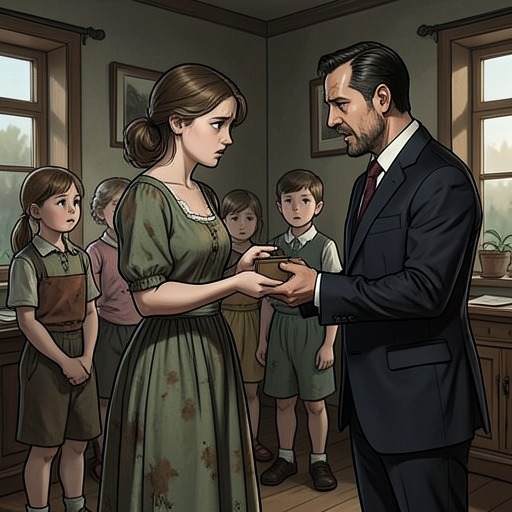
On returning, Norma Jeane announced herself cheerfully and told Harriet about the walk before lifting Irina from the stroller and carrying her inside. Harriet rarely answered. Norma Jeane continued talking to the child as she handed her back to her mother, who remained rigid and withdrawn on a couch described as soaked with tears and resentment. Irina might fuss and kick before Harriet finally took her. The scene places Norma Jeane in an uneasy intermediary role: she offers companionship and practical help, but cannot make Harriet respond or relieve her distress.
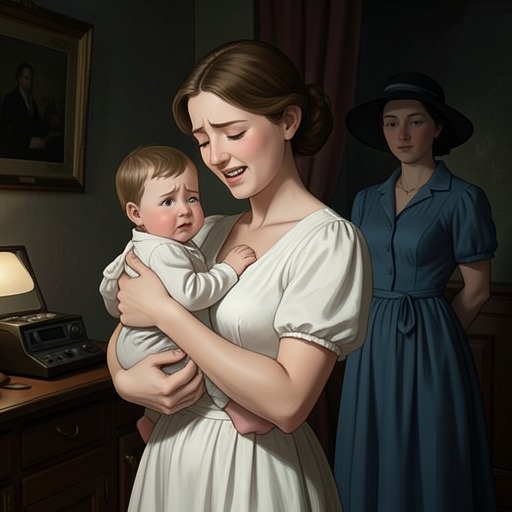
That attachment ended without warning. In March 1944, Harriet disappeared from Verdugo Gardens with Irina, leaving most of her few possessions behind. Norma Jeane was devastated by the child’s absence and wondered how she could manage without her. She later held a vague, dreamlike memory of bringing Irina to Gladys Mortensen and receiving Gladys’s blessing, but the child was gone and that imagined reassurance could not restore her. The complex had briefly contained a surrogate family connection that Norma Jeane experienced as precious; Harriet’s departure made its limits unmistakable.
Departure and Narrative Significance
Verdugo Gardens ceased to be Norma Jeane’s home after Bucky left on a Liberty. She did not move in with the Glazers in Mission Hills, nor did she remain at the complex. A week after his departure, she obtained an assembly-line job at the Radio Plane Aircraft factory in Burbank and rented a furnished room near a streetcar stop. By her eighteenth birthday, she was living on her own. Her move marks a change from the household she had tried to perfect to a life sustained by wages and independent lodging.
The apartment’s significance lies in this compressed transition. It is at once the setting for Norma Jeane’s early married hope, her painstaking domestic routines, and her care for a neighbor’s child; it is also a place she must leave as the people around her depart. Later, Marilyn Monroe’s name and photographs would become difficult to avoid, and the image of Miss Golden Dreams would be republished without her authorization. That later public exposure contrasts with the young Norma Jeane’s effort to secure belonging through private domestic life. Verdugo Gardens is not presented as a lasting refuge, but as a crowded, temporary home in which the desire to be wanted briefly takes the form of marriage, work, and caregiving.