Van Nuys
BlondeVan Nuys marks a pivotal change in Norma Jeane Baker’s life: in November 1938, she leaves the orphanage for a foster family there, entering a world that offers new pleasures and relationships but does not remove her vulnerability. The town’s high school, foster household, and routes to beaches and other outings gather contrasting experiences around her: service and surveillance, adolescent excitement and adult pressure, humiliation and the desire to be wanted.
Foster placement and the household
When Norma Jeane Baker leaves the orphanage for foster care in Van Nuys, she has saved $20.60. Edith Mittelstadt doubles the sum as a farewell gift, a gesture that gives her a modest reserve as she begins another placement. The money also carries the memory of the labor behind it: at the orphanage, Norma Jeane has endured exhausting kitchen work for ten cents a week, scraping greasy pots and grates after managing only a few bites of food. Her pride, the narrative emphasizes, cannot be bought for such a small sum.
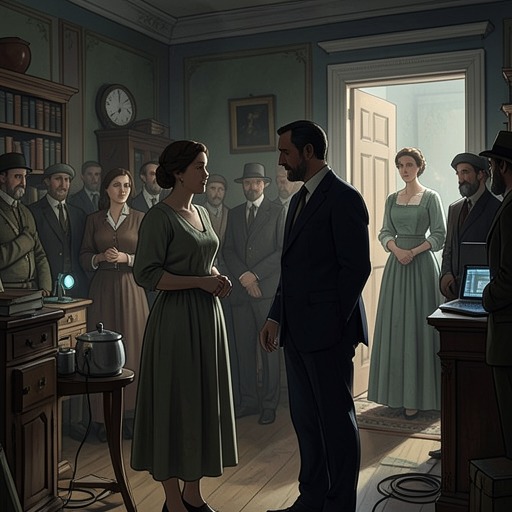
The foster setting is not simply a refuge from institutional hardship. The Pirig household is concerned with its reputation as a long-standing foster family, and that concern shapes how Elsie Pirig interprets Norma Jeane’s adolescence. Warren Pirig’s used-vehicle business occupies a lot behind the family home on Reseda Street, among shacks and barren fields. The lot’s burned-tire smell and bluish haze make the immediate surroundings materially rough; for Frank Widdoes, who knows where Norma Jeane is living, the household represents a place he imagines but hesitates to investigate more closely.
School, courtship, and pressure to marry
At fifteen, Norma Jeane is still attending Van Nuys High School and wants to finish her education. Elsie, however, tells her that it is time to marry. She grounds the advice in the war and the prospect that young, able-bodied men will soon be sent to the front, and she treats marriage as something that should happen before the available men are gone. Norma Jeane protests that she is too young and has years of school ahead; Elsie counters with her own early marriage and insists that a diploma is not necessary.
The argument also exposes the foster family’s anxiety about reputation. Elsie says that Warren has heard rumors that Norma Jeane is involved with married men and that the family must take emergency measures before the situation becomes a scandal. Norma Jeane is bewildered by the accusation and by the implication that the household’s standing matters more than her account of herself. Van Nuys is therefore not only the place where she is given a home: it is where adults frame her popularity as a problem to be managed and marriage as a solution to risks she does not believe she has created.
At the same time, the narrative describes a busy adolescent social life. Men and boys of markedly different ages and occupations take Norma Jeane to the cinema, dancing, church, bowling, baseball, boating, and other outings. They drive her to Topanga Beach, Will Rogers Beach, Las Tunas, Santa Monica, and Venice Beach, and on Sunday excursions into the San Gabriel Mountains. She is an accomplished jitterbug dancer, though she feels embarrassed by close dancing, and she dances the hula with confidence. These outings offer movement and companionship beyond the foster home, but they also sit beside the pressure to marry and the attention of men much older than she is.
The remembered details of courtship are careful and guarded. Norma Jeane keeps her hands still when kissing, closes her eyes, and knows how to prevent a kiss from becoming more intimate than she wishes. She recalls being treated respectfully and not being forced to drink or touched where she did not want to be touched. Yet the youngest suitor is sixteen, while the oldest is thirty-four, a married Culver City police inspector. In later years, some moonlit drives become difficult for her to distinguish from scenes in films she has seen or thinks she has seen. The town’s excursions thus survive both as concrete memories of adolescent freedom and as recollections blurred by the movies that helped shape her imagination.
Frank Widdoes and unequal power
Frank Widdoes comes to Van Nuys to collect Norma Jeane near the high school. He knows she is an orphan under social-services care and that she lives with a foster couple. His own circumstances include a recent separation from his wife after he confessed to infidelity; he now lives alone and finds that he is beginning to like it. He also recognizes that pursuing a fifteen-year-old could bring criminal consequences and professional trouble, and that his position makes the situation dangerous.
Widdoes sometimes gives Norma Jeane money, no more than five dollars at a time, for something nice. He presents the connection to himself as innocent, but he also understands that she is eager to obey people she trusts and that this trust increases his responsibility. His attention to her badge and her admiration of it further underline the imbalance between an adult authority figure and an orphaned schoolgirl. The episodes complicate any simple picture of Van Nuys as a safe haven: the town’s familiar routes and school surroundings are also places where adults can approach a girl whose dependence leaves her with limited power.
A landscape of rejection and recognition
Van Nuys High School holds a sharply different memory from the exhilaration of social outings. Norma Jeane remembers being excluded from the school’s drama club, then leaving to the sarcasm of the acting teacher and the laughter of her classmates. At the time, the humiliation seems to confirm her low opinion of her own worth. Later, when she has become a celebrated beauty, she still sees herself in the mirror as the frightened, anxious girl from that rejection, rather than as the dazzling figure other people admire.
The same high-school past contains an opposing memory: Norma Jeane was a standout on the girls’ track team, racing toward applause, pride, and medals. She associates that athletic recognition with feeling wanted. The contrast makes Van Nuys more than a point on her route from orphanage to adult life. It is an emotional geography in which exclusion and acclaim, dependence and mobility, coexist. The girl who was laughed out of the drama club and the runner who crossed the track to applause belong to the same remembered place; both experiences help explain why recognition and acceptance become so powerful in her later story.