A City
DecodedA City is the pivotal local setting in Rong Jinzhen’s story: the place from which he is drawn into Unit 701, to which he returns after a major cryptographic operation, and from which he sets out again when a stolen notebook may threaten far more than his own security. The narrative gives the city little physical description. Instead, it makes A City legible through departures, guarded journeys, institutional procedures, and sudden reversals: an ordinary urban address can conceal a secret workplace, and a return to familiar streets can become the beginning of an emergency.
A Local Base in a Secretive Network
A City is closely tied to Unit 701’s operations. It is the point from which Rong Jinzhen travels to the General Headquarters in Beijing, and the place where a delegation from Unit 701 meets him on his return. The distinction between the two locations matters: the unit’s General Headquarters is in Beijing, three days and two nights away by train, while A City remains a significant local center in Rong’s working life. The story establishes that connection through movement and institutional presence rather than a map or civic portrait.
The city’s relation to Unit 701 is also marked by concealment. When Rong is first taken away from the university at dawn in 1956, he believes that his destination is local. The preceding day’s hiring arrangements have been obscured by repeated turns through the streets and a period in dark glasses; now the car crosses the city limits and speeds along National Highway XX. Only then does Rong understand that he is being taken much farther away than he expected. The departure makes A City a threshold: leaving it means entering a world whose location, rules, and purpose have been withheld from him.
That secrecy is not merely a matter of guarded premises. Rong is made to repeat his oath after being told that he has already violated it, underscoring how quickly the unit treats even an uncertain breach as a serious matter. Later, Unit 701 inspects personal mail. A letter from Jan Liseiwicz reaches the unit by the normal route, but surveillance staff initially treat its English text as grounds for heightened suspicion and obtain an official translation before its contents can be considered. These procedures show the city’s institutional world extending beyond its gates: communications and private obligations are drawn into the same system of control.
Journeys Between A City and Beijing
The contrast between A City and Beijing becomes especially sharp during the crisis surrounding BLACK. By then, traces of the cipher have appeared and Rong has spent three years trying to decipher it, without finding a way through its growing darkness. Unit 701 and the General Headquarters convene a research symposium at Headquarters in Beijing, placing Rong’s work before a broader institutional gathering. His travel is treated as a security problem because he has cracked PURPLE and is now working on BLACK.
An aeroplane is considered too risky. The narrative recalls the abduction of a low-ranking cryptographer from Y Country by agents from X Country after Rong’s success with PURPLE, making the danger of capture concrete rather than abstract. A train or car is regarded as safer because countermeasures and escape routes remain possible. Rong therefore travels by train from A City, in a soft sleeper reserved because of his status and the top-secret documents he carries. Even this special arrangement leaves him uneasy. His journey reveals a world in which a change of transport is not simply a matter of convenience: the identity of the passenger and the information he carries alter the risks of travel.
A City’s place in this route is therefore defined by its relation to the capital and by the precautions required to leave it. The city is neither the conference site nor a neutral starting point. It is the home base from which a cryptographer whose work has become internationally consequential must be moved under protection, with the ordinary possibilities of travel narrowed by the threat of intelligence operations.
Return and the Collapse on the Platform
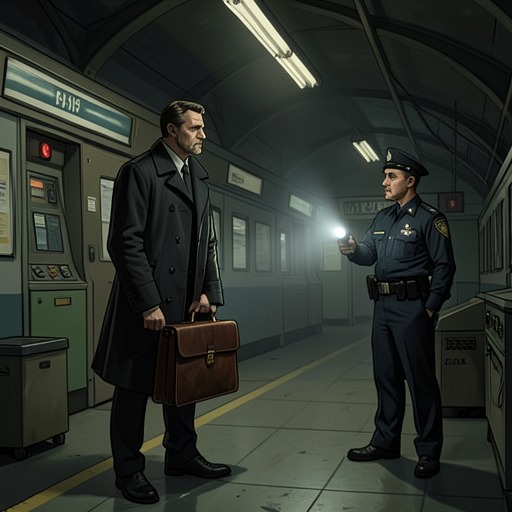
When Rong steps off the train back in A City, a Unit 701 delegation is already approaching. At its head is a former Director, not Zheng the Gimp, who has not yet risen to that post. The Director’s cold reception immediately changes the meaning of arrival. He demands to know why Rong did not put sensitive documents in a safety-deposit box. The accusation is public: everyone on the platform watches as Rong’s expression briefly flickers and then vanishes, before he goes rigid and collapses.
The platform turns A City into the scene of a devastating reversal. Rong has returned from a journey undertaken for the unit’s work, yet he is met not with relief but with blame. His collapse follows the confrontation so closely that the public setting intensifies its force: the institution’s judgment becomes visible to the people gathered there, while Rong himself can no longer answer it. A City’s narrative importance lies partly in this collision between private vulnerability and official scrutiny.
The consequences do not end at the station. After being taken to hospital, Rong learns that the thief who stole his notebook may have been on the train or may have got off in B City. Because the train has been searched and the thief is not aboard, the search turns toward B City. Rong leaves the hospital without permission, tells his wife that he must retrieve his briefcase from the station, and instead drives directly to B City. A City is thus the point from which the crisis is launched: the city’s station, hospital, and military-linked response mark successive stages in the transition from accusation and illness to pursuit.
The City as a Managed Passage
A City also belongs to the story’s larger pattern of controlled movement and restricted knowledge. Unit 701’s operations involve escorts, guarded travel, inspected correspondence, and, in Rong’s case, protection during journeys. The evidence gives no broad account of A City’s population, architecture, or civic life; its defining features are the routes that pass through it and the institutions that shape what can happen there. The city is encountered at moments when someone is leaving, returning, being watched, or being dispatched elsewhere.
That pattern extends into the novel’s account of long-term surveillance. After BLACK is broken, Jan Liseiwicz and his household are placed under strict house arrest; even before that, beginning around the time PURPLE was cracked, they are shadowed when they go out and their telephone is monitored. The account does not specify that every measure is confined to A City, so the city is best understood as part of the broader setting of Unit 701’s control rather than the sole site of those restrictions. In this world, the boundary between public travel and private life is porous: a journey can require authorization and protection, while a letter or telephone call can become an object of institutional scrutiny.
The narrative gives A City significance through this repeated structure of passage. It is the place Rong believes he is staying when he is recruited, the point of departure for a guarded trip to Beijing, the setting of his public collapse on returning, and the launch point for his unauthorized search in B City. Each movement changes what the city means. At first it offers the appearance of a local destination; later it is a station of accusation and a place from which even a hospitalized man feels compelled to flee. A City is therefore less a scenic backdrop than a hinge in the plot, where the secret demands of Unit 701 repeatedly turn into personal consequences.