Unit 701 compound
DecodedUnit 701 compound is the guarded center of the novel’s cryptographic world: a place where Rong Jinzhen’s mathematical gifts are put to national use, while his movements, communications, and private life become subject to institutional control. Its geography is deliberately difficult to read. The outward appearance of an ordinary, even bucolic, courtyard conceals a more restricted inner space, making the compound’s physical arrangement a fitting expression of its secrecy.
A concealed destination
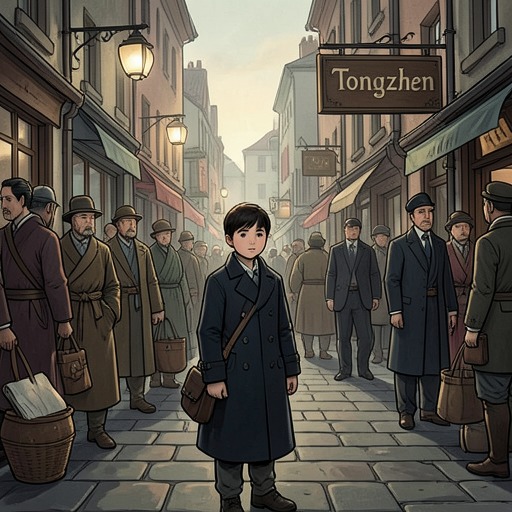
Rong is taken toward Unit 701 after being recruited in 1956. At dawn, still half-asleep, he rides in a car with Zheng the Gimp, the head of the cryptography section and his new immediate superior. The destination is not explained to him. The previous day, during the hiring paperwork, the car had turned repeatedly, and Rong had been made to wear dark glasses for ten minutes. He believed they had remained within the city. When the car instead crosses the city limits and reaches National Highway XX, he realizes that he is being taken far away and asks where they are going. The journey introduces the compound not through a map or description, but through the recruit’s dawning awareness that the institution controls what he is allowed to know about his own destination.
That control continues through the oath required of new personnel. When Rong insists he is sure that the previous day’s destination was somewhere in the city, his superior tells him that he has already infringed the oath and orders him to repeat its first part. The exchange makes secrecy an immediate obligation, not an abstract principle of the work. The compound’s boundaries begin before its gates: they are enforced through a person’s speech, memory, and understanding of where he has been.
Work, correspondence, and surveillance
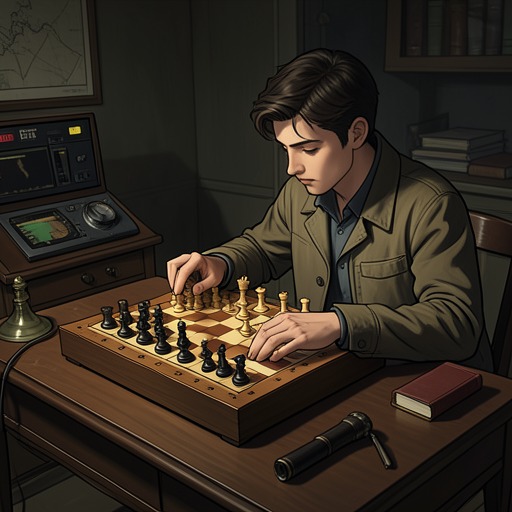
Inside the institution, Rong’s working life narrows around cryptography. As section chief, he is supposed to carry administrative responsibilities, but he commonly appears at the office only an hour before the day ends and spends the rest of his time shut away in the cryptography room. He even unplugs the telephone to keep from being disturbed. The room offers the solitude he seeks, but that withdrawal also means neglecting both his leadership duties and his marriage. After BLACK becomes the focus of his work, his isolation grows more extreme: the cipher’s secrets seem to demand that he hide himself away.
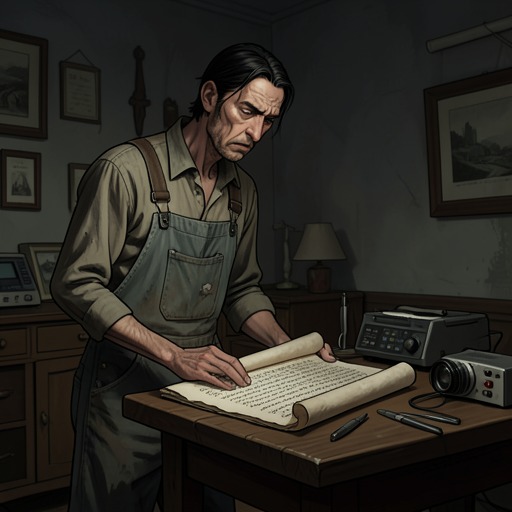
The compound’s security extends to personal correspondence. When Jan Liseiwicz writes to Rong, the letter follows the ordinary delivery route to Unit 701, but whether Rong may read it depends on its contents. The surveillance team opens it as a matter of course. Because it is in English, they are initially baffled, treat it with particular suspicion, and report it to their superior, who requests a translation. The original sheet becomes only a couple of lines in translation. The episode shows how a message between individuals is transformed into an object of institutional scrutiny before it can reach its intended reader.
That system operates alongside surveillance beyond the mailroom. After PURPLE is cracked, Jan Liseiwicz and his household are shadowed when they go out, their telephone is monitored, and restrictions accumulate. In the second half of 1970, after BLACK is broken, they are placed under strict house arrest. The compound’s secrecy is therefore not limited to a guarded worksite: the institution’s procedures reach into communication and everyday movement, shaping the conditions under which its people can live and speak.
Loss and return
The loss of Rong’s notebook triggers a response that reveals the scale of the institution behind the compound. The notebook contains sensitive institutional information and Rong’s thoughts on the difficulties of deciphering BLACK. When Vasili realizes it has gone missing, he alerts the train’s security chief and staff so that nobody can disembark, then sends a telegram to Unit 701. The report travels onward to General Headquarters and up the chain of command until the most senior director orders every department to assist in recovering the documents as quickly as possible. A private record of thought has become a national-security emergency.
When Rong steps off the train at A City, a delegation from Unit 701 is waiting. Its head is an intimidating director, not Zheng the Gimp, who has not yet risen to that post. The director confronts Rong over his failure to put the sensitive documents in a safety-deposit box. In front of the assembled onlookers, Rong’s expression briefly changes; then he goes rigid and collapses. On 14 January 1970, in Vasili’s care, he is brought back to the high-walled compound, broken and tormented. The return closes this part of the story by bringing him back inside the institution whose work, rules, and secrecy have shaped his life.
The outer courtyard and the inner boundary
A later visit presents a changed view of Unit 701 compound. The narrator recalls that passing through its gates used to require a painfully tedious and complicated process. This time, the sentinel checks a national identity card and reporter’s pass, tells the visitor to register in an ordinary-looking logbook, and permits entry. The large courtyard seems almost casual: pedlars hawk goods, temporary workers idle, and the scene appears carefree, like a picture of bucolic simplicity. The faded color of the gate and the ease of entry suggest that some of the compound’s former mystery and imposing calm have worn away.
But the apparent openness proves incomplete. The visitor has entered a newly constructed residential area, not the most restricted sector. Beyond it lies an inner courtyard within the compound, like a cave inside a larger cave, difficult to find and easy to enter without realizing that a boundary has been crossed. Sentinels there appear suddenly and prevent anyone from approaching. The contrast between the relaxed outer courtyard and the guarded inner one makes the place’s architecture part of its security system: concealment depends not only on walls and guards, but on making the boundary itself hard to perceive.
To reach the most secure area, the narrator passes three checkpoints with an escort. The first is an armed police post with two guards carrying pistols and truncheons. The second is staffed by two members of the People’s Liberation Army with crow-black semi-automatic rifles; barbed wire surrounds their post, and a small stone pillbox stands beside the gate, with a phone and what appear to be machine guns inside. At the third checkpoint, a lone plainclothes guard paces with a walkie-talkie and no visible weapon. The sequence makes access a graduated process, each threshold adding a different form of scrutiny and control.
An institution difficult to classify
Even after entering the compound, the narrator cannot establish whether Unit 701 belongs to the military, the police, or local government. Most staff appear in casual dress, only a few wear military uniforms, and the car park contains both local and military license plates, with the latter less common. People asked about the unit respond that it is not a question to ask and that they do not know the answer. The uncertainty is not resolved; instead, the narrator sets the classification aside and emphasizes the unit’s importance to the country.
That unresolved identity deepens the compound’s role in the novel. It is at once a place of concentrated intellectual labor, an apparatus that monitors messages and movement, and a space whose own institutional position remains obscured. Its visible courtyards invite ordinary life, while its hidden thresholds deny ordinary access. The physical return of Rong to its high walls, and the later visitor’s passage through checkpoints into its concealed interior, give the compound a double meaning: it shelters the work that makes secrecy possible and embodies the restrictions that secrecy imposes.