Rong Family Mansion
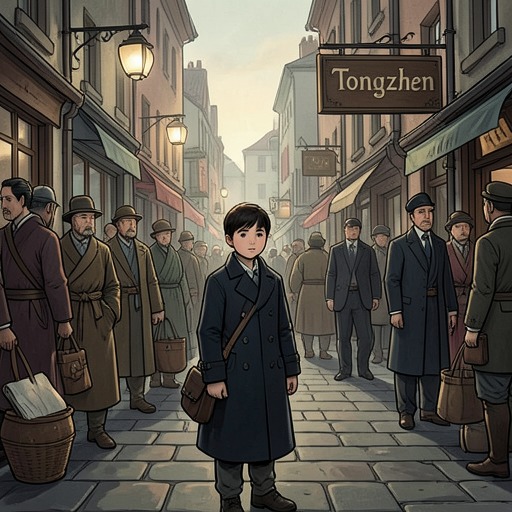
DecodedThe Rong Family Mansion is the ancestral home of the Rong clan in Tongzhen, a sprawling residence that once occupied half the village. As the family’s fortunes and household dwindled, the mansion’s neglected buildings and encroaching wilderness made its decline visible. In that altered landscape, Young Lillie sheltered a mysterious pregnant woman, and the mansion became the setting for the birth of a child whose resemblance to the Killer exposed the truth of his parentage.
Setting and former grandeur
The mansion’s buildings were packed close together, their roofs compared to fish scales. By the time the narrative focuses on it, the paint on its pillars and eaves had begun to flake away. Its size and closely grouped structures still testified to former importance, even as the damaged surfaces made clear that the family’s circumstances had changed.
The house had once been busy with masters and servants. Later, its residents were fewer, older, and disproportionately women and servants. With fewer young people to animate the place, the mansion seemed larger and quieter. Birds nested in the trees, spiders spread webs across doorways, and weeds swallowed the paths between buildings. The pet birds had flown away; the artificial mountain and cultivated garden had become wild, while the rear courtyards formed a maze. The remains of the mansion’s former beauty persisted, but its ordered appearance had given way to disrepair.
Family decline and political memory
The Rong family’s decline was tied to changes both within and beyond the household. Many family members had left Tongzhen to study with Young Lillie’s father in the provincial capital, and few wished to return to continue the family business. The state monopoly on salt also deprived the family of its principal source of income. Those educated in the new emphasis on scientific method and truth were largely uninterested in restoring a life of wealth and luxury; the family lost nearly all its property within a decade.
A prominent sign of the mansion’s political history remained above its main gate: a plaque honoring support for the Northern Expedition. When the National Revolutionary Army reached C City, Young Lillie’s father saw students collecting funds for the cause and contributed to it. The family’s business suffered, but he insisted that the plaque remain, declaring that it would come down only over his dead body. Its place above the gate made the family’s political commitment visible even as the household’s material standing diminished.
Refuge and revelation
After the Killer’s death, a pregnant woman arrived seeking help from his family and was turned away. An onlooker directed her to N University, where the upright and principled elder of the Lillie family took her in. The following day, he sent Young Lillie with her to Tongzhen. Young Lillie then faced the problem of persuading Mr and Mrs Rong, who held authority over the clan, to shelter her. Mr Rong had suffered a stroke and was confined to bed; Mrs Rong held the household’s real power.
Remembering Mrs Rong’s Buddhist devotion, Young Lillie devised a story that the woman had conceived after praying at Putuo Mountain. The explanation secured her acceptance into the mansion, but it could not alter the child’s actual parentage. Months later, after a difficult birth, the woman died. When the baby was cleaned, his likeness to the Killer—including his thick dark hair, large head, and Mongolian spot—made the connection unmistakable. The resemblance overturned Young Lillie’s account: the child was recognized as the Killer’s son, not as a miraculous conception. His likeness to Grandmother Rong nevertheless moved Mrs Rong, and that family resemblance helped save him from abandonment. Even then, the Rongs did not readily recognize him as one of their own.
A house of departures and contested belonging
The mansion’s role as a place of shelter was not the same as secure belonging. The baby was initially called the Grim Reaper, and the elderly servants caring for him later sought a kinder name. The household’s reaction to him shows how descent could be acknowledged yet withheld as a social identity: his resemblance established his connection to the family, but did not immediately earn him acceptance.
The mansion also witnesses a departure. At dawn, the household’s dogs woke its residents, who saw Duckling in new clothes carrying the ox-hide suitcase that Mr Auslander had brought years before. He walked behind Young Lillie, struggling to keep up, as they left. The sight bewildered those watching, and the major-domo later confirmed that it was real. The questions this raised—where Duckling was going, why Young Lillie was taking him, and whether he would return—show the mansion as a community of onlookers as well as a family home. Against its still-imposing but increasingly desolate setting, shelter, kinship, and departure remain unsettled.