Putuo Mountain
DecodedPutuo Mountain enters the narrative through a woman’s account of prayer and pregnancy, a story Young Lillie uses while arguing that she should be given shelter. The place matters less as a described landscape than as the setting for an account whose explanation Mrs Rong cannot verify but must consider as she decides whether to take the woman in.
The Pilgrimage and the Woman’s Account
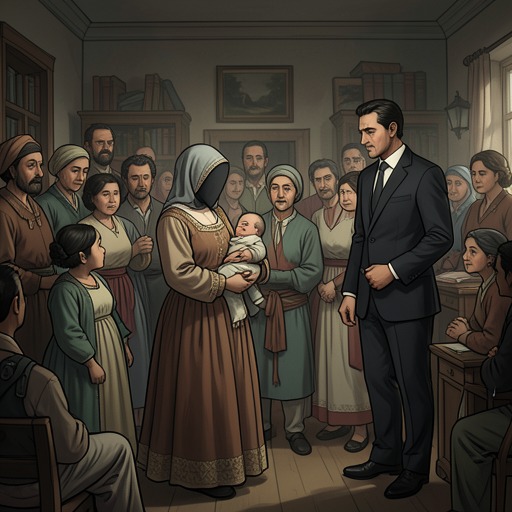
The woman is described as a devout Buddhist who grew up in a nunnery. She was unmarried when, the previous year, she went to Putuo Mountain to pray before the Buddhist statue there. After returning, she discovered that she was pregnant. The account gives the visit and the discovery in sequence; it does not establish a cause for the pregnancy or independently confirm the woman’s explanation.
The Visit’s Role in the Household Decision
Young Lillie relays the story to Mrs Rong while pressing her to shelter the pregnant woman. He frames the central issue as whether Mrs Rong believes the account, while Mrs Rong asks what follows if she does not. Young Lillie answers that he will put the woman out of the house if she rejects it. After a sleepless night, during which the Buddha does not help her decide, Mrs Rong agrees at noon to let the woman stay. Putuo Mountain is thus tied to a practical household choice: the pilgrimage story supplies the terms of the dispute, but the decision turns on whether the woman will be given shelter.