Unit 701 Training Base
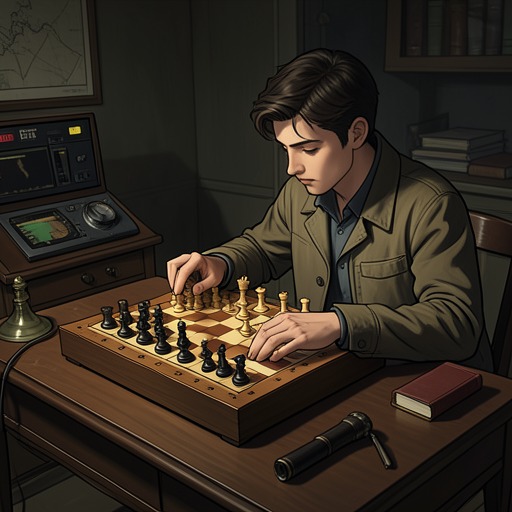
DecodedUnit 701 Training Base, known within the compound as the Southern Complex, is the secluded gateway where new recruits received political education and professional training before joining Unit 701. For Rong Jinzhen, its remote, fortress-like setting turns an unexplained journey from the university into the first stage of a life governed by secrecy, restricted movement, and guarded thresholds.
A concealed destination
In the summer of 1956, Rong Jinzhen was bundled half-asleep into a car at dawn and driven away from the university. His escort, Zheng the Gimp, was not merely an intimidating stranger: he headed Unit 701’s cryptography section and would become Rong Jinzhen’s immediate superior. The previous afternoon, the car had repeatedly turned through the city, and Rong Jinzhen had been made to wear dark glasses for ten minutes. Because he believed the hiring address was a local postbox, No. 36, he assumed the journey would remain within the city. When the car crossed the city limits onto National Highway XX, he realized that the destination was much farther away than he had expected.
After another stretch of driving, lights appeared on the side of a dark mountain. The entrance had no sign. A gatekeeper with one arm missing and a vivid scar running across his face opened the gate; the silent buildings and shadowed approach recalled the castles and pirates of Rong Jinzhen’s childhood stories. Two figures emerged from the darkness, including a woman who greeted Zheng the Gimp. In his frightened, unhappy state, Rong Jinzhen failed to catch her name, remembering only that she held a senior departmental title and directed the site.
A training and screening ground
Zheng the Gimp identified the place as Unit 701’s training base. New recruits came there for political education and professional instruction, and he told Rong Jinzhen that someone would collect him when his basic training was complete. He then drove away, leaving Rong Jinzhen at the remote compound. The abrupt handoff makes the base more than a classroom: it is the controlled point of entry into an organization whose people and destinations are deliberately obscured.
The secrecy began before Rong Jinzhen reached the mountain. His hiring journey had concealed its route, and the local-looking address had misled him about where he was going. At the base, Zheng the Gimp also confronted him with the fact that he had already violated the oath he had sworn and ordered him to repeat its opening portion. The episode connects recruitment to discipline: entry into Unit 701 required not only training but immediate submission to rules about what could be known and said.
The route to the Northern Complex
About three months later, just as Rong Jinzhen was getting out of bed, a young man arrived by motorbike with instructions from Section Chief Zheng to collect him. The motorbike did not head for the main gate. Instead, it carried Rong Jinzhen deeper into the compound and into a vast network of caves, where passages opened into one another like a maze. After roughly ten minutes underground, they reached a round-topped steel door. The driver went inside and returned before they continued through the complex; shortly afterward, the motorbike emerged on the far side.
There stood a series of buildings many times larger than the training centre: the Unit 701 Northern Complex, where Rong Jinzhen would spend the rest of his life. The distinction between the two sites is explicit. The training base was the Southern Complex; the Northern Complex held the work itself, beyond the steel door. The Southern Complex functioned as both gateway and checkpoint: recruits who did not pass its inspections could not even glimpse the northern buildings. The account’s drawbridge-and-moat image captures the arrangement—a passage that remained closed to anyone who had not been admitted.
Secrecy beyond the training grounds
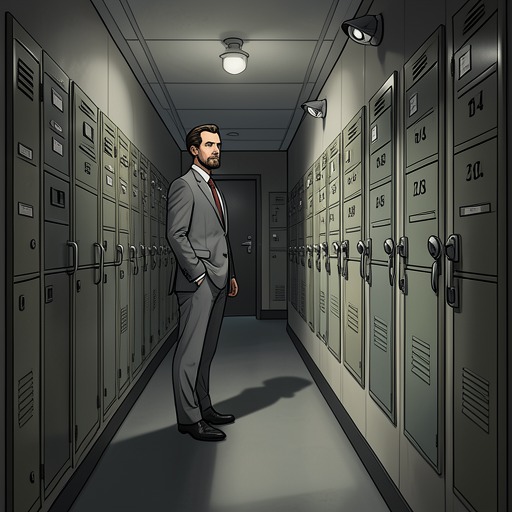
The training base introduces a broader system of controlled access that continues inside Unit 701. Elsewhere in the complex, entry to its most secure area required passage through three checkpoints: an armed police post, a People’s Liberation Army post surrounded by barbed wire, and a post manned by a plainclothes guard carrying a walkie-talkie. The different guards and barriers make security a sequence of inspections rather than a single gate.
Information was restricted alongside movement. Unit 701’s surveillance team opened personal mail, and a letter from Jan Liseiwicz written in English was treated with particular suspicion and sent for translation before its contents were considered. Later, Jan Liseiwicz and his household were shadowed, their telephone monitored, and their freedom increasingly restricted; after BLACK was broken in the second half of 1970, they were placed under strict house arrest. These later measures are not features of the training base alone, but they illuminate the institutional world for which the Southern Complex prepares its recruits. The base’s narrative importance lies in that threshold: it marks the transition from an ordinary university setting into a life in which routes, correspondence, and access are all subject to control.