Escape
DublinersEscape in Dubliners is both a longing for elsewhere and a test of whether imagining or pursuing departure can overcome the forces that keep a person in place. It takes the form of a schoolboy’s day of truancy and dreams of adventure, an imagined Eastern world, a woman’s decisive but abandoned passage abroad, and a married man’s fantasy of a literary life in London. The motif’s force lies in its reversals: departure can feel like liberation before it begins, while the prospect of escape may sharpen awareness of the life that remains.
Desire for Adventure
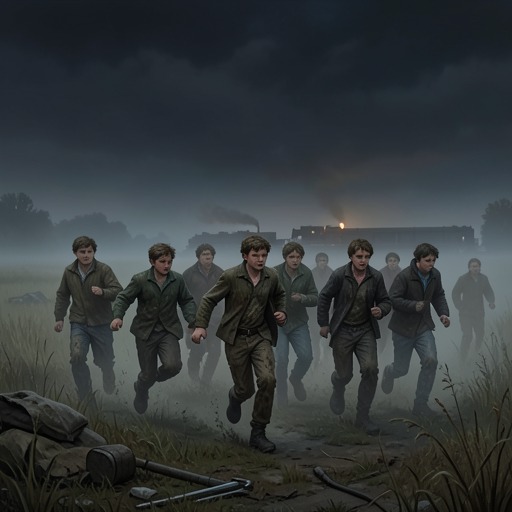
The schoolboy narrator’s desire to escape begins in the contrast between classroom discipline and the sensations promised by the adventure stories he reads. A schoolmaster’s rebuke over The Apache Chief diminishes the stories’ glamour during school hours, but that restraint weakens once he is away from school. He grows hungry again for wild sensations, and the make-believe warfare of evening becomes as tiresome as the school routine. What he wants is not simply a change of activity but an adventure that will happen to him. He reasons that real adventures cannot come to people who stay at home and must be sought abroad.
With the summer holidays approaching, he turns that reasoning into a plan for a day of truancy with Leo Dillon and Mahony. Each boy saves sixpence; they arrange to meet at ten in the morning on the Canal Bridge and head along the Wharf Road to the ships, cross by ferry, and walk out to the Pigeon House. Their alibis are part of the design: Mahony’s older sister is to write his excuse, while Leo Dillon will have his brother say he is sick. Leo worries that they might meet their schoolmaster, Father Butler, but Mahony argues there is no reason for him to be at the Pigeon House. The boys end their planning with handshakes and laughter, giving the escape an anticipatory excitement before it has become an experience.
The expedition briefly makes school and home seem remote. On the way to the quays, however, the children’s imagined adventure runs up against ordinary streets and other children. Mahony plays at being an Indian, chases ragged girls with an unloaded catapult, and proposes charging two small boys who throw stones at them. The narrator objects that the boys are too small. The children are called “Swaddlers!” by the ragged troop, and their attempt to stage a siege at the Smoothing Iron fails because they need at least three participants. Their mock heroics remain bounded by schoolmates’ punishments and games: they tease Leo Dillon about being a coward and speculate about how many strokes he will get from Mr Ryan.
At noon, after walking past the Vitriol Works and along the Wharf Road, the boys reach the quays. They buy two large currant buns and eat beside the river on metal piping. Around them, cranes and engines work, carts groan along the high-walled streets, and the harbour opens onto barges, a brown fishing fleet beyond Ringsend, and a large white sailing vessel being unloaded. Mahony imagines running away to sea; the narrator, looking at the ship’s masts, feels the geography he has only been taught at school take visible substance. This is a more compelling form of escape than the children’s mock warfare: the distant world appears within reach, and school and home seem to lose their hold.
They cross the Liffey by ferry, paying their fare alongside two labourers and a small Jewish passenger carrying a bag. Their seriousness gives way once to shared laughter when their eyes meet. On the opposite bank they watch the ship being unloaded; a bystander identifies it as Norwegian. The narrator tries to read its name and looks at the foreign sailors, searching for green eyes because of a confused idea he has formed. Their eyes are blue, grey, or black; one tall sailor entertains the people on the quay by calling out cheerfully as planks fall. The scene gives the schoolboy’s journey real distance and unfamiliar faces, but its glimpses of elsewhere remain observations from the quay rather than a voyage out.
Escape as Imagination
The Araby episode presents escape not as a day’s physical excursion but as a spell cast over ordinary life by a desired destination. The narrator’s promise to bring a girl something from the bazaar leaves him consumed by the days before it. The word Araby seems to call to him through silence and cast an Eastern enchantment. At school, he pays little attention to questions and cannot gather his thoughts; the teacher’s expression changes from amiability to sternness as he suspects the boy is becoming idle. Schoolwork and the serious routines of life seem ugly and monotonous because they stand between the narrator and his desire.
The contrast with the planned outing is significant. The schoolboy and his friends set out to reach the harbour and look at ships; the bazaar becomes an imagined elsewhere that occupies the narrator before he reaches it. In each case, distance lends an escape its appeal, but the journey begins in thought: the harbour masts make geography visible, while the repeated name Araby enlarges a destination into an enchantment. The evidence of this episode establishes the power of anticipation and distraction, rather than treating escape as a settled transformation of the narrator’s circumstances.
The Choice at the North Wall
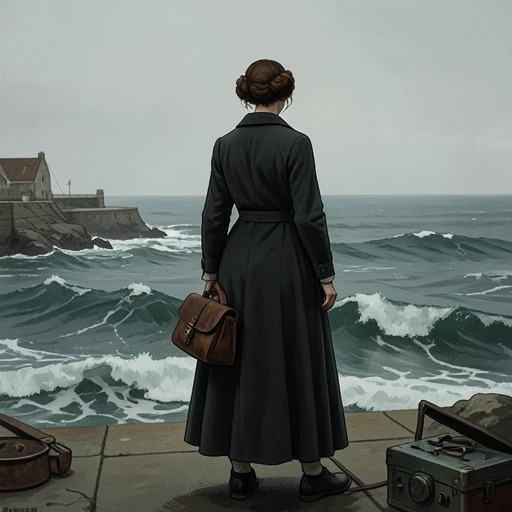
For Eveline, escape is a concrete possibility with a fixed destination and an immediate cost: she is at the North Wall station with Frank, and their passage to Buenos Aires has been booked. Recalling her mother’s life—its commonplace sacrifices and final craziness—she trembles as her mother’s repeated words return to her: “Derevaun Seraun! Derevaun Seraun!” She rises in sudden terror and tells herself she must escape. She imagines Frank saving her and giving her life, perhaps love, and insists inwardly that she has a right to happiness.
At the station, the physical signs of departure press in on her. The crowd sways; soldiers stand with brown baggage; through the shed doors she sees the boat, its portholes lit beside the quay wall. Frank holds her hand and speaks to her about the passage, but she does not answer. As the boat gives a long, mournful whistle, the choice becomes immediate: by the following day, if she goes, she will be at sea with Frank, heading for Buenos Aires. She wonders whether she can still draw back after all he has done for her. Distress makes her feel nauseated, and she moves her lips in silent prayer, asking God to show her her duty.
The scene turns on the distance between her resolve and her response. Eveline has named escape as necessary and imagined Frank as her rescuer, yet the booked passage and the waiting boat do not resolve the conflict. The remembered voice of her mother, her appeal for divine direction, and her question about whether she may still withdraw converge at the threshold of departure. The evidence places the choice at the station and shows the fear and hesitation surrounding it; escape is not a general dream here but a decision demanded in the presence of a departing ship.
The Elsewhere of Literary Ambition
Little Chandler’s version of escape begins after his encounter with Ignatius Gallaher. Walking quickly, he feels superior to the people he passes and revolts against the dullness of Capel Street. He concludes that success requires going away and that nothing can be done in Dublin. Looking down from Grattan Bridge toward the lower quays, he imagines the poor houses as tramps huddled along the riverbanks, their coats covered in soot and dust. The city he sees from the bridge is both a real landscape and, in his mind, a picture of confinement.
The thought of leaving becomes bound up with becoming a poet. Chandler wonders whether he could write a poem from the idea that has come to him. He is thirty-two, and he begins to imagine his temperament as mature enough to turn its varying moods into verse. He considers melancholy the dominant note, tempered by returns of faith, resignation, and simple joy; a book of poems, he thinks, might reach a small circle of kindred minds even if he never becomes popular. He also imagines English critics calling him part of the Celtic school, and drafts the sort of praise they might offer. His fantasy extends to his name: he considers adding his mother’s name and signing as Thomas Malone Chandler or T. Malone Chandler, a change he thinks might make him look more Irish.
This imagined career depends partly on Gallaher’s access to the world beyond Dublin. Chandler hopes his old acquaintance might get a poem into a London paper, so leaving the city and gaining recognition become aspects of the same ambition. Yet the reverie does not carry him cleanly out of his present life. He walks past his street, must turn back, and arrives at Corless’s in a state of renewed agitation. He stops outside in indecision before entering. The bar’s red and green glasses briefly confuse his vision, and its crowd seems to be watching him, though he discovers that no one has turned to look. Gallaher is there, leaning against the counter. The approach to the imagined elsewhere ends not in London but in this meeting at Corless’s, where Chandler’s hopes remain dependent on the Dublin friend whose life seems to exemplify escape.
Forms and Limits
Across these episodes, escape changes from one kind of desire to another without becoming a single, guaranteed route to freedom. The schoolboy wants sensations beyond the routine of school and home; the harbour and ships lend his desire a physical horizon. Araby makes a destination into an inward enchantment capable of distracting its narrator from lessons and daily obligations. Eveline faces an actual passage, but the boat’s presence intensifies rather than settles her conflict. Chandler imagines escape through writing, London publication, and a revised name, only to find himself turning back and entering a Dublin bar.
The motif therefore joins movement to delay, and possibility to constraint. A ferry crosses the Liffey, but the boys only watch a ship being unloaded; Eveline stands beside a booked passage but cannot answer Frank; Chandler’s mind travels toward London as his feet pass his street and return. The evidence gives each episode a distinct outcome and circumstance, while their recurrence makes the desire for elsewhere part of the book’s broader portrait of lives pressed against the limits of their surroundings. Escape can widen perception and make a different life imaginable, but the wish to leave is not itself departure.