Alcohol and drinking
DublinersAlcohol and drinking recur in Dubliners as both social practice and personal liability. Bottles and glasses help organize company, welcome a visitor, and sustain conversation; elsewhere, drinking is linked to Tom Kernan’s collapse, his prolonged absence from work, and the strain his habits place on his household. The pattern is not presented as a single isolated crisis: convivial scenes and the consequences of habitual excess sit beside one another, showing how readily drink becomes part of ordinary Dublin life and how unevenly its costs are borne.
Shared Drink and Social Ritual
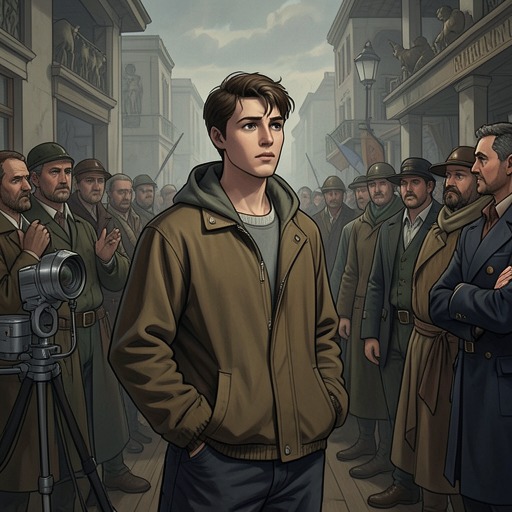
At one gathering, Mr O'Connor asks whether there is any chance of a drink, and the old man answers that he, too, is thirsty. The exchange follows Mr Henchy’s account of trying repeatedly to order stout, while a boy at the counter is occupied in conversation with Alderman Cowley. Drink here is anticipated as part of the company’s ordinary proceedings: the request is casual, and the delay is treated as a minor inconvenience rather than a crisis.
The delivery makes that social routine concrete. A boy arrives from the Black Eagle carrying a basket that rattles with bottles, which the old man helps transfer to the table before checking the tally. Once three bottles have been opened, the men distribute them and drink at the same time. Each places his bottle on the mantelpiece within reach and draws a long breath of satisfaction. The action is collective but modest: drinking gives the gathering a shared pause, and the bottles remain close at hand as conversation resumes.
That ease can shade into a warning. When the old man says, "That's the way it begins," Mr Henchy calls it "The thin edge of the wedge." Their remarks give the drinking scene a note of apprehension, even as the men continue with their bottles. The passage holds together two meanings of the same habit: immediate comfort and the possibility that an apparently small indulgence may lead further.
Tom Kernan's Collapse and Its Costs
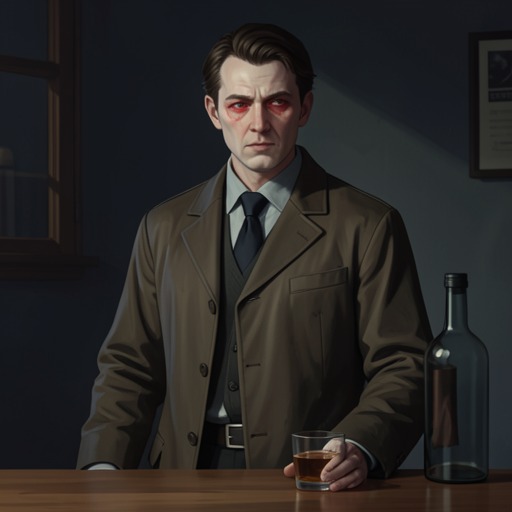
In "Grace," Tom Kernan is found after falling down the stairs in a bar. Two gentlemen try to raise him but find him helpless, and he is carried upstairs by them and a curate. The manager asks who he is and who accompanied him, but no one present can identify him; the curate can only say that he served Kernan a small rum. The drink is a detail in the immediate account of the incident, while Kernan’s condition makes plain that the evening has ended in a serious loss of control.
Mr Power, a younger friend employed at the Royal Irish Constabulary Office in Dublin Castle, is with Kernan when he is taken home to a small house on the Glasnevin road. Kernan’s wife puts him to bed, while Power stays downstairs with the children. Mrs Kernan explains the larger pattern directly: Kernan has been drinking since Friday. Her account turns a single fall into part of a longer episode of excess, and Power is careful to clarify that he came upon the situation by accident rather than having been responsible for it.
Mrs Kernan’s response is shaped by long familiarity with her husband’s conduct. She has made a household for him for twenty-five years, and the narrative describes her as accepting his frequent intemperance as part of the climate: when he is sick, she nurses him and tries to get him to eat breakfast. She also distinguishes his drinking from other harms, observing that he has not been violent since the boys grew up and that he will still walk to the end of Thomas Street and back to secure even a small order. The household therefore absorbs the consequences while preserving an image of Kernan as flawed but not wholly unreliable.
The day after the fall, Kernan sends a letter to his office and remains in bed. His wife makes him beef-tea and scolds him, combining practical care with reproach. Her actions show the immediate aftermath of his drinking not as spectacle but as domestic labor: work must be explained, illness tended, and ordinary routines restored. The repeated pattern of sickness and care gives the family’s response its own weight alongside Kernan’s lapse.
Drink as Hospitality and Conversation
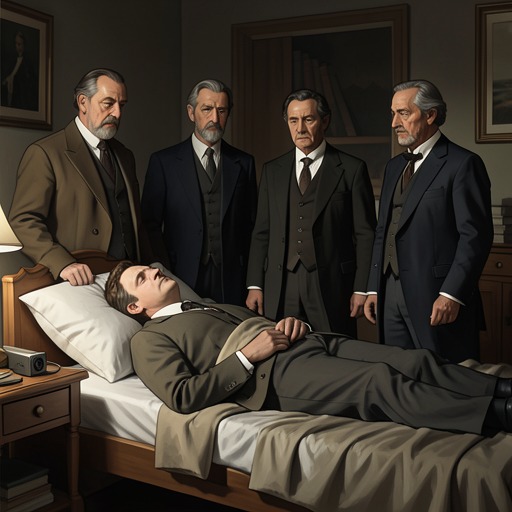
Two nights later, Kernan’s friends visit him in his bedroom. He sits propped among pillows and apologizes for the disorder, yet looks at them with a veteran’s pride. The visitors’ presence restores a social dimension to his recovery, and the men later discuss a plan intended to bring him back into the Church. Kernan’s Protestant background, conversion to Catholicism at marriage, long absence from Church practice, and habit of making side-thrusts at Catholicism frame that plan; alcohol is one part of a wider portrait of the routines and loyalties his friends hope to influence.
Mr Fogarty, a grocer whose small shop is on the Glasnevin Road, arrives with a half-pint of special whisky. He places the gift on the table and joins the company on equal terms. Kernan values the gift partly because he knows that he owes Fogarty for groceries, so the whisky carries more than one social meaning: it is a gesture of fellowship, but it enters a relationship already shaped by an unsettled account. When Kernan invites the company to open it, Mr Power rinses the glasses and pours five small measures. The whisky enlivens the conversation, and Fogarty becomes especially interested in the discussion.
The scene makes the hospitality surrounding drink inseparable from its risks. The visitors’ offering is generous in form, and the measured pours help them settle into talk; yet they are visiting a man who has just been found helpless after a drinking episode. The narrative does not present the bottle as a cure or a resolution. Instead, it shows how easily drinking remains woven into the very social arrangements through which Kernan is supported and persuaded.
Moderation, Habit, and Contrast
The Morkan sisters’ gathering offers a contrasting instance of alcohol being managed through social attention. After Freddy Malins has been drinking, Kate warns Mr Browne with a frown and a moving forefinger. Once she has left the room, Browne says he will give Freddy a good glass of lemonade to buck him up. Freddy waves the offer away while nearing the end of his story, but Browne fills a glass and hands it to him. Freddy accepts it mechanically while adjusting his clothes, then leaves it untasted as laughter interrupts his story.
The moment distinguishes the offer of a nonalcoholic drink from the whisky Browne pours for himself. It also shows care expressed through supervision rather than confrontation: Kate signals a warning, and Browne acts on it, while Freddy’s attention remains on his story. In contrast with the bottles shared without comment at the earlier gathering and the whisky offered to Kernan during his recovery, the lemonade marks an attempt to limit further drinking. Yet Freddy does not drink it, and the scene ends without a stated change in his behavior.
Taken together, these episodes give alcohol a recurring, double-edged place in Dubliners. It facilitates company and conversation, appears in gestures of welcome, and can be treated as an ordinary pleasure; it also accompanies loss of control, illness, missed work, and burdens shouldered by family. The people around the drinkers respond in different ways: they share bottles, offer alternatives, bring friends home, nurse them, or try to redirect their lives. Those responses reveal that drinking is not merely a private appetite in these scenes. It is a social habit whose immediate comforts and lasting costs are distributed across households and circles of friendship.