Snow as a motif
DublinersIn “The Dead,” snow is both a physical presence and the image that gathers the story’s widening reflections on distance, memory, and mortality. It enters on Gabriel Conroy’s coat from the winter street, beckons him away from the crowded supper table, becomes a shared subject at the party, and finally falls across Ireland and Michael Furey’s grave. Its movement from incidental weather to encompassing last image gives the story’s closing recognition its reach: the living and the dead occupy one world beneath the same falling snow.
Arrival and the outdoor world
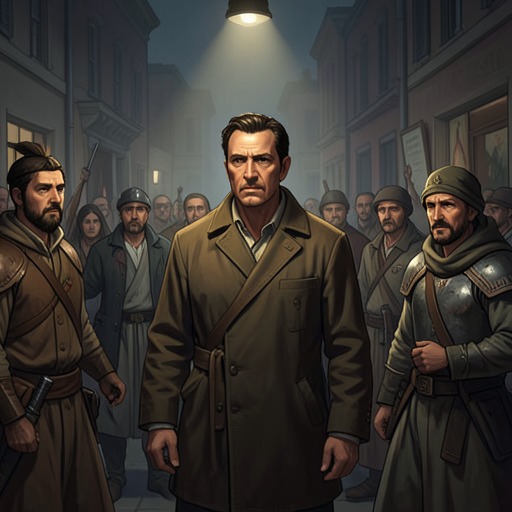
When Gabriel arrives, a light fringe of snow rests on the shoulders of his overcoat and caps the toes of his goloshes. As he removes the coat, cold, fragrant air escapes from its snow-stiffened folds. The weather is therefore not merely reported from indoors: it accompanies him across the threshold, carried on his clothing and felt as a contrast to the company gathered inside. Its first appearance is precise and domestic, a trace of the outside world that remains visible even as the party resumes its warm social life.
The snow also marks the distance between Gabriel and the younger generation represented by Lily. She asks whether it is snowing again as she helps him off with his coat. The arrival scene gives the weather a quiet recurrence from the outset: the flakes have begun falling before Gabriel enters, and their return later in the night will connect his arrival to the story’s ending. At this stage, though, snow is still part of the familiar winter setting, attached to wet clothes, a cold draft, and the practical business of greeting guests.
A wished-for alternative to the supper
As supper approaches, the weather becomes something Gabriel imagines rather than simply carries in with him. Away from the fading dance, he stands at the window, taps the cold pane with trembling fingers, and thinks how pleasant it would be to walk outside alone. He pictures snow on the branches and a bright cap on the Wellington Monument. Against that imagined landscape he sets the prospect of the supper table, which seems less attractive to him.
This moment makes snow part of Gabriel’s inward escape from social performance. He is rehearsing a speech that must honor the Morkan gathering, and he is unsettled by the prospect of Miss Ivors hearing it after their earlier disagreement. The window offers a counter-scene: solitude, cold air, the park, and the snow-covered monument. Snow does not resolve his discomfort; it gives visual shape to the alternative he longs for while he remains among the guests, preparing to speak.
Snow in the public gathering
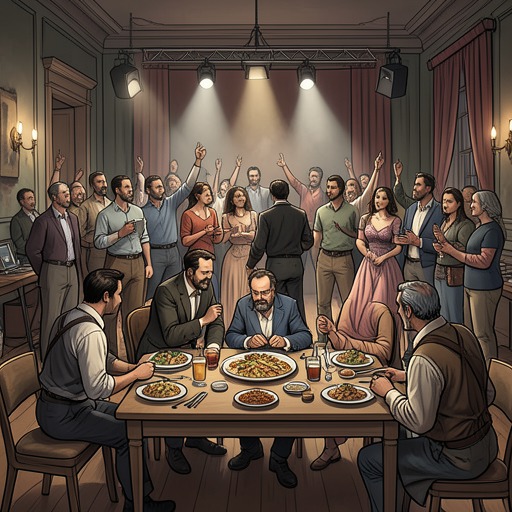
The weather enters the supper-room conversation as both a report and a shared point of attention. Mary Jane says that the newspapers have reported no snow like it for thirty years and that snow is general all over Ireland. Aunt Julia says sadly that she loves the look of snow, and Miss O'Callaghan associates it with Christmas. The same snowfall that Gabriel had imagined from the window becomes communal knowledge, described through memory, seasonal feeling, and the newspaper’s broad claim.
Just before Gabriel begins his speech, the party’s interior and the snow-covered exterior briefly coexist in his attention. He hears the piano playing a waltz and imagines people standing outside on the quay, looking up at the lighted windows and listening to the music. Beyond them, the trees in the park bear the weight of snow, and the Wellington Monument wears a gleaming cap visible across the white field of Fifteen Acres. The scene does not make the guests aware of the same vista in the same way; rather, it shows Gabriel’s attention moving from the assembled faces toward an imagined cold public space beyond the house. Snow frames the speech without becoming its subject, holding the party’s light and music against the winter darkness outside.
The widening fall
At the close, the snow returns with a decisive change in scale. After Gabriel lies beside his wife and thinks of the image she has kept for years of her former lover, Michael Furey, a few light taps against the window draw his attention outward. Snow has begun again. He watches the flakes falling through the lamplight, and the account widens from the room to the whole island: the dark central plain, the treeless hills, the Bog of Allen, and the Shannon waves farther west. It falls, too, on the churchyard where Michael lies buried, covering the crosses and headstones, the small gate’s spears, and the barren thorns.
This final fall gathers the earlier appearances without reducing them to a single simple meaning. The snow that marked Gabriel’s arrival and supplied a daydream of walking alone now reaches the dead as well as the living. Its quiet spread places a remembered young man, Gabriel and his wife, and the wider country within one image, while the narrative preserves the difference between them: Michael is buried, Gabriel is alive beside Gretta, and the flakes cross both worlds. The snowfall thus accompanies Gabriel’s recognition that his wife’s past contains a love of a kind he has not experienced, and that the dead remain present in memory even as their former world fades.
Narrative function
Snow binds scenes that otherwise move between the practical rituals of a party, Gabriel’s private unease, and his encounter with Gretta’s memory. It recurs at thresholds and windows: first on Gabriel’s coat, then outside the pane where he imagines walking, in his view of the quay and park, and finally at the window beside the bed. Each return enlarges its reach, from a few flakes on clothing to a landscape, then to a national fall that includes Michael Furey’s grave.
The last image also transforms the newspaper’s earlier report that snow is general all over Ireland. At the supper, the phrase belongs to conversation about the weather and Christmas; at the ending, Gabriel’s attention makes the generality encompass places and people far beyond the room. Snow is neither a simple emblem of death nor merely a picturesque winter detail. Its quiet, continuous fall holds warmth and cold, company and solitude, the living and the dead in unresolved relation, leaving the story to end not with an explanation but with an image that spans them all.