Irish cultural revival and language movement
DublinersThe Irish cultural revival and language movement in Dubliners is at once a public cultural cause and a measure of private allegiance. Its language lessons, postcards, musical networks, and invitations to travel give Irish identity a visible social life; Miss Ivors’s confrontation with Gabriel Conroy reveals how readily that identity can become a demand to account for one’s loyalties.
Cultural Practice and Social Opportunity
When the Irish Revival began to attract notice, Mrs Kearney responded by bringing an Irish teacher into her home, making Kathleen’s connection to the language part of the family’s public identity. Kathleen and her sister exchanged Irish picture postcards with friends, turning cultural affiliation into a reciprocal social custom. On special Sundays, after the family attended the pro-cathedral, musical and Nationalist friends gathered at the corner of Cathedral Street. Once the conversation and gossip had run their course, they joined hands, laughed at the crossing of so many hands, and said goodbye in Irish. The language thus appears not only as an abstract political emblem but as something used in greeting and leave-taking, among acquaintances bound by shared cultural and social ties.
That network helped make Kathleen’s name familiar. She was known as musically clever, pleasant, and a believer in the language movement. Mrs Kearney was satisfied with this reputation, and it made the opportunity proposed by Mr Holohan unsurprising: Kathleen would accompany a series of four grand concerts at the Antient Concert Rooms. The arrangement made the revival materially consequential. It connected cultural commitment and musical ability with paid public work, establishing an eight-guinea fee for Kathleen’s services across the four concerts.
Mrs Kearney also entered the practical work of the enterprise. She helped Holohan with the wording of bills and the ordering of the programme, advising on typography and on the sequence of performers. She understood that the first tenor would not welcome appearing after Mr Meade’s comic turn, and she placed uncertain items between old favourites to keep the audience diverted. Holohan visited daily for her advice; she received him hospitably and guided the arrangements. The movement’s social world therefore includes not just declarations of national feeling but the organizing, negotiating, and professional labor through which a cultural event is made possible.
Language, National Belonging, and Gabriel
The movement also gives Miss Ivors a vocabulary for questioning Gabriel’s sense of belonging. She invites him on an excursion to the Aran Isles, where the party intends to spend a month, and suggests that the trip would suit Gretta because her people are from Connacht. Gabriel answers that Gretta’s people are from there, distancing her family origin from his own immediate identification. The invitation makes travel within Ireland a proposed alternative to the journeys abroad that Gabriel takes with friends.
When Gabriel explains that they usually cycle in France or Belgium, and sometimes Germany, he describes the trips as a way to keep in touch with languages and to enjoy a change. Miss Ivors turns that explanation back on him: does he not have his own language, Irish, to keep in touch with? Gabriel replies that Irish is not his language. His answer makes the disagreement sharper than a difference in holiday preference. For Miss Ivors, the language is his by virtue of national belonging; for Gabriel, that claim does not describe his own linguistic identity.
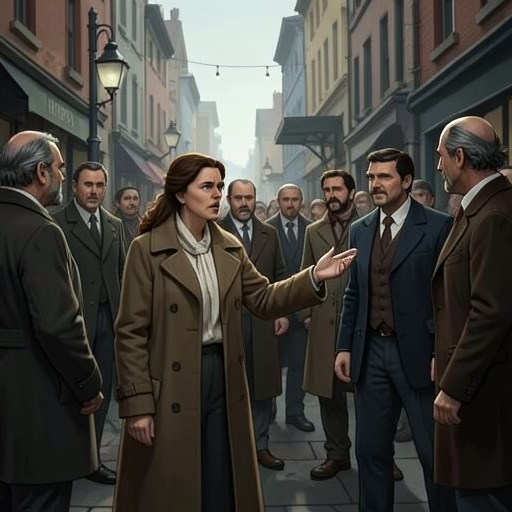
The conversation becomes public when their neighbours turn to listen. Miss Ivors presses Gabriel on whether he has his own land to visit, and on his knowledge of his own people and country. Under the attention of the surrounding guests, he glances nervously from side to side and tries to preserve his good humour, while a blush spreads across his forehead. He then retorts that he is sick of his own country. The exchange exposes a tension between Irish cultural revival as collective affirmation and as interpersonal pressure: a movement that sustains community through shared language can also make a person’s distance from that language an occasion for scrutiny.
Cultural Allegiance as an Unresolved Question
The two episodes show different ways the revival becomes part of everyday life. In the Kearney household, Irish lessons, postcards, and Sunday greetings nurture Kathleen’s reputation and help open a paid musical engagement. In Miss Ivors’s conversation with Gabriel, national culture becomes a challenge about where he travels, which language he claims, and whether he recognizes Ireland as his own country. The contrast is not between culture and its absence: Gabriel explains his continental trips partly in terms of keeping up languages, but refuses Miss Ivors’s premise that Irish is his language.
The narrative leaves that disagreement unsettled. Gabriel’s abrupt declaration that he is sick of his country follows his nervous effort to remain good-humoured, so the scene registers both an avowed rejection and the discomfort of being made to defend it before others. Read beside the Kearneys’ organized cultural life, the confrontation shows that the movement’s meaning is not exhausted by its institutions or customs. It also lies in the personal question those practices raise: whether national culture is experienced as a chosen affiliation, an inherited obligation, or a claim another person can insist upon in public.