Music
DublinersMusic in Dubliners is never merely background: it draws private memory into the present, gives social gatherings a language of affection, and marks the distance between people who hear the same melody differently. An Italian street tune recalls Eveline to her mother’s final illness and the promise that binds her to the family home; a harpist’s mournful performance accompanies Corley and Lenehan through the city; and an old song at Joe Donnelly’s house moves Joe to tears even as Maria’s mistake goes unnoticed. Against those shared, emotionally charged moments stands James Duffy’s carefully limited enjoyment of Mozart, one of the few pleasures he permits himself.
Music as Memory and Obligation
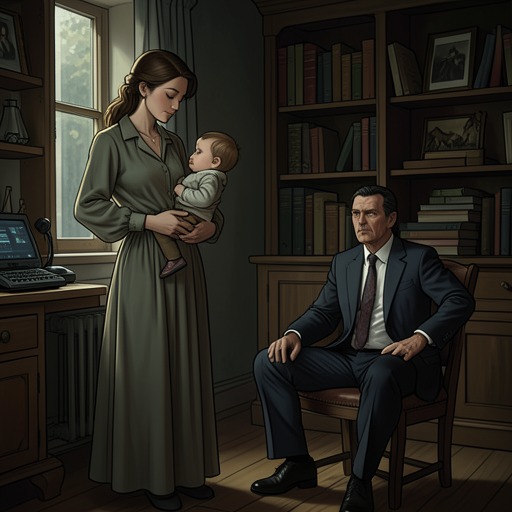
In Eveline’s recollection, music arrives from outside the home but reaches directly into its most difficult history. Sitting by the window as evening deepens, she hears a street organ play an air she knows. Its appearance on that particular night makes the sound inseparable from her promise to her mother: to keep the home together for as long as she can. The melody does not present that promise as an abstract duty. It makes the past return with force at the moment when her time to decide is running out.
The tune brings Eveline back to the last night of her mother’s illness, when she was in the close, dark room across the hall and heard a melancholy air of Italy outside. Her father ordered the organ-player away and gave him sixpence; afterward, he returned to the sickroom cursing the Italians for coming over. The episode binds music to both the household’s intimate suffering and the father’s brusque response to the world beyond it. Eveline’s memory is not simply of a song: it includes the room, the organ-player’s dismissal, and her father’s contemptuous words.
As the present music revives the memory, Eveline is overcome by the vision of her mother’s life, defined by commonplace sacrifices and ending in craziness. The sound thus opens onto a history she cannot easily set aside. Her mother’s repeated voice and the promise attached to it make music a vehicle for returning obligation, not a release from it. The episode’s force lies in its timing: the familiar air comes when Eveline is poised between departure and staying, turning memory into pressure on the choice before her.
Music in the Street
In the episode involving Corley and Lenehan, a harpist stands in the roadway near the club porch as the two men walk along Nassau Street and turn into Kildare Street. His performance slows their movement and briefly silences them. He plucks heedlessly at the wires, looking from one newcomer’s face to another and then wearily at the sky; the instrument’s coverings have fallen about its knees. The harp itself is described as weary of strangers’ eyes and of its master’s hands, so that the image of the performer and instrument becomes one of fatigue and exposure.
The harpist plays the bass melody of “Silent, O Moyle” with one hand while the other follows the groups of notes in the treble. The air sounds deep and full, and its mournful quality continues to follow the two young men as they walk on without speaking. Their silence is a distinct response: for a short stretch, the music interrupts their conversation and the forward motion of their encounter. At Stephen’s Green, however, the trams, lights, and crowd release them from it. The urban noise and activity break the spell, and Corley immediately resumes his practical attention to the woman they have been seeking.
The passage places the harp’s exposed, weary performance against the movement of the city around it. Music gives the men a brief shared interval but does not redirect their purpose or transform their conduct. Its presence is real and affecting, yet temporary: it follows them only until the street’s noise and the next business of the plot reclaim their attention.
Song and Belonging at Joe Donnelly’s
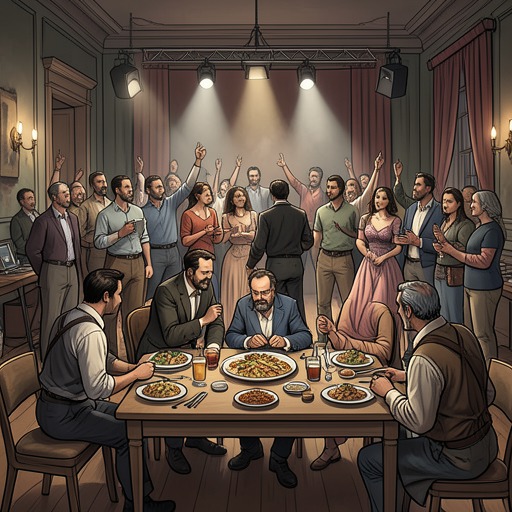
At Joe Donnelly’s gathering, music helps restore a warmth between Maria and people whose kindness matters to her. After the Hallow Eve divination game, Mrs Donnelly plays Miss McCloud’s Reel for the children, and Joe gives Maria a glass of wine. The conversation and play make the evening merry again. Mrs Donnelly says that Maria will enter a convent before the year is out because she drew the prayer-book, but Maria’s more immediate impression is personal: she has never seen Joe so nice to her, so full of pleasant talk and reminiscences. She says that everyone has been very good to her.
As the children grow tired and sleepy, Joe asks Maria to sing one of the old songs before she leaves. Mrs Donnelly joins in the request, and Maria stands beside the piano while the children are told to be quiet and listen. Blushing, she begins in a tiny, quavering voice to sing “I Dreamt that I Dwelt in Marble Halls.” Her performance is not presented as polished or forceful; its delicacy makes the attention of the room part of the moment. The song gives Maria a place at the center of the family gathering, with the children listening and Mrs Donnelly at the piano.
Maria repeats a line from the song’s second verse, and no one corrects her mistake. That failure to notice it matters because the scene’s tenderness and its incompleteness coexist: the family responds warmly to her singing, but does not register the words as she sings them. When she finishes, Joe is deeply moved. He praises the old music of Balfe, saying that no music is like poor old Balfe, whatever others may say; tears fill his eyes until he cannot find the corkscrew and has to ask his wife where it is. Music brings him to visible emotion and briefly displaces the practical business of opening the bottle. The response makes the old song a channel for affection and reminiscence, while the missed line leaves a small gap between Maria’s performance and the listeners’ understanding.
Music and Solitary Pleasure
James Duffy’s relationship with music provides a quieter contrast to the street performances and family song. He has neither companions nor friends, and his evenings are spent before his landlady’s piano or walking on the outskirts of the city. Mozart’s music sometimes draws him to an opera or a concert; these are described as the only dissipations of his life. Music is therefore not part of a broad social world for him, but one of a few permitted departures from an otherwise even, isolated routine.
The contrast across these episodes is not between music that always unites and music that always isolates. Eveline’s remembered tune ties her to family obligation; the street harp briefly holds two men in silence before the city breaks that interval; Maria’s song gathers a household around her, though its words pass unnoticed; and Duffy’s musical pleasure remains bounded by solitude. Music makes feeling audible and memory present, but it cannot guarantee that listeners share the same meaning or that an emotional opening will last.