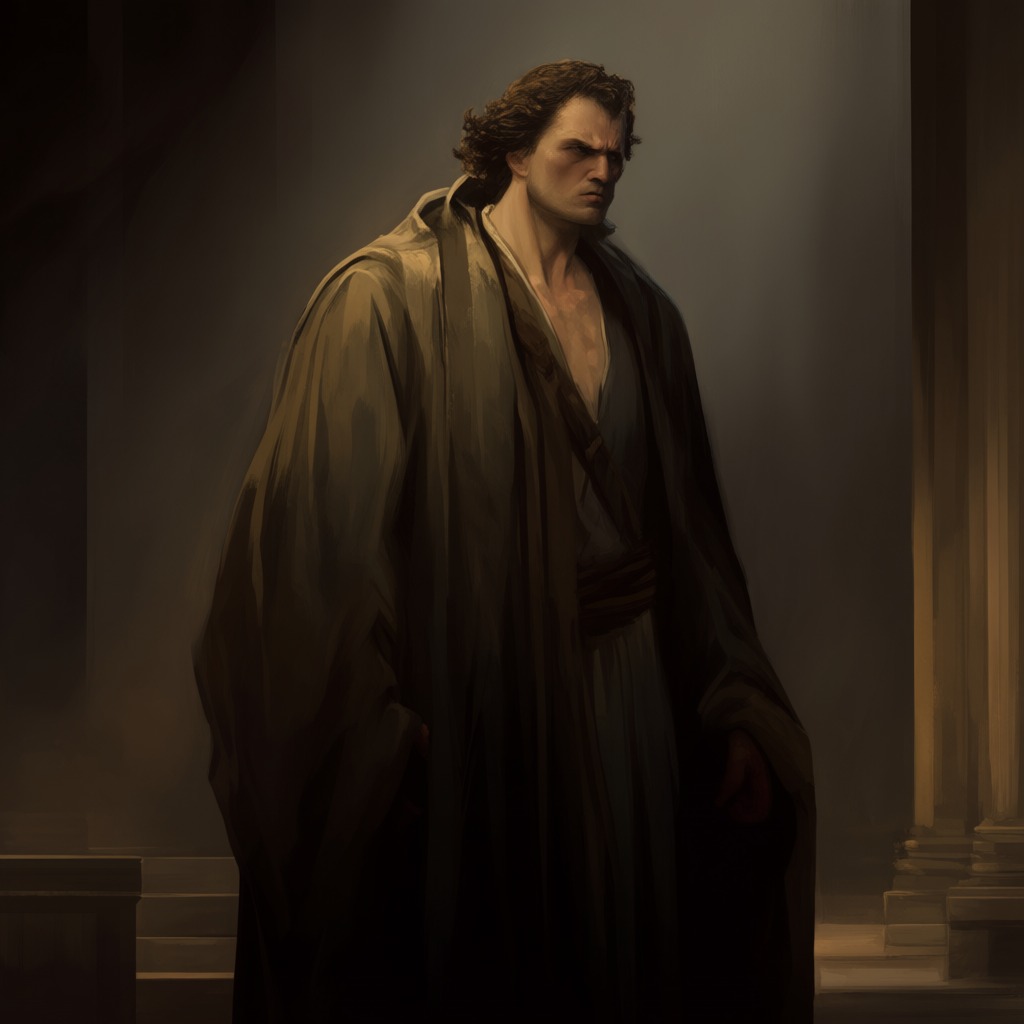
The Turtle
The Turtle is a cosmic entity of immense age and power, a being that exists in a state of profound withdrawal from the universe it is said to have created. It is the only named counter-force to the malevolent entity known as It, yet it is defined by its refusal to take an active role in the struggle between good and evil. The Turtle is not a god of intervention but of passive creation, a being who, after vomiting forth the universe, retreated into its shell to sleep, leaving the cosmos to its own devices. Its presence in the narrative is felt most acutely as a source of cryptic, almost reluctant guidance for Bill Denbrough during the climactic Ritual of Chüd, and its eventual death marks the final severing of any hope for external salvation for the Losers' Club.
Nature and Role in the Cosmos
The Turtle is presented as a primordial entity, older than the universe itself. It is described as having created the universe not through an act of will, but as a consequence of a cosmic bellyache, a detail that underscores its passive and almost indifferent nature. This act of creation is not a divine fiat but a biological accident, positioning the Turtle as a force of nature rather than a moral arbiter. It exists in a state of near-total disengagement, having withdrawn into its shell for eons. The entity It, by contrast, is an active predator, an eater of worlds that feeds on the fear of living creatures. The Turtle and It are presented as two poles of a cosmic duality: one creates and then sleeps, the other consumes and is eternally awake. The Turtle's only direct communication with the protagonists occurs during the Ritual of Chüd, when Bill Denbrough is hurled into the macroverse. There, he encounters the Turtle, which appears as a colossal, ancient reptile with a shell plated in many blazing colors. The Turtle's voice is described as kind but distant, and it offers Bill no tangible aid, only the cryptic advice that he must help himself.
The Turtle's Guidance and Refusal to Act
The Turtle's most significant interaction with the Losers' Club is its conversation with Bill Denbrough during the first Ritual of Chüd. When Bill is thrown into the void by It, he pleads for help, but the Turtle refuses, stating, "I take no stand in these matters." This refusal is not born of malice but of a fundamental cosmic law: the Turtle is a creator, not a warrior. Its only advice to Bill is to "thrust your fists against the posts and still insist you see the ghosts," a cryptic reference to a tongue-twister Bill's mother taught him to overcome his stutter. This advice is not a weapon but a reminder of the power of belief and self-reliance. The Turtle also warns Bill that the opportunity to defeat It is fleeting, saying, "What can be done when you're eleven can often never be done again." This statement underscores the novel's central theme that the power to confront ultimate evil is a function of childhood's unique capacity for faith and imagination, a power that fades with adulthood. The Turtle's role is thus not to save the children but to point them toward their own inner strength.
The Turtle's Death and Its Thematic Significance
By the time of the final confrontation in 1985, the Turtle is dead. Bill senses its passing during the second Ritual of Chüd, and It confirms the death with malicious glee, taunting Bill that "the old idiot puked inside his shell and choked to death on a galaxy or two." The Turtle's death is a crucial plot point, as it eliminates any possibility of external intervention and forces the adult Losers to rely entirely on their own diminished power. Thematically, the Turtle's death represents the final severing of the connection to the cosmic, benevolent force that had once aided them. It also symbolizes the death of the childhood belief that a protective, parental figure will always be there to save them. The Losers are now truly alone, forced to confront the monster of their childhood with only the remnants of their former faith and the bonds of their friendship. The Turtle's absence is as significant as its presence, transforming the final battle into a stark test of human courage and solidarity against an indifferent universe.
The Turtle as a Symbol of Passive Creation
The Turtle functions as a powerful symbol of a creative principle that is fundamentally passive and non-interventionist. It is the antithesis of the active, consuming evil of It. The Turtle's act of creation is described as an involuntary, almost sickening event, and its subsequent withdrawal into its shell suggests a creator who has abandoned its creation. This aligns with the novel's existentialist undercurrents, where the universe is not inherently just or benevolent, and where the responsibility for fighting evil falls squarely on the shoulders of individuals. The Turtle's only legacy is the universe itself, a flawed and dangerous place that it refuses to manage. Its death, therefore, is not a tragedy but a final confirmation of its irrelevance. The Losers cannot look to the heavens for a savior; they must become their own. The Turtle's final message to Bill—that he must help himself—is the novel's ultimate statement on the nature of courage and the human condition.