Wainamoinen's Harp-Songs
KalevalaWainamoinen’s Harp-Songs, narrated in Rune XLI, transform a performance into a communal event and an etiological myth: the music stops Northland to listen, while the minstrel’s tears, gathered from the water by the Duck, explain the origin of sea-pearls and the bird’s beautiful plumage. The episode makes music consequential in two registers at once. It gives the assembled people an experience of shared pleasure, and it converts the singer’s grief into enduring features of the natural world.
The minstrel and his audience
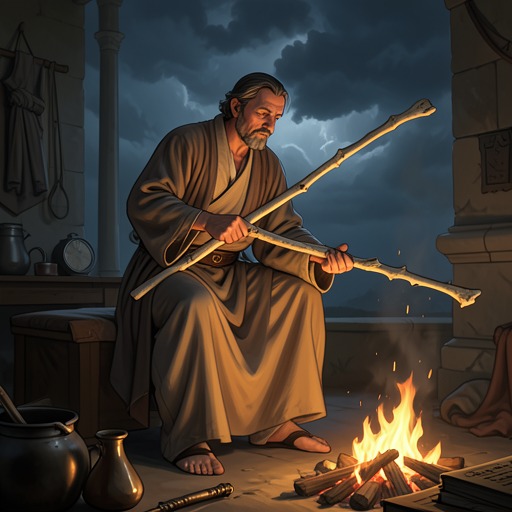
Wainamoinen enters the episode as an ancient minstrel and eternal wisdom-singer. He has made the harp he is about to play, and the text emphasizes both the instrument’s construction and the performer’s command: he adjusts and tunes it, then works the strings with practiced fingers. The music is not merely a display of skill. As the sound spreads, gladness builds upon gladness, and the harmony echoes from hills and mountains.
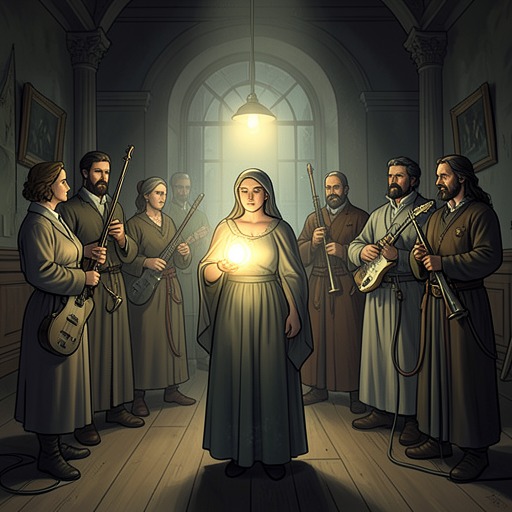
The harp draws a broad audience. Young men come to see it, as do older people with children, mothers, and their daughters; the instrument is presented as a source of pride and beauty in Northland. Wainamoinen lets the aged try its strings and gives it to young magicians, extending the performance beyond a single singer. The scene therefore places the harp within a community of listeners and prospective players: its sound belongs to a public world, even as Wainamoinen remains its defining maker and performer.
The response exceeds the human gathering. All Northland stops to listen, and creatures from the forest bound toward the music. The poem enlarges the audience from people assembled around an instrument to the surrounding living world. This widening response gives the harp-song the reach of an event in nature, not simply an entertainment heard by those nearest the singer.
The performance and its emotional turn
Wainamoinen plays for three days: first one day, then a second, and then a third from morning until evening. The duration makes the performance sustained rather than incidental, and the repeated playing holds the episode within a continuing musical present. The harp’s effect is also inward. Wainamoinen’s tears begin to flow as he plays and sings; they well from his eyelids and course downward as pearly drops.
The tears change the direction of the scene. A performance that has spread pleasure through its listeners becomes a moment of sorrow for the performer, and the water receives what his body releases. The drops mingle and form streamlets from his eyes; some are assigned to the earth and some to the water. The minstrel’s grief is thus given a physical course through the landscape rather than remaining private or abstract. His tears eventually disappear into deep, clear waters among reeds and rushes, beyond his immediate reach.
Wainamoinen then asks whether anyone in the assembly can gather the drops from the depths. The question turns listeners into potential participants in the next action: the music has assembled them, but recovering what it has carried into the water requires a different kind of service. When he asks again, he makes the reward explicit. Whoever gathers the tears will receive beautiful plumage in recompense for that service.
The Duck and the origin of pearls
The Duck accepts the task. It swims here and there, circles, and dives beneath the foam and waves to search for Wainamoinen’s lost tears. The episode gives the bird a practical role in the transformation: the precious material does not rise by itself, nor does the minstrel retrieve it. The Duck’s movement through the water connects the singer’s sorrow to the objects that will emerge from it.
The episode identifies the result as the origin of sea-pearls and the Duck’s beautiful plumage. The tears acquire a second life as ornaments for heroes and jewels for beautiful maidens, while the bird receives the promised reward of plumage. The story links natural beauty to a particular act of musical grief and to the Duck’s service. Its origin account is therefore reciprocal: the singer supplies the tears, the bird gathers them, and recompense accompanies the recovery.
Place in the harp’s larger story
The episode belongs to a broader sequence in which the harp is made, performed, lost, and made again. The harp-song follows the presentation of the instrument to a Northland audience and precedes the later storm that tosses Wainamoinen’s warship and casts the fish-bone harp into the sea. That loss gives the first instrument’s public life a limit: a harp capable of stopping Northland to listen can still be carried away by the waters. Later, a sacred harp is finished again, renewing the place of music in Wainola.
This larger movement sharpens the episode’s contrast between what the sea takes and what it gives back. The fish-bone harp is lost to the storm, while the Duck’s dive retrieves the minstrel’s tears from the water and makes their recovery meaningful as an origin of pearls. The harp-song is not simply a self-contained musical interlude: its sound gathers a community, its emotional turn generates a quest, and that quest leaves its mark on the natural world. Elsewhere, the poem also frames singing as shared remembrance, with a call to clasp hands and sing together. Here that communal principle becomes audible in the assembled audience, then expands until people and forest creatures alike respond to Wainamoinen’s playing.