Dyved
MabinogionDyved is a seven-cantref realm whose fortunes connect royal rule, hunting, and enchantment. Under Pwyll and later Pryderi, it is associated with the chief palace at Narberth; in a later episode, its familiar houses and lands are emptied, and its wilderness conceals a newly appeared castle.
Realm and Royal Center
Pwyll is introduced as lord of Dyved’s seven cantrevs, with Narberth as his chief palace. From there he sets out to hunt in Glyn Cuch, travelling as far as Llwyn Diarwyd before continuing the next morning. The journey places Dyved’s political center alongside a landscape of woods and hunting grounds, where the boundary between ordinary royal activity and marvel soon gives way.
Pwyll’s rule is remembered by the nobles as especially wise, generous, and just during the year he spent away from Dyved. When he returns, he explains that another ruler had governed in his likeness, and the nobles ask him to preserve the rule they had enjoyed. The episode makes the quality of governance part of Dyved’s identity: the land’s people recognize and value not merely the presence of a prince, but the conduct of his rule.
Pryderi’s Rule and Territorial Growth
After Pwyll’s death, Pryderi rules Dyved prosperously and is beloved by his people and those around him. He later adds the three cantrevs of Ystrad Tywi and the four cantrevs of the Cardigan Region. These added territories are called the Seven Cantrevs of Seissyllwch, distinguishing the enlarged dominion from Dyved’s original seven-cantref realm. Pryderi’s choice of Kicva as his wife follows this expansion, linking the account of territorial rule with the continuation of his household.
Narberth and the Enchanted Desolation
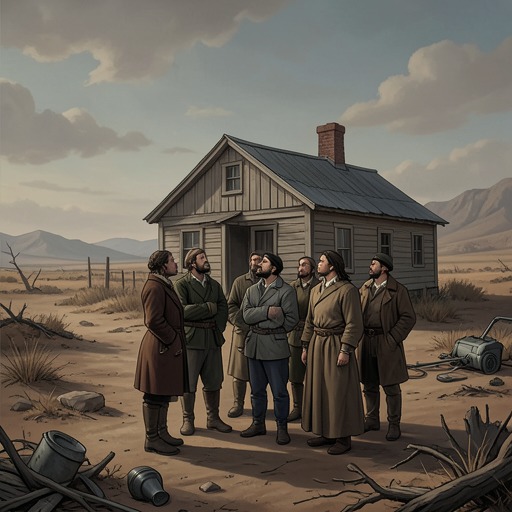
Narberth remains a principal setting under Pryderi. During a feast there, Pryderi, Manawyddan, and their companions go to Gorsedd Arberth after the first meal. Thunder and a dense mist intervene; when it clears, the familiar signs of habitation have vanished. They find no houses, cattle, smoke, fire, people, or other inhabitants, and the court’s buildings stand empty. Only the four companions remain together.
They search the hall, castle, sleeping quarters, mead-cellar, and kitchen, finding them deserted. Across their lands they encounter only wild beasts. At first they make a life from hunting and wild honey, and the first two years pass pleasantly; eventually, however, the isolation wears on them. The change is more than the loss of a court: the ordinary structures of settlement and supply have disappeared, leaving the inhabitants to depend on the land in its uncultivated state.
The White Boar and the New Castle
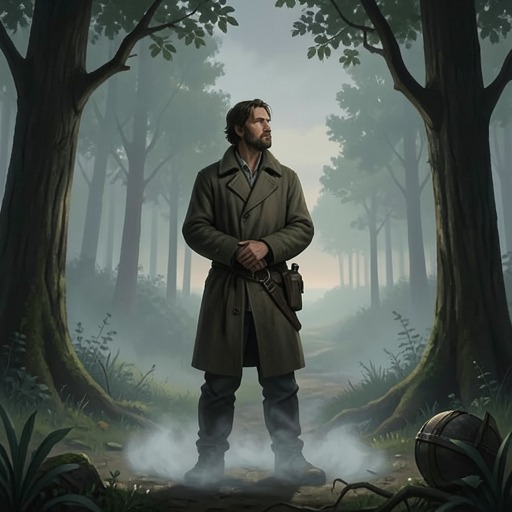
After returning to Dyved, Pryderi and Manawyddan hunt near Narberth. Their dogs recoil from a small bush, where a pure-white wild boar appears. The men set the dogs after it, and the boar retreats until it draws them to a vast, high castle in a place where they had never seen any building. The dogs follow the boar inside, then fall silent; from Gorsedd Arberth, the men can hear nothing of them.
Manawyddan warns Pryderi that the castle may have been brought there by whoever enchanted the land. Pryderi nevertheless enters because he will not abandon his dogs. Inside, he finds no people, animals, or dwellings, but a fountain surrounded by marble, with a golden bowl resting on a marble slab and chains hanging above it. The bowl’s workmanship draws him close; when he takes hold of it, his hands stick to the bowl and his feet to the slab, and he loses the power to speak. The episode turns Dyved’s vanished settlement into a landscape of uncanny appearances, where a familiar hunt leads from a bush to a castle and from the castle to a trap.
Narrative Significance
Dyved moves between two sharply different conditions: a realm measured by cantrevs, courts, feasts, and prosperous rule, and an emptied territory in which the surviving companions must hunt for food. Narberth anchors both conditions, first as Pwyll’s chief palace and later as the starting point for the mist and the return to the hunt. The recurring movement from court to landscape allows the account to make the land itself the measure of change: its political order is visible in its inhabited places, while enchantment is registered through their sudden absence and through marvels appearing where no building had stood.