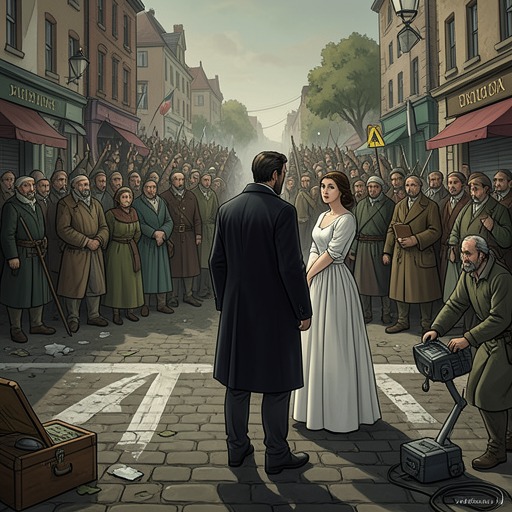
Lucas’s testimony at Charlie’s trial
MovingLucas Spinner’s testimony against Charlie Treadaway helped establish the case that Charlie had supplied the drugs that killed Elise Landreth, while revealing that the witness and accused were stepbrothers. The evidence was both legal and intimate: Lucas described what he had seen at the party, then publicly identified a young man whose fate would remain bound to his own sense of guilt.
Background and Observations
At the Oxford party, Lucas felt out of place among people who had gained admission to Oxford when he had not. He had been drinking and was struggling to stay awake. From a distance, he watched Charlie arrive and Rowena introduce her twin around the gathering. Lucas’s resentment was personal as well as social: he was in love with Fern Woolbright and recoiled at the thought of Charlie touching her.
Lucas then saw Charlie and Elise circle one another before meeting. Elise repeatedly grabbed Charlie’s arm; Charlie shrugged her off. When Elise found her handbag beneath a pile of coats, she clutched it and hurried back to him. Lucas watched them turn their backs on the party and huddle together during what appeared to be an exchange. Elise then embraced Charlie so tightly that he had to prise her hands away. These observations supplied the basis for Lucas’s later account of their contact.
Evidence and Identification
At the inquest, Lucas testified that he had driven Elise from London to the party and described seeing her join Charlie in a corner after retrieving her bag. Asked how he could be certain that Charlie had given Elise the drugs that killed her, Lucas pointed to what he had witnessed. When pressed to explain how he could identify the man, he disclosed that Charlie was his stepbrother and that he had known him since he was eleven. The revelation startled members of the court who had not known of the connection.
The family relationship sharpened the significance of Lucas’s identification without making the observation itself more conclusive: he described seeing Elise and Charlie meet around her bag, while the exchange’s contents were not independently spelled out in his testimony. Charlie did not give an account at the inquest. Through his solicitor, he exercised his right to remain silent pending cross-examination at trial. At the inquest’s conclusion, he was formally charged with possessing amphetamine sulphate and supplying heroin to Elise, with a jury trial set for 19 December 1981.
Trial and Consequences
Lucas later remembered standing in court and giving evidence against Charlie. The trial ended with Charlie going to prison; the evidence here does not set out the full exchange at that later hearing, but Lucas came to regard his testimony as having signed Charlie’s death warrant. His retrospective account makes the legal outcome inseparable from the personal act of identifying his stepbrother. At the time, Fern’s absence from the trial mattered to him: he was relieved not to have to lie in front of her, while acknowledging that the ideal of telling the whole truth had become bitterly ironic.
Lucas also learned at the inquest that Fern was pregnant and had married Captain James Frobisher. For years he wondered whether Charlie knew the baby was another man’s and whether he cared. The discovery added a private, unresolved question to the consequences of the case, even as Charlie’s conviction and imprisonment appeared to close the public proceedings.
Guilt and Retrospective Meaning
Eight years after the testimony, Lucas’s guilt temporarily fell away. He felt certain that he had been right to speak, and that certainty accompanied the beginning of years of drinking and drug use. He maintained a functioning life in New York while concealing the addiction from his parents, but the courtroom decision remained part of the past he could not settle simply by numbing himself.
Much later, Lucas told Edwina that he could not change what had happened in court or bring back Charlie or Elise. He returned her stolen keepsakes and confessed that he had arranged the burglary of her house when he was in trouble and in debt. The confession did not retract his testimony or repair its losses; it was, instead, a limited act of restitution. The event’s lasting force lies in that distinction: Lucas could acknowledge the harm and attempt to do something right, but neither his witness statement nor its consequences could be taken back.