The birth of Rowena and Charlie
MovingThe birth of Rowena Treadaway and Charlie Treadaway is a turning point in the family history: a home birth that Edwina Treadaway expected to produce one child instead brought twins into the house, minutes apart across midnight. The scene moves from confidence in an ordinary delivery to pain, alarm, and surprise; afterwards, the twins’ names and alternating birthday celebrations make that unusual beginning part of family life.
A home birth becomes unexpected
No one had mentioned twins at Edwina Treadaway’s antenatal check-ups, so when labour began on a moonless March night, the family expected one baby. Edwina Treadaway had requested a home birth. She was young and healthy, and she disliked hospitals; the house was prepared with newspaper and old sheets. Ollie Treadaway, who joked about his farming upbringing, was nevertheless frightened by the prospect.
The midwife arrived by bicycle shortly before lunch, carrying her own food. The labour continued into the night. At five minutes to midnight, after severe pain and a moment in which Edwina Treadaway feared that childbirth could kill her, she delivered a daughter. The baby was healthy, though the midwife had to smack her before she cried. Edwina Treadaway expected the pain to subside after the birth, but it did not. The midwife, who had initially expected to be home by then, became concerned and raised the possibility of complications.
The first delivery did not end the labour. Amid bloodied sheets and continuing agony, Edwina Treadaway rolled onto all fours and gave birth to a second baby, a boy described as smaller, thinner, and bluer than his sister. The midwife remarked that he had received less nutrition, contrasting his condition with the girl’s greater size. The discovery transformed what had seemed a difficult but familiar birth into the arrival of an entirely unexpected second child.
Two names and a shared birthday ritual
The afterbirth followed, and at two in the morning the midwife cycled away, leaving two dazed new parents holding a baby each. The naming was immediate and decisive: Ollie Treadaway chose Rowena Treadaway, and Edwina Treadaway answered with Charlie Treadaway. The boy was never called Charles in the family account; he was always Charlie.
Their names carried a small trace of disagreement. Edwina Treadaway had privately wanted to name a girl Elizabeth, while Ollie Treadaway had once said he would have preferred Sebastian for Charlie Treadaway. Edwina Treadaway rejected that suggestion during a terrible argument. These alternatives did not change the names the parents settled on, but they show that the choice belonged to a marriage with its own disagreements as well as its shared decisions.
Because Charlie Treadaway was officially recorded as born a day later than his sister, Edwina Treadaway decided that the twins would alternate which date they celebrated. Their parties would fall on either 14 or 15 March, taking turns from year to year. The arrangement made a practical distinction out of the few minutes that separated the births, turning the calendar into a small family ritual. At the time, Edwina Treadaway imagined a future of parties and cake, without knowing what lay ahead for the children.
The house and the work of early care
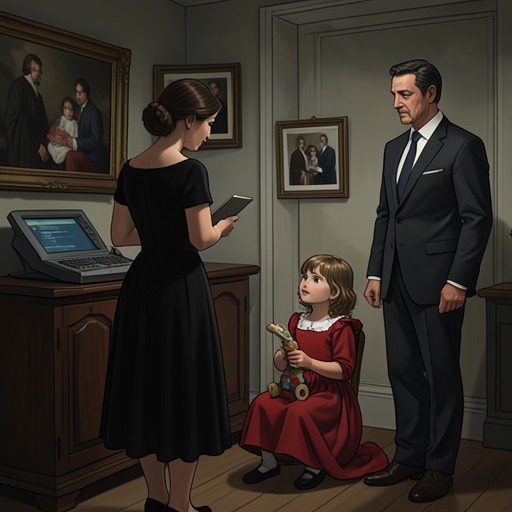
The birth took place in the house that would remain central to the twins’ childhood. In Edwina Treadaway’s later recollection, her babies were all born there; as they grew, they slept and played upstairs, among wooden building bricks, a doll’s house, and Lego. The room’s toys preserve the transition from two infants kept close beside their mother to children who could play together in the home.
The work of caring for them soon extended beyond the immediate family. Alicia, a part-time cleaner with two sons living in Kingston under their grandmother’s care, became part of the twins’ daily life. She came to the house every day until the children were too old to need a nanny, and stayed on to do the ironing and cleaning. Her practical help was especially important in a household where Edwina Treadaway had little confidence in cooking. She relied on tinned food, soups, jars of baby food, and a Baby Belling to heat the children’s meals, while the Aga Ollie Treadaway had insisted on remained a source of warmth rather than a cooking solution. Rowena Treadaway had a gummy eye, and Charlie Treadaway coughed repeatedly.
Alicia’s care was concrete and physical: she dried and changed the infants, found dry clothes, and fed them hot toast and honey. Edwina Treadaway’s later account recognizes that the twins were not eating well before Alicia helped; afterwards, warm and fed, they could sit contentedly in their playpen. The birth therefore begins a family story not only of parenthood, but also of care that depended on another woman’s labour.
A beginning that shaped family life
As Edwina Treadaway’s children grew, Alicia’s presence also helped make her work possible. Edwina Treadaway illustrated the Betsy and Tom books, and credits Alicia with giving her the freedom to work from home. While Alicia cared for the twins in the nursery or kitchen, Edwina Treadaway drew and painted; she and the children often met for lunch before she returned to her studio. The illustrations brought in money, making Edwina Treadaway financially independent after Ollie Treadaway’s death and helping her pay the bills, send the twins to a preparatory school in Chelsea, run a car, and look after Alicia.
The birth itself is remembered through contrasts: one expected baby and two actual arrivals, the healthy daughter and the smaller boy, the frightened father’s joke and the mother’s ordeal, the separate dates and the shared celebration. Its consequences reach beyond the delivery room into the house’s routines and the labour that allowed the family to function. The twins’ arrival is thus both a sharply defined surprise and the beginning of a long domestic history, kept in memory through the rooms where they were born and the ordinary objects with which they later played.