The burglary at Number 137
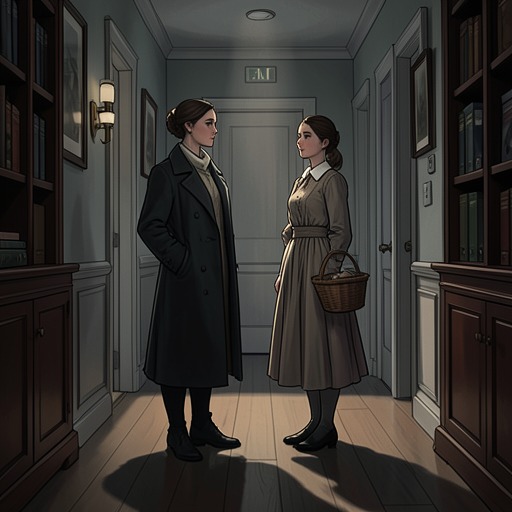
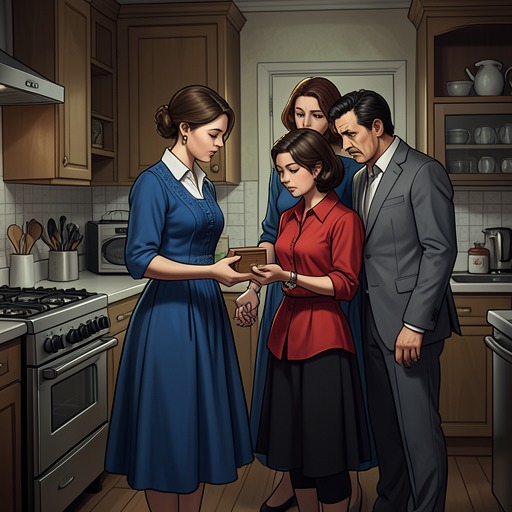
MovingThe burglary at 137 Kennington Road was a theft of family memory as much as property. A bright red extendable jewellery box disappeared during an afternoon when several members of the household were elsewhere; because there was no sign of forced entry, the family and police turned suspicion toward Alicia, the housekeeper. In retrospect, Edwina remembers the accusation as both foolish and painful, and recognizes that the truth had been close at hand even then.
The Box and Its Contents
Over the years, Edwina’s collection had grown from inexpensive pendants chosen by the children to precious gems and pearls given to her by Dickie. The box also held objects whose value could not be measured by their price: the only photograph of the family of four on the beach at Sennen Cove, a lock of Ollie’s hair kept in a matchbox, the children’s baby teeth, and dice Edwina hoped might bring luck. She kept these things carefully together, turning the jewellery box into a small repository of family history.
The theft took the box itself along with everything stored inside it. Edwina distinguishes the losses she truly mourned from the broader collection of baubles: the tiny rings from her first marriage, the baby teeth, Ollie’s hair, and the unique family photograph. She still misses them. Rowena had secretly borrowed the charm bracelet and forgotten to return it, so that item escaped the burglary; the reprieve was accidental, and only partial.
The Afternoon and Its Alibis
The burglary happened roughly forty years before Edwina’s later recollection, on a summer afternoon when Alicia had gone home and Edwina was at the dentist having a crown fixed. Dickie was at his Westminster office, Rowena was sitting a history O-level examination, and both boys were at boarding school. Edwina remembers the examination in particular: she can still recall details about Archduke Franz Ferdinand. The precise distribution of the household members matters because the absence of forced entry made the question of who could have taken the box unavoidable.
After the break-in, Charlie telephoned Edwina and pointed out that the theft could have been worse because she had been away at the dentist. She was surprised that he knew about the appointment and could not remember telling him, though she concluded that she must have. His attention felt touching to her at the time. In the circumstances of the burglary, however, the detail also sits beside the family’s emphasis on whereabouts and alibis: even a considerate remark carried a reminder of who knew when the house would be empty.
Suspicion Falls on Alicia
With no sign of forced entry, the police, Lucas, and Dickie collectively suspected Alicia. Edwina recalls feeling a bubble of hysteria at the accusation, an anger that had not faded with time. She insisted that Alicia was more honest than the others believed and rejected the suggestion that the housekeeper could not be trusted. Her defense rested not on a vague impression but on her understanding of Alicia’s religious conviction: Alicia believed that God watched her constantly and would punish even the smallest unauthorized taking.
Edwina also had reason to resist Dickie’s judgement of Alicia. Some months earlier, he had proposed presenting the housekeeper as his personal secretary so that he could claim her wages against tax. Against that background, the suspicion directed at Alicia appears especially misplaced to Edwina. She sees an irony in the household questioning the honesty of the woman who believed herself answerable to God, while failing to recognize the significance of its own circumstances. The burglary’s lack of forced entry did not establish Alicia’s guilt, but it became the basis for an accusation that Edwina continued to regard as absurd.
Loss and Belated Recognition
The theft’s immediate consequence was the loss of objects that could not be replaced: a single photograph of the family together, small traces of the children’s infancy, and a lock of Ollie’s hair. The jewelry box had gathered these disparate keepsakes into one place; its disappearance made their absence permanent. The stolen belongings therefore register not simply as a list of missing possessions but as fragments of family life removed from Edwina’s keeping.
Years later, Edwina looks back and understands that the truth had already been staring the family in the face. Her recollection does not make the keepsakes reappear or undo the mistaken suspicion of Alicia. Instead, the passage recasts the burglary as a failure of recognition: the family carefully stored its memories, yet at the moment of loss misread the people and clues around it. Edwina’s enduring grief for the photograph and other small objects is joined by the bitter awareness that the household’s collective certainty had been misplaced.