The abuse scandal at Wyebourne College
MovingThe abuse scandal at Wyebourne College begins as a family crisis over Charlie’s safety and expands into an institutional scandal. Its central reversal is that Dickie’s use of political influence to secure Charlie a place at the school, which had seemed like a favour, becomes in Edwina’s later understanding part of a bargain designed to keep the school quiet. Charlie ultimately reports Mr Robbins; two other boys come forward, and the school’s attempt to contain the matter is overtaken by the prospect of a court case. The episode exposes both the abuse and the assumptions that allowed it to persist.
Background and the Admission
Dickie promises to speak to Wyebourne on Charlie’s behalf, invoking the advantages of being an old boy. As a politician, he can be persuasive, and Edwina is astonished when Charlie is accepted. At first, she does not know how Dickie arranged the place. The scandal later changes the meaning of that unexplained success: looking back, she guesses that the school admitted Charlie because Dickie knew what Mr Robbins was capable of and could threaten to expose the institution if it refused.
This account of the admission is presented through Edwina’s retrospective realization, not as a transparent institutional record. She reads Dickie’s expression as guilt and concludes that Wyebourne took Charlie to keep Dickie silent. The implication is disturbing: a child’s access to the school may have been secured not through ordinary advocacy but through an arrangement that left him in the care of a known danger. Edwina remembers the expense of the uniform, trunk, and equipment Charlie barely used as the material residue of that decision. The school’s acceptance had looked like opportunity; in retrospect, the unused school things embody the cost of a compromised bargain.
Conflict Between Edwina and Dickie
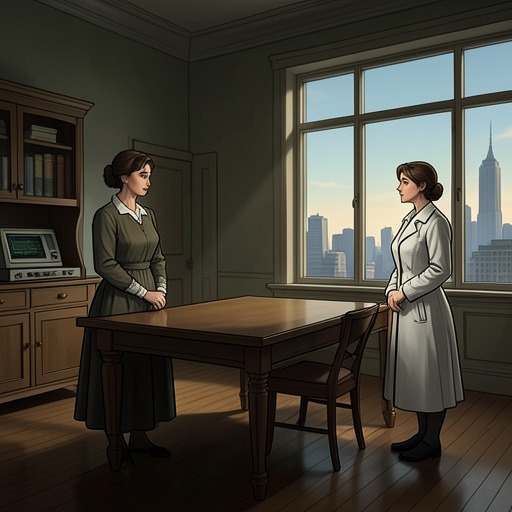
When the scandal breaks, Edwina confronts Dickie over both his knowledge and his decision to send Charlie to Wyebourne. She regards what happened as abuse by an adult entrusted with a boy’s care. Dickie initially resists that description. In his experience, boys at boarding school were interfered with by older boys or teachers, and he treats this as an ordinary hardship that they would recover from, even something that made them more masculine. His response reveals how a culture of normalization can turn abuse into an accepted feature of school life rather than a breach demanding protection and accountability.
Edwina insists that the issue is not a harmless school experience but an adult’s abuse of boys under his care. She also accuses Dickie of securing Charlie’s place despite knowing that such conduct was happening. The scene’s turning point comes when she sees what she interprets as guilt cross his face. That moment confirms her suspicion for her, though it does not erase the contradiction in Dickie’s position: he minimizes the abuse as familiar, while Edwina believes he also knew enough about Mr Robbins to use that knowledge against the school. Their disagreement is therefore about more than the meaning of the abuse. It is about what Dickie knew, what he accepted as normal, and whether his intervention protected Charlie or exposed him to harm.
Charlie Reports the Abuse
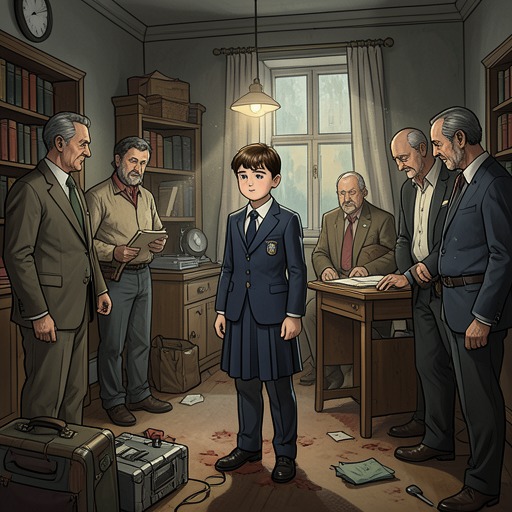
The scandal breaks open when Charlie reports Mr Robbins. Two other boys then come forward, and the story can no longer be contained as an isolated allegation. The sequence shifts the focus from the school’s prior knowledge and Dickie’s presumed leverage to the boys’ testimony: Charlie, whom the adults were supposed to protect, is the one who exposes what is happening. The other boys’ decision to speak adds weight to the disclosure and widens its consequences beyond Charlie’s own experience.
Wyebourne attempts to manage the crisis. Mr Robbins is placed on gardening leave, and the school employs a new sports master described as emphatically heterosexual. That appointment suggests a public effort to signal a change in the school’s image, but it does not itself resolve what has been alleged or establish accountability. A court case is looming because a parent of one of the other boys is determined to pursue Mr Robbins. The scandal thus develops from concealed abuse into a threat of legal scrutiny, while the school’s immediate actions remain focused on removing Robbins and presenting a reassuring replacement.
Departure and Aftermath
Charlie can no longer attend Wyebourne while the matter is pending, and he leaves immediately for Glennings with his new trunk still full of barely used clothes. The move is both a practical consequence of the scandal and a sharp reversal of the promise attached to his admission. Edwina had been shocked that he had obtained a place; she later sees the uniform and equipment as part of a costly passage into a school that could not keep him safe. Although she wonders angrily about the effect on her son’s mind, the narrative says that Charlie appears to recover rather well. That observation does not undo the abuse or Edwina’s anger; it distinguishes his apparent recovery from the institution’s failure.
Three weeks after Charlie leaves, Mr Robbins is found hanged in a wood near his mother’s house. An inquest concludes that the balance of his mind had been disturbed. The official conclusion concerns Robbins’s mental state, while Edwina’s indignant response turns attention back to the damage and vulnerability of her son. The close therefore refuses to let the account of Robbins’s death displace the question of what happened to Charlie or the school’s responsibility. The scandal’s consequences remain divided: Charlie has left Wyebourne, other boys have disclosed abuse, a court case has threatened, and Robbins is dead, but the evidence presented does not describe a resolution of the institution’s wider culpability.
Public Framing and Significance
Later, as the inquest into Elise’s death approaches, press coverage revisits Charlie’s school history. Wyebourne refuses to comment on its former pupil, while Glennings publicly describes Charlie as a much-loved member of its school community and presents drugs as a modern scourge from which not everyone emerges unscathed. The contrast shows how schools and newspapers frame a young person through competing public identities: the former pupil of a prestigious school, the chorister once pictured as angelic, and the boy whose later life is associated with scandal. The earlier abuse at Wyebourne becomes part of the history scrutinized by the press, although the available account does not say that the inquest into Elise’s death adjudicates the school’s conduct.
The scandal’s significance lies in the distance between institutional respectability and the treatment of children within the institution. Dickie’s old-boy connections, Wyebourne’s apparent willingness to admit Charlie under pressure, its handling of Mr Robbins, and its refusal to comment all place reputation and control beside the boys’ accounts. Yet the decisive disclosure comes from Charlie himself, followed by two other boys. The school’s effort to contain the story fails because those directly affected speak, turning a private family suspicion into a public and potentially legal reckoning.