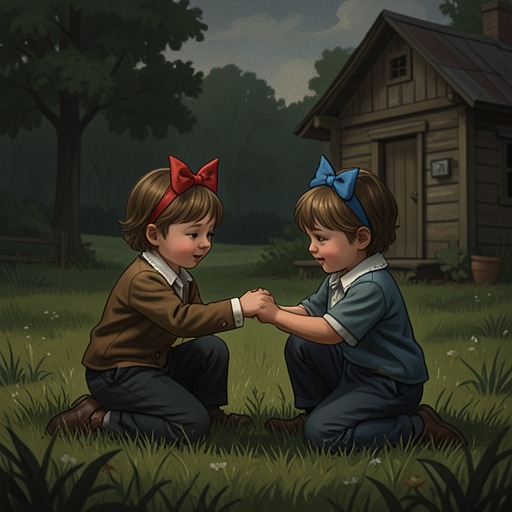
The twins’ twenty-first birthday gathering
MovingThe twins’ twenty-first birthday gathering is a remembered family celebration that holds apparent ease and unease in the same frame. In March 1981, Edwina brings Rowena and Charlie home for a Sunday-lunch feast, with Lucas joining them. The cake, flowers, and carefully matched gifts make the occasion look like a generous family reunion; the details Edwina cannot stop replaying also reveal how fragile that appearance is. She returns to this scene during sleeplessness and anxiety, remembering it as the smooth stretch before turbulence arrived less than a year later.
The celebration Edwina remembers
The twins are turning twenty-one and coming home for the weekend. Rowena’s birthday is actually on Saturday, and she travels by coach from Oxford, arriving in time for lunch. The family plans to celebrate both twins together the next day. Edwina gets out the best china, while Alicia makes a chocolate cake; the room carries the scent of blue-and-white hyacinths, which Edwina remembers as her favourite. These domestic preparations give the reunion a composed, hopeful surface, as though familiar rituals can make the family secure.
The memory is not presented as an uncomplicated record of a happy weekend. Edwina revisits it later, when insomnia and anxiety have taken hold, and the narrative calls the approach to disaster deceptively smooth. The gathering matters partly because it is a scene of ordinary anticipation that retrospectively acquires a warning edge. Its food, flowers, gifts, and arrivals remain vivid, but they sit just before a rupture the family could not foresee.
The twins arrive carrying different troubles
Rowena has found her place at university and is much better than she was, but her eating remains governed by rules. At lunch she slowly shreds a butterless ham sandwich into tiny crumbs and swallows them between repeated sips of water. Edwina knows not to watch her eat, so she busies herself with surfaces, candlesticks, and the garden. Their time together is easier while Dickie is away at rugby in Twickenham; Rowena talks about Oxford, friends on her staircase, plays, and an art class. Edwina feels pride and relief at her daughter’s greater happiness, even as she still wishes Rowena would attend more to her appearance.
Charlie arrives around five, smelling strongly of drink, laughing and hugging his mother and sister. Skinny like Rowena, he reaches for biscuits, holds a roll-up, teases his twin, and lets Edwina take his shirt to wash. Fading bruises mark his ribs. Later he slips out with little explanation, leaving Edwina only enough time to ask where he is going before the front door shuts. On the following birthday morning he drinks a carton of orange juice straight from the carton. At lunch he eats heartily and praises the meal, while keeping his ashtray off the table until cake time. His appetite and easy joking coexist with signs of disorder that the family celebration does not resolve.
The work and objects that make a family table
Alicia’s work underpins the feast even though she is absent, attending a nephew’s christening. She has made the chocolate cake and left handwritten cooking instructions; Rowena helps with the vegetables, taking care that no butter touches them. Alicia had long done much of the household cooking and laundry, first caring for the twins and later staying on to clean and iron. Her absence leaves Edwina to manage the kitchen herself, but the meal still depends on Alicia’s preparation and guidance. That dependence sits within a household hierarchy Edwina had challenged before: when Dickie described Alicia in a racist way, Edwina sharply rebuked him.
The Sunday table makes the effort visible. Edwina serves spring lamb, Charlie’s favourite, with mint sauce, gravy, new potatoes, peas, cauliflower, and carrots; butter sits separately. Daffodils stand in a blue glass vase, and freshly starched napkins are rolled inside the twins’ freshly polished silver christening rings. When Edwina sees the rings, her heart silently calls for the twins’ father. The feast is therefore more than a display of hospitality: its painstaking care brings absence into the middle of the celebration.
The presents also bind the twins together while marking their distinct birthdays. Dickie gives them new cameras. Edwina commissions silver cufflinks for Charlie and matching earrings for herself, with the birth date of each twin inscribed on one piece: 14.03.60 and 15.03.60. Each wearer’s set contains both mismatched dates, turning their consecutive birthdays into a small, deliberate emblem of their twin bond. The family’s photographs from the day later lose their frames and are moved into a cupboard; they prompt questions Edwina does not want to face. The keepsakes preserve the celebration, but the changing place of the photographs shows how difficult it becomes to look at the past directly.
Lucas’s presence and the gathering’s afterlife
Lucas arrives at half past twelve with no card or gift, but with a chilled bottle of vintage champagne from his mother Barbara’s refrigerator. Edwina is surprised the bottle has survived Barbara’s handling and keeps her reaction to herself, reminding herself that they are adults. At the table Lucas is only moderately unpleasant, sporting a beard Edwina dislikes and talking as if he has plans to take over the Bank of England. His attendance makes this a broader family gathering, but it does not erase the long distance between him and his stepmother.
Edwina had once performed the duties of a stepmother to Lucas—remembering birthdays, wrapping Christmas presents, making breakfast, and washing his clothes—while feeling that her care was a role she played. She considered him Barbara’s son, not her own, and their relationship was defined by mutual toleration and hostility. The birthday lunch briefly places Lucas among the family at home, yet his presence does not amount to reconciliation. Much later, when Edwina challenges him to say how everything was her fault, Lucas refuses to continue the cycle of blame, revenge, and guilt. He admits that he arranged the theft of Edwina’s jewelry box because he owed money at school and handed over the house keys to the people who carried it out. That later confession does not explain the birthday gathering, but it casts the family’s fragile civility in a longer light: the day’s attendance and feast could not settle what remained unspoken between them.
As a flashback, the gathering is shaped by Edwina’s return to one specific weekend rather than by a detached account of the family’s history. Its remembered pleasures are concrete—the hyacinths, the cake, the lamb, the dates engraved on silver—while the troubling details remain alongside them. The birthday celebration becomes a temporary picture of family life held together by domestic work and ritual, even as grief, illness, and estrangement press at its edges.