Silvianne Delmars
NomadlandSilvianne Delmars is a tarot reader, seasonal laborer, and van dweller whose life on the road emerges from a succession of setbacks as well as a deliberate search for meaning and freedom. Her story links precarious work to a mobile community: she meets Linda May on an Amazon night shift, becomes her friend and campground-hosting partner, and later finds room for work, performance, and new companionship within the nomadic world. The road offers her a life she can claim as her own, but not one insulated from illness, financial uncertainty, or demanding jobs.
Identity and Departure
Silvianne had worked across a wide range of fields, including corporate healthcare, waitressing, retail, acupuncture, and catering, before making tarot reading part of her mobile life. She interpreted the events that led her onto the road through spiritual belief, as a path opened by divine influence. In describing her departure on her blog, she presented it as a break with the security promised by conventional home and work: she had left a former miner’s cabin in New Mexico that she could not sell, along with three part-time jobs and the expectation that those arrangements could guarantee stability. She imagined her road identity as that of a tarot reader, shamanic astrologer, and agent of change.
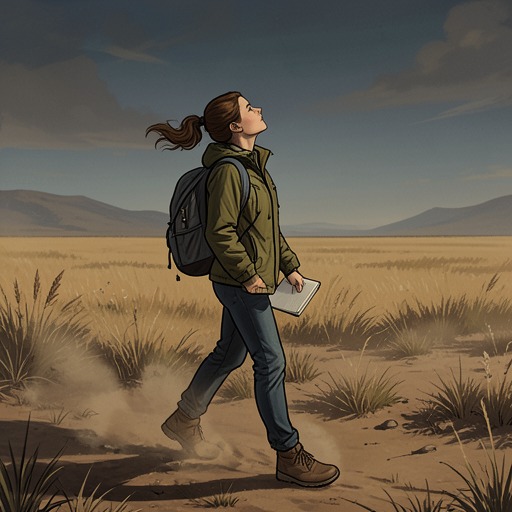
The move was not a frictionless adventure. Her car had been stolen, she had broken her wrist without insurance, and the New Mexico house remained unsold. She set out in a 1990 Ford E350 Econoline Super Club Wagon that had previously served as a transit van for elderly people and as a work vehicle for prison crews. It came with serious mechanical problems, including leaking head gaskets, faulty brakes, damaged power-steering hoses, worn tires, and a grinding starter. The long-painted-over lettering for the Holbrook Senior Citizens Association still showed through on its side. Friends proposed names that combined into Queen María Esmeralda, a name that made the battered vehicle hers without erasing its former uses.
She refashioned its interior with jewel-toned scarves, embroidered pillows, and Christmas lights. An altar held a Virgin of Guadalupe votive candle and a statuette of Sekhmet. These details joined the practical fact of a used, unreliable van to Silvianne’s spiritual self-understanding: the vehicle was both her living space and the means by which she pursued a new life. Her green-eyed cat, Layla, traveled with her as well.
Work and Friendship with Linda May
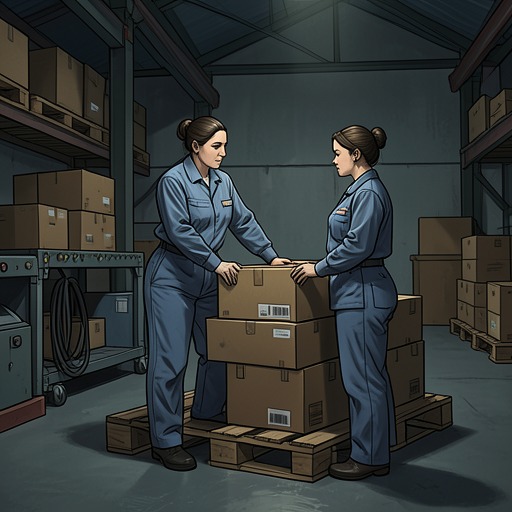
Silvianne first met Linda May about a year and a half before they became campground hosts. Both were working as night-shift temporary employees at an Amazon warehouse in Fernley, Nevada, where Linda injured her wrist. Silvianne later joined Amazon CamperForce as a stower on the same night shift. She had approached the assignment as a temporary adventure and a way to finance the first stages of her journey, even while viewing Amazon as the embodiment of the consumer economy she wanted to leave behind.
The warehouse work tested her in ways she found especially difficult as a self-described type A personality. Storage bins were often full, leaving her unable to complete the work to her own standards. She likened the experience to an impersonal, Kafkaesque system that frustrated people who wanted to do a job well. At first, she cried several times a week and felt embarrassed by how strongly she reacted. The work also brought new, persistent back pain and repeated static shocks. A jolt from a metal shelf once made her recoil and the book she was stowing strike her face. Workers had reported the shocks before she arrived; the company tried grounding shelves, adding tinsel to carts, and applying Staticide to the floor, but employees continued to experience them.
Outside the warehouse, the worksite also became a place of recognition and friendship. Silvianne lived near Linda at Sage Valley RV Park, and people knew her for walking Layla on a leash attached to a pink harness. Warehouse workers would recognize her from the cat walks. Linda later became a close companion: when Silvianne agreed to try campground hosting despite never having done it before, she was excited to work at Linda’s side. Their friendship carried across the shift from warehouse labor to seasonal outdoor work.
Campground Hosting
Silvianne and Linda began their first day as campground hosts in matching brown pants and khaki windbreakers, uniforms that gave them a passing resemblance to federal forest rangers. They had been told that the resemblance could help when dealing with unruly campers. Their golf cart carried cleaning and maintenance tools as well as promotional leaflets for commercial wilderness activities. Silvianne had only recently learned to drive the cart, but was eager to take the wheel while Linda rode beside her.
The campground job brought its own routines and pressures. Before work, Silvianne followed a regimen of detoxifying herbs, meditation, and a restricted diet without sugar, meat, dairy, or refined grains. She hoped the routine would help with a basal cell carcinoma below her right eye. Her effort to care for her health therefore took place alongside seasonal work, communal living, and life in a vehicle rather than a fixed home. The campground was not simply a scenic retreat: it was also a workplace in which the hosts had to keep sites usable and respond to the needs of visitors.
For Silvianne, the job also deepened the bond with Linda that had begun at Amazon. The two women’s work lives repeatedly depended on short-term positions and changing circumstances, yet their friendship offered a measure of continuity. Their matching uniforms made them a working pair; their earlier experience as temporary warehouse employees connected the less visible labor of campground maintenance to the broader system of seasonal jobs that supports life on the road.
Community, Mobility, and Later Life
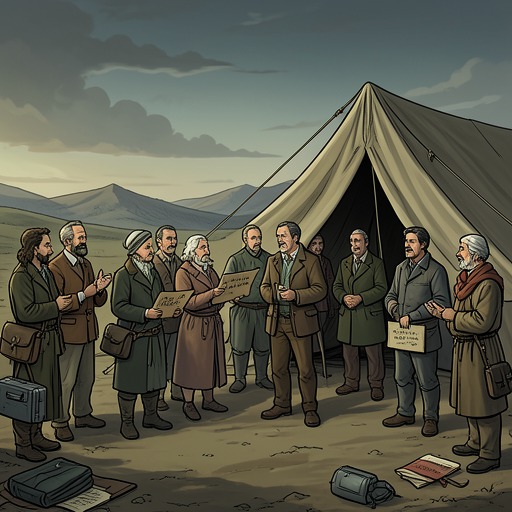
Silvianne’s mobility belonged to a larger network of nomads whose ability to travel depended on more than a vehicle. Full-time travelers still had to maintain official domiciles for registration, licenses, taxes, voting, and other responsibilities; some used mail-forwarding services and chose states with relatively easy residency requirements. Public-land camping also had limits. Near Quartzsite, Arizona, free sites generally allowed stays of up to two weeks before campers had to move at least twenty-five miles or pay to stay in the La Posa Long Term Visitor Area. In Coconino National Forest, rangers questioned some van and RV campers about their addresses and could treat apparent permanent residence as prohibited residential use. These rules describe the constraints surrounding nomadic life, rather than any particular citation or residency status for Silvianne.
The people living that life also built forms of community through repeated encounters. Silvianne was camped near Charlene Swankie in Quartzsite when she was working the register at Gem World, which sold crystals and jewelry-making supplies. At a karaoke potluck, she overcame her nerves and sang her self-written vandweller anthem, Queen of the Road, to a gathering of about two dozen people, who responded with cheers and applause. She was also preparing for her first date in seven years, with an RVer she had met at a ranger station. These moments show her not only as a worker adapting to whatever job was available but as someone making a public and personal place for herself within the community.
Silvianne had once imagined continuing this way indefinitely, even contemplating a bleak final horizon rather than a conventional retirement plan. The book does not report a settled long-term outcome for her. Instead, its later glimpse catches her still working, singing, and considering a new relationship. Her trajectory remains open: the uncertain vehicle and unstable employment have not disappeared, but neither have the friendships, spiritual commitments, and acts of self-invention through which she gives her life on the road direction.