Bob Wells
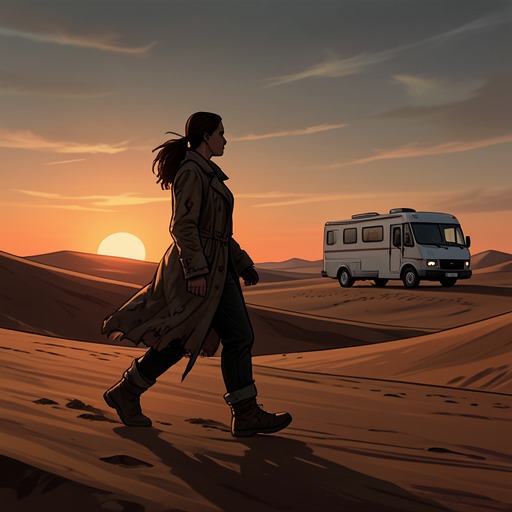
NomadlandBob Wells turned a forced move into a philosophy and a community. After debt and divorce pushed him toward vehicle dwelling, he came to see life on the road as more than an emergency measure: it could be a way to reject expensive expectations and find freedom. He shared that idea through CheapRVLiving.com, practical instruction, and the Rubber Tramp Rendezvous, a gathering where nomads exchanged skills, supplies, and companionship.
Identity and the Turn to Vehicle Dwelling
Before becoming an advocate for vehicle dwelling, Wells was a former Safeway shelf stocker from Alaska facing a personal and financial crisis. In 1995, after a bitter divorce from his wife of thirteen years, with whom he had two young sons, he was carrying $30,000 in maxed-out credit-card debt and preparing to declare bankruptcy. His account of the change is not a story of a carefully chosen lifestyle from the outset: he later acknowledged that he might not have made the move if circumstances had not forced it.
The change nevertheless altered how Wells understood the conventional promise of security. In a later interview, he described feeling happy for the first time while living in a van, and rejected the idea that people must follow a prescribed sequence of marriage, homeownership, and work before they can be happy. The experience became the foundation for his advocacy: a condition commonly treated as homelessness could, in his account, also be chosen as a route to independence from debt and consumer expectations.
Wells presented that argument with the fervor of a convert. His message was not simply that people could spend less; it was that reducing material needs could enlarge their freedom. The tension between hardship and choice remained central to his outlook. His own move had begun under pressure, yet he came to treat the life it opened up as a meaningful alternative to the fixed home and conventional career that society held out as necessities.
CheapRVLiving.com and Practical Advice
In 2005, Wells founded CheapRVLiving.com as a modest collection of how-to articles for people hoping to live in a vehicle on a shoestring budget. The site paired an anti-consumerist argument with practical information. Its guidance included boondocking: camping away from paid RV-park hookups for water, sewage, and electricity. Wells also addressed stealth parking, the related practice of staying in urban areas while trying not to attract attention. The distinction mattered because a vehicle dweller in a city might be living cheaply without camping in the wilderness.
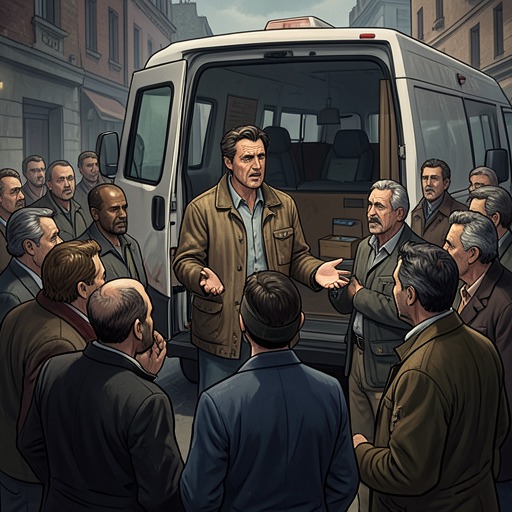
His advice treated mobility as something sustained by small, concrete decisions. At the Rubber Tramp Rendezvous, he recommended carpooling into town, avoiding unnecessary driving, and using Gas Buddy to seek cheaper fuel. He urged attendees to build an emergency reserve of roughly $2,000, even if that meant saving only $3 a day in an envelope. He also gave examples of how little some people managed to spend, including one person living on $250 a month, and asked the audience how many lived on $500 or less and how many were free of debt. The few hands raised in response to the debt question gave the discussion a practical edge: frugality was not an abstract ideal but a response to financial exposure.
Wells extended this economy to health expenses. He traveled annually to Los Algodones for a $25 teeth cleaning, and used the town’s inexpensive opticians and pharmacies to obtain medication for high blood pressure and, on one visit, an eye examination and glasses for about $100. The book’s narrator joined one excursion, with the group carpooling from Scaddan Wash near Quartzsite toward Yuma before continuing to Andrade and crossing the border on foot. The trip illustrates the kinds of workarounds that could make life on a small budget more manageable, while also showing how vehicle-based mobility depended on fuel, transport, and access to services.
The Rubber Tramp Rendezvous
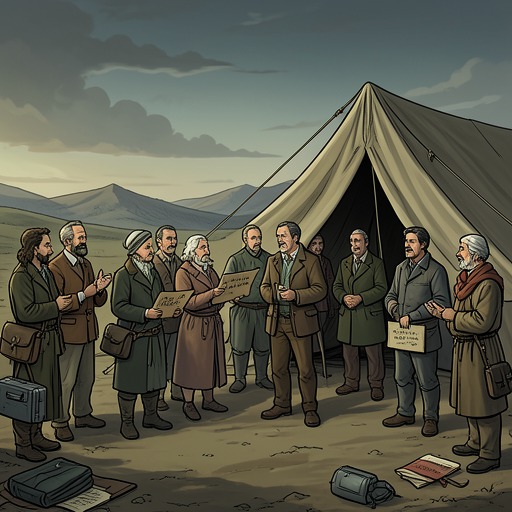
Wells organized the first Rubber Tramp Rendezvous in 2011 on public desert land near Quartzsite, Arizona. Inspired in part by the annual gatherings of nineteenth-century mountain men, the two-week January event was designed for travelers who spent much of the year isolated and on the move. It gave them a place to share stories and skills, make friends, and mentor newcomers. Similar get-togethers formed in the East, and some groups traveled together between gatherings in what nomads called a roving GTG.
Wells framed the Rendezvous as a necessary counterpoint to solitude: people who valued moving independently also needed occasional contact with others who understood their lives. By the fourth winter gathering he had hosted, that idea had become a substantial organizing effort. He spent months planning and publicizing the event, put up a sign secured against desert winds, and prepared a calendar of social events and seminars. He also set out a tipi-style tent with basic toilet supplies for newcomers, stacked wood by the fire ring, and spread a blue tarp to serve as a free pile. As attendees tried to make the most of limited storage, usable belongings—including blankets, books, and a large straw sombrero—appeared there over the course of the gathering.
Wells did not profit from the Rendezvous. Its generous, shared-resource atmosphere encouraged others to contribute what they knew or had. A cosmetologist offered haircuts for donations; mechanics taught basic repairs; carpenters built beds and shelves for vans; and people with large solar panels made excess power available to others. A deaf attendee led an informal American Sign Language class. Charlene Swankie demonstrated a solar oven by baking brownies, banana nut bread, and blueberry muffins. These exchanges made the gathering more than a series of talks: instruction, equipment, food, and practical help circulated among people whose budgets and living space were limited.
That communal work also showed up in recurring rituals of welcome. Each morning, Lesa NeSmith started a campfire and made cowboy coffee for anyone who came by with a cup. The habit echoed her earlier practice of sharing coffee with neighbors in her Richmond, Virginia, apartment building. Linda May, attending because she wanted to learn, found the Rendezvous’s conviviality a contrast to the isolation associated with life on the road. The book also describes Charlene Swankie drawing newcomers into her camp and helping a stranded traveler by towing his vehicle out of a ditch. Such scenes give concrete form to the community Wells sought to convene: not only people exchanging advice, but people able to assist one another when vehicles or bodies limited their independence.
Limits, Regulation, and Mobility
Wells’s gatherings took place within rules that made a mobile life possible while also placing limits on it. On public land managed by the Bureau of Land Management near Quartzsite, free camping was generally limited to two weeks. Afterward, campers had to move at least twenty-five miles or stay in the La Posa Long Term Visitor Area, where a permit cost $40 for two weeks or $180 for as long as seven months. Its brightly colored windshield stickers, marked with a roadrunner and a snowflake, became recognizable signs among nomads. At the Rendezvous, a BLM ranger arrived to issue permits and record license-plate numbers; as the deadline approached, attendees began considering where they would go next, whether they had found work, and when they might meet again.
Wells also warned that public-land access could be contested. In Coconino National Forest, rangers questioned campers in vans and RVs about their home addresses, and people suspected of living there permanently could be ticketed or evicted for residential use. A Quartzsite camping sticker could help identify a traveler as a long-term nomad. The prospect of an app for reporting suspected long-term campsites added another way for authorities to monitor where people stayed. These pressures sit uneasily beside the apparent freedom of the open road: a traveler might move across the country yet still need a recognized address for vehicle registration, a driver’s license, taxes, voting, jury service, and other obligations. Some nomads used mail-forwarding services and established residency in states such as South Dakota, where the process could be completed after a motel stay and registration with a forwarding service.
A Growing Movement and a Bleak Outlook
Wells’s public message also generated a problem of success. Some readers worried that the more widely vehicle dwelling was promoted, the harder it would be to remain inconspicuous, and that rising attention might bring a police crackdown. Wells, meanwhile, told attendees that government pressure on people living this way was increasing. His advocacy thus occupied a difficult position: teaching people how to join a community could make that community more visible and potentially more vulnerable.
He imagined his own later years in starkly practical terms, including a cheap school bus partly covered with earth and fitted with south-facing windows. His plans also included an eventual end to his life if he could no longer manage, a prospect he expressed without optimism about future care. Behind that personal contingency was a wider expectation of environmental and economic catastrophe. Wells anticipated a downturn far worse than the Great Depression. His pessimism did not displace the work of organizing; rather, it underscored how much his practical counsel assumed a future in which formal guarantees might fail.
The scale of the Rendezvous kept growing. When Wells prepared to host what he expected to be the largest gathering in Ehrenberg, he anticipated hundreds of attendees, prohibited loud music and unleashed dogs, and removed traditional group meals from the schedule because feeding so many people would be difficult. More than five hundred mobile dwellings eventually arrived, many drawn by videos he had posted on YouTube. The expansion brought his project into focus: a once-modest how-to website and a desert gathering had become routes through which a dispersed population could find knowledge and one another. Wells’s significance lies in holding together that practical and ideological work—teaching people to economize and move, while making the road less solitary for those who chose or were compelled to live there.