Ghost Dancer
NomadlandGhost Dancer was a gregarious nomad whose quick response to a threatened online community helped establish a durable gathering place for people living in vehicles. On January 1, 2002, from his brown 1989 Ford F150 pickup outside a McDonald’s in Vincennes, Indiana, he jury-rigged an internet connection and created Vandwellers: Live in Your Van 2. The improvised setup became part of the group’s origin story; the board outlasted the crisis that prompted it and drew thousands of participants, including Bob Wells.
Identity and Introduction
Ghost Dancer belonged to Live in Your Van, one of the online communities through which vehicle dwellers found one another across the country. Its members posted under names such as vangypsy and vwtankgirl, and the group had become a close-knit circle of friends. Their gathering place was more than a discussion forum: it was a clubhouse for people whose lives and homes were scattered across the country.
That community had grown around an earlier board created by a member called lance5g, who stopped posting after setting it up. When Yahoo announced that it would move its message boards to a new platform, groups with absent owners seemed unlikely to survive the transition. For Live in Your Van, the possibility of losing the forum threatened a shared meeting place at a moment when its members were already geographically dispersed.
The January 2002 Response
On New Year’s Day, Ghost Dancer was parked outside a McDonald’s on Highway 41 in Vincennes, living in his pickup. He had heard that the message-board changeover deadline was the end of that day. The looming loss of the group’s online home worried him, but he had made no preparations. The solution came down to creating another gathering place before the old one went dark.
He had neither a laptop nor access to the Wi-Fi hotspots that would become commonplace years later, so he assembled a connection from the equipment he carried. A Konexx acoustic coupler attached to a pay-phone handset, using a microphone at the earpiece and a loudspeaker at the mouthpiece to transmit analog data. He plugged the coupler into a WebTV box, which had a built-in modem and basic browsing services. To save space, he hung the WebTV from his CB radio; it connected to a thirteen-inch Philips television on the passenger-side floor.
After hours of working on the setup, Ghost Dancer fed thirty-five cents into the pay phone, got online, logged into Yahoo, and started Vandwellers: Live in Your Van 2. The sequence was improvised at every step: pay phone, acoustic coupler, WebTV, and television turned a parked pickup into a place from which a new online meeting point could be made. The account of this resourcefulness later became a well-worn tale of cyber-McGyvering, and a popular blogger called him vandwelling’s founding father.
The Board’s Survival and Growth
Only afterward did Ghost Dancer realize that, working across time zones, he had missed the purported deadline by a few hours. The mistake did not undo the rescue: members followed him to the new board. Yahoo never shut down the original Live in Your Van, but it became a virtual ghost town, overrun by adult-industry spambots and largely abandoned by its intended audience. The new forum, by contrast, attracted thousands of newcomers and continued to gain momentum.
Bob Wells was among those who joined. In the four years following the 2008 economic crash, the group’s numbers more than doubled, reaching 8,560 members. Its self-description presented it as a far-flung tribe, a circle of elders and a nurturing place for newcomers, where members shared information with one another. That language captured the social work the forum performed: people living apart could exchange knowledge and recognize a common culture through an online gathering place.
Narrative Role and Significance
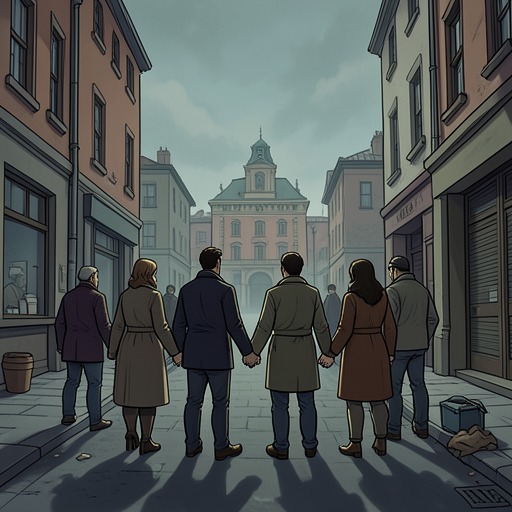
Ghost Dancer’s importance in the account rests on a practical act rather than a sustained personal storyline. He appears at a precise moment when a platform change threatens to sever a community, and he responds by building an alternative with limited equipment and a pay phone. The board’s creation is a small-scale story of how dispersed people can make community through communication technology, even when their connection depends on a makeshift setup in a vehicle.
The episode also holds two kinds of fragility together. The members’ clubhouse depended on a commercial message-board platform that might change or disappear, while Ghost Dancer’s workaround depended on the ordinary infrastructure available where he was parked. Yet the forum did not vanish with the original board’s decline. Its migration and subsequent growth made his hurried intervention consequential well beyond the missed deadline: the replacement became a meeting place for a much larger community of vehicle dwellers.