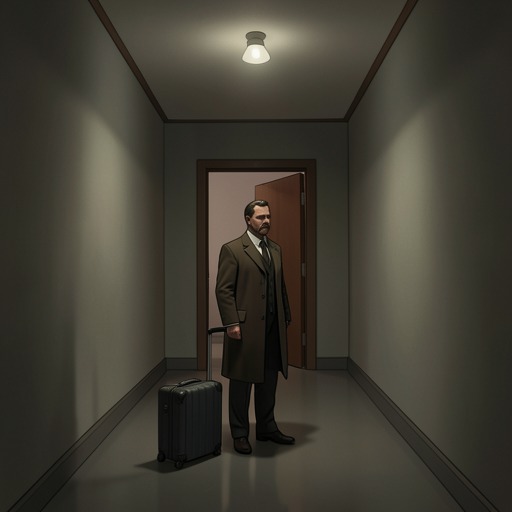
Philip is nine years old, in January
A Mother's Last Farewell
As a doctor tends his dying sister-in-law, Helen Carey wakes her son, Philip, to lie beside her. She holds his feet and weeps, while the doctor quietly takes the sleeping child away. A stillborn second son lies nearby; Helen asks what will become of Philip, knowing she is leaving him behind.
The opening binds Philip’s childhood to loss and to the body that will shape his sense of himself. His mother’s tenderness is the first and most enduring measure of love in a life otherwise marked by dependence on strangers.
One week later
The News of His Mother's Death
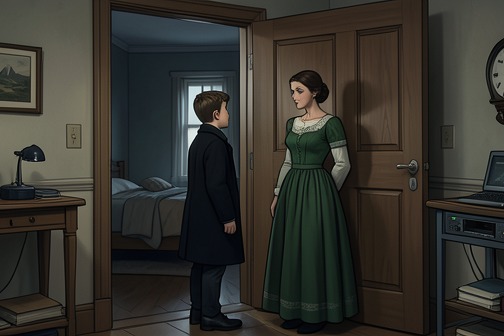
At [Henrietta Watkin](entity:character-recall-character-henrietta-watkin-d64c04ba18ea)’s house, [Emma](entity:character-recall-character-emma-0b5c09f9ac66) collects Philip and tells him that his mother is in heaven and that he will never see her again. Philip does not understand at first, then cries with Emma. He savours the attention he receives when he says goodbye to the Watkin sisters, unaware that the adults are mourning him as a bereaved, limping child.
Emma takes him to the [London](entity:location-recall-location-london-420923d4a60a) home where his mother died. [William Carey](entity:character-recall-character-william-carey-535ff683586d) tells him he must live with his uncle and aunt at [Blackstable](entity:location-recall-location-blackstable-c5be51fba8d8), that Emma cannot go with him, and that money is too limited to keep her. Philip chooses a little clock as a keepsake, then slips into his mother’s bedroom, buries his face in her dresses, and imagines she will return.
The day after Philip leaves London
A New Home at Blackstable
William brings Philip to [Blackstable Vicarage](entity:location-recall-location-blackstable-vicarage-dc646b9e37a0), where [Louisa Carey](entity:character-recall-character-louisa-carey-34d5c336f44c) greets the child shyly and the household’s economies are immediately apparent. Philip is given a small bedroom and a place at the table, where books are stacked beneath him to raise his chair. William offers him the top of his egg, an indulgence that becomes part of the family’s ritual.
The child gradually learns about his father’s money and his mother’s past, mostly through fragments of adult conversation. William’s resentment of Henry and Helen’s former prosperity sits beside his duty as guardian, while the careful, narrow routines of the vicarage begin to define Philip’s new life.
Philip’s first months at Blackstable
Life in the Vicarage
The vicarage runs on thrift, ceremony, and church politics. Louisa shops among parishioners with an eye to their religious loyalties; William quarrels with [Josiah Graves](entity:character-recall-character-josiah-graves-e819809fc1b1) over authority, ritual, and parish business. Philip spends much of his time with [Mary Ann](entity:character-recall-character-mary-ann-e4585393fefe), whose stories about fishermen and the sea lend romance to the rough harbour district that his uncle and aunt regard with suspicion.
Louisa tries to win Philip’s affection but does not know how to approach a child. Their connection begins awkwardly, then deepens when Philip, after telling her he hates her, sees her cry and kisses her without being asked. Her barren longing for a child makes the moment transformative for them both.
During Philip’s early years at the vicarage
Sunday Discipline and the Collect
William forbids Philip to play with his bricks on [Sunday](entity:time-recall-time-sunday-073632221971) and tells him the game grieves his dead mother. When Philip cannot learn a collect by heart, he sobs alone at the table, ashamed to let anyone see him. Louisa discovers his distress and replaces the lesson with illustrated books, which open for him the absorbing refuge of reading.
Philip’s first experience of religious discipline mixes fear, guilt, and imaginative escape. His habit of reading grows into a lifelong shelter, but it also encourages him to expect the world to resemble the vivid, romantic worlds he finds in books.
At about age nine
School and the First Bullying
Philip enters the preparatory school at [Tercanbury](entity:location-recall-location-tercanbury-c804970bc6f4), where the enormous headmaster, [Mr. Watson](entity:character-recall-character-mr-watson-54a0f455f576), overwhelms him with noisy cheerfulness. A boy named Venning asks about Philip’s club-foot and kicks his shin; later, other boys imitate Philip’s limp during a playground game, trip him, and laugh as he struggles not to cry.
The humiliation teaches Philip to hide his foot and to watch constantly for signs that others have noticed it. His difference becomes a barrier between him and the games through which the boys form their community.
Philip’s first term at the preparatory school
Singer's Torment
[Singer](entity:character-recall-character-singer-47723f168add) and another boy force Philip to expose his foot by beating his hands and twisting his arm. Philip gives in under pain, then lies awake furious not at them but at himself for yielding. Later, when a forbidden game of Nibs earns Singer a caning while Philip is spared, Singer says Philip escapes punishment because he is a cripple and renews his torment.
Philip’s shame is compounded by helplessness: he cannot defend himself physically and hates having to beg forgiveness. His isolation drives him inward and intensifies the self-consciousness that will follow him into adulthood.
During the Christmas holidays at about age twelve
A Failed Prayer for Healing
After reading Christ’s promise that faith can move mountains, Philip asks his uncle whether it is literally true. William answers that the Bible is true and that the matter is one of faith. Philip prays with absolute confidence that God will cure his foot by a chosen date, imagining the astonishment of his family and schoolmates.
The miracle does not happen. William explains that Philip must not have had enough faith, and Philip eventually abandons the prayer, feeling that the promise says one thing but means another. The failure plants an early doubt about religious authority and about the belief that suffering can be overcome by obedience.
Before Philip enters King's School
Perkins Becomes Headmaster
The old masters at King’s School expect [Mr. Watson](entity:character-recall-character-mr-watson-54a0f455f576) to succeed Dr. Fleming, but the Dean and Chapter choose [Tom Perkins](entity:character-recall-character-tom-perkins-af7c0688c2f1), once a brilliant scholarship boy and the son of a linen-draper. His appointment unsettles the masters, who regard his social origins, liberal politics, and enthusiasm for change as threats to the school’s traditions.
Perkins introduces new subjects, modern teaching, and a more open approach to education. His appointment establishes the contrast between rigid institutional custom and the curious, energetic mind that will later offer Philip both sympathy and pressure.
At about age thirteen
Philip's Cruel Latin Master
At King’s School, Philip is placed in [B. B. Gordon](entity:character-recall-character-b-b-gordon-a7b7e44be25c)’s form. Gordon’s rage and verbal cruelty make Philip afraid to answer questions; when he cannot translate a passage, Gordon calls him a club-footed blockhead and enters him in the Black Book. Philip carries the book to Perkins, who notices his distress and distracts him with photographs of Athens.
Perkins recalls that Gordon used to call him a gipsy counter-jumper when he was a boy. The disclosure gives Philip a glimpse of solidarity across class and disability, and helps create the deep admiration he develops for the headmaster.
During Philip’s years at King's School
Confirmation and a Religious Vocation
Under Perkins’s influence, Philip returns to religious devotion and prepares for confirmation. Perkins asks him to regard his club-foot as a cross given him to bear, even a sign of divine favour. Philip accepts the idea in a rush of religious feeling and, limping alone up the cathedral chancel, offers his deformity as a sacrifice.
The commitment fades as the intensity of his faith subsides. Philip begins to see the clergy around [Blackstable](entity:location-recall-location-blackstable-c5be51fba8d8) as narrow, hypocritical, or miserable, and he recoils from the life he had once imagined. His first vocation proves to be one more borrowed ideal rather than a durable desire of his own.
During Philip’s later school years
Rose and the Loss of Friendship
Philip becomes close to [Rose](entity:character-recall-character-rose-154df6dd1d30), a warm and popular boy whose ease with others seems to Philip almost miraculous. Philip’s intense need for exclusive affection soon turns to jealousy; after a scarlet-fever absence, he returns to find Rose has grown close to Hunter. Philip confronts him, is rebuffed, and answers a later attempt at reconciliation with cruel words he immediately regrets.
The friendship’s collapse repeats the pattern of Philip’s emotional life: he longs for love, fears rejection, and damages the bond he most wants to preserve. He hides his hurt behind sarcasm and turns instead toward the disreputable [Sharp](entity:character-recall-character-sharp-7eadf1c5a5e8) and the imagined life of [London](entity:location-recall-location-london-420923d4a60a).
Near the end of his school years
Philip Rejects the Ministry
Philip tells his guardians that he no longer intends to be ordained and wants to leave school for [Germany](entity:location-recall-location-germany-2e3723c2f347). William resists and writes to Perkins, who initially advises against the plan. Philip angrily defies his uncle, visits [Blackstable](entity:location-recall-location-blackstable-c5be51fba8d8) without permission, and confronts him over the broken promise; Louisa’s tears soften the conflict, and William eventually agrees that Philip may leave after another term.
Perkins tries once more to persuade Philip to remain and go to [Oxford](entity:location-recall-location-oxford-6b47fed333f9), but Philip chooses Germany. The decision brings freedom without triumph: after the final conversation with Perkins, Philip walks away wondering whether getting his own way has left him worse off.
At about age eighteen, in spring
Heidelberg and a Wider World
Philip arrives in [Heidelberg](entity:location-recall-location-heidelberg-fef686c04437) and lives in Professor and Frau Erlin’s crowded household. He studies languages, meets the eccentric English tutor [Wharton](entity:character-recall-character-wharton-0f30f53cf55d), and discovers that life abroad offers both freedom and unfamiliar social worlds. A walk above the Rhine gives him his first undiluted experience of beauty; he feels suddenly happy beneath the broad sky.
His year in [Germany](entity:location-recall-location-germany-2e3723c2f347) loosens the habits of his English upbringing. He encounters new ideas through the people around him, and the landscape, conversation, and relative freedom prepare him to question assumptions that had once seemed unquestionable.
During Philip’s first winter in Heidelberg
Cacilie and Sung Disappear
[Cacilie](entity:character-recall-character-cacilie-d10bbf2a030e), the young daughter of the Erlins’ guests, falls in love with [Sung](entity:character-recall-character-sung-0f54ace83c60), a Chinese student. The Frau Professor tries to stop the relationship, partly from racial prejudice and partly from fear of losing paying residents. After the household’s suspicions become impossible to ignore, Cacilie and Sung leave together, leaving money for their bill and a note of defiance behind.
Philip witnesses how desire overwhelms respectability and calculation. Their departure unsettles the household and quietly widens his sense of what people will risk for love.
During Philip’s first year in Heidelberg
Hayward's Lessons in Culture
[G. Etheridge Hayward](entity:character-recall-character-g-etheridge-hayward-9bf3e13305de) arrives in the Erlins’ house and gradually becomes Philip’s guide to literature, art, and cultivated talk. [Hayward](entity:character-recall-character-hayward-4c1bed9d206b)’s fluent enthusiasm draws Philip into writers and ideas he had not encountered, while the scholar [Weeks](entity:character-recall-character-weeks-4fe3d4ee54ae) punctures Hayward’s pose with dry, learned criticism. Philip watches their arguments, at first admiring Hayward’s aesthetic confidence and only slowly noticing its idleness and self-deception.
Hayward’s example teaches Philip to distinguish culture from experience, though he initially mistakes the former for a route to a richer life. Their friendship will persist even after Philip grows disillusioned with the man who once seemed a model of possibility.
During his Heidelberg year
Philip Loses His Faith
Conversations with [Weeks](entity:character-recall-character-weeks-4fe3d4ee54ae), and observations of German Catholics and other believers, force Philip to recognize that sincere people hold incompatible faiths. He asks why the [Church of England](entity:organization-recall-organization-de351bb0d831) should be right when others are equally convinced; as he speaks, he realizes that he no longer believes in God. He reads skeptical works, then experiences the loss of faith as release from hellfire and religious obligation.
The change is not wholly comfortable: Philip fears eternal punishment and grieves that he may never see his mother again. Still, the new freedom sharpens his sense of adventure and begins his lifelong attempt to construct a personal philosophy of conduct.
After Philip returns from Heidelberg
Miss Wilkinson's Arrival
Philip comes back to [Blackstable](entity:location-recall-location-blackstable-c5be51fba8d8) and meets [Emily Wilkinson](entity:character-recall-character-emily-wilkinson-87696fc97518), the clergyman’s daughter who helped arrange his German stay. Her vivid clothes, French accent, stories of [Paris](entity:location-recall-location-paris-c02b439ce220), and teasing manner fascinate him despite his initial suspicion. She flatters his wit and encourages his interest in painting, while he is drawn into imagining her as a romantic heroine.
Wilkinson’s accounts of past admirers and artistic life help rekindle Philip’s appetite for experience. Their conversations also expose how readily he turns ordinary people into figures from books and how much he wants to have a life that can be narrated as romance.
During Philip’s summer at Blackstable
The Affair with Wilkinson
Philip and [Emily Wilkinson](entity:character-recall-character-emily-wilkinson-87696fc97518) begin a secret affair in the vicarage garden. He is proud of his first sexual conquest and acts the passionate lover, though his feelings are partly theatrical and he often finds her unattractive in daylight. Wilkinson, by contrast, becomes genuinely attached and distressed at their approaching separation.
When Philip leaves for [London](entity:location-recall-location-london-420923d4a60a) to begin accountancy, he feels relief, while Wilkinson writes pleading letters that he answers reluctantly. The affair gives him experience but also teaches him that romance in imagination and attachment in life may be sharply different.
At about age twenty
The Accountant's Office
Philip begins an apprenticeship at [Herbert Carter](entity:character-recall-character-herbert-carter-b68576a20cce) & Co. in [London](entity:location-recall-location-london-420923d4a60a). The office is dingy, the work consists largely of copying and figures, and Philip is surrounded by clerks who judge him by class and practical competence. He struggles with arithmetic, suffers [Thompson](entity:character-recall-character-thompson-7109facfecd1)’s mockery, and finds the city’s solitary Sundays more oppressive than the office itself.
[Watson](entity:character-recall-character-watson-5e2079bc8a94)’s confident social life intensifies Philip’s sense of exclusion. After a year, convinced that accountancy is not for him, Philip gives up the articles and resolves to study art in [Paris](entity:location-recall-location-paris-c02b439ce220), accepting that the decision may cost him security.
Just before Philip leaves for Paris
Louisa Gives Philip Her Savings
William refuses to fund Philip’s plan to study painting, calling [Paris](entity:location-recall-location-paris-c02b439ce220) a place of vice and art an unsuitable profession. Louisa quietly gives Philip nearly all her remaining savings so he will not have to sell his father’s jewellery. She admits she has always wanted to do something for him and hopes that he will remember her if he becomes a great artist.
Her gift is an act of love that contrasts with William’s rigid guardianship. Philip accepts the money with gratitude and shame, then leaves for Paris eager to begin again.
At about age twenty
Life in the Paris Studios
Philip settles in the [Latin Quarter](entity:location-recall-location-a5752e990de9) and begins studying at Amitrano’s School. He meets the stubborn [Fanny Price](entity:character-recall-character-fanny-price-0c922c23e5f6), the sardonic [Clutton](entity:character-recall-character-clutton-7f21d084b5a5), and the lively [Lawson](entity:character-recall-character-lawson-a437fc10e5a2), and is swept into arguments about modern painting, impressionism, and artistic purpose. His new companions make [Paris](entity:location-recall-location-paris-c02b439ce220) seem at once a school, a social world, and a stage for bohemian life.
Philip quickly adopts the aesthetic opinions of those around him, learning to value new artists and to distrust his earlier taste. Yet he is still uncertain whether he has talent or is merely copying the people whose approval he seeks.
During Philip’s early years in Paris
Cronshaw's Persian Carpet
Philip meets the poet [Cronshaw](entity:character-recall-character-cronshaw-22d902dc7adf), whose talk ranges from art and pleasure to selfishness, morality, and fate. Cronshaw insists that life has no ready-made meaning and challenges Philip to discover one for himself. When Philip asks what life is for, Cronshaw points him toward Persian carpets at the Cluny and gives him a small rug as an enigmatic answer.
The carpet becomes a recurring emblem of Philip’s search for a way to understand experience. Cronshaw’s ideas provoke him without resolving his questions, and the contrast between the poet’s rhetoric and his squalid life warns Philip that a philosophy may be easier to speak than to live.
During Philip’s first months at the Paris art school
Fanny Price's Desperate Hope
[Fanny Price](entity:character-recall-character-fanny-price-0c922c23e5f6) works relentlessly at painting and believes she is destined to succeed, though her work is painfully weak. [Foinet](entity:character-recall-character-foinet-203fe9323ab2) publicly tells her she has no aptitude and should give up. Philip, who has seen her effort and her pride, is disturbed by the gap between her conviction and her ability, but he cannot offer her honest criticism or comfort.
Fanny’s story becomes a warning that persistence and self-belief cannot guarantee talent. Her jealousy of Philip and his friendships grows, while his uncertainty about his own work deepens.
After Philip has spent nearly two years in Paris
Fanny Price's Suicide
Philip receives a note from Fanny asking him to come, then finds her locked room and her body hanging from a hook. She has been living on bread and milk, hiding her poverty from those around her; her brother arrives more concerned with inconvenience and family respectability than with her suffering. Philip helps arrange the funeral and is left haunted by the knowledge that she starved in isolation.
Her death forces Philip to confront the human cost of pursuing a vocation without talent or means. It makes his own artistic doubts practical and urgent: perhaps a life devoted to an unachievable ambition is not noble but simply destructive.
Near the end of his second year in Paris
Philip's Artistic Failure
Philip submits a portrait of [Miguel Ajuria](entity:character-recall-character-miguel-ajuria-f3007e975b02) to the [Paris Salon](entity:organization-recall-organization-a4667cbd8fe7), and it is rejected. He asks [Lawson](entity:character-recall-character-lawson-a437fc10e5a2) and [Clutton](entity:character-recall-character-clutton-7f21d084b5a5) whether he should give up, but their answers do not settle the question. He eventually shows his work to [Foinet](entity:character-recall-character-foinet-203fe9323ab2), who praises his industry and manual skill but tells him he will never be more than mediocre.
Foinet advises him to leave painting while he can still choose another life. Philip resists at first, partly because quitting would feel like admitting defeat, but Fanny’s fate and his own lack of conviction prepare him to abandon art.
After Foinet’s verdict, when Philip is about twenty-one
Louisa's Death and Philip's Return
A letter from William announces that Louisa has died. Philip returns to [Blackstable](entity:location-recall-location-blackstable-c5be51fba8d8) for the funeral, expecting grief to have shattered his uncle; instead, William discusses wreaths, tea, cake, and parish details with composed routine. Philip recognizes both the waste of Louisa’s life and the depth of the love she had given him.
Back at the vicarage, Philip tells William he has abandoned painting and will study medicine. He has not fully planned his future; the choice emerges in conversation, but it offers a profession with freedom of movement and a connection to his dead father.
At about age twenty-one
Philip Enters Medical School
Philip enters St. Luke’s Hospital and begins the long medical curriculum. In anatomy class he meets [Dunsford](entity:character-recall-character-dunsford-04e2e8500d61), and they discover that they have been assigned a dissected leg together. The work is unpleasant and exacting, but Philip soon takes an interest in the people and circumstances behind illness rather than in anatomy alone.
His early medical years are lonely and academically uneven. He struggles with examinations and is drawn to the hospital’s human material, finding in patients a more compelling reality than in the abstract ideas he had pursued as an artist.
During Philip’s first year at medical school
Mildred's First Rejection
At a tea shop, Philip meets the waitress [Mildred Rogers](entity:character-recall-character-mildred-rogers-ce173c372cf8), who answers his attempts at conversation with coldness and mockery. His pride is wounded, and he returns repeatedly, first hoping to retaliate and then hoping to win her attention. A sketch of her reading a novel gives him an opening; she becomes more friendly, and he asks her to dinner and a musical comedy.
The attraction begins not in mutual affection but in humiliation and wounded vanity. [Mildred](entity:character-recall-character-mildred-5ad1a526d11a)’s indifference gives Philip exactly the kind of emotional obstacle that can consume him.
Soon after his first evening out with Mildred
Philip Falls in Love
Philip takes [Mildred](entity:character-recall-character-mildred-5ad1a526d11a) to dinner and a show, where she enjoys the entertainment more than his company. He walks her home and returns to his rooms restless and unhappy; only then does he admit that he is in love. He recognizes her ordinary conversation, sharpness, and lack of charm, yet longs for her with an intensity he cannot control.
This contradiction becomes the central bondage of his early adult life. His feelings do not resemble the idealized romance he imagined; they are a painful compulsion that overrides his judgment and self-respect.
A few months after Philip's infatuation begins
Mildred Chooses Miller
Philip and [Mildred](entity:character-recall-character-mildred-5ad1a526d11a) continued to correspond. She accepted his gifts and also accepted his company when he accompanied her on outings, yet she did not return his deep feelings. When she told Philip that she intended to marry [Emil Miller](entity:character-recall-character-emil-miller-1742d7735cf1), he was devastated. On the day of the wedding, he and [Hayward](entity:character-recall-character-hayward-4c1bed9d206b) spent
After Philip passes his first medical examinations
Norah's Affection
Nora Nesbitt is a sharp and tenacious author of cheap novels. She first became Philip's partner and later his lover. She gave him a warmth, loyalty, and practical care he had never experienced before, and she sincerely loved him. Philip enjoyed being with her and appreciated her love
During Philip’s second year at medical school
Mildred Returns Pregnant
After Emile abandoned [Mildred](entity:character-recall-character-mildred-5ad1a526d11a), she came to Philip's home pregnant and penniless. Philip took her in, gave her money, and arranged legal consultation for her, but later found out that Miller had already been married. Mildred admitted that she followed him because she was tired of her previous life
Before Mildred gives birth
Philip Leaves Norah
[Mildred](entity:character-recall-character-mildred-5ad1a526d11a) lived with Philip, but he gradually neglected Nora. He lied about his intentions and did not tell her that he had rekindled his feelings for Mildred. After Nora wrote him a letter, he coldly replied, ending their relationship. She came to his residence to apologize to him
Early spring, after her return to Philip
Mildred Gives Birth
[Mildred](entity:character-recall-character-mildred-5ad1a526d11a) gave birth to a daughter in a hospital. Philip visited her, helped pay the doctor's fees, and was moved by the helpless look of the infant. Mildred exhaled a sigh of relief at the end of childbirth, but showed no care for the child and soon planned to give
After Philip fails an anatomy examination
The Oxford Weekend
Philip introduced [Mildred](entity:character-recall-character-mildred-5ad1a526d11a) to his handsome friend Griffith, hoping they would get along. Indeed, they got along well: Mildred was full of spirit when with Griffith, and Philip saw them holding hands in a taxi. Griffith denied loving her, but the next day, Mildred showed Philip a passionate letter
The week after the Oxford trip
Mildred Abandons Philip
Griffith left [Oxford](entity:location-recall-location-oxford-6b47fed333f9) before [Mildred](entity:character-recall-character-mildred-5ad1a526d11a) returned. Philip waited anxiously for her. When she finally returned, she had taken her things and left the lodging. Philip learned from the maid that she had been away for no more than an hour, and once again left him without any explanation. His hope
During his stay at Blackstable after Mildred leaves
Philip's Search for Meaning
At the rest cure in Blackster, Philip reflects on why his self-imposed life principles have failed: he had intended to follow his inner inclinations while avoiding legal punishment. He concludes that reason has almost no power over the impulses that dominate him, and that he is often driven by forces he cannot
After Philip returns to London
Philip and Norah Reunite
Philip found a new place to live, and later visited Nora, hoping she would forgive him and welcome him back. She warmly received him, but he found out she had already engaged to Kingsford. Kingsford was an editor who had been helping Nora and had given her a stable life. Philip confessed
After his reunion with Norah
Philip Returns to the Hospital
Philip returned to medical studies, rotated through various clinical disciplines, and began to genuinely care about patients' lives. His experiences in the outpatient clinic made him realize the dramatic social aspects of human interaction, something he had lacked during his years in the studio. He began to believe that medicine might indeed be suitable
During Philip’s later years at medical school
Philip Cares for Cronshaw
When [Cronshaw](entity:character-recall-character-cronshaw-22d902dc7adf) returned to [London](entity:location-recall-location-london-420923d4a60a), he was already seriously ill with cirrhosis of the liver. He lived in a narrow room in [Soho](entity:location-recall-location-soho-2b44f60b5e8d), sharing it with others. Although Cronshaw refused to quit drinking and would not accept treatment, Philip convinced him to move into his own home so that he
A few weeks before Philip’s next hospital appointment
Cronshaw's Death and Funeral
Philip found [Cronshaw](entity:character-recall-character-cronshaw-22d902dc7adf) dead on the bed and called Dr. Terry. The doctor thought Cronshaw died in his sleep. Philip paid for a simple funeral, but was reprimanded by [Leonard Upjohn](entity:character-recall-character-leonard-upjohn-f37c9ddfb99a), who said he had not arranged a more solemn ceremony. Later, Upjohn wrote a lavish biography
During his clinical years at St. Luke's
Philip Meets Athelny
Philip met Sophus Arserni. He was a journalist hospitalized due to jaundice. Philip was attracted to Arserni's Spanish translation, exaggerated mannerisms, and his enthusiasm for El Greco and Spanish literature. Arserni invited Philip to his home. There, Philip met Betty and
Soon after Athelny leaves the hospital
Philip's First Visit to the Athelnys
Philip visited the Arthurney family living at the old Holborn house. Arthurney showed him the carved ceiling and Spanish-style furniture, and invited him to the lively family dinner. Arthurney's impressive manner of speaking contrasted with Betty's practical care and the noisy presence of the children. Philip was welcomed
After his return to medical training
Philip Abandons the Hospital Again
Philip's money was nearly gone, and he again followed [Macalister](entity:character-recall-character-macalister-cade314463ce)'s advice to speculate in the [London](entity:location-recall-location-london-420923d4a60a) [Stock Exchange](entity:organization-recall-organization-6719d54b3f08), losing most of his remaining savings. He was unable to convince [William Carey](entity:character-recall-character-william-carey-535ff683586d) to lend him enough money to complete his studies. Philip was left with only a few pounds and sold his clothes
After several nights sleeping outdoors
The Athelnys Shelter Philip
Philip arrived at the Arseny family on a [Sunday](entity:time-recall-time-sunday-073632221971) during a stormy week, exhausted and hungry. Arseny had discovered that Philip had not paid his rent and was missing, and insisted that Philip move in with the family. Betty prepared a bed for him, warmly welcomed him, without requiring
During the Second Boer War
Philip Becomes a Shop-Walker
Philip applied for the position of store clerk, was hired to work as a sales assistant, earned a meager salary, and received lodging. His work was monotonous and repetitive, his quarters were cramped, and the staff had to endure strict rules and fines. He was assigned to guide customers to
During Philip’s first months at Lynn and Sedley
The Shop's Social Evenings
Philip attended the company's social party, where the staff performed songs, recitations, and dances in the basement. He met [Mrs. Hodges](entity:character-recall-character-mrs-hodges-1b5391f95f7e) and Miss Bennett, watching the staff awkwardly try to entertain; when it seemed their lives were far removed from his own, he felt deep loneliness. The
Several months after joining Lynn and Sedley
Philip Finds His Artistic Skill Again
Philip's sharp sense of color and line proved useful in the costume department. When Alice Antonia, a cabaret performer, wanted a striking stage costume, Philip drew an original design, which she immediately liked. [Mr. Sampson](entity:character-recall-character-mr-sampson-6df52de19ec9) and [Mrs. Hodges](entity:character-recall-character-mrs-hodges-1b5391f95f7e) received public praise, but after the costume was
After Hayward's death and before Philip's final medical year
The Meaning of the Persian Rug
At the [British Museum](entity:organization-recall-organization-british-museum-21e2b18c1cc3), Philip reflected on the deaths of Crowshaw and his former friend [Hayward](entity:character-recall-character-hayward-4c1bed9d206b) after learning that Hayward had died in [South Africa](entity:location-recall-location-14eca21eb0ed). Standing before the tombstone of the Parthenon, he felt a shared fate of death that connected the ordinary with the beautiful departed. The answer to the Persian
During Philip's years at Lynn and Sedley
William's Decline
Philip went to Blackstock to visit [William Carey](entity:character-recall-character-william-carey-535ff683586d), finding him weak from bronchitis and old age. William only thought about food, medicine, and medical bills, while Philip secretly calculated how much he could inherit. The doctor would not predict when the old man would die, and William himself anxiously
At Christmas, near the end of William Carey's life
The Vicar's Last Fear
On [Christmas](entity:time-recall-time-christmas-a573265d0167), Philip returned to Blackster, noticing that William was near death, yet the old man still kept asking about his health, expenses, and appetite. Philip thought, if he doubled the dose of opium, he could easily hasten death, but then felt horrified by this thought. William
The morning after his last Communion
William Carey Dies
William endured the entire morning in pain and unconsciousness, with Philip and [Mrs. Foster](entity:character-recall-character-mrs-foster-3751f71af29f) by his side. After Dr. Wiglham left, Philip was sent to find the undertaker; when he returned, William was still alive. Not long after, the old man's limbs twitched, his
Immediately after William's funeral
Philip Receives His Inheritance
[Josiah Graves](entity:character-recall-character-josiah-graves-e819809fc1b1) reads William's will, leaving the remaining money and belongings to Philip. The inheritance is not substantial, but it is enough for Philip to escape his current shop work and return to Saint Luke's Hospital. Philip is relieved, but not ecstatic; the years of poverty have made him realize that
After William's death, before the autumn session
Philip Returns to Medical School
Philip returned to Saint Luke's Hospital to complete the remaining exams. He walked through the nearly empty medical school, feeling as though he had started over again, yet carrying with him the experiences of poverty, work, love, and failure from his earlier years
During his summer return to Blackstable
Philip Reconsiders His School Years
When Philip returned to Blackster in the summer, he visited the King's School of Tuckborough. He saw the boys and teachers still living along the familiar daily routine from his childhood. It was familiar, yet no longer belonged to him; he even could not recall the name of the boy who
During his obstetric clerkship in late summer
Philip Delivers the Poor
Philip born dozens of infants in poor families in south [London](entity:location-recall-location-london-420923d4a60a). He saw women deliver in narrow, dirty rooms, families struggling to feed newborns, sometimes parents showing not joy but despair when welcoming infants. Once, he warned a family that letting unwanted twins face so-called "accidents" would bring in
At the end of Philip's obstetric clerkship
A Young Mother Dies
Philip was called to a poor young mother. After the child was born, she had internal bleeding; a senior obstetric nurse arrived but could not stop the bleeding. She died while her 18-year-old husband helplessly waited by her bed. He had no place to lie down, and knew
After qualifying, at about age thirty
Philip Takes Doctor South's Locum
Philip accepted a month's job as a substitute for Dr. Thos in Fen Village. The old doctor looked down upon the current medical trends and criticized the lack of experience of the young; Philip, however, responded with humor rather than fear. As Philip proved his ability in treating patients, their completely
At the end of Philip's month in Farnley
South Offers a Partnership
After treating a child in Ivy Lane, Philip heard from Dr. Thos that the family had specifically requested this new doctor. That night, he invited Philip to become a partner in the clinic, which was a rare opportunity for a newly qualified doctor. Philip was moved by the invitation and the feelings of
During the hop-picking season after Philip qualifies
Philip and Sally Begin a Life
Philip joins the Arthurson family in the hop-fields of [Kent](entity:location-recall-location-kent-fc36fd4e44ab) and spends his days working, swimming, and sharing their family life. One night, as he walks with [Sally](entity:character-recall-character-sally-995cd04e2cf1) to fetch tea, he kisses her and is swept into a sudden passion. The next morning, he fears he has behaved foolishly
A few weeks after Philip and Sally become intimate
Sally's False Alarm
[Sally](entity:character-recall-character-sally-995cd04e2cf1) tells Philip she may be pregnant, and he immediately imagines abandoning his travel plans to marry her. He writes to [Doctor South](entity:character-recall-character-doctor-south-384009dc9467), prepared to accept the partnership and build a life in the fishing village. His earlier dreams of [Spain](entity:location-recall-location-spain-336a02c89dc7) and the East suddenly seem less important than Sally and the child he
Near the novel's ending
Philip Chooses Sally
Philip tells [Sally](entity:character-recall-character-sally-995cd04e2cf1) that he had planned to ask her to marry him and that he no longer wants to travel. She admits she would not have stood in his way, but says there is no one else she would marry. Philip recognizes that he has spent too much of his life pursuing ideals and imagined futures instead of the happiness immediately available to him.
They leave the [National Gallery](entity:location-recall-location-national-gallery-5970fbd8ebbe) together, deciding to marry and settle into a modest life. The conclusion does not promise an exceptional destiny; it presents ordinary love and domestic life as a pattern Philip can freely choose and inhabit.