Gravel Pit
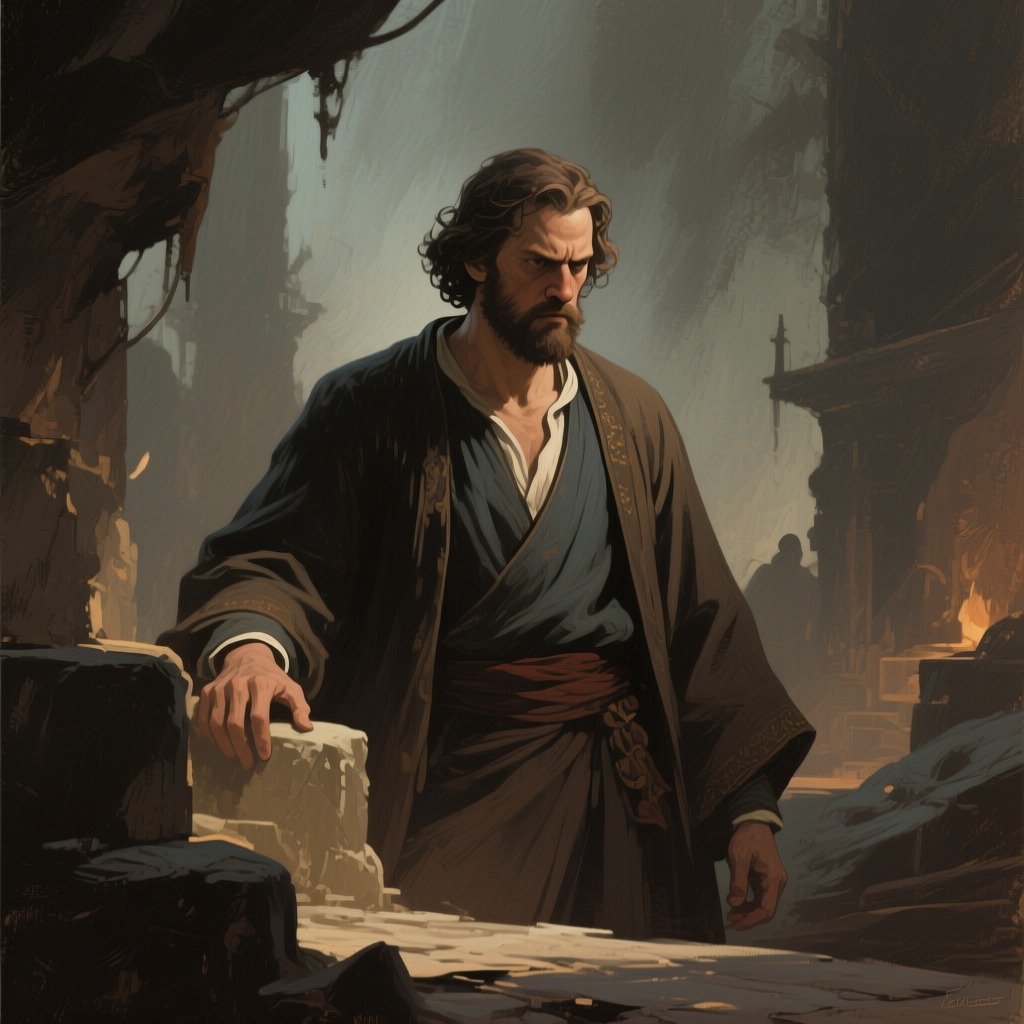
The Gravel Pit is a remote, unpaved excavation on the road to Lost Valley, outside Auburn, Maine. It appears in two distinct but thematically connected moments in the narrative: as the site where Ted Jones takes Sandra Cross after a violent incident at the Rollerdrome, and as the place where state police sharpshooter Daniel Malvern test-fires the Mauser rifle that will later be aimed at Charlie Decker. The pit thus links a private act of sexual coercion to the state's calculated use of lethal force, both unfolding in the same barren, isolated landscape.
Ted Jones and Sandra Cross at the Gravel Pit
After a brawl breaks out at the Rollerdrome, during which Ted Jones punches a boy who yells a crude remark at Sandra, Ted drives her to the gravel pit on the road to Lost Valley. There, in the back seat of his car, they have sex. Sandra later recounts that Ted did not use a condom as he had promised, but she did not become pregnant. She describes the encounter as "nice" but also notes that Ted apologized afterward, acted uncomfortable, and kept saying he would marry her if she got pregnant. When she called him "Teddy," he told her not to use that name because it was "a baby name." The gravel pit, then, is the setting for a sexual encounter that Sandra experiences as emotionally flat and that Ted treats with a mixture of aggression and anxious obligation. It is also the place where Sandra's sense of unreality—her feeling that her life is "fake," like a movie set—is momentarily broken, though the encounter itself does not leave a lasting emotional imprint.
Police Use of the Gravel Pit
During the hostage crisis at Placerville High School, the Maine State Police bring in their best sharpshooter, Daniel Malvern, a small man with a crew cut who looks like an accountant. Malvern takes a Mauser rifle with a telescopic sight to a gravel pit several miles away, test-fires it, and then returns to the school. He conceals the rifle down his pants leg, walks to a police cruiser parked on the lawn, and takes a prone position behind the front fender. Through the 30X cross-hatched lens, Charlie Decker appears as large as a bulldozer. Malvern waits until Decker half-rises and half-leans over Mrs. Underwood's desk, then fires. The bullet strikes Decker's breast pocket, directly over his heart, but is stopped by the steel padlock he had placed there earlier. The gravel pit, then, is the site where the state calibrates its violence—a place of preparation and precision, removed from the chaos of the school, where a man who looks like an accountant test-fires a weapon that will nearly kill a teenager.
Thematic Significance
The gravel pit functions as a geographical hinge between two forms of male violence: Ted Jones's coercive sexuality and the police's calculated lethality. Both occur in the same kind of place—a remote, worked-over landscape, stripped of vegetation, defined by absence and extraction. Sandra's encounter there is framed by her own passivity and Ted's anxious aggression; Charlie's near-death there is framed by the state's cold efficiency. The pit is where private domination and public authority converge, each using the same barren ground to enact their power. It is also the place where Sandra's story of sexual awakening and Charlie's story of survival cross without meeting: she leaves the pit with a memory of something "real" but emotionally hollow; he leaves it with a bullet-shaped dent in a padlock and a chest wound that will not bleed. The gravel pit, in the end, is a site of failed intimacy and successful marksmanship, a place where nothing grows and where two different kinds of violence are prepared and consummated.