Ted Jones
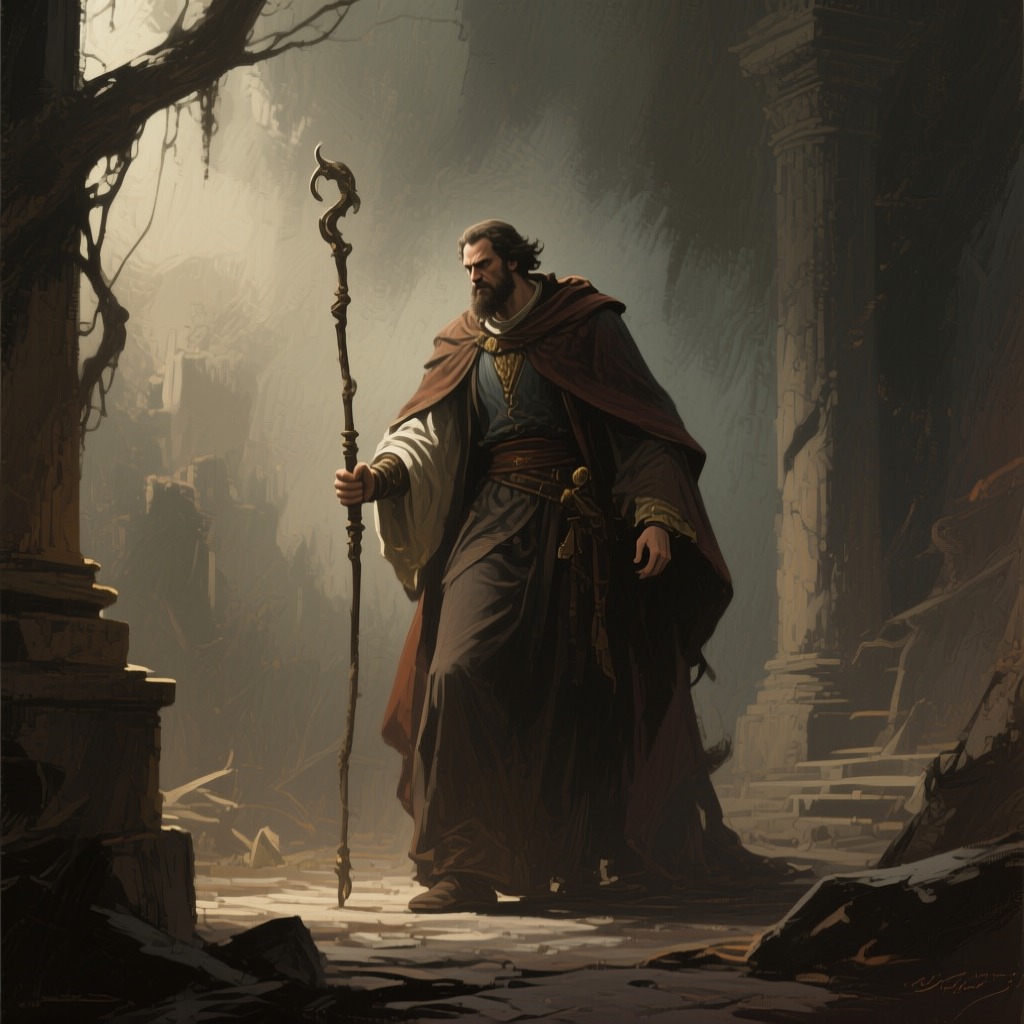
Ted Jones is the golden boy of Placerville High School — handsome, wealthy, and admired, the son of a bank vice-president and a boy whose natural charisma seems to place him above the petty struggles of his peers. Yet beneath this polished surface, the hostage crisis in Room 16 reveals a young man driven by a desperate need for control, a hidden family shame, and a capacity for cruelty that ultimately makes him the target of the very violence he tried to condemn.
Identity and Background
Ted Jones is introduced as a tall boy with an all-American name, driving last year's Mustang, combing his hair in an out-of-fashion DA, and never getting parking tickets. His father is vice-president of the Placerville Bank and Trust. Ted is the only student besides Charlie to pass a horrible algebra exam, and he sits closest to the door in Room 16. He had been the star running back of the Placerville High School Greyhounds, called the best the school ever produced, but he quit the football team suddenly in his junior year after three Saturdays of glory, offering no explanation except that football seemed like a pretty stupid game. His popularity did not suffer; if anything, he became more the local BMOC. Charlie Decker, who had always admired Ted from a distance, notes that Ted was never part of the circle he traveled in.
Arc Through the Plot
From the moment Charlie takes the classroom hostage, Ted positions himself as the moral opposition. He is the first to challenge Charlie's authority, demanding to know what he thinks he is doing. When Charlie orders the door shut and locked, Ted obeys but with a strange, savage smile that makes Charlie think he might be wondering how Charlie would taste. Ted's resistance escalates: he stands up and declares he will take the gun away, calling Charlie a "tin shit." Charlie deflects this challenge by asking why Ted quit the football team, a question that visibly stuns him. The secret is then exposed by Pig Pen: Ted's mother is an alcoholic who had to go somewhere to dry out, and Ted had to help with his family. Ted's reaction is volcanic — he threatens to kill Pig Pen, his face dead pale, his eyes red and baleful. When Charlie needles him about his mother, Ted finally breaks, screaming "Yeah, it was disgusting!" and calling her a "drunk bitch." This confession shatters his carefully maintained image, and the class's sympathy shifts away from him.
Relationships and Conflict
Ted's relationship with Sandra Cross is the most devastating revelation. Sandra describes their date to the Wonderland dance, the cocktails at the Hawaiian Hut, and how Ted was never fresh or nervous. But she also recounts a later incident at the Rollerdrome, where a boy skated by and yelled a crude remark, and Ted responded by yanking the boy back and forth by his jacket until it ripped, then hitting him again. Afterward, Ted drove Sandra to a gravel pit and they had sex in the back seat. He did not use protection, but Sandra did not get pregnant. He apologized afterward, acted uncomfortable, and kept saying he would marry her if she got pregnant. Sandra's account reveals Ted's possessiveness and his inability to handle the exposure of his own vulnerability. His relationship with his mother is the hidden wound: he calls her a "drunk bitch" under pressure, and later, when the class turns on him, he adds with strange irrelevancy, "I never meant what I said about my mother." His relationship with Charlie is one of escalating antagonism; Ted sees Charlie as a killer and a madman, while Charlie sees Ted as a politician whose eyes are clear and straight and frighteningly purposeful.
The Collective Attack and Its Aftermath
When Charlie asks the class to identify the final order of business, hands go up one by one — Pig Pen, Susan Brooks, Sandra, Grace Stanner, Irma Bates, and eventually all but one. Carol Granger articulates the consensus: "We have to help show Ted where he has gone wrong." What follows is a ritualized humiliation and assault. Sandra walks to Ted and slowly pops open the buttons of his khaki shirt. Pig Pen says he could pop Ted's eyes out like olives. Billy Sawyer pulls his hair. Irma Bates pushes a ruler down the back of his pants. Anne Lasky rubs the bridge of his nose with an eraser. Corky Herald dumps Carter's ink in his hair. Pat Fitzgerald whacks his bare shoulders with a notebook. Harmon Jackson pulls off one of Ted's shoes, rubs it in his inky hair, and slams the sole against his chest, leaving a huge footprint. Carol steps on his stockinged foot and twists her heel, snapping something in his foot. Pig Pen darts in and bites his nose. Ted weeps, begs, and speaks in unconnected phrases. He is left leaning against the wall, ink running down his cheeks, drooling, his eyes staring into emptiness. When Frank Philbrick arrives, he finds a "drooling Tedthing." An interoffice memo dated November 3, 1976, from Dr. Andersen describes Ted as a flat-line catatonic state with some signs of deterioration, and the doctor is loath to try shock treatments, though he admits he cannot justify his hunch. Ted Jones, the golden boy, has been reduced to a shell.
Thematic Significance
Ted Jones embodies the novel's central critique of the American ideal of success and normalcy. His polished exterior conceals a family secret, a capacity for violence, and a desperate need for control that makes him a mirror image of Charlie Decker — the difference being that Ted's violence is socially sanctioned while Charlie's is not. The collective assault on Ted is the novel's most disturbing scene, as it reveals that the line between victim and perpetrator, sanity and madness, is terrifyingly thin. Ted's catatonia is the final, ironic outcome of a system that demands perfection and punishes vulnerability: the boy who tried to be the hero ends up as the most broken casualty of the day.