Charles Decker
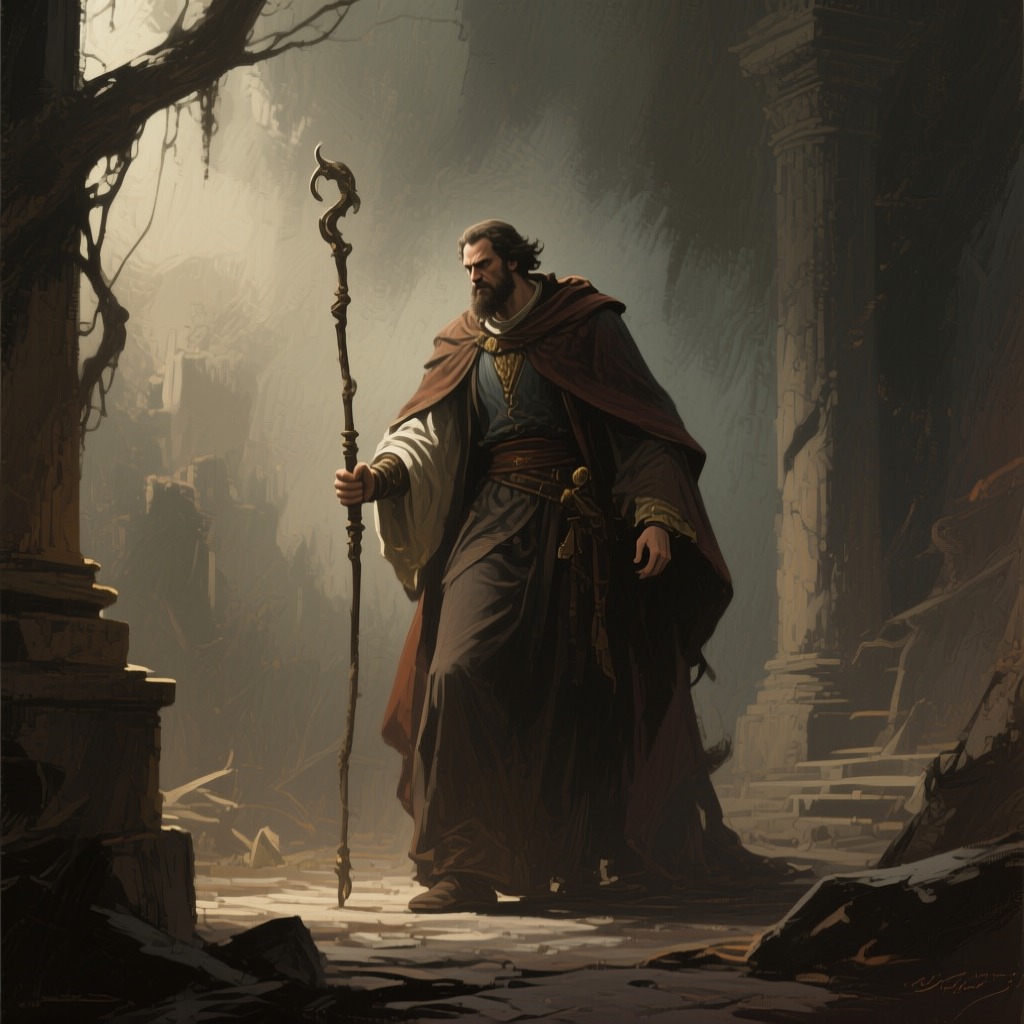
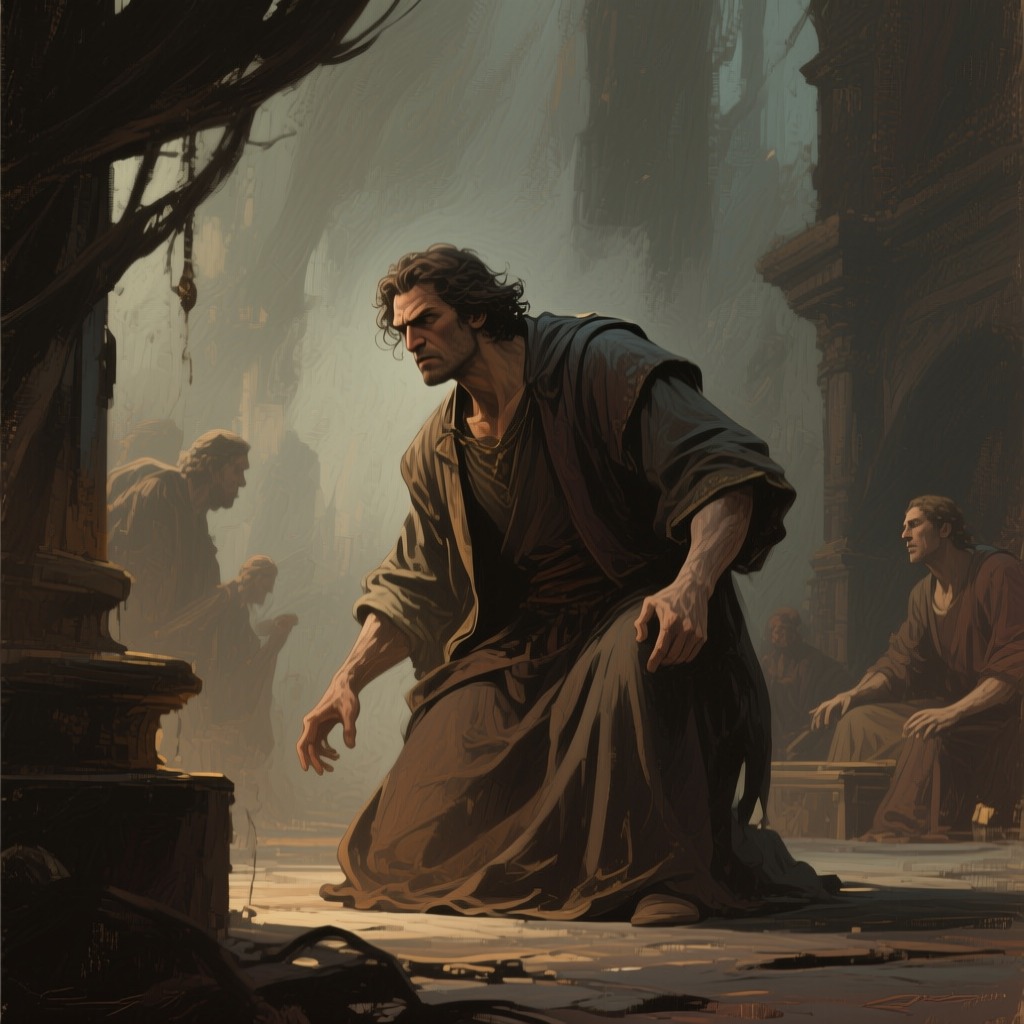
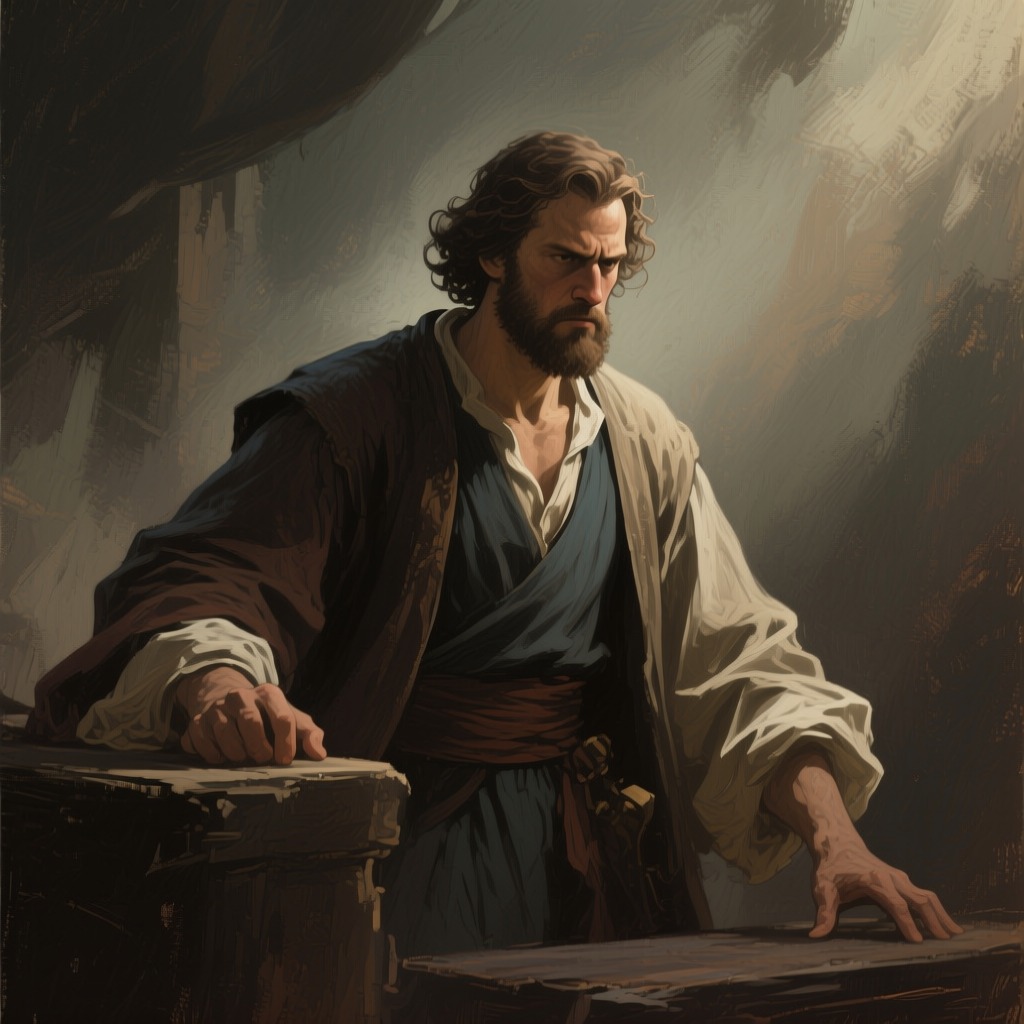
Charles Everett Decker, known as Charlie, is the seventeen-year-old narrator and central figure of Richard Bachman's Rage. A senior at Placerville High School in Maine, he is a bright but deeply troubled young man whose internal turmoil erupts into a shocking act of violence that holds an entire classroom hostage. His story, told in his own voice, is a harrowing exploration of the roots of extreme violence, the failure of social institutions, and the dark potential for cruelty that lies within a group of seemingly ordinary teenagers.
Identity and Background
Charlie Decker is the only child of Carl Decker, a rigid, authoritarian Navy recruiter, and Rita Decker, an intellectual and emotionally distant mother. From his earliest memories, Charlie's life has been marked by fear and trauma. His first conscious memory is of lying in the dark, terrified by a "Creaking Thing" he later realizes was his father's sexual aggression toward his mother (E00395-E00403). A pivotal childhood trauma occurred during a hunting trip when he was nine: hiding in a tent, he overheard his drunken father and his friends joking about violence, including his father's threat to slit his mother's nose if she were unfaithful, a threat he called the "Cherokee Nose Job" (E00070-E00075). This event, along with his father's contempt for his sensitivity, forged a deep-seated hatred and a sense of being a disappointment. Charlie's relationship with his father is one of open conflict, culminating in a physical fight in the garage where Charlie, armed with a hatchet, finally stands up to his father's belt (E01498-E01515). His mother, while protective, is often absent, retreating into her own world of books and puzzles, leaving Charlie to navigate his growing rage alone.
Life and Plot Trajectory
Charlie's senior year is a downward spiral. He suffers from chronic stomach problems, nightmares, and a growing paranoia. He begins carrying a pipe wrench to school for protection, a symbol of his escalating fear and aggression. The crisis point comes when he attacks his chemistry teacher, Mr. Carlson, with the pipe wrench after being humiliated at the blackboard, an assault that leaves Carlson with a fractured skull and splinters of bone in his brain (E01460-E01483). Suspended and facing expulsion, Charlie is sent to the school psychiatrist, Don Grace, whom he despises. On the morning of the hostage crisis, he is called to Principal Thomas Denver's office to discuss his fate. A tense, confrontational meeting ends with Charlie verbally humiliating Denver and being expelled, effective immediately (E00126-E00128). This final rejection triggers his complete breakdown. He retrieves a pistol from his father's desk, sets his locker on fire, and walks into Room 16, where he shoots his algebra teacher, Mrs. Jean Underwood, in the head . When history teacher Mr. John Downes Vance investigates, Charlie shoots him in the throat, killing him as well . He then takes the remaining twenty-four students hostage, beginning a siege that will last until noon.
Key Actions and Objectives
Charlie's primary objective during the hostage crisis is not escape or negotiation, but a desperate, performative act of self-destruction and exposure. He calls it "getting it on"—a process of forcing everyone, including himself, to confront the ugly truths they hide. He uses the school's intercom to psychologically torture Don Grace, forcing the psychiatrist to admit to lies and humiliating himself until he breaks down sobbing (E00594-E00721). He orchestrates a physical fight between two girls, Irma Bates and Grace Stanner, forcing them to air their grievances in a ritualized circle (E00760-E00772). He tells his own story of childhood trauma, failed sexual encounters, and violent confrontations with his father, laying bare his own psyche as a form of testimony. His ultimate, unspoken objective seems to be to force a moment of collective honesty, even if it means destroying everyone in the process. He repeatedly refuses to surrender, taunting the police and daring them to shoot him.
Relationships and Conflict
Charlie's relationships are defined by conflict and a profound sense of alienation. His bond with his only true friend, Joe McKennedy, is a rare source of warmth, but even Joe cannot reach him in his final breakdown. His infatuation with Sandra Cross, a "Nice Girl" he idealizes, is shattered when she reveals her casual sexual encounters, including one with Ted Jones, the popular, seemingly perfect student whom Charlie sees as a rival and a symbol of everything he hates (E01283-E01288). The central conflict of the siege is between Charlie and Ted Jones. Ted, whose own mother is an alcoholic, tries to challenge Charlie's authority and is met with a devastating counterattack: Charlie and the other students expose Ted's secrets, his mother's alcoholism, his sexual relationship with Sandra, and his hypocrisy. This conflict culminates in a shocking act of collective violence. When Charlie puts down his gun and declares he will not shoot Ted, the other students—including Sandra, Carol Granger, and Pig Pen—fall on Ted, beating, stripping, and humiliating him into a catatonic state (E01566-E01595). Charlie, having orchestrated this, becomes a passive observer, his role as the sole aggressor replaced by a mob.
Change and Ending
Charlie's arc ends not in a moment of redemption, but in a final, ironic twist. After the students leave, he is shot three times by police captain Frank Philbrick, who believes Charlie is reaching for a weapon . Charlie survives, is found legally insane, and is remanded to the Augusta State Hospital (E01638-E01643). The novel's final chapter, written from the hospital, shows a changed Charlie. He is quiet, compliant, and engages in mundane activities like jigsaw puzzles. He has a small secret—he hates the custard they give him but eats it anyway, a tiny act of private rebellion that makes him "feel like a human being again" (E01673-E01676). The narrative ends with him contemplating the yearbook his mother sent, hoping that when he looks at the senior pictures, he will no longer see the black ink stains on his classmates' hands—the physical evidence of their collective attack on Ted. This final image suggests a fragile, tentative hope for recovery, but also a deep, lingering trauma.
Narrative Role and Evaluation
Charlie Decker is the sole narrator and unreliable chronicler of his own story. His voice is raw, intelligent, and bitterly sarcastic, filled with literary allusions and a dark, self-aware humor. He presents himself as both a victim and a perpetrator, a sane man driven mad by an insane world. The novel's power derives from this first-person perspective, which forces the reader to inhabit his fractured psyche and confront the uncomfortable possibility that his violence is a logical, if extreme, response to his environment. Charlie is a classic "round" character in E.M. Forster's terms, capable of surprising the reader with his depth of feeling and his capacity for both cruelty and self-reflection. He is not a simple monster but a complex, tragic figure whose story serves as a devastating critique of American family life, the education system, and the repressive social codes of small-town life in the 1970s.