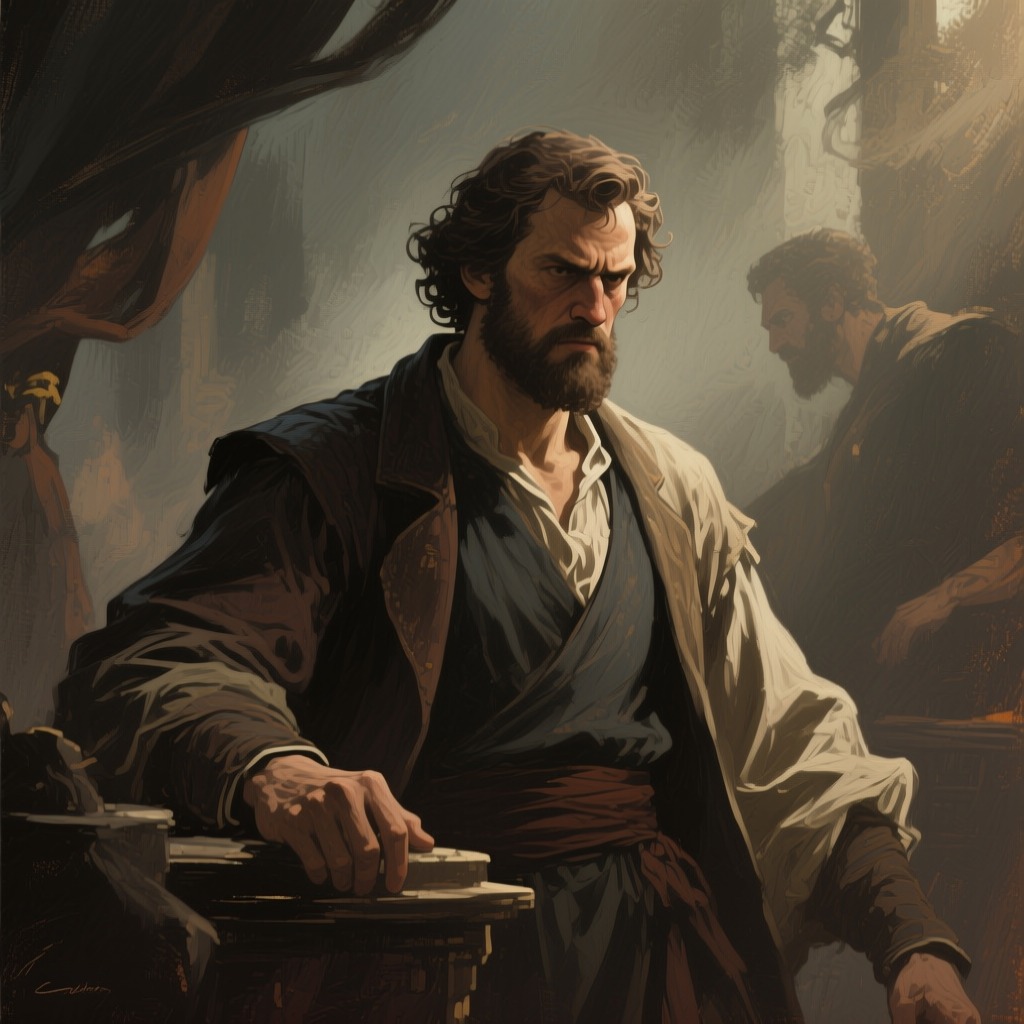
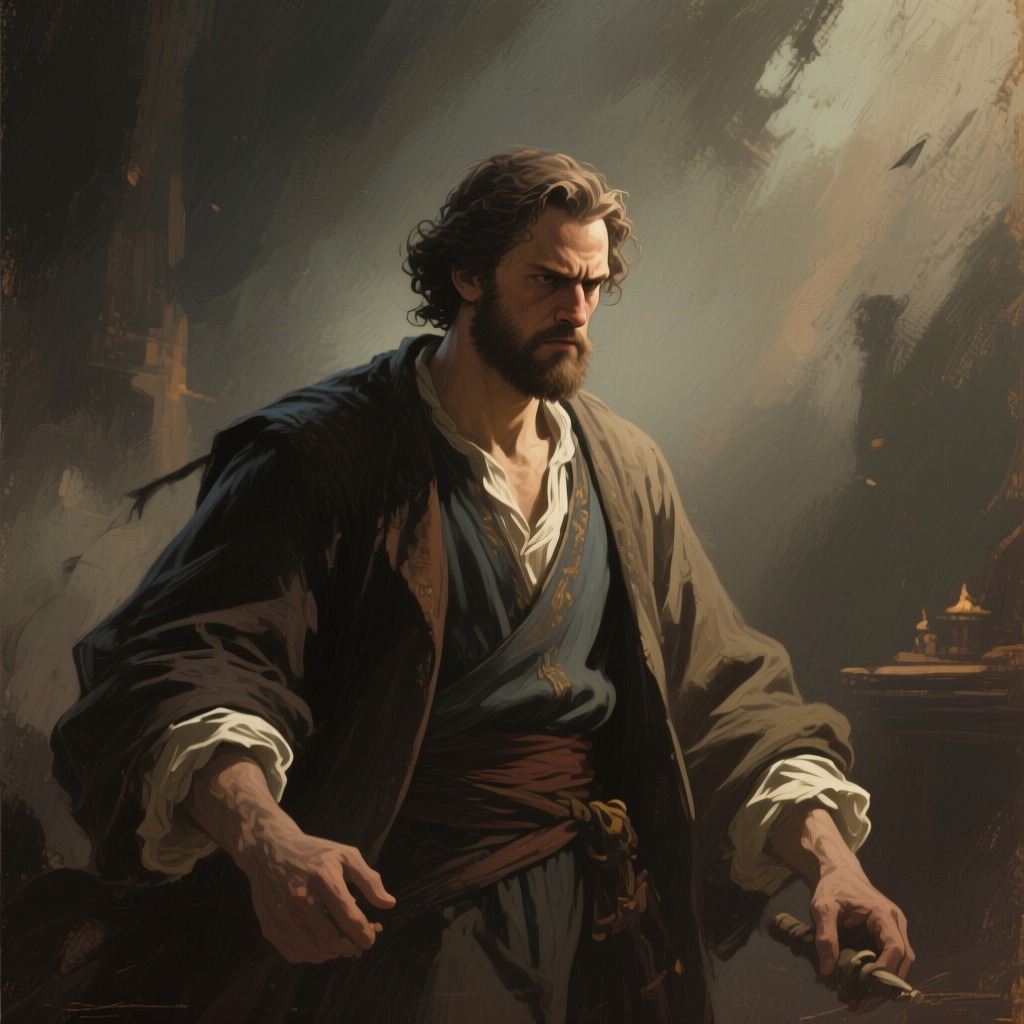
Hunting knife
The hunting knife is a recurring object in Charles Decker's account, a tool that carries the weight of his father Carl Decker's violent authority and the traumatic memories that shape Charlie's own descent into violence. It first appears in a childhood nightmare and later in the real-world horror of a hunting trip, and its shadow extends into Charlie's final confrontation with his father, linking paternal brutality to the psychological unraveling that culminates in the hostage crisis.
Identity and Symbolic Weight
The hunting knife belongs to Carl Decker, a Navy recruiter and avid hunter who keeps his tools in meticulous order. Charlie describes it as the knife his father carried in the woods, the same blade he later used to gut a deer, "slamming it into the deer's guts to the hilt and then ripping upward, the muscles in his forearm bulging, spilling out green and steaming intestines onto a carpet of needles and moss" . The knife is not merely a practical object; it is an instrument of domination, associated with the father's need to "Keep It Tight and Keep It Right" and his contempt for anything that falls short of his standards. In Charlie's memory, the knife becomes a symbol of the father's capacity for cruelty, both toward animals and, implicitly, toward his family.
The Hunting Trip and the Cherokee Nose Job
The knife's most traumatic appearance occurs during a hunting trip in the Allagash when Charlie is nine years old. Awakening in a tent, he overhears his father and his friends—Al Lathrop, Randy Earl, Scotty Norwiss, and guide Hubie Levesque—drinking and talking around a campfire. The conversation turns to marital infidelity, and Carl Decker produces his hunting knife, holding it up so that the firelight and the angle of the tent canvas transform it into a spear . He declares that if he caught another man with his wife, he would "whip him over on his back and cut off his accessories" . When Al Lathrop asks what he would do to the woman, Carl replies that the Cherokees used to "slit their noses" so that everyone in the tribe could see "what part of them got them in trouble" . Charlie, terrified and needing to urinate, watches the shadow of the knife move back and forth on the tent wall, and the memory of this moment—the knife as a threat of mutilation and control—becomes a recurring psychic wound. Three days later, Charlie witnesses his father use the same knife to gut a deer, and he vomits; his father's look of contempt confirms the gulf between them .
The Knife as a Weapon of Confrontation
The hunting knife reappears in Charlie's memory during his final confrontation with his father in the garage, after Charlie has been suspended for assaulting Mr. Carlson with a pipe wrench. Carl Decker, enraged, begins to take off his belt to beat Charlie, but Charlie refuses to submit. He tells his father he will take the belt away from him, citing the time he was thrown on the ground as a child and the hunting trip when Carl spoke of slitting his mother's nose . The knife is not physically present in this scene, but its symbolic weight is: Charlie's accusation directly references the Cherokee Nose Job, and the father's violent authority is embodied in the memory of the blade. When Carl lunges at Charlie with a hardhead rake, Charlie picks up a hatchet from the wall, and the two stand frozen, each holding a weapon, until Carl backs down . The hunting knife, though absent, is the ghost that haunts this standoff—the original instrument of paternal threat that Charlie must now match with his own.
Narrative and Thematic Significance
The hunting knife functions as a concentrated symbol of the father's violence and the son's inherited trauma. It is the object around which Charlie's earliest fears of castration and mutilation crystallize, and it reappears in his dreams and memories as a marker of the unbridgeable distance between him and his father. The knife is also a tool of revelation: it exposes the casual brutality of the adult male world that Charlie is expected to join, and it foreshadows the violence Charlie himself will commit with the pistol he later takes from his father's desk. In the novel's structure, the knife is part of a chain of weapons—the pipe wrench, the belt, the hatchet, the pistol—that trace Charlie's progression from victim to perpetrator. The hunting knife, however, remains the primal object, the one that first taught Charlie that power is exercised through the threat of bodily harm, and that love and cruelty are intertwined in the figure of the father. Its presence in the narrative underscores the novel's central theme: that violence is learned, inherited, and passed down through generations, and that the attempt to break free from it often only reproduces it in new forms.