Captain Granger
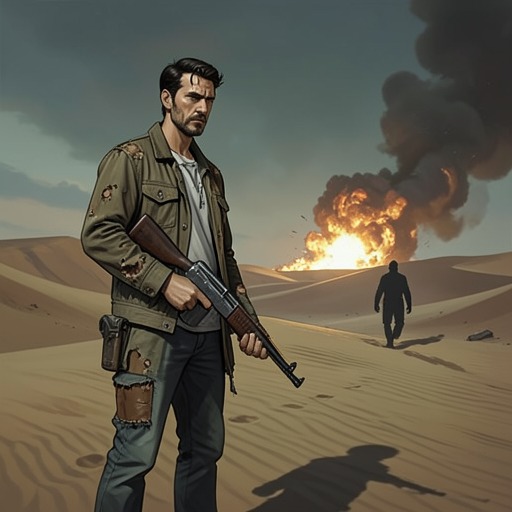
StrikeCaptain Granger is a SYLO commander whose authority is tested by catastrophe, suspicion, and the need to trust people he once endangered. First seen fighting to keep a damaged helicopter aloft, he appears to vanish when the craft crashes; later, he re-emerges to explain his ruthless defense of SYLO’s arks and to accept Tucker Pierce and his friends as credible allies. His arc turns a frightening military presence into a commander willing to act on evidence, acknowledge the cost of his decisions, and share danger with those he once nearly killed.
Identity and Command
Granger occupies the helicopter’s copilot’s seat as the SYLO commander while Cutter flies. His rank places him at the center of the group’s military crisis, but the crash makes clear that authority cannot guarantee control: when the aircraft spins, Granger struggles with the copilot’s stick, and the attempt does not stop it. The normally confident commander looks terrified. Even so, he keeps trying to save the people aboard, orders Tucker to pull Cutter away from the instruments, and warns the passengers to prepare for impact.
The wreck initially offers no answer about Granger’s fate. Tucker finds no bodies or survivors inside, and the copilot’s seat is empty; Granger, Tucker’s mother, and his friends are all gone. The scene establishes absence, not a confirmed death. Granger’s later appearance in Tucker’s room overturns the immediate impression that the crash has taken him out of the story and restores him as an active force in SYLO’s response.
The Cost of Earlier Decisions
Granger’s position on the same side as Tucker’s group does not erase his history with them. Tori Sleeper struggles with the knowledge that Granger ordered the attack on the rebel camp where her father was killed. The attack, she learns, had been intended to root out Retro infiltrators; that purpose does not make the loss easier for her to bear. Her reaction preserves the distinction between a military explanation and the personal grief caused by the order.
When Granger later speaks with Tucker, he supplies a broader account of the pressures behind his conduct. The battle had lasted more than a week, and SYLO eventually judged it hopeless and activated its arks as a last stand. SYLO landed on Pemberwick Island, Catalina Island, Fort Knox, and other locations. The plan itself proved compromised when the organization discovered how many Retro spies had infiltrated the arks. Granger admits that his methods on Pemberwick Island were ruthless, while explaining that he believed he was protecting the ark. His account makes his past actions legible as wartime decisions under infiltration and defeat, without undoing their consequences for people such as Tori.
From Suspicion to Trust
Granger’s return to Tucker’s life begins with a stark contrast: after Tucker has been confined and left waiting, Granger enters the room and addresses him formally as “Mr. Pierce.” The meeting moves beyond mere recognition when Granger says he believes Tucker, Sleeper, and Berringer. He also acknowledges that he nearly caused Tucker’s death, a remark Tucker answers by pointing out how often that danger has recurred. Their exchange holds both facts at once: Granger has endangered Tucker repeatedly, and he is now prepared to listen to him.
The question Granger puts to Tucker is strategically decisive: whether the Retros are preparing a second-wave invasion. His willingness to ask for certainty signals a change in the relationship between command and witness. Tucker’s group is no longer simply a threat or a source of trouble to be controlled; what they know may determine whether SYLO can respond in time. Granger’s trust is not presented as effortless reconciliation, especially given Tori’s unresolved grief, but as a practical and consequential choice to take their warning seriously.
Authorization and the Desert Plan
Granger’s acceptance of the warning leads into coordinated action. After Tucker thanks Richard E. Neff, Neff turns to Granger and gives him a one-word order: “Go.” Granger answers with enthusiasm, suggesting that authorization is what he had been waiting for. His response joins the personal decision to believe Tucker’s group with the larger institutional decision to act against the approaching danger.
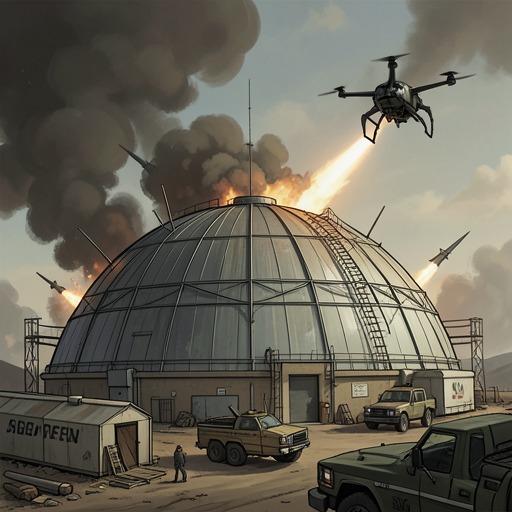
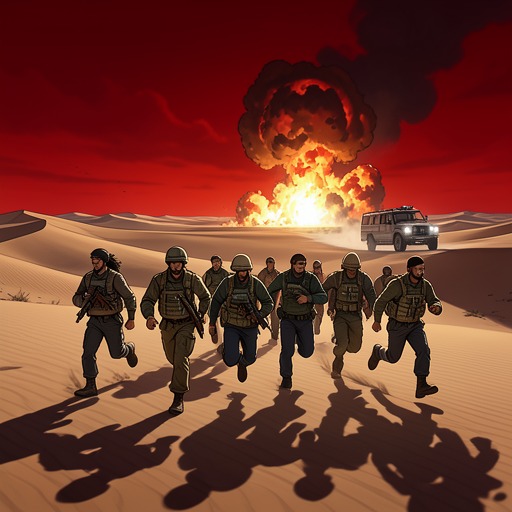
Granger then explains the conditions for the desert operation. Tucker and his companions will travel with him in his helicopter, while ground troops establish a broad perimeter around the base, beyond the Retros’ sight lines. The force is to hold there until it is confident that the Retro drones have been grounded. If that confirmation does not come, Granger says, they will not attack: they would be cut down before reaching even half a kilometer from the camp’s perimeter. The instruction defines his command style in this operation through restraint as well as resolve. Advancing is not treated as courage by itself; the plan depends on waiting until the force has a viable chance of reaching its objective.
At the point where the vehicles stop and SYLO’s soldiers begin unloading, Granger surveys his troops and tells Tucker’s group, “This is where we part.” He knows Tucker will not simply stay behind, but still marks the boundary between the military movement and the companions’ next actions. Tucker thanks him. The brief exchange closes this stage of their cooperation without pretending their histories have disappeared: Granger has accepted their warning, helped set the assault in motion, and reached a point where he must continue with his troops while Tucker’s group goes its own way.
Character and Narrative Significance
Granger’s role is built around reversals in what his conduct means. In the helicopter, he is a frightened commander who cannot control the aircraft but continues trying to save its occupants. In Tori’s memory, he is also the officer whose order cost her father’s life. In his account of the arks, he is a ruthless defender responding to a collapsing military position and hidden Retro infiltration. By the desert operation, he is a commander who can accept a warning from the people his decisions have harmed and make action conditional on a concrete tactical safeguard.
These shifts do not amount to a simple absolution. Granger’s explanation gives context to his choices, while Tori’s pain and Tucker’s recollection of repeated danger keep their human cost in view. His importance lies in the movement between those perspectives: he remains a figure of military authority, but cooperation requires him to listen, explain himself, and place a limit on what his troops will attempt. The story makes trust operational rather than sentimental—visible in his belief in Tucker’s group, Neff’s authorization, the drone-dependent plan, and the eventual separation at the roadside.