Retros
StrikeThe Retros are the faction controlling the future United States Air Force, whose plan to save the world by resetting civilization turns into a campaign of mass killing and an invasion of the past. Their advanced weapons and enormous military capacity make them a formidable opponent for SYLO, but their stated purpose never resolves the central contradiction of their project: they claim to protect humanity by destroying much of it and forcing survivors to build for them.
Identity and Historical Setting
The Retros control the United States Air Force during a civil war with SYLO, the Navy-based force resisting them. Their conflict reaches Pemberwick Island, where SYLO establishes a base and quarantines the island under the false claim that a virus is present. The quarantine is a military measure in a war that has already spread beyond the island; SYLO is trying to protect it from the fate the Retros have brought elsewhere.
That fate is described as a purge that kills three quarters of the world’s population. The Retros justify their actions as protection from an even worse future, but the people caught in the conflict see no corresponding territorial conquest or new government. To them, the deaths seem to produce death alone. The scale of the destruction is therefore not incidental background: it is the defining result against which the Retros’ claim of rescue must be judged.
The Retros’ advantage is also material and technological. Their aircraft fire energy bursts that are invisible but destructive, while SYLO lacks comparable technology. When a SYLO helicopter is attacked, the difference between the forces makes the civil war appear profoundly unequal. The Retros’ weapons are only one part of that imbalance; their capacity to keep deploying aircraft gives them a strategic reserve that SYLO cannot match.
The Reset and Its Human Cost
The Retros’ explanation for the violence comes through Feit, who tells Tori Sleeper and Tucker Pierce that SYLO is leading the world toward calamity and that civilization must be reset to save it. This account gives the campaign a stated purpose, but the evidence available to those held by the Retros is chiefly its consequences: mass death, imprisonment, and labor imposed on survivors. The claimed necessity does not make those methods less destructive, and the gap between rationale and practice sustains the characters’ uncertainty about who is directing the plan and what its ultimate objective is.
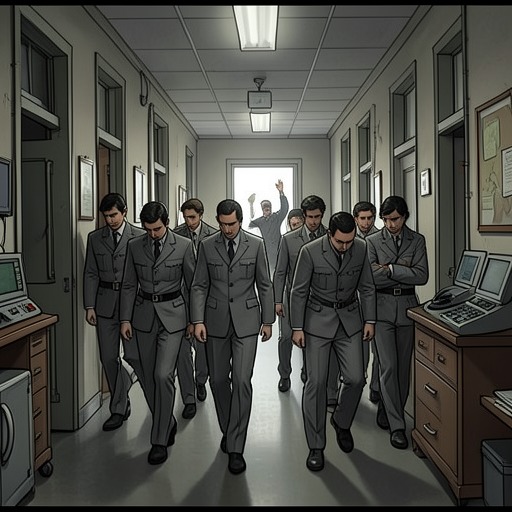
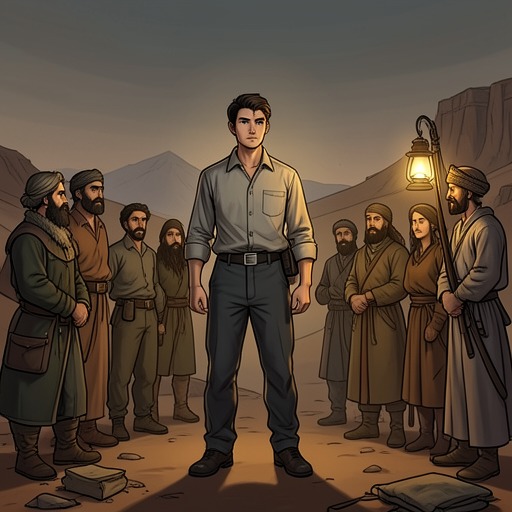
At Fenway Park, Tucker Pierce and Tori Sleeper witness survivors being treated as slaves, given Ruby for increased strength and speed, and compelled to work on a project Captain Granger calls the Gate to Hell. In a medical facility, injured prisoners are handled with little personal attention, identified by numbers printed on their clothing rather than by names, and given treatment that rapidly heals their bodies. The scene suggests that medical recovery serves the Retros’ labor system: the prisoners’ value is measured by their usefulness in rebuilding the world for their captors.
This system extends beyond individual work details. Prisoners believe they are building a large facility intended to house thousands of Retros, making the camp seem like a staging area for arrivals from elsewhere. The facility and the labor imposed to construct it connect the daily coercion of captured people to a wider undertaking. The Retros do not merely defeat opponents; they organize surviving people and resources around a future they control.
Military Power and the Invasion
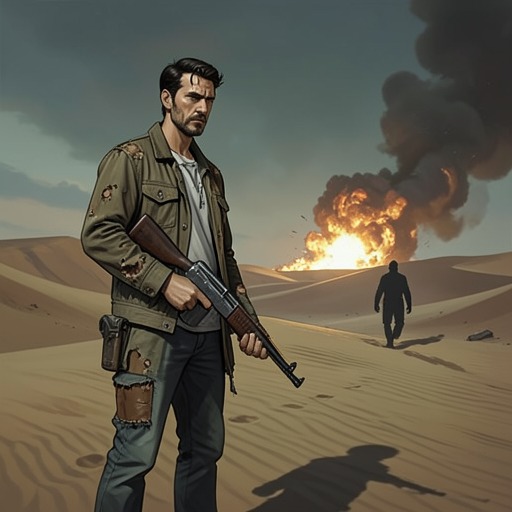
The Retros’ return to the Mojave Desert demonstrates that the destruction of their fleet at Area 51 has not ended their military power. A black attack plane rises vertically from a dome and departs, showing that aircraft are still being produced or supplied from a source inside the structure. SYLO fighters lie wrecked across the desert after attacking the dome, having been brought down by drones and antiaircraft guns. The dome remains secure, the Retros remain capable of rebuilding their fleet, and SYLO’s earlier victory has not removed the threat.
The Sounders explain why that imbalance matters to the invasion. SYLO’s commanders do not know that the Sounders exist, and SYLO has lost its nuclear arsenals and the capacity to manufacture replacement conventional weapons. By contrast, the future Air Force can send large numbers of machines back to the past and replace losses. Its next offensive is planned as a scorched-earth attack against cities, followed by another wave intended to finish off survivors. In the Sounders’ assessment, SYLO cannot win by attrition; closing the Bridge is the remaining way to stop the invasion and allow the people of the past to rebuild.
The Retros’ forces also appear in close pursuit of escaping prisoners. After an alarm is raised, soldiers converge on a fleeing group and fire pulsers at their Humvee. The vehicle takes repeated energy impacts but continues moving as its driver swerves to avoid being hit; Tori Sleeper and Chief Brock return fire, forcing some attackers to scatter. The episode presents the Retros’ security apparatus as active beyond the great strategic battles: its troops pursue people attempting to escape, while the prisoners’ flight turns into an armed confrontation.
The Battle for the Dome
During the later assault on the camp, the Retros’ own aircraft appear to turn against them, producing confusion among the soldiers. Artillery crews hesitate because they are unsure whether to fire on their planes, and that delay allows drones to attack the guns. The Retros’ response inside the camp is to herd the prisoners into barracks and lock them in, a tactical choice that keeps guards occupied while the dome is contested.
The Sounders, already embedded in the camp, prepare to defend the structure. They place armored vehicles across its open entrance and take positions inside, where their heavier weapons give them an advantage over the Retros’ smaller pulsers. The initial assault is repelled, but the defense becomes a standoff when the Retros regroup and press forward with greater numbers. Their commanders send soldiers into the attack despite heavy losses; a few reach the entrance, but the Sounders prevent them from entering. The sequence shows both sides’ different advantages: the Sounders hold a defensible position and superior firepower, while the Retros can reinforce their attack with more troops.
Resistance, Consequences, and Legacy
The Sounders’ opposition exposes a division within the future military itself. They resist the invasion from within the same broader military order the Retros control, and they seek SYLO’s intervention because they believe the past’s remaining population will otherwise be eradicated. Their effort does not erase what has already happened, but it changes what can happen next: after the Bridge is closed, the Retros can no longer send forces into the twenty-first century.
The closure does not restore the devastated past or erase the Retros’ future. Olivia explains that the future still exists, while the people of the twenty-first century must live with the invasion’s consequences and rebuild from what remains. The outcome is therefore a boundary, not a universal undoing: the Retros lose access to the past, but the damage inflicted there remains part of that timeline’s history.
The novel also complicates any simple separation between the Retros’ cruelty and the conditions that produced them. Tori Sleeper argues that they became killers because of what they endured, while insisting that this does not justify their actions and warning that the same pattern could recur. That distinction preserves responsibility without treating violence as inexplicable. The Retros are both perpetrators of a mass atrocity and the products of a desperate history; stopping their invasion prevents further harm, but it does not make the cycle that created them disappear.