Kent Berringer
StrikeKent Berringer is a survivor of the crash, a prisoner who refuses to let fear turn suffering into a spectacle, and one of Tucker Pierce’s most dependable companions. Across the group’s flight from a Retro prison camp and return to the future, his defining change is relational: the sarcastic friend Tucker once disliked becomes someone he trusts without reserve and loves as family. His devotion to Olivia, meanwhile, draws him toward danger with a different, more immediate force.
Identity and Introduction
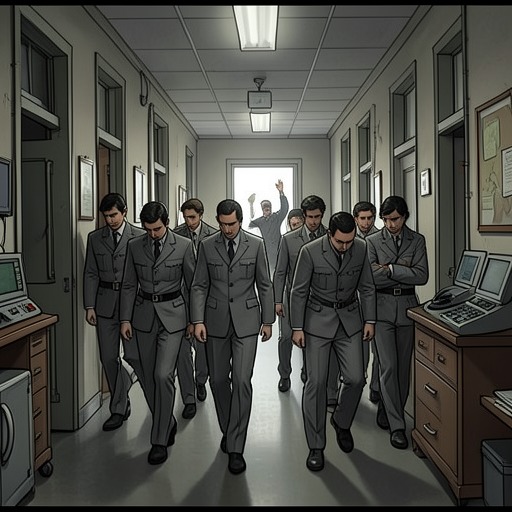
Tucker first recognizes Kent among the people involved in a fight after the crash. The sight brings relief: Kent has survived, and his survival means there may also be hope for Tucker’s mother and Tori Sleeper. Kent stands a few inches taller than his opponent. His beach-blond hair has begun to darken and grow longer since the group left Pemberwick Island, a visible reminder of the time and distance separating them from home. The altered appearance registers not as a new identity but as evidence of how much has happened since they were together.
The reunion places Kent inside a conflict he did not choose. He is one of the fighters, but the surrounding prisoners and guards frame the encounter as entertainment. When the other prisoners are asked whether they will die with dignity or for their captors’ amusement, Kent lets go of the jeep, stands upright, and refuses to keep performing. He tells the guards that if the prisoners are going to die, the guards should kill them rather than make a show of them. His words redirect the moment: the crowd does not cheer, but its muted response is the first sign Tucker has seen that the prisoners have not entirely given up.
Dignity and the Prison Camp
Kent’s refusal is a small act with a collective consequence. It does not free the prisoners or end the danger, but it breaks the silence around their treatment and gives Tucker a measure of hope. Tucker is proud of him and worries about what the stand might bring down on him. The importance of the act lies partly in its novelty: Tucker sees Kent display a resolve he had not seen from him before. In a camp organized around control, even a refusal to participate on the captors’ terms becomes a way of asserting that the prisoners remain people rather than an audience for one another’s humiliation.
After the jeeps leave and the floodlights return, the prisoners disperse to their barracks, leaving Kent and Tucker alone in the field. Kent, breathing hard, tells Tucker he will not fight him. Tucker answers by asking whether he is all right; Kent replies that he is better off than the other man. The exchange holds both the aftermath of the confrontation and their habitual closeness: Kent can still answer with dry humor, but he also makes clear that his opposition is not directed at Tucker. Their brief conversation replaces the crowd’s spectacle with a private, mutual concern.
That bond deepens when Tucker saves Kent’s life. As Kent sits receiving treatment through a tube connected to his arm, he thanks Tucker sincerely and addresses him by his name, rather than using the sarcastic nicknames Tucker has grown used to. Tucker finds the gratitude and the unfamiliar form of address surprising. He attributes the change to their repeated brushes with death, while explaining that he acted without thinking when he saw someone sneaking up on Kent. The scene marks a shift in their friendship: danger has made their dependence on one another explicit, and Kent’s thanks lets Tucker hear that dependence directly.
Loyalty in Flight
Kent’s loyalty becomes most visible when the group is forced to decide whether to separate. Amid an air battle, Tori insists that they will not split up again. Kent backs her up: even if the plan means running toward a target others are fleeing, they will go together. Tucker sees that Tori will not be dissuaded, then hears Kent make the same commitment in his own terms. They came together and, he insists, will leave together; Tucker will not face the danger alone. Tucker thinks of the two as his friends and family. Kent’s words turn that emotional bond into a practical rule for their decisions.
Later, escape requires trusting Olivia and the Sounders. When the group questions whether they are expected simply to go outside and run through the city, Olivia asks them to trust her. Kent answers that he does, and the account makes clear that he means it. They descend to a cooler level below ground, where a Sounder directs them through double doors toward a car. Kent’s confidence is significant not because the route is safe, but because he accepts reliance on people whose plans he cannot fully see.
He is also candid about the scale of what lies ahead. The proposed route means crossing a city filled with Retros searching for them, returning to the dome, entering it, crossing the Bridge to the past, escaping the work camp, traversing empty desert, reaching SYLO, and persuading Captain Granger to attack the base. Kent calls the plan implausible and wants everyone to understand the risks. But after looking to Olivia and taking a breath, he tells Tucker that he has followed him through the gates of hell once already and trusts nobody more. His objections are not a withdrawal: he is testing the plan aloud, then choosing to stand by Tucker if Tucker proceeds.
Family, Love, and the Endgame
Kent’s commitment extends beyond the group’s immediate escape. When Tucker resolves to get his mother out, the president reports that both of Tucker’s friends demanded to go as well and that Mr. Berringer was particularly insistent. Kent’s presence in the endgame is therefore not incidental. He volunteers to share the risk of a rescue that matters personally to Tucker, even when the wider operation already exposes the group to danger.
Before they set out, Kent steps up to Tucker and Tori and throws his arms around them. The gesture is so unlike his usual manner that Tucker does not know how to react. Kent tells them he loves them. Tori and Tucker join the embrace, which lasts about thirty seconds before Kent breaks it off and turns back to action. Tucker acknowledges the contradiction at the heart of their friendship: he does not like Kent, yet he loves him, and he knows Tori feels the same. The scene does not erase Kent’s sarcasm or their friction; it shows that affection has grown large enough to include both.
During the final operation, Kent, Tori, and Tucker run into the infirmary, where they find the woman who had earlier given them the Sounder sign and allowed them to sleep beside Kent while he recovered. They have come looking for Tucker’s mother, but the woman backs away in fear and warns them that they do not belong in a hospital. The return to this particular room links the rescue effort to Kent’s earlier recovery: a place associated with his vulnerability becomes part of the search for Tucker’s family. The evidence establishes their arrival and the woman’s reaction, but not the outcome of that search.
Olivia and the Bridge
Kent’s love for Olivia provides the clearest image of his priorities in the final crisis. He crosses the Bridge minutes before Tucker and Tori. On emerging into the future, he sees Olivia lying on the ground fifteen yards in front of the frame. He does not notice that Colonel Pike is dead, the white cylinder is counting down, or Feit is at the bomb’s control panel trying to enter the shutdown codes. His attention fixes on Olivia, whom he loves; he runs to her and falls to his knees beside her head.
The scene makes his devotion both tender and dangerous. The countdown and the effort to stop the bomb remain urgent, but Kent’s first response is to reach the unconscious woman he loves. His action completes a pattern established throughout the story: he can assess a plan’s hazards, insist that the group face the risks honestly, and still commit himself when someone he loves is in danger. As Tucker’s ally, he turns trust into collective resolve; as Olivia’s beloved, he moves toward her before anything else. The account leaves him beside her at a moment when both the rescue and the larger crisis remain unresolved.