Event 1
Arrival of the Wright Family at Castle Dracula
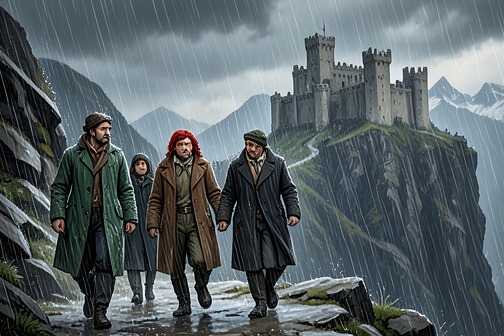
The [Arrival of the Wright Family at Castle Dracula](entity:event-recall-event-arrival-of-the-wright-f-3aabb5b800ea) marks the decisive threshold between the Wright family’s ordinary journey and the hidden supernatural world governed by [Vlad Dracula](entity:character-recall-character-vlad-dracula-e0ec58b6d207). Diverted by a storm, forced into the mountains, and drawn toward a castle at the edge of a precipice, the family loses control of its route before it ever meets its host. The event’s final reversal is both social and supernatural: the apparent refuge is Dracula’s home, and the stranger who receives them already knows Earl Wright’s name and expected arrival.
## Causes and Background
A violent storm has cut off the pass leading to the village, scattering large rocks across the road and leaving only a dangerous route into the mountains. The Transylvanian guide [Ovidiu](entity:character-recall-character-ovidiu-a45a829708d0) is so frightened that he appears close to sitting down and crying, while Earl Wright impatiently insists that the family must continue because of an important connection awaiting them in the village. The blocked road therefore creates the immediate cause of the arrival: the family does not choose the mountain road as part of its intended itinerary but is compelled onto it by an obstruction that seems almost purposeful.
[Lady Glynis Wright](entity:character-recall-character-lady-glynis-wright-206a9887f2cd) interprets the fallen rocks as a possible sign that God does not want the family to visit the Count, though she admits that she does not truly believe this and dreads continuing. Earl Wright dismisses such thinking, declaring that the year is 1819 and that they are beyond believing in signs. His confidence converts a warning into a practical inconvenience, but the narrative makes the obstruction feel more consequential than he allows. The family proceeds precisely when the road has begun to resemble a prohibition.
## The Mountain Road and the Castle
The carriage lurches forward and begins its ascent into a darkening forest. As the sun descends, shadows fill the valleys, [May Wright](entity:character-recall-character-may-wright-3d98d113a9e3) falls asleep in [Antoinetta Wright](entity:character-recall-character-antoinetta-wright-fdca197148ff)’s arms, and Earl Wright stares blankly into the wilderness. The carriage becomes a tiny enclosed haven moving through an increasingly hostile landscape, while the silence inside contrasts with the danger outside. The ascent is treacherous, and the horses race faster as darkness gathers, throwing the passengers against the carriage with every curve.
During this passage, Lady [Glynis Wright](entity:character-recall-character-glynis-wright-d6dbb6432ea3) sees a beautiful woman beside the road, dressed in a white gown with long blond hair blowing in the wind. The woman appears ghostly, yet she reaches out when Glynis impulsively extends her own hand, and their fingertips touch. Glynis responds by putting her frozen finger into her mouth, a small physical gesture that makes the apparition’s strangeness immediate rather than merely picturesque. The encounter prepares the family for a world in which the boundaries between the visible and the supernatural are already permeable.
The forest suddenly disappears, revealing a dark chasm beneath the carriage and a road leading directly toward a great castle resting on the edge of a precipice. The sight changes the journey’s meaning. What began as a detour now appears to have delivered the family to an isolated and dangerous destination. Antoinetta, relieved to see a building, thanks God, but the castle’s position makes it an ambiguous refuge: it promises shelter while standing above an abyss.
## First Encounter with Vlad Dracula
At the castle door, Lady Glynis Wright notices a momentary change in Earl Wright’s demeanor and thinks she sees fear in his eyes before he regains his composure and knocks. Ovidiu, by contrast, openly begs to leave and clutches his heart while staring at the door. Their different reactions establish two forms of resistance to the place: Earl Wright suppresses alarm in order to preserve authority, whereas Ovidiu recognizes the danger without attempting to disguise it.
The door opens and a lantern-bearing man appears, his face initially concealed by the low light. The entrance does not offer a clear human welcome; it first presents an obscured figure emerging from darkness. The stranger then addresses Earl Wright by name and says that his arrival is a surprise because he was not expected until the following day. This knowledge unsettles the family’s position as travelers who have arrived by accident. Their host is already informed about them, and the supposed accident has entered a larger pattern that they do not understand.
The man identifies himself as Vlad Dracula. He speaks with a low, seductive, powerful voice marked by the accent of the country, and his presence chills Lady Glynis Wright. When he raises the lantern, his green eyes come sharply into focus and fix upon Glynis. He smiles with sensuous lips, claims that strange things happen on nights such as this, welcomes the family to his home, and names himself Dracula. The exchange therefore combines hospitality with possession: the castle is introduced as his home, while his gaze singles Glynis out at the very moment the family crosses its threshold.
## Narrative Function and Consequences
The event functions as an entrance into a Gothic threshold space rather than as a simple change of location. The storm, the blocked pass, the dark forest, the apparition, the chasm, and the castle form a sequence of increasingly forceful displacements. Each stage removes the family farther from ordinary travel and closer to Dracula’s domain. The road is not merely difficult; it redirects the family away from its intended destination and toward a household whose master possesses foreknowledge of their arrival.
The value at stake shifts from the family’s confidence in safe travel to their dependence upon a host whose intentions remain concealed. The castle appears when the travelers need shelter, making hospitality inseparable from vulnerability. Earl Wright’s refusal to treat the blocked road as a warning, Antoinetta Wright’s relief at seeing the castle, and Ovidiu’s plea to depart all acquire an ironic force once Dracula receives them. The welcome resolves the immediate crisis of exposure to the mountain night, but it establishes the larger crisis of captivity, danger, and supernatural entanglement that follows.
As narrated through Lady Glynis Wright’s perspective, the arrival also establishes the pattern by which attraction and fear will coexist. She is unnerved by Dracula’s power, yet the scene gives his first attention to her rather than to the family as a whole. The contact with the ghostly woman, the sensation of Dracula’s gaze, and the castle’s placement over the chasm make the threshold simultaneously intimate and immense. The family has reached shelter, but it has also entered the space from which its former assumptions about signs, safety, and human identity will be transformed.
Event 2
Dracula’s Failed Marriage Proposal to Glynis Wright
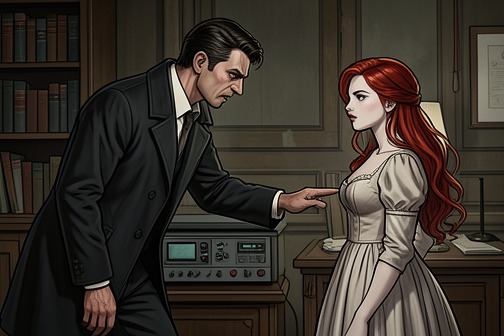
[Dracula’s Failed Marriage Proposal to Glynis Wright](entity:event-recall-event-dracula-s-failed-marria-8b63046dc106) is the decisive turning point at which [Vlad Dracula](entity:character-recall-character-vlad-dracula-e0ec58b6d207)’s apparent courtship becomes an act of coercion. The proposal is rejected not because Glynis is merely uncertain about romance, but because her family recognizes that the invitation to marry is inseparable from the false welcome, the decayed castle, and Vlad’s demand for authority over her future. The scene establishes marriage as the language through which Vlad attempts to convert desire into ownership, while the Wright family’s resistance briefly preserves Glynis’s right to leave.
## Background and Gendered Expectations
The conflict grows out of Glynis’s earlier resistance to the restrictions placed upon women. In conversation with [May Wright](entity:character-recall-character-may-wright-3d98d113a9e3), she rejects the idea that freedom requires becoming a man; she wants to live as a woman without the constraints imposed on women by society. That desire makes Vlad’s proposal especially significant. He offers the conventional form of female elevation—a noble husband, a titled household, and a prestigious marriage—while simultaneously reproducing the very subordination Glynis wishes to escape. Her father, [Edric Wright](entity:character-recall-character-edric-wright-a2e0d8d275ea), articulates the family’s social expectation differently: a daughter should be given a suitable husband, but suitability requires a safe and honorable home rather than rank alone.
Vlad’s proposal also follows the family’s discovery that [Dracula’s Castle](entity:location-recall-location-dracula-s-castle-c64a3de1e334) is not the estate they expected. Edric tells Vlad that the Wrights would never have undertaken the journey had they known the castle’s condition. Their daughters are described as the family’s greatest treasures, and Edric refuses to allow Glynis to marry Vlad simply because the family traveled there under a false impression. The contrast between the ancestral castle and Vlad’s modern house in [Buda](entity:location-recall-location-buda-89e5673736b2) becomes central to the refusal: Vlad insists that he can provide a lifestyle appropriate to Glynis’s station, but the family has already judged the castle and the circumstances surrounding it.
## The Proposal and Rejection
At dinner, Edric sets the confrontation in motion by placing down his fork and informing Vlad that the family will leave at dawn. He has already spoken with the driver and guide, and his stiff posture and cool voice show that the announcement is deliberate rather than conversational. Vlad’s reaction is immediate and disproportionate. Rage darkens his face, startles Glynis, and sends her spoon clattering to the floor before he demands an explanation.
Vlad then reveals that he had written to [Sir Stephen Sheridan](entity:character-recall-character-sir-stephen-sherida-ea5ff6fa0c5c), his close friend in Buda, because he believed he had made clear that he wanted a marriage contract with the Wright family. His conception of courtship is contractual and dynastic. When Edric suggests that marriage might be discussed after Vlad reaches [England](entity:location-recall-location-england-b153c1f368ea), Vlad refuses to defer the matter. He presents himself as wealthy, prestigious, nobly born, titled, and powerful, treating these attributes as reasons why Glynis’s hand should be granted. The argument assumes that a woman’s consent can be secured by the social advantages possessed by the man who asks for her.
Edric answers that what is proper is to find a suitable husband for his daughter, but he defines suitability against Vlad’s terms. The family belongs in England, and [Antoinetta Wright](entity:character-recall-character-antoinetta-wright-fdca197148ff) adds that Buda is not the place for Glynis. Edric orders that the family will leave the following day and expects Vlad to respect the decision. His firmness briefly reverses the power dynamic: the host becomes the man being confronted, and the visiting family asserts its authority over Glynis’s marriage.
Vlad responds by separating Glynis from the rest of the family. He says that the others may leave but that Glynis will stay, transforming a proposal into an ultimatum. Both Antoinetta and Edric reject the demand immediately. Vlad asks Edric once more whether he will leave Glynis behind to become his bride, making the question less a request than a test of submission. Edric throws down the napkin he has been clutching and declares that he would never abandon his daughter. His refusal is calm but openly furious, and Glynis experiences it as both a source of pride and a warning that Vlad’s authority has been challenged.
## Threat, Captivity, and the Failed Escape
Vlad’s final response gives the event its ominous force. After taking several deep breaths and slowly sitting down, he permits the family to leave but tells them that they have chosen their own destiny and that their fate is of their own choosing. The phrasing disguises retaliation as consequence. Vlad presents himself as merely acknowledging a decision, yet the threat is unmistakable: refusing him will carry a price.
The family’s attempt to depart therefore does not restore ordinary freedom. Glynis later finds herself confined in the castle, where she describes the disappearance of her former life and the torment of having to survive as a Vampire under Vlad Dracula’s control. The rejected proposal has become the ideological foundation of her captivity. Vlad’s demand that she remain as his bride is enacted through the rules of the castle, the authority of the Master, and the expectation that the new Bride must obey. When [Cneajna](entity:character-recall-character-cneajna-cc5dab651a46) Wright’s transformed counterpart orders Glynis to answer Vlad’s summons, she calls the command her duty; Glynis answers that duty is damned and refuses to let Vlad touch her again. The scene shows how the language of marriage is converted into compulsory obedience.
Vlad later claims that in Buda he will grant Glynis freedoms unavailable in the castle, allow her to hunt independently, and prepare her to become his true bride when he moves to England. These promises do not cancel the earlier coercion. They redefine permission as freedom and loyalty as the condition for receiving it. His plan requires Glynis to conceal herself from [Andrew Wright](entity:character-recall-character-andrew-wright-15e2c32beef5): she must wear veils, avoid dresses and jewelry her brother would recognize, and use clothing bought in [Paris](entity:location-recall-location-paris-c02b439ce220) together with [Erzsébet Dolingen](entity:character-recall-character-erzs-bet-dolingen-f5a83d46c8ab)’s jewels. The proposal’s failure thus leads not to Vlad’s withdrawal but to a more elaborate system of possession, disguise, and blood-bound dependence.
## Consequences for Glynis’s Identity and Relationships
The event places Glynis between competing definitions of womanhood. May’s language imagines a woman’s life beyond social constraints, while Edric’s defense protects Glynis through paternal authority and marriage conventions. Vlad appears to offer status within those conventions, but his version of marriage eliminates the freedom that gives marriage meaning. Glynis can become a countess, a Bride, and the first woman of Vlad’s projected English household only by surrendering control over where she lives, what she wears, whom she sees, and ultimately what she is.
Clothing repeatedly makes this struggle visible. Before the proposal, Glynis’s own clothing represents continuity with her former self. Later, inside the castle, she resists the prescribed outfit and pulls a blue Italian-silk gown from her chest, dressing without a corset because she feels better in her own clothes. In Buda, Vlad orders special veils to hide her supernatural beauty from Andrew, and her frustration culminates in tearing the lace from her face. At the opera, however, he gives her a magnificent black-and-gold dress, allowing her to feel radiant and to appear as Countess Dracula even while she knows herself to be undead. The rejected marriage is therefore followed by a succession of visual roles—daughter, captive, veiled sister, countess, and Bride—each imposed or negotiated through Vlad’s authority.
Glynis’s relationships with the other women further complicate Vlad’s marital structure. Cneajna insists that answering Vlad is the new Bride’s duty, yet later expresses love for Glynis while recognizing that Glynis has become first in their husband’s affections. Her tenderness becomes an attack when she rakes Glynis’s neck and face, drawing blood. The Brides’ intimacy is not simply sisterhood or rivalry: it is organized by a shared husband and by the unequal distribution of his favor. [Ariana](entity:character-recall-character-ariana-3b400cd4e588)’s feeding of [Erzsébet](entity:character-recall-character-erzs-bet-0e6032bd790f) Dolingen through a blood exchange likewise presents female closeness as both tenderness and vampire ritual. These relationships expose the unstable boundaries within Vlad’s household, where affection, obedience, erotic hierarchy, and violence occupy the same structure.
Vlad’s later declaration that Glynis is his wife and belongs to him confirms the meaning already latent in the failed proposal. Even after Glynis develops a secret relationship with Ignatius, Vlad treats their bond as exclusive possession. The marriage claim becomes a supernatural and psychological bond rather than a freely chosen union. It offers Glynis comfort as well as anger, demonstrating the event’s lasting ambiguity: the rejected proposal does not disappear, but survives as the structure through which Vlad continues to define her.
## Narrative Significance
As a dramatic situation, the event combines a rejected courtship, a family defense, and an attempted escape that is already shadowed by pursuit. Its immediate participants are Vlad as claimant, Glynis as the claimed bride, and the Wright family as protectors who refuse to surrender her. The central stake is not merely whether a marriage will occur; it is whether Glynis remains attached to her family and to the possibility of choosing her own life.
The scene also establishes the book’s larger pattern of transformation. A socially recognizable marriage contract is first proposed, then stripped of negotiation, and finally replaced by vampiric bridehood and blood control. Vlad’s wealth and title cannot persuade the Wrights, so he turns to threat, confinement, disguise, and supernatural compulsion. The rejected proposal therefore functions as both a failed romantic episode and the first clear declaration of the system Glynis will spend the remainder of the story resisting. Her later longing for escape and freedom gains its sharpest definition here, at the moment when Vlad says that the family may leave but Glynis must stay.
Event 3
The Enchanted Return to Castle Dracula
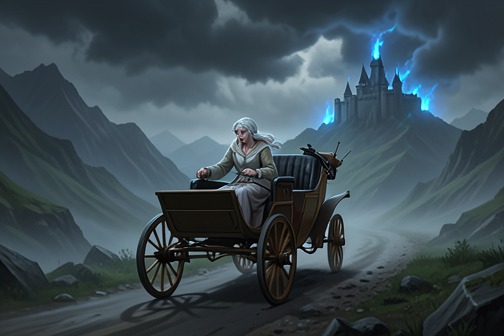
[The Enchanted Return to Castle Dracula](entity:event-recall-event-the-enchanted-return-to-4b0ea0855fbb) is the decisive reversal in the Wright family’s attempted flight from Prince [Vlad Dracula](entity:character-recall-character-vlad-dracula-e0ec58b6d207)’s domain. What begins as a journey toward safety and [London](entity:location-recall-location-london-420923d4a60a) becomes a supernatural recapture: the landscape itself closes around the family, the road refuses to lead away, and blue fire ultimately drives the terrified carriage back to the castle courtyard. The event changes escape from a plausible human action into an illusion maintained by a power greater than the travelers’ understanding.
## Causes and Background
The return follows the Wright family’s departure from the castle after a visit to a man they already regard as dangerous. [May Wright](entity:character-recall-character-may-wright-3d98d113a9e3) is pale and trembling, while [Glynis Wright](entity:character-recall-character-glynis-wright-d6dbb6432ea3) feels relief at being away from the “horrible, horrible man”; [Edric Wright](entity:character-recall-character-edric-wright-a2e0d8d275ea)’s smile and reassuring hand briefly restore the children’s sense of protection. That fragile confidence is immediately challenged by the mountain weather. For an hour the family travels through misty passes as the sun struggles against dark clouds that seem not merely to gather but to pursue them. When Glynis asks whether the storm will make the pass impassable, Edric Wright observes the lightning and thunder and calls to [Ovidiu](entity:character-recall-character-ovidiu-a45a829708d0), the driver, asking whether the carriage can reach the village before the storm.
The first unmistakable sign of enchantment is not the weather but the failure of direction. Edric Wright learns that Ovidiu is confused: every attempt to turn back leaves the carriage apparently returning to the same place. The family is therefore caught in a circuit rather than traveling along an ordinary road. When Glynis looks from the carriage, Prince Vlad Dracula’s dark castle looms close behind them, converting the family’s hoped-for distance into the visual proof of continued proximity.
The road then becomes physically impossible. A great chasm has opened across the mountain pass, splitting the road and leaving no route around it. Edric Wright had traveled the same road only two days earlier, so the sudden gorge appears inconceivable by ordinary standards. Ovidiu interprets the rupture as the work of a wicked and powerful host who promised safety while the family remained guests but will not spare them after their departure. His explanation identifies the force behind the trap as Vlad Dracula’s supernatural power, even though the family cannot yet understand its full extent.
## What Happens
The storm intensifies until the carriage shudders under its violence. The horses whinny in terror, and the driver is forced to seek shelter in a thicket. For several hours the family remains cold and wet inside the carriage while wind, rain, and lightning batter the temporary refuge. The physical confinement is accompanied by emotional collapse. May cries into [Antoinetta Wright](entity:character-recall-character-antoinetta-wright-fdca197148ff)’s shoulder; Antoinetta Wright prays over her rosary; Glynis Wright clings to Edric Wright and feels guilt for her earlier behavior in [Italy](entity:location-recall-location-italy-85c2492cd54b) and France, imagining that her own lack of obedience may have contributed to the family’s predicament. The storm thus externalizes a fear that the journey has become a punishment from which none of them can free themselves.
Hunger makes the ordeal more intimate and ominous. The family eats food supplied by gypsy women, including chicken, fruit, and a ripe apple. Glynis Wright remembers pity in the women’s dark eyes and notices that the food does not relieve the burning emptiness she has felt since waking, although it tastes exceptionally good. The meal is later marked by retrospective irony: she does not know that it will be her last human meal. Even before the supernatural attack becomes visible, ordinary acts of nourishment and family care are placed under the shadow of impending catastrophe.
By mid-afternoon, the carriage passes the castle without a word from the occupants. The family watches it through the window, and Glynis Wright takes May Wright’s hand when May whimpers. Yet the apparent progress is deceptive. The carriage continues down narrow roads, only for each road that descends toward the valley to turn upward again. No direction permits escape, and Prince Vlad Dracula’s castle remains above them, looming over every attempted route. When the storm finally recedes and the low sun appears over the valley, the family briefly believes that nightfall and increasing distance may bring safety. Edric Wright watches the village lights grow stronger, and Glynis Wright begins to relax as the castle seems to drift away above the treetops.
That hope is destroyed by the wolves. Their howling breaks the quiet, and three wolves race past the carriage with glowing eyes: two are dark and one is white, matching the three animals Glynis Wright has seen before. They move with extraordinary speed, darting in front of the carriage and vanishing into the darkness. When Glynis Wright leans from the window to call attention to them, a branch catches and tears away her bonnet, a small physical sign of the violent force gathering around the travelers.
Before Edric Wright can answer, blue fire erupts in the road ahead. The horses scream and wrench the carriage around to avoid the dancing flames, nearly overturning it and throwing Glynis Wright onto the floor. The fire then pursues them, its strange iridescent flames twisting in the wind as it rolls after the carriage. Antoinetta Wright clutches her rosary while May Wright screams hysterically, and the driver loses any remaining control over the direction of travel. The horses race back up the mountain, not toward refuge chosen by the family but toward the place from which they had tried to flee.
## Return to the Castle
The enchanted return ends in the courtyard of Prince Vlad Dracula’s castle. After the long and terrifying ride, the horses lead the carriage directly to the front door and stop. They continue to paw at the ground and toss their heads, their eyes wide with terror, while the driver issues harsh orders that cannot make them move. The carriage’s rocking gradually gives way to an eerie silence, making the destination feel less like shelter than a sealed threshold.
The blue fire remains at the mouth of the courtyard. Its beautiful, shifting flames roll and sway around three figures, linking the supernatural pursuer to the wolves and to the castle’s authority. The scene combines attraction and terror: the fire is visually beautiful, yet it has already transformed the horses into panicked instruments of return. The family is not simply found by the castle; it is delivered to it by forces that have taken command of road, weather, animals, and direction.
## Consequences and Significance
The event destroys the Wright family’s belief that ordinary travel can restore freedom. London is still their stated destination, and Antoinetta Wright imagines that reaching it will be a comfort, but the route has become subject to Vlad Dracula’s will. The broken pass prevents escape by geography, the looping roads prevent escape by navigation, and the wolves and blue fire prevent escape by endurance. Each apparent solution is converted into another mechanism of confinement.
The return also changes the castle’s narrative function. It is no longer merely the residence of a frightening host left behind in a foreign landscape. It becomes the gravitational center of the family’s world, a place capable of drawing fugitives back across apparently open roads. The family’s tenderness—Edric Wright’s embrace, Glynis Wright and May Wright clasping hands, Antoinetta Wright’s rosary—survives during the journey, but that human protection cannot overcome the supernatural enclosure.
As a Gothic reversal, the event turns the conventional road back into a trap. The travelers appear to move from captivity toward the ordinary world, yet every sign of progress folds into repetition: roads return upward, the castle remains present, and the final pursuit forces the carriage to retrace its direction. The sequence therefore makes supernatural domination visible through movement itself. By the time the family stops at the castle door, escape has not merely failed; it has been revealed as an illusion permitted—and then withdrawn—by Prince Vlad Dracula.
Event 4
The Wright Family Massacre
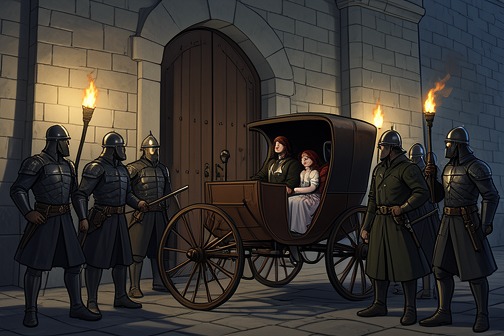
The Wright family massacre is the violent destruction of [Glynis Wright](entity:character-recall-character-glynis-wright-d6dbb6432ea3)’s family as a unit and the beginning of her forced life under [Vlad Dracula](entity:character-recall-character-vlad-dracula-e0ec58b6d207). It unfolds through a series of escalating captures: armed guards surround the carriage, supernatural blue fire destroys the attempted escape of the driver and [Ovidiu](entity:character-recall-character-ovidiu-a45a829708d0), and Vlad takes Glynis while her parents and sister are brought into the castle. Her father’s resistance ends in his death; Glynis is left to hear her mother’s screams and to understand that the family’s flight has become a trap. The event’s significance reaches beyond the immediate attack: it begins the coercive transformation that makes Glynis Vlad’s bride and supplies the motive she later names when she strikes back at him.
## The Ambush and Failed Escape
The family’s attempt to flee ends at the castle door. Dark-clad guards carrying torches pour out and encircle the carriage, hemming in the Wrights as they gather what they can carry. The torches throw moving shadows across the castle, but the danger is not only theatrical: the guards control the approaches and prevent the family from leaving. Against this display of force, the carriage offers only the appearance of safety. Glynis senses Vlad’s power drawing her attention toward him even before he reaches the family, establishing that the threat includes a supernatural hold as well as physical confinement.
The driver and Ovidiu make a break for a path away from the castle. They initially evade the guards, but Vlad stops his men from pursuing them and instead declares that his Brides will feast. Blue fire then follows the two fleeing men, surges over them, and vanishes; their screams cease, and no trace of them remains. Their failed escape demonstrates that the grounds are controlled not only by armed guards but by a force the family cannot resist or understand. For the Wrights, the scene removes the most immediate means of escape and turns the castle’s boundary into a killing ground.
## The Family Is Separated
As the family cowers together, Glynis clings to her sister and mother while feeling the pull toward Vlad intensify. She knows that if he calls again, she may go to him despite her wish to remain with her family. The danger therefore divides her even before the guards physically separate them: she is frightened by Vlad and by the compulsion she experiences in his presence. Her father confronts him, but the protest does not alter the balance of power.
Two guards seize her father. The family tries to pull him back toward the carriage, and her mother, [Antoinetta Wright](entity:character-recall-character-antoinetta-wright-fdca197148ff), cries out in his defense. Vlad moves toward the carriage; Antoinetta places herself between him and the others. He then turns back into the castle, dragging Glynis with him and ordering that the others be brought. Glynis struggles, clutches at his wrist, and cries out in pain and anger as he pulls her away. Vlad’s declaration that all he possesses is hers does not offer a choice or a rescue: it follows the abduction and frames his control as a gift, while the surrounding violence makes clear that Glynis cannot refuse it safely.
The guards drag Glynis up the stairs while the rest of the family is led inside. She sees her mother holding [May Wright](entity:character-recall-character-may-wright-3d98d113a9e3), whose eyes are closed and whose body has collapsed; Antoinetta’s face is fierce despite the tears on it. Her father is still struggling with his captors. When he breaks free and charges Vlad, Vlad strikes him so quickly that Glynis hears the blow before she can make sense of it. Her father falls at Vlad’s feet, stunned. Vlad says he will die first for the attack. Glynis and Antoinetta scream as the guards pull Glynis farther up the staircase; Glynis’s last view of them is her mother falling to the floor with May slipping from her arms and her hands reaching toward Vlad in appeal.
## Death, Captivity, and Forced Making
The separation becomes final when Glynis hears her father cry out and her mother scream. She falls to the ground, certain that Vlad has murdered her father, and the guards briefly release her arms. The pause offers no escape: she rocks with her face in her hands while the guards remain impassive and her mother’s cries continue through the castle. Vlad’s laughter rises from below as the guards lift Glynis and carry her on. The event thus reaches her not only through what she witnesses but through what she is forced to hear after she has been removed from her family.
The subsequent scenes show what the capture was preparing. The Brides tell Glynis that, like every Bride, her time to be made by the Master has come. Vlad later orders her to undergo the [vampire baptism](entity:concept-recall-concept-2d256e3b2ebd) once more and says she will join them. In the chapel where the vampires sleep during daylight, a coffin waits open at its center; [Ariana](entity:character-recall-character-ariana-3b400cd4e588) and [Elina](entity:character-recall-character-elina-8b98166e303a) withdraw into tombs, while Vlad and [Cneajna](entity:character-recall-character-cneajna-cc5dab651a46) remain with Glynis. The former holy space, now serving as shelter for vampires, makes her imposed entry into their world feel like an inversion of the religious life in which she was raised. These later moments distinguish the massacre from a single act of killing: it is also the first stage of Glynis’s confinement and transformation.
## The Violence’s Long Afterlife
The family’s capture leaves its mark on Glynis’s later experience of vampirism. When hunger overwhelms her, Vlad presents blood in a goblet and commands her to drink because she is his bride. Cneajna holds her as Glynis sobs and resists the identity being imposed on her. The goblet and the command make explicit the connection between the family’s destruction and Vlad’s intended possession: survival inside the castle is conditioned on accepting the appetite and status he has forced upon her. Her transformation does not erase her attachment to the family; it becomes inseparable from the loss that precedes it.
That loss remains present years later. At an opera performance advertised as the life of Vlad Tepes, Glynis sits beside Vlad and her brother, [Andrew Wright](entity:character-recall-character-andrew-wright-15e2c32beef5), while the [Baroness](entity:character-recall-character-baroness-aa85d1ccc76d) explains the subject. Glynis looks toward Vlad, touches his hand, and recognizes that he will give her no answers. The scene places a public performance of Vlad’s life beside Glynis’s private knowledge of his violence, without suggesting that the opera itself explains the massacre. Later still, when Glynis drives a stake through Vlad and says it is for her family, the revenge directly names the people whose destruction began at the castle. The massacre is therefore both a rupture in the family’s story and the enduring measure by which Glynis understands her struggle against Vlad.
Event 5
May Wright’s Death
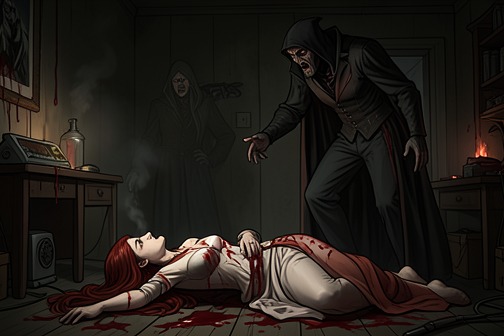
[May Wright](entity:character-recall-character-may-wright-3d98d113a9e3)’s death is the moment when [Glynis Wright](entity:character-recall-character-glynis-wright-d6dbb6432ea3)’s last hope of protecting her sister collapses inside [Dracula’s Castle](entity:location-recall-location-dracula-s-castle-c64a3de1e334). Given to the [Vampire Brides](entity:concept-recall-concept-vampire-brides-21a41afa6ca1) by [Vlad Dracula](entity:character-recall-character-vlad-dracula-e0ec58b6d207), May is killed while Glynis is trapped nearby, able to hear and sense the attack but unable to intervene. [Cneajna](entity:character-recall-character-cneajna-cc5dab651a46)’s refusal to feed offers Glynis a fragile act of protection, not rescue: May dies, and Vlad turns the scene into a command that Glynis submit to the vampire life he has chosen for her.
## Background and Stakes
Before the killing, May is more than Glynis’s companion in captivity: she is the sister who knows the difference between Glynis’s desire for freedom and the stereotype of a wanton woman. When Glynis describes wanting to live without the constraints imposed on women, May reads her restlessness as a wish to live as a man; Glynis corrects her, insisting on the distinction between wanting freedom and wanting to be male. The exchange gives their bond a familiar intimacy, even as it makes clear how few freedoms either sister possesses.
By the time the Vampire Brides awaken, Glynis is already under their control. She refuses the demand to join the feast and says she would rather die. May, meanwhile, is searching for her in the darkness, crying out and trying to find somewhere to hide. Cneajna pulls Glynis into a trunk and shuts its lid, holding her there. She warns Glynis that she is too weak to defend May against [Ariana](entity:character-recall-character-ariana-3b400cd4e588) and [Elina](entity:character-recall-character-elina-8b98166e303a). The warning makes the sisters’ separation immediate: May is exposed, while Glynis is physically restrained beside her and cannot reach her.
## The Killing
May finds the trunk and beats on its lid, pleading for Glynis to let her hide with her. Glynis tries to push the lid open, but Cneajna holds her back. As the other Brides rise, Glynis hears the lids of their resting places being thrown open. She calls to May to hide and hears the sisters moving toward her. The scene unfolds through sound and confinement: Glynis cannot see what is happening, but May’s terrified screams and the sounds of the vampires make the danger unmistakable.
May’s body strikes the trunk with a loud thump. The Brides’ laughter follows. Glynis fights Cneajna and begs her to stop them, but Cneajna says Vlad has given May to them. She chooses not to feed, and covers Glynis’s ears and body so that Glynis will neither hear the full horror nor have May’s blood fall through the cracks onto her. The protection is real but limited. Cneajna cannot prevent May’s death; she can only keep Glynis from witnessing more of it and from being directly marked by the blood.
Glynis later understands that May’s frailty meant death would come quickly, and imagines that she fainted before she knew what was happening. That thought offers a measure of relief, but not escape from the loss. Beneath Cneajna’s embrace, Glynis weeps and wishes she could die and join May. She whispers a farewell that imagines her sister flying to heaven with the angels, placing the death within the language of Christian consolation even as the vampires’ feeding proceeds around them.
## Vlad’s Intervention
Vlad enters the chamber after May has been attacked. From inside the trunk, Glynis sees that the scene is not the gruesome spectacle he had expected: May’s frail body lies across a trunk, her pale eyes fluttering as death approaches, while Ariana and Elina are beside her. His anger shifts the attention from May’s dying to the disobedience he perceives in Cneajna. When Cneajna’s glance gives away Glynis’s hiding place, Vlad shoves her aside and strides to the trunk. He flings May’s body away as though it were an inconvenience, while Ariana moves hungrily toward it.
Vlad opens the trunk and finds Glynis cowering inside. He rebukes her for failing to feed, then calls Ariana and Elina to stand beside her. Their bloodied mouths make the feeding visible, while their silent submission places them back under his authority. He orders them to prepare Glynis for the [vampire baptism](entity:concept-recall-concept-2d256e3b2ebd) once more and take her to the bedchamber. His command makes May’s death part of a wider coercion: Glynis’s refusal to feast does not protect her from Vlad’s plan to make her one of the Brides. He kisses her despite her attempt to avoid him, treating her grief and resistance as no barrier to his claim.
## Aftermath and Significance
The death’s immediate consequence is not freedom or a chance to mourn but deeper captivity. Glynis has lost the sister who searched for her in the dark, and the vampire who sheltered her could not save May. Vlad’s response further reveals the hierarchy governing the household: Cneajna may choose not to feed, but she cannot override her husband’s will; Ariana and Elina obey his summons; Glynis is ordered into another ritual of transformation. In the scene, protection exists only within the limits Vlad permits.
May remains part of Glynis’s understanding of what she has lost. Later, when Glynis’s mother urges her to live and escape, Glynis promises that she will not forget May or her father, even if she lives until the world ends. Her mother’s appeal and Glynis’s promise place May among the dead whose memory the surviving family carries forward. May’s death therefore marks both a personal bereavement and a test of the resolve that will shape Glynis’s resistance: she cannot save her sister, but she can keep the promise to remember her and to seek a life beyond Vlad’s control.
The episode’s form intensifies that defeat. Glynis narrates from the trunk, where the lid divides her from May and restricts her knowledge to voices, impacts, and the blood she can taste in the air. Her sensory awareness becomes a source of horror and, when fear itself seems delicious to her, an early sign that the vampire nature she resists is already altering her. Cneajna’s humming and embrace soften the moment without undoing its violence. The contrast between that intimate care and Vlad’s cold command gives the death its defining tension: a sister can offer comfort, but in Dracula’s Castle, she cannot choose who lives.
Event 6
Glynis Wright’s Vampire Initiation
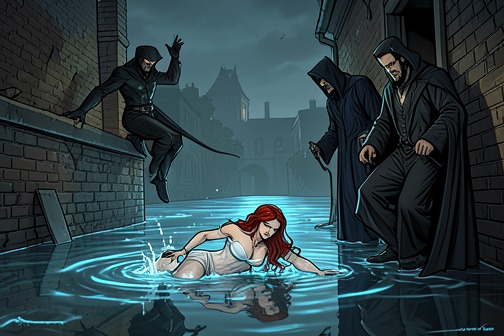
[Glynis Wright](entity:character-recall-character-glynis-wright-d6dbb6432ea3)’s vampire initiation is a forced passage from attempted escape into an existence controlled by [Vlad Dracula](entity:character-recall-character-vlad-dracula-e0ec58b6d207). On the castle roof, she chooses what she believes will be death in the river below; instead, Vlad and the Brides overwhelm her and turn her into one of them. The scene makes the reversal brutally clear: she survives the fall only to have her wish for death answered with a supernatural life she never chose.
## The escape attempt and its reversal
Glynis’s resistance begins as a physical escape from the fate others have chosen for her. After [Cneajna](entity:character-recall-character-cneajna-cc5dab651a46) speaks of an eternity together as sisters bound by blood, Glynis leaves her bed despite her pain, finds the door unlocked, and struggles along the dim corridor toward a stairwell. Her determination is not a wish to bargain for a better place in the castle; she wants to get out of it altogether. The stairs lead her to the roof, where the river below seems to offer the release the castle denies her.
When Vlad appears, Glynis falls backward from the roof. The fall is an intentional attempt to die, and its brief serenity makes the interruption especially stark: she imagines the river swallowing her and freeing her from the castle. The narrative then denies her the death she sought. Later, she tells Vlad she wants only death, but he answers by seizing her and making her body the site of his decision. The attempted escape therefore turns into an initiation imposed by the very person she is trying to escape.
## The forced turning
Vlad holds Glynis by the hair while the Brides encircle and restrain her. He feeds from her already injured throat as she struggles, until the loss of blood brings her close to death. Cneajna intervenes when Glynis’s heart grows weaker and Vlad’s feeding threatens to go too far. The episode makes the other Brides participants in the coercion, but also gives Cneajna a moment of resistance to its fatal outcome: she urges Vlad to stop before Glynis dies.
As Glynis’s consciousness slips away, she sees a light and [May Wright](entity:character-recall-character-may-wright-3d98d113a9e3) reaching toward her. The vision gives her a route out of the scene’s violence: she believes she is approaching her sister and leaving her earthly body behind. Vlad cuts his own throat and makes his blood available to her. When it enters her mouth, the experience abruptly returns her awareness to her body. The blood spreads through her, and she breaks free of the vampires long enough to run toward the vision. That freedom is momentary. May’s image disappears, and Glynis is left in the night with the transformation already underway.
## Bodily and social transformation
Vlad declares that Glynis has passed from mortal life into a state of living death and now belongs among the vampires. Her body visibly changes: her hair grows, her nails lengthen into pale, sharp points, and fangs press against her lips. She floats above the stone floor as her skin pales and her appearance becomes more voluptuous; when the wind dies, she falls back onto the roof. Her altered vision lets her see clearly in the darkness, confirming that the change is not merely an outward disguise but a new way of inhabiting the world.
The Brides name her transformation as a change in belonging. Cneajna recognizes that she has become one of them; [Elina](entity:character-recall-character-elina-8b98166e303a) accepts her as one of their kind, and [Ariana](entity:character-recall-character-ariana-3b400cd4e588) welcomes her as a sister. This welcome does not undo the violence that produced the new kinship. Vlad’s laughter and howl of victory contrast with Glynis’s scream as madness descends. The household treats the turning as the making of a new member, while Glynis experiences it as the destruction of the life and choice she was trying to preserve.
## Aftermath and significance
The initiation establishes conflicts that continue after the first frenzy passes. Glynis later describes the castle as a place of confinement and herself as Vlad’s slave, with survival dependent on learning its rules while seeking a way to escape. Her hunger becomes both torment and a source of pleasure and power: she recalls enjoying the hunt and the rush of feeding, a response that troubles her because it draws her toward the nature she resists. The turning thus begins not with willing acceptance but with an imposed bodily change whose consequences reach into appetite, conduct, and self-understanding.
Her later circumstances make the initiation’s social dimensions visible. Vlad chooses what she may wear and how she may appear: in the castle she rejects a costume imposed on her in favor of her own blue Italian silk gown, while preparations for [Buda](entity:location-recall-location-buda-89e5673736b2) require a veil to conceal her altered beauty from [Andrew Wright](entity:character-recall-character-andrew-wright-15e2c32beef5). At the opera she appears in black and gold beside Andrew and Vlad, feeling for a moment like Countess Dracula even as she remains aware of being undead. The changing clothes and titles do not establish autonomy; they show how her new identity is repeatedly staged under another person’s authority.
The event also sets a religious counterpoint that recurs in Glynis’s later life. When [Antoinetta Wright](entity:character-recall-character-antoinetta-wright-fdca197148ff) urges her to escape, she buries her rosary and prays for mercy for Glynis’s soul before offering her blood so that her daughter can live. That later exchange echoes the initiation’s substitution of vampire blood for mortal life, but gives the act a different meaning: a mother’s deliberate sacrifice stands against Vlad’s coercive making. Together, the scenes distinguish survival from consent and kinship from possession. Glynis’s initiation creates the vampire who must struggle against the household that calls her its sister, and the struggle for escape continues long after her body has changed.
Event 7
Glynis Wright's transformation
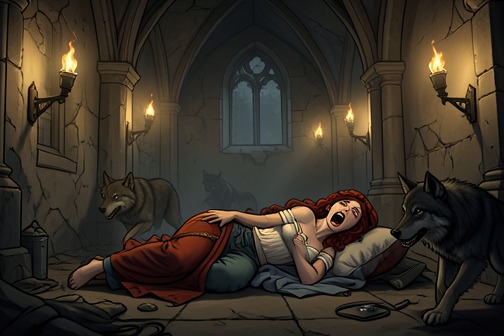
[Glynis Wright's transformation](entity:event-recall-event-498b03caab1e) is both an imposed death and a contested rebirth. Her body acquires the hunger and weapons of a vampire under [Vlad Dracula](entity:character-recall-character-vlad-dracula-e0ec58b6d207)’s power, but the change does not immediately make her feel whole: at first she understands only despair, captivity, and the tearing demand to feed. The decisive turn comes when her memories return. She recognizes both the human life taken from her and the freedom she can still pursue, even within the existence her captor has designed for her.
## The Passage into Hunger
The transformation is first registered not as triumph but as bodily distress. After Vlad identifies Glynis as a vampire and forbids her to eat mortal food, she struggles to comprehend his words. What she can grasp is her absolute despair, her wish to be far from the place where she is held, and an awful hunger that feels consuming. The change has given her a new appetite without giving her an explanation or control over it.
When she wakes burning with hunger in the ruined chapel, the disturbance has become visible and audible: her screams ring through the chapel and corridor. Vlad emerges from the darkness into torchlight, while wolves enter and acknowledge him. His presence makes clear that her awakening takes place inside his domain and under his authority, not in a private or self-directed passage into a new life.
Glynis’s body is changing faster than her sense of self. When Vlad and his wives gather around her, she flees into the chapel and cowers in a corner, shaking beneath her tangled hair. Yet when Vlad approaches, she turns and hisses at him. Her aquamarine eyes burn with rage; her nails have become long and sharp, and she feels her fangs against her lips. Vlad greets this threatening response with delight, declaring that she is becoming. The scene holds two meanings together: her new body gives her visible means of resistance, but Vlad treats even that change as progress belonging to him.
## A Mother’s Sacrifice
The transformation is bound to an intimate act of care as well as to coercion. Glynis’s mother urges her to fight Vlad and escape, asking her daughter to live free. As hunger tears at Glynis and her mother’s beating heart summons her to feed, Glynis promises that she will find a way out. Her mother then lays aside her journal, buries her rosary in a small hole in the dirt and straw, and genuflects before turning back to Glynis. The rosary, hidden in the filthy floor, marks the religious faith she carries into a moment of mortal danger.
Her mother frames the act that follows as giving life again. She tells Glynis not to forget her or the family, and promises to pray for her soul before the Father, the Son, and the Holy Spirit, asking the Blessed Virgin to watch over her. She then urges Glynis to drink and live, binding survival to a promise of escape. Glynis answers that she will remember her mother, father, and May even if she lives until the world dies. The exchange makes the new existence neither a clean severance from the human past nor an uncomplicated gift: it is sustained by love, grief, prayer, and a demand that Glynis remain responsible for what she does with the life she receives.
## Memory and Rebirth
The turning’s psychological culmination arrives when the hunger and madness recede and Glynis’s mind clears. Asked whether she remembers, she answers that she remembers what she is and who she was. Her past returns with startling clarity: her father and mother, her sister and brother, her home in [England](entity:location-recall-location-england-b153c1f368ea), the family’s travels, their deaths, and her own death and rebirth. The recovery of memory changes the meaning of her transformation. What had been an almost incomprehensible present becomes a life she can place within a history.
With that history restored, Glynis understands that the chains she endured in her former life no longer bind her in the same way. She imagines an existence in which she may live forever, feed, kill, and do what is necessary to escape. This is not freedom already secured: she remains within the castle and still has to find a way out. But the return of memory gives her a purpose that the first, overwhelming hunger could not supply. She stands and declares that she has become; the rebirth is at once physical, mental, and directed toward a future beyond Vlad’s control.
## The Body as Possession and Resistance
After the madness lifts, the castle becomes an ongoing test of whether Glynis can inhabit her changed body on her own terms. She resists the clothes chosen for her. When [Elina](entity:character-recall-character-elina-8b98166e303a) summons her to Vlad’s library, Glynis takes a favorite gown of blue Italian silk from her own chest and changes into it, discarding the gauzy garment she has been wearing and choosing not to put on a corset. The choice is small beside her captivity, but it lets her distinguish her own preferences from the appearance imposed on her.
That resistance is repeatedly checked by Vlad’s plans. He orders that a veil be made to conceal her beauty from [Andrew Wright](entity:character-recall-character-andrew-wright-15e2c32beef5), instructs her not to bring clothing or jewelry her brother would recognize, and has her wear clothes bought by her mother in [Paris](entity:location-recall-location-paris-c02b439ce220) along with [Erzsébet Dolingen](entity:character-recall-character-erzs-bet-dolingen-f5a83d46c8ab)’s jewels. In [Buda](entity:location-recall-location-buda-89e5673736b2), the heavy veil frustrates Glynis; she tears it from her face because she wants to see Andrew rather than look at him through layers of organza and lace. At the opera, she appears in a fine black-and-gold dress and feels radiant, briefly alive rather than undead, and every inch the Countess Dracula. The changing garments and titles do not undo the transformation. They show how its visible form is continually contested: Vlad uses dress, concealment, and rank to manage what others can see, while Glynis asserts moments of choice within those constraints.
## Survival, Complicity, and the Unfinished Escape
Glynis’s later reflections make clear that becoming a vampire does not end her captivity or settle what kind of person she will be. Once the initial madness is gone, she describes sanity itself as torment: her former life is a distant, beautiful memory, while her new life is the castle. She understands herself as Vlad Dracula’s slave and finds its rules oppressive. Yet she also remembers the pleasure and rush of power she experienced when she hunted and killed the gypsy girl who had taken her ring. That pleasure disturbs her; it reveals that the hunger can become more than an affliction imposed from outside, without proving that she has accepted Vlad’s values.
The conflict returns in a later blood ritual. Glynis drinks from a goblet as the vampires gather around her and her sisters support her. Vlad lowers her into blood; his kiss and the surrounding dance turn the act into a display of intimacy and power. Her wounds fade, her sight and hearing sharpen, her heart begins to beat, and the hunger recedes. But as the feeding’s ecstasy passes, conscience returns: she recognizes that she has feasted on innocents in the arms of her captor and acted against the promise she made. Physical restoration has renewed her vampiric power, but it has not erased her moral memory.
That distinction also shapes Glynis’s relationship with Ignatius. In Purgatory, his account of losing the ability to touch a crucifix or enter a church, and of undertaking penance in the hope of returning to God’s service, sets another response to vampiric existence beside hers. He says that he still serves Astir and her husband, yet his love for Glynis threatens the penance he has pursued. Glynis recognizes the danger in [Astir’s prophecy](entity:concept-recall-concept-astir-s-prophecy-4170cb8ef45c) that she will destroy the one who loves her. Her transformation therefore remains an unfinished passage: she has recovered memory and a will to escape, but hunger, blood power, imposed roles, and the consequences of her choices continue to shape what freedom can mean.
Event 8
Antoinetta's death
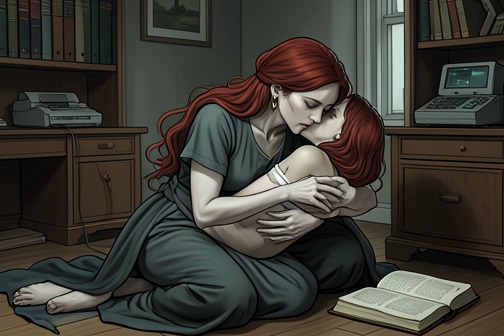
[Antoinetta Wright](entity:character-recall-character-antoinetta-wright-fdca197148ff)’s death is both the cost of [Glynis Wright](entity:character-recall-character-glynis-wright-d6dbb6432ea3)’s vampire hunger and the moment her mother turns that hunger into a deliberate act of love. In a filthy cell, Antoinetta gives Glynis permission to drink, dies in her arms, and leaves her with a promise to keep: escape and be free. The scene makes a brutal distinction between blood taken as predation and blood offered as a final gift.
## Crisis and the promise
Glynis’s hunger has become impossible to ignore. She tells her mother that she is starving, while Antoinetta understands the danger not as an abstract threat but as a consequence of [Vlad Dracula](entity:character-recall-character-vlad-dracula-e0ec58b6d207)’s power over her daughter. She believes he has chosen her as the death Glynis will be made to cause. Glynis, for her part, insists that she is still fighting the hunger, though she feels herself weakening. The scene therefore begins with both women recognizing that love alone cannot make Glynis’s bodily need disappear.
Antoinetta’s response is to ask Glynis for a promise: fight Vlad Dracula, escape the place, and become free. Glynis gives her word even as she hears her mother’s heart calling to her hunger. Before the final feeding, Antoinetta sets aside her journal and buries her rosary in a small hole in the dirt, filth, and straw. The gesture places her faith and her written life within the cell she cannot leave; Glynis has to look away as her mother’s body briefly shines white. Antoinetta then comforts her daughter, tells her that she loves her, and asks her not to forget her family.
## A mother gives her blood
Antoinetta explicitly tells Glynis to drink and live, while asking her to remember the promise to escape. She presents this as the continuation of a bond that began at Glynis’s birth: as she once gave her life, she now gives it again. The offer does not undo the circumstances that brought them here. Rather, within those circumstances, Antoinetta makes a choice about what her remaining life will mean. Glynis accepts the gift, promising once more to escape and urging her mother to rest and feel no pain.
When Antoinetta’s eyes close and she falls into Glynis’s arms, Glynis kisses her throat and her fangs descend. Antoinetta whispers that she forgives her. Glynis bites, and the blood flows as she drinks hungrily, in an image likened to a baby feeding at its mother’s breast. The scene joins a vampire’s appetite to the intimacy of nursing, but does not make the act gentle in its physical consequence: Glynis drinks Antoinetta’s life, and Antoinetta weakens in her arms. The wolves howl outside the dark cell as Glynis weeps over the body she is consuming.
## Death and its immediate aftermath
Afterward, Glynis calls to her mother and receives only silence. She first sees Antoinetta’s staring eyes, then finds them closed; although the body appears to be sleeping, Glynis knows she is dead. She holds her mother and begs forgiveness. The hunger has been appeased, but the relief is inseparable from grief: Glynis has survived by taking the life of the person who loved her most.
Glynis calls Antoinetta free and covers her face with kisses, repeating her vow to escape. She remains with her mother’s dead body while the wolves howl again. Hours later, Vlad Dracula enters the cell. Glynis’s flesh has become rosy from feeding, and Antoinetta’s body has been laid out behind her. The contrast makes the consequence visible: the daughter’s renewed vitality and the mother’s death occupy the same room, with no possibility of separating one from the other.
## Meaning and consequences
Glynis later understands the feeding not simply as the degradation Vlad Dracula intended, but as Antoinetta’s sacramental gift. Her mother’s body had given her life at birth; now her blood gives her strength to endure what Vlad will do to her. Glynis believes that he meant for her to defile her mother by feeding, but Antoinetta’s permission changes the meaning of the act for her. The hunger remains real, and the death remains irreversible; what changes is Glynis’s understanding of what the blood carries. It becomes an inheritance of love and a source of resolve.
That interpretation distinguishes Antoinetta’s death from other feeding scenes in the story. A small child is brought before the vampires as food, a farmer is bitten while Glynis takes only what she says she needs, and willing young attendants later offer themselves to be fed upon. In another setting, a girl’s blood is collected in wine goblets. These scenes show blood moving through coercion, appetite, service, and chosen offering. Antoinetta’s gift is not equivalent to ordinary feeding: she names what she is giving, binds it to her daughter’s survival, and attaches a demand for freedom to it.
The death also determines the direction of Glynis’s resistance. When Vlad Dracula questions whether he has won, Glynis does not accept his interpretation of the encounter; she says that she wishes to go to her sisters. Her mother’s last request has become an obligation she carries beyond the cell. Antoinetta cannot secure Glynis’s escape herself, but her final act gives Glynis a reason to endure and a promise by which to measure the struggle. In this sense, the scene’s decisive outcome is not freedom achieved, but freedom made into Glynis’s purpose.
Event 9
吸血鬼新娘的饥饿危机
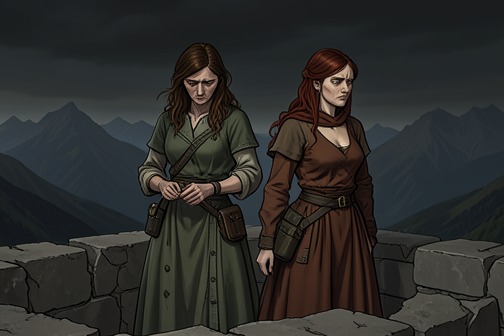
The [Brides of Dracula](entity:creature-recall-creature-brides-of-dracula-aff8e70b1e1d) starvation crisis turns [Vlad Dracula](entity:character-recall-character-vlad-dracula-e0ec58b6d207)’s absence into a weapon: his brides are left hungry inside a castle they cannot leave, and their attempt to break out reaches the threshold but not freedom. Recorded by [Glynis Wright](entity:character-recall-character-glynis-wright-d6dbb6432ea3) in her journal, the episode makes the connection between appetite and captivity brutally concrete. The women are not merely without food; their confinement prevents them from satisfying the hunger that is consuming their bodies and minds.
## Vlad Dracula’s absence and the trap
The crisis first comes into focus when Glynis stands with [Elina](entity:character-recall-character-elina-8b98166e303a) on the castle’s decaying battlements, looking out toward the [Carpathian Mountains](entity:location-recall-location-carpathian-mountains-af7281764e91). She is already hungry, and her vision has begun to lose its sharpness. Vlad Dracula has not appeared in the chapel for several days. The women had not immediately understood that he was gone: Glynis had been writing secretly, while the other brides had also been absent from the chapel. It is Elina’s frightened realization that Vlad is no longer there that makes his disappearance unmistakable.
Searching the castle together, Glynis and Elina find no sign of him. Elina infers that he left several days earlier, when the Gypsies stopped entering the castle. Their usual behavior had offered a warning: when Vlad travelled, they locked the doors and stayed away. His departure therefore removes not only the presence of the household’s master but also the human attendants who might otherwise have entered the castle.
At first, Glynis welcomes the prospect of being rid of Vlad for a while. The relief proves short-lived. Elina explains that the Gypsies fear the brides and anticipate that hunger will make them dangerous, so they keep their distance. Glynis recalls that the women had fed on an unlucky hunter four nights earlier, but the next feeding is already necessary: the hunger throbs, her heartbeat has slowed, and she feels life draining away. Vlad’s absence has turned the castle from a place of confinement into a closed system with no dependable source of blood.
## Unequal knowledge and shared dependence
The discovery also exposes how differently the brides understand their dependence on Vlad. [Ariana](entity:character-recall-character-ariana-3b400cd4e588), hearing the prospect of starvation, breaks down and pounds the floor with her fists. [Cneajna](entity:character-recall-character-cneajna-cc5dab651a46), by contrast, insists that Vlad promised to return the following night and trusts that he will keep his word because she is the First. Glynis is angry that Cneajna knew he had gone without telling the others. Cneajna had believed there was no reason to alarm them while she expected him back.
Elina rejects that confidence. Vlad has failed to return when promised before and has starved them previously, she points out. Her anger focuses on a practical possibility the others had not been told about: the brides can sometimes hunt for themselves in the valley below. Vlad usually releases them that far, but this time he has not. Elina attributes the restriction to Glynis’s status as Vlad’s new prize: because he did not want Glynis away from the castle, none of the brides was allowed to leave. His possessive attention to one captive thus determines the fate of the whole group. The women’s mutual predicament does not erase their differences, but it reveals that each is subject to the same power.
## Hunger becomes bodily and collective
By the time Glynis records the ordeal several days later, the hunger has become a collective breakdown. Their screams have filled the night since they woke in its grip. Glynis is the first to run to the great doors and beat on them with her fists. Behind her, Ariana descends the long staircase in a flowing white gown, while Elina throws herself over the railing and Cneajna drops to her knees, screaming. Glynis’s attention to their different movements captures a group losing control in distinct ways, all directed toward the same impossible exit.
The starvation has altered their bodies as well as their behavior. Their faces and limbs have thinned; their eyes are deep-set, their limbs sinewy, and their skin a pale gray. Their hearts have ceased to beat. Glynis compares their changed appearance to wraiths, a description that makes the deprivation visible as a transformation toward something less recognizably human. Elina lands beside her and rakes her nails across the dark wood, tearing splinters into her fingers. The damage does not deter her: the brides are desperate and beyond reason.
The episode also shows hunger turning cooperation into an unstable necessity. Ariana takes an ancient sword and drives it into the lock; Cneajna, who had been crouched behind the others in despair, joins them at the weapon. They are all too weak to force the door alone, so they strain together as the sword bends and the wood splinters. Their temporary alliance is not a cure for the conditions Vlad has imposed, but it gives them enough shared strength to open the barrier that can be opened by ordinary force.
## A doorway without freedom
When the enormous door finally swings open on its rusted hinges, the brides have succeeded only in crossing one boundary. They crouch together in the doorway as crisp night air reaches them, and the sight of the evening sky above the courtyard gives them a measure of solace. Yet Vlad Dracula’s invisible barrier still holds them back from the night. They have overcome wood and metal, but not the supernatural power that makes the castle a prison.
The difference between the open door and the unbroken barrier defines the episode’s ending. Elina collapses to her knees, warning that without anyone arriving they will starve; Ariana continues to wail. Glynis presses herself against the unseen shield, cannot break through, and weeps. The opening has changed what they can see and feel, but it has not changed their access to food or their ability to escape. Their hunger remains, and the evidence ends with the brides still trapped.
## Significance
The crisis exposes Vlad’s control as more than a command over individual bodies. His power over the castle, combined with his decision not to release Glynis and the others to hunt, makes their survival depend on his return. The Gypsies’ fear reinforces the isolation, while the brides’ earlier access to the valley shows that their confinement is imposed rather than inevitable.
Glynis’s diary gives the episode the shape of a delayed recognition: the initial relief at Vlad’s disappearance becomes dread as its consequences emerge, then bodily terror as hunger erodes the brides’ strength and reason. The open doorway offers a brief visual promise of escape, only for the invisible barrier to expose the limits of their resistance. In that reversal, starvation is both a physical crisis and a demonstration of the power that keeps Vlad’s brides dependent on him.
Event 10
Vlad's return
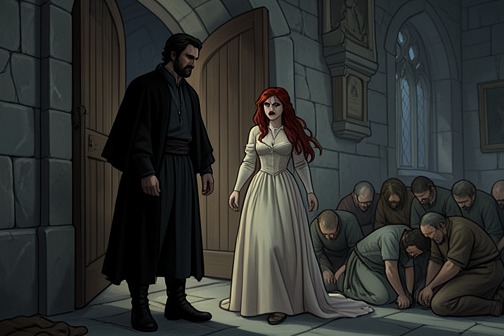
[Vlad Dracula](entity:character-recall-character-vlad-dracula-e0ec58b6d207)’s return to [Castle Dracula](entity:location-recall-location-1140294d9f23) turns the entrance into a blood feast and brings [Glynis Wright](entity:character-recall-character-glynis-wright-d6dbb6432ea3) face to face with [Sir Stephen Sheridan](entity:character-recall-character-sir-stephen-sherida-ea5ff6fa0c5c), the man whose betrayal helped send her family to its deaths. The returning Master restores his household’s strength with fresh victims, but not its freedom from hunger: Glynis recognizes the cost of her new existence and demands the man she wants to punish, only to be reminded that Vlad decides who may feed.
## Background and Approach
The return follows a period of separation in which the Brides of Vlad Dracula have been left hungry. Glynis’s life in the castle has already become an imprisonment that sharpens rather than quiets her resistance. She recalls wanting to live without the restrictions imposed on women, but finds herself a slave to Vlad Dracula and subject to the castle’s rules. Even clothing marks the loss of control: she had once chosen her own favorite blue silk gown and gone without a corset, while her new existence involves being dressed according to someone else’s wishes. Against that history, the arrival is not simply a reunion with a household’s master. It is the return of the person who controls the Brides’ bodies, movement, and access to blood.
As the carriage turns into the courtyard, Vlad’s eyes appear to burn more brightly in the darkness. The great castle door stands open, with four beautiful women gathered there in pale, flowing gowns. Their seductive gestures, fangs, and whispered call draw a guard toward them. A hunter already lies prostrate at their feet, but the guard approaches of his own accord, reaching out as the Brides close around him. Their laughter accompanies his surrender to them; the scene’s beauty is inseparable from its lethal invitation.
## The Feast at the Castle Door
The guard’s death is witnessed from the carriage by Sir [Stephen Sheridan](entity:character-recall-character-stephen-sheridan-1d330e79a464), who recoils when one of the Brides looks directly at him. He recognizes her as the red-haired Glynis Wright, now among the vampires who have drained the young man. Her bloodied appearance makes the transformation unmistakable. [Sir Stephen](entity:character-recall-character-sir-stephen-ff95cbc47318) turns away and cowers in the carriage, but Glynis’s cold stare remains with him. Vlad, by contrast, treats the encounter with composure, saying that he will be in contact with his friend before descending gracefully and moving toward the castle.
Glynis’s account of Vlad’s return supplies the other side of that departure. She watches the carriage carrying Sir Stephen leave, and understands that he had not been surprised by what the Wright family truly was. In her judgment, he had sent them to their deaths in service to his Master. The blood she has consumed loses its flavor at the recognition; betrayal has abruptly displaced appetite. Behind her, Vlad stands over the other Brides with dark satisfaction, while the young guard’s drained body lies in the doorway, pale and emptied of life.
The Brides gather around Vlad, whispering, caressing him, and offering their hands in supplication. Glynis does not join them. She stands over the dead guard, separated from the display of welcome, and refuses the submissive posture the others adopt. Vlad calls her to him, but her first response is to insist that he bring them another victim. Her demand makes plain that feeding has not ended the crisis: the hunter and guard have restored color and a heartbeat, yet the hunger still claws at the Brides.
## Hunger, Vengeance, and Vlad’s Authority
Glynis’s protest grows into an accusation. She tells Vlad that he made them what they are and starved them while he was away, then insists they need to feed again. She wants Sir Stephen. She remembers his frightened eyes and the lust she had seen in them, and wants both to sate her hunger and avenge her family. The request joins bodily need to an intimate grievance: for Glynis, Sir Stephen is not an anonymous source of blood but the man implicated in her family’s destruction.
Vlad refuses. He says that Sir Stephen’s blood is not hers and that the man is more valuable to him than she understands. When Glynis challenges him, Vlad answers that he is the Master and can do as he pleases. The exchange turns the courtyard feast into a confrontation over ownership. The Brides may feed, but Vlad controls the supply; Glynis may identify her enemy and demand redress, but she cannot convert that demand into action. His return provides immediate nourishment while reaffirming the hierarchy that keeps her captive.
## Consequences and Significance
The episode marks a reversal in Glynis’s response to Sir Stephen. His departure once carried the sting of betrayal; after recognizing him, she imagines taking his blood as both sustenance and revenge. Yet Vlad blocks that personal claim, preserving Sir Stephen for his own purposes. Glynis’s anger therefore has two targets: the betrayer who helped destroy her family and the Master who denies her the right to punish him.
The feast also distinguishes temporary restoration from release. The victims’ blood briefly makes the Brides look warm and alive, but their hunger remains, and Vlad promises another feeding only for the following day. Later, Glynis is again made to submit to Vlad’s control: he dictates what she may wear and instructs her to conceal her face from [Andrew Wright](entity:character-recall-character-andrew-wright-15e2c32beef5) with a veil in [Buda](entity:location-recall-location-buda-89e5673736b2). Much later, during another forced feeding, she drinks deeply and feels blood and power renew her, only to recognize afterward that she has become the monster she had sworn not to be. The courtyard scene anticipates that conflict without resolving it. At the moment of Vlad’s return, Glynis can name her hunger, her enemy, and her desire for vengeance; she cannot yet command what happens next.
Event 11
三岁男孩血宴
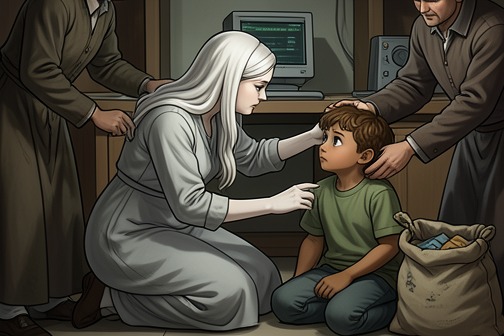
The three-year-old boy feast is a deliberate feeding staged by [Vlad Dracula](entity:character-recall-character-vlad-dracula-e0ec58b6d207) for his starving brides, and a defining moral crisis for [Glynis Wright](entity:character-recall-character-glynis-wright-d6dbb6432ea3). Faced with a child whose trust the brides have encouraged, Glynis begs that he be sent away, yet hunger and the household’s imposed customs overwhelm her resistance. The scene makes the cost of vampiric appetite intimate: the child is not an unseen victim but a person the women have held, kissed, and comforted before they kill him.
## Background and Arrival
The brides have already fed, but the previous night’s meal has barely eased their need. They look pale and drawn, and their hunger is becoming urgent. [Cneajna](entity:character-recall-character-cneajna-cc5dab651a46) tells them that their Master will come and they will feed, renewing the expectation that sustenance will arrive through Vlad Dracula’s authority. He enters with a sack over his shoulder and presents its contents as a feast intended to restore their bodies, youth, and beauty.
The sack contains a boy about three years old. His small, sun-browned limbs and wide brown eyes make the threat unmistakable to Glynis, even before it is fully exposed. [Elina](entity:character-recall-character-elina-8b98166e303a) exclaims over his appearance, while [Ariana](entity:character-recall-character-ariana-3b400cd4e588) kneels and strokes his head and cheeks. Glynis understands what Vlad has brought and grips his arm, but he answers her protest by reminding her that she had wished to feed. He then leaves, shutting the brides in with the child and the hunger he has brought them.
## The Brides and the Child
The women do not begin by treating the boy as prey. Cneajna embraces and kisses him; Ariana lifts him and spins him until he giggles; Elina bounces him on her hip and sings. Their affection is genuine in its gestures, but it does not protect him. The scene holds tenderness and danger together: the child’s fear fades as the brides draw him into play, while the reader and Glynis know that this welcome is leading toward his death.
Glynis remains frozen near a column as the others fuss over him. Her body registers the conflict that her conscience cannot resolve: the hunger is savage, and yet she asks the brides to send him away. When the boy runs around the furniture, Ariana chases him; Elina cuddles him, then nudges him toward Glynis. He runs to Glynis and wraps his arms around her legs. She cannot meet his eager face, but her hand rests on his dark head. As he races away again, she catches his shirt and draws him into her arms. She kisses his cheek, feeling her fangs descend, while he kisses her back and clings to her neck.
This contact makes the choice immediate. Glynis sinks to the floor holding him and tells him to sleep as the other brides watch. She can hear his heart and blood, and the warmth of his body intensifies the hunger she is trying to refuse. Elina says that Glynis has the right to begin because she is the first. Cneajna reverently takes the boy from Glynis, traces his lips, and turns his head to expose his throat. Glynis still murmurs that they cannot do this. Cneajna answers that it is their way; then the hunger prevails and the brides feed.
## Aftermath and Confrontation
After the feeding, Glynis stumbles through the castle, weeping and pulling at her hair, dress, and body. She wants to retch, but her undead body is already burning the blood to restore her. The aftermath is not relief or uncomplicated satisfaction: she experiences the renewed life in her body as part of the horror. Her distress drives her to the library, where Vlad Dracula is reading in English, composed and dressed in black.
Glynis confronts him over giving them an innocent child. Vlad strokes his mustache, laughs, and points to the effects of the blood in her glowing skin, sparkling eyes, and glistening hair. He argues that she should not complain about something she enjoyed. Glynis strikes at him and calls him a monster; he restrains her wrists and makes their shared nature the basis of his reply, asking whether she hates herself because she is like him. The exchange shifts the scene from a question of appetite to a struggle over responsibility: Vlad has supplied the victim and controls the brides’ circumstances, but he uses Glynis’s participation to make her feel morally indistinguishable from him.
## Meaning and Narrative Significance
The feast is part of a wider pattern in which blood is treated as nourishment, power, and a means of control, but the boy’s age and the brides’ conduct make this episode especially stark. In another scene, Glynis drinks wine and tears into food while ravenously hungry; elsewhere, she hunts an adult man and takes only what she needs. Here, the victim is a small child whom she has held and tried to protect. The contrast does not erase her participation; it clarifies why she experiences this feeding as a crisis rather than a routine hunt.
The episode also exposes the hierarchy among the brides. Vlad decides what will be brought to them and leaves them to feed, while Cneajna invokes their custom and the order that Glynis, as the first, begin. The boy’s affectionate welcome disguises none of that power once the feeding starts: his trust has been encouraged inside a closed room from which Glynis cannot make him safe. The diary account preserves her resistance as well as her surrender, refusing to let the act become either an innocent accident or a simple expression of monstrous appetite. Its decisive consequence is Glynis’s confrontation with the identity Vlad claims for her: she has acted under hunger and within his coercive household, but the horror of what she has done remains hers to reckon with.
Event 12
Wright family deception
The [Wright family deception](entity:event-recall-event-828d5a79f157) is the scheme by which [Vlad Dracula](entity:character-recall-character-vlad-dracula-e0ec58b6d207) and [Sir Stephen Sheridan](entity:character-recall-character-sir-stephen-sherida-ea5ff6fa0c5c) turn a supposed aristocratic courtship and country visit into a trap. Its importance lies not only in the family’s destruction, but in the chain of purposes concealed beneath it: Dracula wants an English aristocratic bride, a route to establish himself in [England](entity:location-recall-location-england-b153c1f368ea), and control over [Glynis Wright](entity:character-recall-character-glynis-wright-d6dbb6432ea3); [Sir Stephen](entity:character-recall-character-sir-stephen-ff95cbc47318) supplies the invitation, information, and false account that make those aims possible. The later revelations recast the family’s journey as a betrayal arranged well before the fatal outcome was known to Glynis.
## Origins and the Invitation
The scheme grows out of Dracula’s intention to leave his homeland and establish himself in [London](entity:location-recall-location-london-420923d4a60a) as an aristocrat and gentleman. He later admits to Glynis that he had already told Sir [Stephen Sheridan](entity:character-recall-character-stephen-sheridan-1d330e79a464) he needed to marry an Englishwoman of aristocratic standing. When Sir Stephen learned that the Wright family was visiting [Rome](entity:location-recall-location-rome-3ec0a741c1f4), he wrote to [Edric Wright](entity:character-recall-character-edric-wright-a2e0d8d275ea) and invited the family to [Buda](entity:location-recall-location-buda-89e5673736b2), then contacted Dracula. The invitation therefore did more than offer hospitality: it brought the family within reach of a man whose marriage plans and relocation ambitions had already been joined together.
At first, the family’s movement toward Dracula could be understood as ordinary courtship and travel. Edric wrote that a Count Dracula had asked to court Glynis, and that the family was going to visit his country estate. The news sounded serious enough to raise the possibility that Glynis might be left as a bride abroad, but the family did not yet know that Sir Stephen had privately helped bring the visit about. The apparent romance was not simply fabricated: Dracula later says that Glynis’s beauty first attracted him. But his desire for her was also instrumental. He wanted an English bride suited to his plans, and he used the courtship to draw the Wrights toward him.
## Sir Stephen’s Complicity
Sir Stephen’s role changes the meaning of the family’s journey. He was not merely a friend who obeyed Dracula’s request after the Wrights had already become involved. Dracula tells Glynis that Sir Stephen arranged the invitation after learning the family was in Rome, gathered information about them, and sent them onward when Dracula could no longer safely remain in Buda. The revelation horrifies Glynis because it identifies the invitation itself as part of the trap: her family had been lured across a great distance by a trusted associate acting in Dracula’s service.
Sir Stephen’s own record shows him managing the deception in practical stages. On [18 July 1819](entity:time-recall-time-1819-7-18-d03a7ca4b014), he sorts through his post with evident anxiety because Edric’s letter to his son may disclose the family’s destination. He fears that knowledge of their journey to Dracula’s castle could cause complications, since Dracula expressly wants the destination kept secret. A letter bearing a distinctive red seal marked with a D then brings a summons: Dracula asks Sir Stephen to meet him in [Bistriţa](entity:location-recall-location-e8ab00a367ed) in a fortnight. The correspondence makes secrecy part of the scheme well before Sir Stephen writes the false account intended for [Andrew Wright](entity:character-recall-character-andrew-wright-15e2c32beef5).
The arrangement also exploits a difference in what each participant knows. Dracula tells Sir Stephen what Andrew is to be told, and Sir Stephen records the instructions with trembling hands. Andrew is to hear that a terrible storm swept the Wrights’ carriage from the road into a river, that Glynis alone survived, and that she is badly injured but in Dracula’s care. When Sir Stephen asks why the account should not say that Glynis is dead if she has become a vampire, Dracula confirms that he transformed her and explains the next stage: after she recovers, he will marry her, as Andrew is meant to believe, and then enlist Andrew’s aid in moving Glynis and her husband to England. The false accident story conceals both the family’s fate and Dracula’s continuing use for its survivor.
## The Trap and Its Cover Story
Dracula later claims that the Wrights’ deaths were not his intention, even as he describes having sent the storm after Edric when the Earl tried to escape with his family. The contradiction exposes the gap between the plan’s professed limit and its actual violence. The storm is not an accidental detail in the cover story: Dracula himself tells Sir Stephen that he sent it, then recalls the event with disturbing pleasure. Sir Stephen, confronted with Dracula’s account, is uncomfortable at the thought of Edric and the family’s deaths and recognizes the significant part he played. His discomfort does not undo his complicity; he remains drawn further into Dracula’s deception because he is relieved that he, rather than the Wrights, is not the one suffering at the Count’s hands.
The proposed explanation to Andrew reduces a family catastrophe to a carriage swept into a river during a storm. Its central lie is selective: the letter will acknowledge a disaster and name Glynis as a survivor, but recast her captivity and transformation as medical care. That version gives Dracula a means of controlling what Andrew believes while keeping him useful. Sir Stephen understands the plan well enough to see that it will work, even as he recognizes the danger and deceit on which it depends.
## Revelation and Aftermath
Glynis eventually learns that her family was sent to its deaths in service to Dracula and that Sir Stephen did not appear surprised by the true nature of the household. On 5 September 1819, she watches the carriage carrying Sir Stephen depart after he has betrayed them. The blood she has consumed loses its flavor at the sight of him; her reaction joins her new vampiric existence to the discovery that the man responsible for her family’s fate had been allowed close enough to witness what the family had become. The episode also records the immediate cost of Dracula’s household’s predation: a young man who answered the Brides’ call lies drained in the castle doorway.
Later, Dracula gives Glynis the fuller history. Sir Stephen had not simply carried out an order to send the family to him; he had helped lure them to Buda, supplied information, and delivered Glynis into Dracula’s reach. Dracula says the family’s death was not what he intended, but admits that he wanted Glynis because she was beautiful and suited his plans. His intended marriage would make her a means of establishing himself in England, while Andrew’s presumed belief in her recovery and marriage would make him an unwitting participant in the relocation scheme.
The deception thus does not end with the family’s deaths. It continues in the false account prepared for Andrew, in Dracula’s plan to marry Glynis, and in the expectation that Andrew will help move her to England. The event is a betrayal structured as a sequence of plausible appearances: courtship masks recruitment, an invitation masks entrapment, a storm masks an attack, and medical care masks vampiric transformation. When Glynis finally understands the arrangement, those appearances collapse into one connected design, and Sir Stephen’s friendship with the family is exposed as the means by which Dracula gained access to them.
Event 13
德古拉迁往英国的计划
[Vlad Dracula](entity:character-recall-character-vlad-dracula-e0ec58b6d207)’s plan to relocate to [England](entity:location-recall-location-england-b153c1f368ea) is the political and personal scheme behind his pursuit of [Glynis Wright](entity:character-recall-character-glynis-wright-d6dbb6432ea3): he intends to establish himself as an English aristocrat, marry an Englishwoman of rank, and use the Wright family’s connections to make the move possible. The plan makes marriage a tool of social reinvention and turns a family visit to [Buda](entity:location-recall-location-buda-89e5673736b2) into a trap. Its intended future never arrives: Glynis ultimately stakes Vlad, ending the power on which the scheme depends.
## A New Life in England
Vlad’s ambition reaches beyond acquiring an estate. He tells Glynis that he has long planned to leave his homeland, buy property in England, and live in [London](entity:location-recall-location-london-420923d4a60a) as an aristocrat and gentleman. He had already shared the plan with [Sir Stephen Sheridan](entity:character-recall-character-sir-stephen-sherida-ea5ff6fa0c5c) the previous year, explaining that he needed to marry an Englishwoman—specifically, an aristocrat. England would give Vlad a new social position and a route toward the halls of power he says he hopes to reclaim.
The scheme rests on a contrast between Vlad’s apparent freedom and his claimed confinement. [Sir Stephen](entity:character-recall-character-sir-stephen-ff95cbc47318) sees him travel through the empire and exercise power beyond the reach of ordinary men, yet Vlad repeatedly describes himself as a prisoner of his own country. In his account, a move to England is not merely a change of residence but an escape from that limitation and a return to public authority. Sir Stephen, who longs for the immortal life Vlad has promised him, is drawn to the grandeur of that imagined future.
Sir Stephen has helped prepare the worldly foundations for it. Over the years, he has built Vlad’s wealth and re-established him in Hungarian society as Count Vlad Dracula, presenting him as a distant descendant of Vlad Tepes and a member of the Dracul family. Sir Stephen regards himself as a well-connected aristocrat and shrewd businessman whose knowledge of the mortal world supplies what Vlad needs. His service is therefore both practical and aspirational: he hopes his work will preserve his position as Vlad’s trusted adviser and eventually bring him into the immortal world he imagines joining.
## The Wrights Are Drawn into the Scheme
Vlad’s need for an English aristocratic bride gives Sir Stephen’s loyalty a direct human cost. After learning that the Wright family is visiting [Rome](entity:location-recall-location-rome-3ec0a741c1f4), Sir Stephen writes to [Edric Wright](entity:character-recall-character-edric-wright-a2e0d8d275ea) and invites the family to Buda; he then contacts Vlad. The invitation is not an innocent act of hospitality. As Vlad later explains to Glynis, Sir Stephen helped lure the family into his reach because their English connections and Glynis’s suitability could serve the relocation plan.
Vlad says he first saw Glynis at the opera, seated with her family in a box across from his. He remembers watching the shadows fall across her face and says that her beauty made him want her as his mortal bride. He subsequently asked Sir Stephen for more information about the family and learned about their affairs. When vampire hunters began stalking him and his Buda home came under suspicion, he says, Sir Stephen sent the Wrights to him. The family’s journey thus answered two needs at once: it brought a prospective bride to Vlad and drew a useful English household into his plans at a moment when he needed to leave Buda.
The intended marriage was coercive even in Vlad’s imagined version of events. He tells Glynis that if her father had accepted his proposal, the Wrights would still be alive; they would have left Glynis behind as his wife and prepared for the couple’s later arrival in England. He treats her father’s refusal as the point at which the plan went wrong, while Glynis rejects the assumption beneath it: that she would have consented to become Vlad’s wife and obediently followed his wishes. His conviction that a woman would learn to love a powerful man exposes the patriarchal bargain at the center of the scheme. Glynis had earlier voiced a desire to live freely, without the constraints placed on women; Vlad’s plan assigns her instead the role of aristocratic wife that would serve his ambitions.
## The Cover Story and Andrew’s Intended Role
After the Wright family’s destruction, Vlad dictates a false account for Andrew. Sir Stephen is instructed to report that a terrible storm swept the family’s carriage into a river on the way to Vlad’s home, that Glynis alone survived, and that she is badly injured and receiving medical care from the Count. The story conceals the family’s fate and presents Vlad as Glynis’s protector. Sir Stephen writes the account down, aware that Vlad has made Glynis what he is.
Vlad’s next step is to let Andrew believe that his sister recovers and marries him. He intends to enlist Andrew’s assistance in moving Glynis and her supposed husband to England. The lie turns Andrew’s affection for his sister into leverage: rather than disclose what has happened to Glynis, the plan would make her apparent survival and marriage the means of securing her brother’s cooperation. Sir Stephen recognizes that the arrangement works on its own terms, even as his written account draws him further into Vlad’s deception.
The concealment continues when Vlad takes Glynis to Buda. He orders a veil to hide her changed appearance from Andrew, insisting that she wear it whenever her brother is present. She is also told not to take clothing or jewelry Andrew would recognize, because Vlad has claimed that her possessions were lost in the accident. Instead, he directs her to wear dresses her mother bought in [Paris](entity:location-recall-location-paris-c02b439ce220) and gives her [Erzsébet](entity:character-recall-character-erzs-bet-0e6032bd790f)’s jewels. These details turn clothing and appearance into parts of the cover story: they are meant to make the transformed Glynis seem like the survivor of a carriage disaster while preventing familiar belongings from exposing the lie.
## Public Identity and the Plan’s Failure
Vlad’s desired identity as an English gentleman sits uneasily beside the violence and deception required to construct it. At a Buda opera arranged by the [Baroness](entity:character-recall-character-baroness-aa85d1ccc76d), Glynis appears in a fine black-and-gold dress beside Andrew and the man claiming to be her husband. She feels radiant and, for a moment, like the Countess Dracula; at the same time, she sees the difference between Andrew’s goodness and Vlad’s menace. The performance of aristocratic respectability therefore cannot erase the coercion behind the marriage or the false account that keeps Andrew from understanding his sister’s condition.
The opera also brings Vlad’s cultivated public identity into view. The Baroness tells Glynis that the performance concerns the life of Vlad Tepes. Vlad offers no explanation when Glynis touches his hand, leaving the relationship between the historical figure onstage and the Count in the box unspoken. The episode places his bid for renewed standing beside a public representation of his past, while his intended life in England depends on presenting himself as a respectable aristocrat and gentleman.
Glynis’s position in the plan remains divided between the identity Vlad imposes and the life she tries to claim. He calls her his bride, demands her obedience through their bond, and imagines promoting her to his first bride once they establish themselves in England. She experiences the castle as confinement and regards escape as necessary. The scheme’s eventual collapse is not a successful relocation but a reversal of its power structure: Glynis drives a stake through Vlad’s back, through his torso and out of his chest, releasing [Cneajna](entity:character-recall-character-cneajna-cc5dab651a46) as Vlad falls. With Vlad dead, the marriage and the English future he intended to build around Glynis lose their master. The plan ends not with his arrival in London, but with the woman he meant to possess bringing his rule to an end.
Event 14
Wright family carriage accident
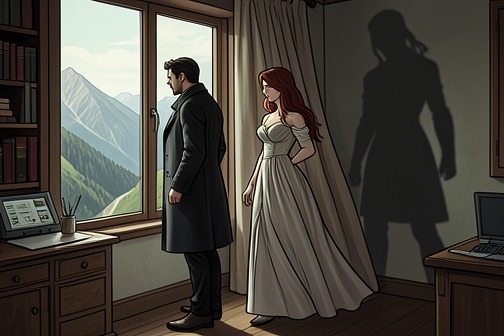
The [Wright family carriage accident](entity:event-recall-event-wright-b-rg-u-fbcb9a678eec) is the false explanation circulated for [Vlad Dracula](entity:character-recall-character-vlad-dracula-e0ec58b6d207)’s massacre of [Glynis Wright](entity:character-recall-character-glynis-wright-d6dbb6432ea3)’s family. The distinction between the reported accident on [Bârgău Pass](entity:location-recall-location-35323b70a0e8) and the murder Glynis later identifies turns the event into both a family tragedy and an act of concealment: the deaths remove those who resisted Vlad, while the cover story leaves [Andrew Wright](entity:character-recall-character-andrew-wright-15e2c32beef5) mourning what he believes was a disaster rather than a deliberate assault.
## Background and Motive
The circumstances emerge retrospectively through Glynis’s account to [Cneajna](entity:character-recall-character-cneajna-cc5dab651a46). When Cneajna argues that Vlad will spare Andrew if Glynis obeys him, Glynis points out that Vlad had already killed her family despite wanting their help. Cneajna explains that Vlad’s desire for Glynis had become paramount: after the family arrived, she and the other brides watched Glynis, and Vlad later told Cneajna how strongly he wanted her. In Cneajna’s telling, her father’s defiance sealed the family’s fate. The massacre is thus linked not simply to a failed arrangement but to Vlad’s determination to claim Glynis and his refusal to accept opposition.
That explanation also makes the deaths part of Glynis’s continuing captivity. Cneajna uses the family’s fate as a warning: if Glynis wants Andrew to live, she must obey Vlad. Glynis recognizes the trap in that reasoning. Vlad’s earlier violence has made the threat credible, while his continuing power over her makes obedience appear to be the only protection she can offer her brother.
## The Accident Story
The account sent to Andrew presents the deaths as a tragic carriage accident on Bârgău Pass. A parcel reaches him containing three letters: a brief condolence from [Sir Stephen](entity:character-recall-character-sir-stephen-ff95cbc47318) of [Buda](entity:location-recall-location-buda-89e5673736b2), a letter from Glynis describing the supposed accident, and a letter from Count Vlad Dracula. The correspondence gives Andrew an apparently coherent account of his family’s loss, but the later disclosure that Vlad killed the family exposes the accident story as a cover for murder.
The report’s emotional consequences are immediate. Andrew becomes inconsolable after reading Glynis’s letter, clutching it as he weeps for his family. In [Angeline Wright](entity:character-recall-character-angeline-wright-d62aa8808b47)’s account, he has touched none of the tea laid out for him; she has to take the letter from his fingers to read it herself. The scene shows how effectively the false account reaches its intended recipient: Andrew receives a story of sudden misfortune, not a warning that Vlad is responsible.
## Consequences and Significance
The massacre leaves Glynis and Andrew separated by a deception that assigns them different understandings of the loss. Glynis knows Vlad’s violence firsthand; Andrew is led to believe that his family died in a carriage accident and grieves for Glynis as the only surviving sister whose letter has reached him. The false report therefore compounds the killing with isolation, preventing Andrew from understanding the danger surrounding his sister.
For Glynis, the family’s destruction remains a motive for resistance rather than a past event she can set aside. Much later, as she drives a stake through Vlad, she identifies her family as the reason for her attack. The act answers the violence that began with their deaths, reversing the relation of power between captor and captive. The accident story had concealed Vlad’s responsibility; Glynis’s revenge makes that responsibility the explicit cause of his fall.
Event 15
Glynis's transformation
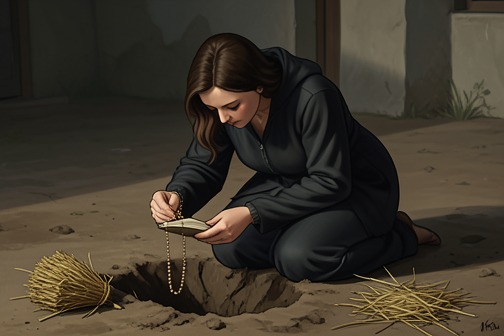
[Glynis Wright](entity:character-recall-character-glynis-wright-d6dbb6432ea3)’s transformation is not a clean passage from death to freedom, but a rebirth in which survival comes bound to hunger, captivity, and the power of [Vlad Dracula](entity:character-recall-character-vlad-dracula-e0ec58b6d207). Her mother’s final gift of blood preserves her life, while later blood rites renew her vampire strength; between those moments, Glynis must learn what her altered body can do and what its appetites may make her become.
## Mortal Longing and the Threshold of Change
Before her transformation, Glynis already chafed against the restrictions imposed on women. She wanted to live as a woman with the freedom customarily granted to men, rather than accept the narrow limits of respectable femininity. That desire for self-determination gives her later captivity a particular bitterness: becoming supernatural does not automatically release her from human structures of control.
At the threshold between mortal life and vampirism, her mother’s actions join religious devotion to a desperate act of preservation. She puts aside her journal, makes a small hole in the dirt and straw, genuflects, and buries her rosary. She then promises to pray for Glynis and urges her to drink and live. Glynis answers with a promise not to forget her family and to escape. The exchange makes survival inseparable from a charge: her mother gives what she can so that Glynis may live, but asks her to resist the power that has trapped her.
## A New Body, Still Under Authority
The transformation gives Glynis abilities that exceed ordinary human limits. In time, she learns that she can scale walls, leap great distances, pass through narrow cracks, and begin to shape herself into mist. Watching [Elina](entity:character-recall-character-elina-8b98166e303a) turn into a wolf shows her another possibility within the powers of her new kind, and makes clear that Glynis has not yet discovered the full extent of what she can do. Her changed body is therefore both an instrument of escape and a source of continuing astonishment.
Those powers do not make her independent. Glynis describes her early vampire life as a succession of torments: she is a slave to Vlad Dracula, confined to his castle and required to learn its rules. Clothing becomes one visible means of enforcing that control. She resents being made to exchange her own clothes for an outfit she considers degrading, just as she later resists the veil Vlad orders her to wear around [Andrew Wright](entity:character-recall-character-andrew-wright-15e2c32beef5). In [Buda](entity:location-recall-location-buda-89e5673736b2), the heavy organza and lace are meant to conceal her altered beauty from her brother; she finds that she cannot truly see him through them and tears the veil from her face. The vampire’s new appearance may be striking, but its presentation remains subject to another’s orders.
Vlad also directs what she may wear when she is to meet Andrew. Glynis must avoid recognizable English clothes and jewelry because Vlad has told her brother that everything was lost in the accident. He plans for her to wear dresses her mother bought in [Paris](entity:location-recall-location-paris-c02b439ce220) and jewels belonging to [Erzsébet Dolingen](entity:character-recall-character-erzs-bet-dolingen-f5a83d46c8ab). Clothing thus helps sustain a deception as well as control Glynis’s appearance: the garments carry traces of her former family life, while the jewels and imposed veil make her part of Vlad’s design.
## Hunger, Submission, and Family Loyalty
Vampirism brings a conflict between Glynis’s will and bodily appetite. The hunger is a torment, yet feeding can also bring pleasure and a rush of power. Looking back on her first kill, she recognizes that she enjoyed the hunt and the strength it gave her, a response that troubles her precisely because it complicates her image of herself as only a victim. Her new existence puts ethical resistance under pressure from physical desire.
Her submission to Vlad is also strategic. After witnessing what happened to [Erzsébet](entity:character-recall-character-erzs-bet-0e6032bd790f), Glynis suppresses her inclination to defy him because Andrew, [Angeline Wright](entity:character-recall-character-angeline-wright-d62aa8808b47), and their newborn son are what remain of her mortal family. She accepts the role of Vlad’s pawn, obeys his wishes, and even goes to his bedchamber when she believes that appearing to be a loyal lover may help her free Andrew from the fate that befell the rest of her family. Vlad permits her to read Andrew’s letters after she has written correspondence according to his instructions. Those letters offer a rare glimpse of the life she left behind, but access to them is another reward controlled by her captor.
## Rebirth and the Cost of Power
The transformation recurs as a more overt blood rite when Vlad’s gathered vampires support Glynis and he repeatedly dips a goblet for her to drink. Blood fills her, and Vlad lowers her into it; her sisters dance as he rises. Her wounds fade, her senses sharpen, and her heart begins to beat. The scene gives vampiric restoration the shape of a communal ceremony, while placing Glynis in its center as both its recipient and its captive.
The renewed strength does not resolve her resistance. When the hunger recedes, her conscience returns, and she understands that she has fed on innocents in the arms of the very person who holds and torments her. The episode turns apparent vitality into moral recognition: the power that heals her also confirms her fear that she is becoming the monster Vlad said she would become. Yet Glynis’s purpose changes over the course of her new life. At first she thinks only of escaping Vlad and the castle; she comes to see the rescue of her surviving family from his designs as a larger task. Her transformation therefore leaves her neither simply powerless nor free. It gives her means to act, but makes every use of those means a contest over what she will serve.
Event 16
Cneajna's vampiric transformation
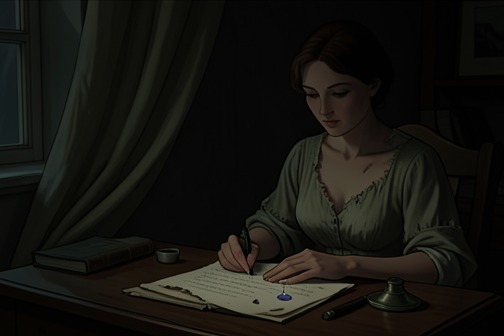
[Cneajna's vampiric transformation](entity:event-recall-event-cneajna-vlad-1ba699fe4955) is the turning point through which [Vlad Dracula](entity:character-recall-character-vlad-dracula-e0ec58b6d207) returned her from bereavement to his household as an immortal bride. As [Cneajna](entity:character-recall-character-cneajna-cc5dab651a46) later recounts it to [Glynis Wright](entity:character-recall-character-glynis-wright-d6dbb6432ea3), the change was bound up with her grief over Vlad's reported death, his sudden return, and the promise that she would again occupy a cherished place beside him. Her account presents the bite not only as the threshold into vampire existence but also as the beginning of a relationship she understood as restoration and love.
## Background: Bereavement and Vlad's Reported Death
Cneajna says she learned by letter from her cousin that Vlad Dracula had died at the hands of assassins sent by the Turks. He had once more become ruler of [Wallachia](entity:location-recall-location-cb08e74a4e51) and pursued the aims she associated with his return to power: pushing back the Turks, killing his brother [Radu](entity:character-recall-character-radu-d64cea5afad7), and reclaiming his throne. The report also said his head had been taken to Constantinople and impaled above the city. To Cneajna, the news meant the loss of both the man she loved and the future she had imagined with him.
She describes falling into a prolonged, consuming grief. She wept for days, then could no longer cry; she would not eat or sleep, and reread the letters Vlad had sent after his release from [Matthias Corvinus](entity:character-recall-character-matthias-corvinus-f23f8e9a414c)'s custody. His seal had once made her heart quicken. His final letter, written before his reported death, told her that she remained in his thoughts and that he wanted to be with her beyond death. He praised her as the only woman who understood his torment and the experience of tasting an enemy's blood after victory. In the moment of transformation, that language of a shared understanding of violence and blood would take on a literal, supernatural meaning.
## The Return and the Turning
Cneajna says she fell asleep in her bedroom while thinking only of death. She awoke to Vlad Dracula's lips against hers. The encounter brought joy and confusion together: she believed him dead, yet he held her and kissed away her tears. Another figure stood in the room, a beautiful raven-haired woman with fiery eyes. Cneajna recognized her as [Erzsébet Dolingen](entity:character-recall-character-erzs-bet-dolingen-f5a83d46c8ab) and understood that she was not mortal. Looking into Vlad Dracula's eyes, Cneajna saw the same fire.
Vlad Dracula told Cneajna that he had come to claim her as his own. He kissed her, then pierced her neck with his teeth. Cneajna recalls being afraid, but she interpreted the bite as proof that he loved her. The account makes the transformation inseparable from possession: the language of a lover's return becomes a claim over Cneajna's body, and the bite enacts that claim. Her remembrance does not describe the physical stages of the change; it fixes its decisive instant in the combination of his declaration, the wound, and her belief about what the act meant.
## A Restored Place in the Household
Cneajna understands the consequences of the turning as the recovery of everything she had lost. Vlad Dracula restored her position as the first wife in his household, even above [Erzsébet](entity:character-recall-character-erzs-bet-0e6032bd790f) Dolingen, who had been his first companion in vampire life. He gave her fine jewels and beautiful clothes, and she describes Glynis Wright, [Ariana](entity:character-recall-character-ariana-3b400cd4e588), and [Elina](entity:character-recall-character-elina-8b98166e303a) as their children. She also names the transformation's larger gifts: eternal life, eternal beauty, and the hope that they might someday rise and rule as they once had.
That account gives the turning a social and dynastic consequence as well as a supernatural one. Cneajna's new existence places her within a household organized around Vlad Dracula and his authority, but she remembers it as a return to status, family, and a shared future. Her understanding of the transformation is therefore not simply that she survived grief; she believes that the vampire life restored the home and power she thought death had taken from her.
## Retrospective Meaning
Cneajna tells this story to Glynis Wright as an argument for obedience. Because she believes Vlad Dracula gave her back her position, beauty, family, and eternity, she urges Glynis to do as he wishes and not complain. She even presents obedience as a way to protect Glynis's brother, [Andrew Wright](entity:character-recall-character-andrew-wright-15e2c32beef5), and suggests that Vlad Dracula might make him immortal. The memory of the turning thus becomes part of Cneajna's case for accepting Vlad Dracula's rule: what she experienced as restoration, she expects Glynis to recognize as a gift.
Glynis does not share that interpretation. She sees Cneajna as content in a dark world that she herself experiences as another prison, and hates Vlad Dracula for trapping her in vampire life. The contrast does not undo Cneajna's account, but it reveals how differently the same system of eternal life and household belonging can be understood. For Cneajna, the bite marks a return to love and rank; for Glynis, the life it inaugurates is captivity. The transformation's significance therefore rests both in what Cneajna believes Vlad Dracula restored and in the freedom Glynis cannot find in that restoration.
Event 17
Journey to Buda
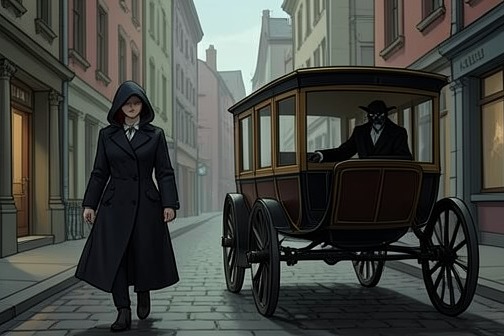
[Journey to Buda](entity:event-recall-event-vlad-glynis-buda-69dba363c3a6) marks a change in [Glynis Wright](entity:character-recall-character-glynis-wright-d6dbb6432ea3)’s confinement, not an escape from it. In March 1820, [Vlad Dracula](entity:character-recall-character-vlad-dracula-e0ec58b6d207) takes her from [Castle Dracula](entity:location-recall-location-1140294d9f23) to his home in [Buda](entity:location-recall-location-buda-89e5673736b2), where her brother Andrew is expected to arrive. The move offers Glynis the hope of reunion and a glimpse of the city where she was last happy as a mortal, but Vlad controls its terms: he plans to deceive Andrew about her identity and their marriage, and presents Glynis’s limited freedom as a test of her loyalty.
## The plan behind the journey
The immediate cause is a letter from Andrew to Vlad’s solicitor. Andrew is travelling to Buda with an English physician who is to examine Glynis and determine whether she can return to [England](entity:location-recall-location-england-b153c1f368ea). Vlad tells Glynis that Andrew is already on his way and should arrive in about two weeks. Rather than bring Andrew to Castle Dracula, Vlad decides to meet him in Buda and keep him at [Sir Stephen](entity:character-recall-character-sir-stephen-ff95cbc47318)’s residence. He says that his own home is undergoing restoration, including additions intended to protect against vampire hunters; this explanation supplies a respectable reason to refuse Andrew entry.
Vlad requires Glynis to help sustain the deception. Andrew is to be told that the couple are married and that she is now Countess Dracula of [Wallachia](entity:location-recall-location-cb08e74a4e51). The claim recasts her captivity as a socially legible marriage, while the proposed journey gives Vlad control over the encounter with the one family member she hopes might help her. Glynis fears that Andrew will be in danger if Vlad loses his temper, and protests when she learns he is coming. After Vlad strikes her, she suppresses her resistance and resumes the appearance of an obedient wife.
## Departure and manufactured identity
Vlad makes the journey part of a wider plan to establish himself in England. Before leaving, he orders Glynis not to take any dress, jewelry, or possession Andrew would recognize. He has told Andrew that the family’s belongings were lost in the accident, so familiar clothes could expose the lie. Instead, Glynis is to wear dresses her mother bought in [Paris](entity:location-recall-location-paris-c02b439ce220) and jewels belonging to [Erzsébet Dolingen](entity:character-recall-character-erzs-bet-dolingen-f5a83d46c8ab). Her clothing is not merely travel preparation: Vlad selects what she may carry and how she will appear to her brother.
He also promises that a veil will conceal her altered beauty when Andrew is present. The garment is meant to protect Vlad’s account of the supposed accident and marriage, but it makes the reunion harder for Glynis to imagine: she expects to see Andrew while hidden behind layers of organza and lace. In Buda, she finds the veil so cumbersome that she tears it from her face and throws it onto the bed. The small act of refusal cannot undo Vlad’s orders, but it makes visible the friction between the identity he stages for her and her wish to meet her brother as herself.
## The road and arrival
Glynis’s journal records the departure on March 5, 1820, with excitement she can scarcely contain. That anticipation coexists with dread: she wants to see Andrew, yet knows Vlad is temperamental and fears for her brother’s safety. The journey is therefore both a literal departure from the castle and a passage deeper into Vlad’s scheme. She is allowed to travel, but not to choose the destination, the terms of the visit, or what Andrew will be told.
On March 9, the party reaches Buda, [Hungary](entity:location-recall-location-hungary-b3ac7e0cfaee), in the early evening. The moon shines over the [Danube](entity:location-recall-location-danube-bac3554d019b) as the carriage crosses the pontoon bridge linking Buda with [Pesth](entity:location-recall-location-pesth-28c7289e9b5f). For Glynis, the return has the force of a recovered memory: this was the last place where she was happy in mortal life. The carriage climbs the cobbled streets toward [The Dracula Estate in Buda](entity:object-recall-object-the-dracula-estate-in-124a374cac45), set among the city’s hills. Vlad visibly relaxes and points out landmarks, including the Royal Palace. The urban setting contrasts with the isolation of the castle; Glynis is relieved to be in a modern city again, even though the home awaiting her there belongs to her captor.
## A conditional freedom
Vlad describes Buda as a place where Glynis will have freedoms denied to her at the castle. He says she may hunt on her own and learn the powers of the night, but makes those permissions conditional on her answering the blood-bond’s Beckoning and proving her loyalty. He presents this training as preparation for her eventual position as his first bride when they move to England. Thus the journey does not loosen his authority; it changes the setting and offers controlled privileges in exchange for obedience.
That bargain bears directly on Glynis’s conflict with the role imposed on her. Before her transformation, she had spoken of wanting to live without the constraints placed on women; now she describes herself as Vlad’s slave and struggles against the clothes and conventions he imposes. At the same time, she recognizes that feeding has brought her a disturbing pleasure in the hunt and a rush of power. Buda promises room to exercise that power, but within a future Vlad has mapped out for her. The journey’s central contradiction is that movement and opportunity arrive in the same form as further control: Glynis returns to a city associated with mortal happiness, only to enter a new stage of captivity under a carefully manufactured identity.
Event 18
Glynis's first independent hunt during the journey
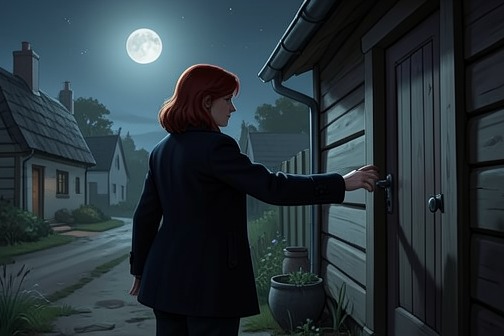
[Glynis Wright](entity:character-recall-character-glynis-wright-d6dbb6432ea3)’s first independent hunt during the journey away from [Castle Dracula](entity:location-recall-location-1140294d9f23) is both a threshold into self-directed vampiric life and a test of whether she can set limits on its violence. Away from her vampire sisters, she follows her hunger into a farmer’s cottage and takes blood from its occupant, but chooses to leave him alive and protect his pregnant wife. [Vlad Dracula](entity:character-recall-character-vlad-dracula-e0ec58b6d207)’s later confession that he killed the woman and her unborn child transforms the hunt into a conflict over responsibility: Glynis has begun to act on her own, yet Vlad insists that their shared nature makes killing unavoidable.
## Causes and Setting
The hunt takes place during the journey, when Glynis is travelling with Vlad and is at last outside the castle. The moon calls to mind freedom and their destination; she welcomes the chance to feed without waiting for her vampire sisters to eat first. That freedom is conditional, however. Vlad sets the terms before she leaves the carriage: she is to find one mortal and return quickly. Her first solitary hunt therefore begins as an allowance from her husband and master, not as a complete escape from his authority.
At the outskirts of a village, Glynis’s senses sharpen as the hunger rises. She removes her coat and bonnet so she can hunt unimpeded, then runs through a field and into the forest. The moonlight marks her path to a small, dark farmer’s hut. From outside, she hears two heartbeats and scents fresh blood within. The scene turns the journey’s open road into a private hunting ground: for the first time, she approaches prey without her sisters beside her, but Vlad’s instruction still defines how far she is meant to go.
## The Hunt in the Cottage
Glynis finds a woman and a farmer inside. Rather than attack both, she bends over the woman, brushes her dark hair back, kisses her forehead, and tells her to sleep peacefully and not awaken. The woman falls silent and her head slumps away. Glynis’s words and gesture remove the woman from the immediate encounter without killing her, a distinction that will matter when Vlad later discloses what happened to her.
The farmer, meanwhile, is not simply an anonymous source of blood. Glynis understands that his wife is heavily pregnant and that he has hoped she would turn her attention to him while his wife slept. She feels disgust at his weakness and at his expectation of sexual attention, but recognizes that a child will soon need its father. That recognition governs her choice: she will take only what she needs. As the farmer strains toward a kiss, Glynis pushes his face aside, exposes his throat, and bites him. She drinks until his heart weakens, then stops and draws away. The man remains alive, looking at her with both adoration and horror; her restraint is real, but it does not make the assault harmless or consensual.
## A Limit Vlad Refuses to Keep
The apparent limit of the hunt becomes the basis of the later confrontation between Glynis and Vlad. When they discuss the feeding, Vlad tells her that he took the blood of the woman and her unborn child. Glynis freezes, grips his hair, and forces him to repeat the admission. Vlad answers that he finished what she started. To him, her attack has already placed the household within the logic of predation; he treats the woman and child as part of the same feeding rather than as lives Glynis had deliberately spared.
Glynis responds with fury, striking at Vlad and condemning the killing of an innocent family. Her anger marks a boundary she is trying to preserve even as she has herself fed on the farmer. Vlad restrains her wrists and counters that vampires feed and kill: their existence, in his account, admits no distinction between taking blood and causing death. The disagreement is not merely about the extent of one hunt. Glynis regards her choices as morally significant; Vlad uses their shared vampiric identity to collapse the difference between her limited attack and his killing of the woman and unborn child.
## Significance
The scene makes Glynis’s independence tangible through action rather than declaration. She leaves the carriage alone, follows the scent of prey, and decides how to approach each person in the cottage. Yet the episode also exposes the limits of that autonomy: Vlad has authorized the hunt, imposed a one-mortal rule, and remains able to determine what happens to the other people there. Her first independent feeding is therefore neither simple liberation nor a clean break from his control.
The contrast between blood-taking and killing is the episode’s central ethical pressure. Glynis does not refuse to feed; she bites the farmer and drinks until his heart weakens. But she stops, conscious that his pregnant wife and their future child depend on him. Vlad’s intervention destroys the outcome she sought to preserve and then presents the resulting violence as the inevitable expression of what they are. The hunt thus gives Glynis a first, incomplete claim to choose how she will live as a vampire—and makes clear that Vlad will contest even the limits she tries to place on that life.
Event 19
Glynis and Ignatius's first meeting
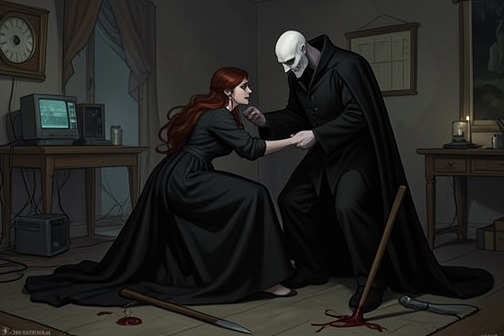
[Glynis and Ignatius's first meeting](entity:event-recall-event-glynis-ignatius-39b375938e74) turns a threatened execution into the beginning of an intimate alliance. In [Buda](entity:location-recall-location-buda-89e5673736b2), as a hunter raises a stake against her, a stranger draws her out of danger; his rescue is followed by tenderness, shared blood, and the disclosure of his name. The encounter matters not because Glynis is suddenly free, but because she meets another vampire whose care offers a startling contrast to the control she knows under [Vlad Dracula](entity:character-recall-character-vlad-dracula-e0ec58b6d207).
## Causes and Circumstances
Glynis approaches the encounter already struggling to claim authority over her life and appearance. Before her transformation, she had told [May Wright](entity:character-recall-character-may-wright-3d98d113a9e3) that she wanted to live as a woman with the freedom men enjoyed, without the constraints imposed on her. After becoming a vampire, that desire takes on a sharper edge: she describes the castle as a prison and resents having to exchange her own clothes for an outfit she considers degrading. Her vampiric existence has brought power and hunger, but not independence from Vlad Dracula.
Even her clothing becomes a point of control. When summoned to Vlad Dracula’s library, Glynis chooses a favorite blue Italian silk gown from her own chest and dresses without a corset, preferring her own clothes to what she has been made to wear. Later, as she prepares to see [Andrew Wright](entity:character-recall-character-andrew-wright-15e2c32beef5) in Buda, Vlad Dracula orders a veil to conceal her changed beauty and directs her to avoid anything her brother would recognize. The veil is meant to manage what Andrew sees and preserve Vlad Dracula’s account of the family’s supposed accident. Glynis finds it so obstructive that she tears it from her face. Her resistance to being presented and concealed by others forms a relevant background to the danger in which Ignatius first finds her.
That danger is immediate and physical. During a confrontation with [Vampire Hunters](entity:character-recall-character-vampire-hunters-27807346dce8), a hunter who has stayed behind advances on Glynis with a stake raised above his head. She is too shocked to react in time. As the weapon begins to descend, a shadow separates from the darkness and takes human form; the hunter’s momentum carries him past the blow, and Glynis is lifted away and dropped onto a rooftop. The rescue interrupts an imminent staking, the clearest possible threat to her continued existence as a vampire.
## The Rescue and First Recognition
On the rooftop, Glynis faces the person who has intervened. She sees a tall, slender man dressed in black, with straight dark hair, a pale face, and midnight-colored eyes. His beauty seems inseparable from the night around him, but his first response is not a greeting: he confronts her about what she was doing below. His anger complicates the rescue. He has saved her, yet he plainly expects an explanation, and Glynis is left shocked by the realization that she is in the presence of another vampire.
The encounter does not remain a contest of authority. In a later moment, Glynis is overwhelmed by tears and unable to move. The vampire takes her away from a ghastly sight, wipes her tears, and tries to soothe her. His gentleness recalls her dead father to her, linking his touch with a lost form of familial comfort rather than the commands and punishments she associates with Vlad Dracula. The contrast is immediate: this stranger does not first demand obedience or define her place, but responds to her distress.
The danger returns when [Gregor](entity:character-recall-character-gregor-a21e0b388746) pursues Glynis. She is in severe pain, nearly delirious, and desperate to escape; an unseen force throws Gregor against a wall. Shadows gather around Glynis until they overwhelm her, and then arms encircle her. The vampire identifies himself as the person who had come to her before and carries her up into the night sky while Gregor remains below, howling in frustration. The rescue is thus not a single interruption of the hunters’ attack: it becomes continuing protection when another pursuer threatens her.
## Blood, Recovery, and Recognition
Glynis’s condition makes the bond between the two vampires physical as well as emotional. Weak and injured, she permits him to bite her. The bite brings an intensity she has not experienced with other vampires; she responds by kissing the blood from his mouth and kissing him. At his direction, she then bites his throat and drinks his blood. The exchange is reciprocal: he feeds from her, and she feeds from him, rather than receiving blood passively from a controlling master.
His blood restores her. Its power fills her, and her wounds close as she drinks. In this moment, blood is both sustenance and an intimate act: it enables survival while drawing the two vampires into contact through the very hunger that has made Glynis vulnerable. The scene therefore offers no simple escape from vampiric need. Instead, the same condition that exposes her to violence becomes a medium through which recovery and desire meet.
The stranger eventually tells her his name: Ignatius. He presses a kiss over her heart and holds her face as she repeats it. The small exchange gives Glynis a personal recognition that differs from the roles others have imposed on her. Vlad Dracula calls her to serve him and imagines her rising to the position of his true bride; Ignatius, by contrast, makes himself known by name within a moment of mutual closeness. The difference does not erase the unequal and dangerous structures governing their world, but it marks the beginning of a distinct relationship.
## Consequences and Narrative Significance
The meeting’s importance becomes clearer against Glynis’s earlier promise to her mother, [Antoinetta Wright](entity:character-recall-character-antoinetta-wright-fdca197148ff). Before Antoinetta’s death, Glynis swore she would escape captivity, and her mother buried her rosary in the dirt before urging her to live and keep that promise. Glynis’s subsequent resistance to imposed clothing, the veil, and Vlad Dracula’s control gives the promise recurring force. Ignatius’s intervention offers help at a moment when escape from immediate danger depends on another vampire, making the encounter both a reprieve and a complication of her pursuit of independence.
Their later bond is not merely an inference from the rooftop rescue. Ignatius eventually tells Glynis that he serves Astir and Astir’s husband and has loved them both; he also says that meeting Glynis has awakened a love unlike anything he has felt before. His confession connects the first encounter to a continuing conflict between desire, loyalty, and the obligations of his past. He fears that [Astir’s prophecy](entity:concept-recall-concept-astir-s-prophecy-4170cb8ef45c) will cost him Glynis, while Glynis believes the prediction will come true and fears that she will destroy the person who loves her.
The rescue consequently establishes a relationship shaped by both care and peril. Ignatius’s tenderness recalls the safety Glynis has lost, and his blood helps restore her body; their attraction, however, enters a world ruled by blood bonds, prophecy, and competing loyalties. The encounter changes the immediate value at stake—from imminent death to survival and connection—without resolving Glynis’s captivity or guaranteeing either lover’s safety. Its force lies in that opening: for the first time, rescue and intimacy arrive together from a vampire other than Vlad Dracula.
Event 20
Gregor's hunt for Glynis
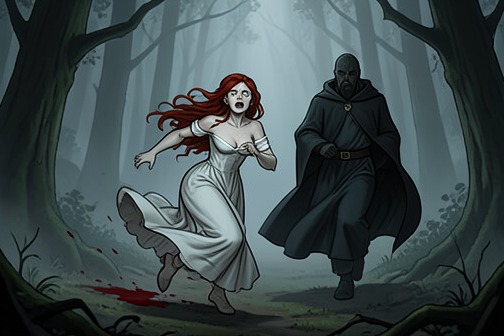
[Gregor](entity:character-recall-character-gregor-a21e0b388746)’s hunt for Glynis is a violent interruption of her journey to [Buda](entity:location-recall-location-buda-89e5673736b2): after finding the carriage driver murdered, Glynis is confronted by Gregor, a Dhamphir who intends to kill her. The pursuit turns her fragile new independence into a test of survival, revealing the danger of traveling while hungry, inexperienced, and still subject to [Vlad Dracula](entity:character-recall-character-vlad-dracula-e0ec58b6d207)’s control.
## Causes and Approach
At the time of the attack, Glynis is trying to make a future for herself within circumstances she did not choose. Her transformation into a vampire has left her bound to Vlad Dracula and confined to his castle, where she regards learning its rules and wearing the clothing imposed on her as further forms of captivity. She has already recognized the irony: she once wished to escape the restrictions placed on women, only to find herself trapped in another system of command. Her desire to survive the castle and find a way out gives her journey beyond it particular weight; movement is not yet freedom, but it creates the possibility of acting beyond Vlad’s immediate presence.
The journey to Buda is also shaped by Vlad’s plans and the danger of Glynis being recognized by her brother, [Andrew Wright](entity:character-recall-character-andrew-wright-15e2c32beef5). Vlad orders a veil to conceal her altered appearance and insists that she avoid anything Andrew might identify as belonging to her former life. The disguise makes their hoped-for meeting possible on Vlad’s terms, while also marking Glynis’s continued dependence on his decisions. Soon after arriving in Buda, she finds the veil so obstructive that she tears it from her face; her impatience with it underscores the tension between the meeting she longs for and the concealment Vlad requires.
The attack begins with a discovery that transforms an ordinary departure into a supernatural threat. When Glynis tries to rouse the carriage driver, she finds that his throat has been slit from ear to ear. The murder does not look like an ordinary robbery: she senses a nearby presence and draws on her own power for protection. Shadows then give shape to a pale, white-haired man dressed in black. Gregor identifies himself as a Dhamphir and declares his intention to end her existence. Glynis does not know what he is, but his appearance and purpose make clear that the journey has brought her into the reach of a hunter rather than into safety.
## The Pursuit and Rescue
Gregor turns the encounter into a hunt, while Glynis’s lack of food becomes an immediate weakness. She runs, barely touching the road with her feet, and tries to summon her power, only to find it fading because she has not fed. She can fly and raise protective barriers, but these abilities do not make her a practiced fighter. As Gregor circles in the air, she struggles to conceal herself behind a barrier that she can feel weakening; the power that might have made her formidable is dwindling at the moment she most needs it.
The chase reaches a spire, where Glynis draws back sharply as Gregor sweeps close. He turns toward the sound of her breath and throws one of the small silver daggers hidden in his coat. She dodges, but not quickly enough: the knife lodges in her arm instead of her breast, and she tumbles from the spire into the night air. Gregor follows her cry and throws again. The second dagger strikes her right thigh; her power flickers out, and she hits the ground. The sequence makes the limits of her new nature concrete: flight and supernatural defenses cannot compensate for hunger, inexperience, and an attacker who can keep pace with her.
On the ground, Gregor shifts from pursuit to interrogation and assault. He cuts open Glynis’s frock, exposes her breasts, and demands to know who her Master is and where his haven lies. She refuses to answer, understanding that disclosing the truth would bring her immediate death. Gregor drives his knife into her breast, and when she continues to resist, threatens to mutilate her further. Her hope that Vlad will come to save her sits uneasily beside the fact that the Master whose identity she protects is also the source of her bondage. The encounter therefore tests not only whether she can escape a hunter, but what survival requires when every available form of protection is compromised.
Help arrives through the shadows rather than through Glynis’s own strength. An unseen force slams into Gregor, knocks the knives from his hands, and gives her enough room to break free. It hurls him across the street into a building; when he staggers up, the force strikes him against the wall again, leaving him nearly unconscious. Glynis, sobbing and disoriented, tries to flee, but the shadows surround her. A gentleman vampire identifies himself as he lifts her into the night sky. Gregor is left below, howling in pain and frustration, while Glynis is carried away from the attack. The rescue ends the immediate pursuit, but its arrival also reveals that she is not alone in the hidden supernatural world—and that her survival depends, for now, on powers beyond her control.
## Aftermath and Significance
The attack ends without giving Glynis a clear route to safety. Gregor’s questions expose the danger attached to her supernatural identity: he seeks not only to kill her but to discover who commands her and where that power is sheltered. Glynis refuses to name Vlad Dracula, even while fearing that he may be the only one who can rescue her. Her resistance is therefore caught in a cruel contradiction: protecting the Master who holds her in bondage may preserve her life, but it cannot make her free.
The intervention of the unnamed gentleman vampire reverses the encounter without resolving that contradiction. Gregor, who had treated Glynis as prey, is left wounded and helpless; Glynis is carried away, but by another supernatural power whose intentions the scene does not yet explain. Rescue restores her immediate chance of survival, not control over her circumstances. The abrupt shift from a hunter’s pursuit to an unknown vampire’s intervention widens the danger surrounding her journey to Buda: the hidden world contains forces beyond Vlad’s household, and Glynis has not yet learned which of them can be trusted.
## Costume, Agency, and Exposure
The hunt also sharpens a conflict over how [Glynis Wright](entity:character-recall-character-glynis-wright-d6dbb6432ea3) may inhabit and present her body. Earlier, she had chosen her favorite gown, a fine Italian silk dress in blue, and put it on without a corset, finding relief in clothing she had selected for herself. That small act of self-direction gives a pointed contrast to Gregor’s attack: he cuts open her frock and exposes her as part of his effort to force information from her. Dress shifts from a means of personal choice to something an assailant can violate, making the pursuit an assault on her bodily autonomy as well as her life.
The contrast connects the danger on the road to Glynis Wright’s wider struggle to act on her own terms. Her supernatural powers offer ways to fly, hide, and defend herself, but they cannot shield her from physical coercion once hunger has weakened them. The episode thus makes her new strength conditional rather than absolute: survival depends on resources she has not yet mastered, while the body through which she exercises that power remains vulnerable to other people’s demands.
Event 21
Andrew's arrival in Buda
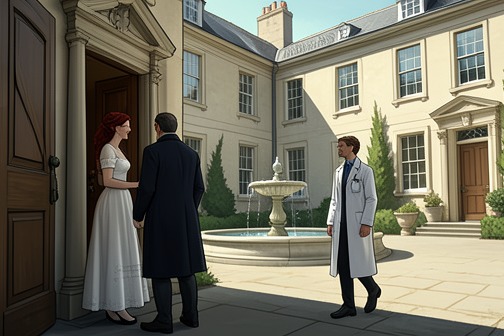
Andrew’s arrival in [Buda](entity:location-recall-location-buda-89e5673736b2) is the point at which his search for Glynis becomes a direct encounter with the household where she is staying. Recorded in his journal on [12 March 1820](entity:time-recall-time-12-march-1820-672c6d5bf4d0), the scene brings him and Dr. [Emil Baum](entity:character-recall-character-emil-baum-5dcf85569739) to [Sir Stephen Sheridan](entity:character-recall-character-sir-stephen-sherida-ea5ff6fa0c5c)’s mansion after a difficult journey. Its sunlit courtyard and courteous reception offer an appearance of domestic ease, even as the reader knows that Glynis has been drawn into [Vlad Dracula](entity:character-recall-character-vlad-dracula-e0ec58b6d207)’s vampire household.
## Purpose and Journey
Andrew comes to Buda to find his sister and have her examined by the family physician. When he introduces Emil to [Maria Ramsay](entity:character-recall-character-maria-ramsay-2d054e2a5e48), [Sir Stephen](entity:character-recall-character-sir-stephen-ff95cbc47318)’s wife, he identifies the older man as their family doctor and explains that he has accompanied him to examine Glynis. Emil’s reason for making the journey is also personal: he says that Andrew’s father was his good friend and that he came for his sake and for Glynis. The visit therefore carries both a practical purpose and a family obligation.
Reaching Buda has taken more effort than Andrew expected. The journey began pleasantly, but after the travellers left Munich, terrible storms plagued their progress. They were held in Austria for nearly a week because the weather made every mode of transportation impossible. Andrew records that there were times when he wondered whether he would survive to see his sister. By the time the carriage reaches the mansion, he is sore from the journey and anxious to begin the visit; the long delay has made arrival feel less like a routine stop than the hard-won opening of a search.
## Arrival at Sir Stephen’s Mansion
Andrew’s journal fixes the moment in bright, specific detail: the sun blazes over Buda as the weather-beaten carriage rolls into Sir Stephen’s courtyard. Before the driver can dismount, Andrew pushes open the carriage door and leaps down onto the cobblestone drive. He takes in the lush foliage, marble columns, and imposing house, while Emil remarks on how well Sir Stephen lives. Andrew agrees, then offers his hand to help his companion down, mindful that the older doctor’s body has probably suffered from the journey.
The mansion’s impressive appearance does not match the reception Andrew had anticipated. He had sent word ahead and expected a better welcome, but no one seems to be about when the two travellers arrive. His impatience is close to breaking through, shaped by the storms, the delay, and the uncertainty of whether he would ever reach Glynis. The gap between the house’s grandeur and its empty arrival point gives the scene a small but consequential uncertainty: Andrew has reached the right destination, yet has not found the welcome or immediate access he expected.
## [Maria](entity:character-recall-character-maria-de0c38967fe7) Ramsay’s Welcome
A cry from around the side of the house draws Andrew’s attention to Maria, who appears carrying a basket of freshly cut flowers. Her initial alarm gives way to a smile when she recognizes his resemblance to his father; for a moment, she says, she thought Andrew’s father had returned from the dead. The resemblance makes the Wright family’s history present at the threshold, before Andrew has even explained why he has come.
Maria identifies herself as Sir Stephen’s wife and explains that they expected Andrew later that evening. The timing mismatch helps account for the absence of a formal reception, without erasing Andrew’s disappointment after the arduous trip. He answers graciously, kisses her hand, and introduces himself and Emil. The exchange establishes Maria as the first person from the household to receive the travellers and moves Andrew’s search forward: he can now state plainly that he has come to have Glynis examined.
## Dramatic Irony and Narrative Significance
The arrival is narrated through Andrew’s dated journal, so Buda first appears in the terms of his immediate experience: the difficult road, the bright sun, the substantial house, the missing reception, and a friendly encounter with Maria. His purpose is to see Glynis as a sister in need of a medical examination. The reader, however, has already seen the danger that his practical explanation cannot encompass. Vlad has declared that Glynis must undergo the [vampire baptism](entity:concept-recall-concept-2d256e3b2ebd) again and join the Brides; later, he offers her blood and names her his bride. Andrew’s arrival thus places a concerned brother at the edge of a crisis whose supernatural nature is not disclosed by the ordinary circumstances of his welcome.
That contrast also gives the scene its structural force. The carriage’s passage into the courtyard completes the physical journey from Munich and Austria, but it does not resolve Andrew’s central uncertainty: what has happened to Glynis? The mansion’s elegance, Maria’s flowers, and the blazing daylight all belong to a recognizable social world; the preceding scenes of vampiric transformation and the desecrated chapel belong to one that Andrew has not yet confronted. His arrival begins the meeting between those worlds, while the journal form preserves the limits of what he can know at this point.
Event 22
Bârgău Pass carriage disaster
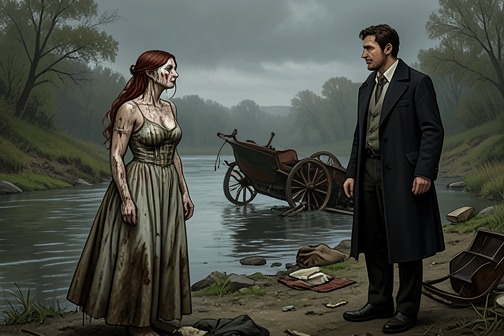
The [Bârgău Pass carriage disaster](entity:event-recall-event-b-rg-u-221a6b8adc19) is the concealed murder of [Glynis Wright](entity:character-recall-character-glynis-wright-d6dbb6432ea3)’s family, disguised as a fatal accident and remembered first through grief, then named as an act of violence. The false account makes Glynis appear to be the lone survivor of a storm; her later testimony identifies [Vlad Dracula](entity:character-recall-character-vlad-dracula-e0ec58b6d207) as the killer. The gap between those versions turns the event into both a personal catastrophe and a carefully obscured crime.
## The Official Accident Story
A letter bearing a dragon stamped in red wax tells [Andrew Wright](entity:character-recall-character-andrew-wright-15e2c32beef5) that a severe storm swept the family carriage off [Bârgău Pass](entity:location-recall-location-35323b70a0e8) and into the river below. It reports that [Edric Wright](entity:character-recall-character-edric-wright-a2e0d8d275ea), [Antoinetta Wright](entity:character-recall-character-antoinetta-wright-fdca197148ff), and [May Wright](entity:character-recall-character-may-wright-3d98d113a9e3) were lost, while Glynis was found half-drowned on the riverbank and taken to Vlad Dracula’s castle. The letter claims that Vlad’s men searched for days without finding other survivors, and describes Glynis as delirious, ill, and battered by the ordeal.
The account is not a neutral report: it is written by Vlad, who presents himself as the rescuer responsible for Glynis’s recovery and promises to update Andrew and eventually return his sister to his care. By assigning the family’s deaths to weather and terrain, the letter conceals the killer while making the surviving sister’s continued dependence on Vlad seem like the aftermath of an accident. Its account also gives Andrew a reason to believe that Glynis alone escaped the tragedy.
## The Murder Revealed
When Glynis later speaks to Andrew, she initially describes the family’s deaths as a tragedy in the [Carpathian Mountains](entity:location-recall-location-carpathian-mountains-af7281764e91) and remembers herself as helpless against the forces that took them. She tells him that grief left her unable to accept the deaths of her father, mother, and sister, and that loneliness and hatred of her own existence brought her close to madness. Her account conveys the scale of the loss without yet disclosing the truth behind it.
Glynis subsequently tells Ignatius that the official accident story is false: her family did not die because their carriage was swept into a river; Vlad killed them. The stark correction changes the event’s meaning. What had been framed for Andrew as a disaster beyond anyone’s control becomes an act of deliberate violence concealed by the supposed rescuer. Glynis gives no further details here about how Vlad killed them, so the exact circumstances of the murders remain outside the account.
A servant’s warning adds a possible political dimension without resolving it. He says that Glynis was trapped by an evil plot against her and that the [Baroness](entity:character-recall-character-baroness-aa85d1ccc76d) had conspired against other people as well. Glynis asks whether the Baroness had a part in her family’s fate, but the exchange does not establish the Baroness’s precise role. Vlad’s responsibility for the murders, by contrast, is stated directly by Glynis.
## Grief, Faith, and Survival
The loss continues to shape Glynis’s account of herself long after the family has died. She tells Andrew that she could not accept their deaths, felt desperately alone, and prayed for death; consolation came partly from imagining her family safe in God’s care and Andrew safe in [England](entity:location-recall-location-england-b153c1f368ea) with [Angeline Wright](entity:character-recall-character-angeline-wright-d62aa8808b47). The supposedly accidental deaths are thus not merely background to her captivity: they are the wound through which she understands her isolation and the life she has been forced to inhabit.
Glynis’s recollections preserve intimate acts of mourning alongside the revelation of murder. In the aftermath, Antoinetta Wright lays her journal aside, buries her rosary in the dirt, filth, and straw, and asks Glynis to drink and live. She urges her daughter to escape and not forget her family. The rosary and the promise of prayer place a language of faith and continuing familial love beside the violence and coercion surrounding Glynis’s survival. The scene does not undo the loss; it records what Antoinetta tries to pass on to her daughter in its shadow.
## Consequences and Revenge
The massacre leaves Glynis alone among her immediate family, while the letter’s account leads Andrew to understand the deaths as an accident and Glynis as a damaged survivor in Vlad’s care. Glynis later tells Andrew that she is bound to her husband and asks him to help with Vlad’s plan to go to England. Her words show how the murder remains entangled with the present: she conceals the truth to protect her remaining brother and to navigate the power Vlad holds over her.
The event’s final consequence is not a return to the family life that the false letter implies might be restored. When Glynis stands over Vlad’s coffin, she says that her family has been avenged and that Vlad is no longer her Master. The vengeance answers the murder but cannot restore Edric, Antoinetta, or May. By making the storm story a cover for a crime, and revenge a later reckoning rather than a recovery, the narrative keeps the family’s deaths active in Glynis’s choices until the end of her conflict with Vlad.
Event 23
Glynis–Dracula marriage
The marriage of [Glynis Wright](entity:character-recall-character-glynis-wright-d6dbb6432ea3) and [Vlad Dracula](entity:character-recall-character-vlad-dracula-e0ec58b6d207) makes Glynis a wife in public and a vampire bride within Vlad’s household, but those identities do not amount to freedom. [Andrew Wright](entity:character-recall-character-andrew-wright-15e2c32beef5) learns from [Maria Ramsay](entity:character-recall-character-maria-ramsay-2d054e2a5e48) that the couple have been married for nearly a month, after arriving in [Buda](entity:location-recall-location-buda-89e5673736b2) expecting to find his sister and take her home. The union is presented as a romantic match by [Maria](entity:character-recall-character-maria-de0c38967fe7), yet the surrounding evidence shows Vlad controlling Glynis’s movements, appearance, and supernatural allegiance. Its significance lies in that tension: marriage gives Glynis a celebrated title even as it makes her subjection harder to separate from the role she is expected to perform.
## Disclosure in Buda
Andrew’s understanding of Glynis’s circumstances is shaped by a letter from Vlad. It says that Glynis is to be moved from the country estate to Vlad’s home in Buda, supposedly so she can be nearer to good medical care. Maria confirms that [Stephen Ramsay](entity:character-recall-character-stephen-ramsay-a3a24173aeff) had also told her Glynis would come to live with them. When Maria explains that something else has happened—that Glynis married Vlad—Andrew is so startled that he rises sharply and takes hold of Maria’s shoulders. Her cheerful clarification is that Glynis fell in love with Vlad, accepted his proposal, and has been living with him at his Buda residence since the wedding nearly a month earlier.
The disclosure overturns Andrew’s purpose in coming. He had intended to retrieve his sister and take her home if she was well enough; instead, he is told that she is already the wife of a man he has not met. His immediate insistence that he must go to Vlad’s home follows from the distance between the arrangement he thought he understood and the marriage Maria announces. The news reaches him through other people: Vlad’s letter describes a relocation, and Maria supplies the marital explanation. Glynis is not present to tell Andrew what the marriage means to her.
## Bride, wife, and control
The language surrounding the union joins marriage to Glynis’s supernatural transformation. Before the Buda disclosure, Vlad orders that she undergo the [vampire baptism](entity:concept-recall-concept-2d256e3b2ebd) once more and says she will join the household; he addresses her as his love while forcing a kiss. Earlier, one of his existing brides had announced that the time had come for Glynis’s making by the Master. These scenes establish that the status of bride is not simply a social title bestowed by a wedding: it is also part of Vlad’s hierarchy of possession and vampire-making. When hunger leaves Glynis trembling among the victims’ blood, Vlad offers her blood and declares her his bride. The marriage therefore occupies a world in which intimate language, supernatural dependence, and command are closely entangled.
Vlad’s plans for her in Buda likewise combine apparent privilege with obedience. Before the journey, he tells Glynis that she will be allowed to hunt on her own and learn the powers of the night, but also requires her to answer the Beckoning, prove her loyalty, and prepare to become his true bride. He expects her to help him establish himself in [England](entity:location-recall-location-england-b153c1f368ea). The promise of greater freedom is thus made conditional on service to Vlad and on a future place in his hierarchy. Maria’s account of a love match does not erase this pattern of control; it describes the marriage from outside it.
## Clothing and the public role
Glynis’s changing clothes make the limits of her new position visible. Before her transformation, she insists that she wants to live as a woman without the restrictions imposed on women, and later chooses her favorite blue Italian silk gown rather than the clothes laid out for her, going without a corset. After becoming a vampire, however, she describes the castle’s required outfit as humiliating and experiences her new existence as another restrictive society. The contrast makes clothing part of her ongoing contest over who gets to define her identity.
The preparations for Buda turn dress into a means of managing what Andrew can know. Vlad instructs Glynis not to take clothes or jewelry her brother would recognize, since Andrew has been told that everything was lost in the accident. Vlad instead provides dresses their mother bought in [Paris](entity:location-recall-location-paris-c02b439ce220) and the jewels of [Erzsébet Dolingen](entity:character-recall-character-erzs-bet-dolingen-f5a83d46c8ab). Once in Buda, he has special veils made to conceal Glynis’s beauty from Andrew and insists she wear one around him. Glynis finds the heavy veil frustrating and tears it from her face before Andrew’s expected arrival, unable to accept that its layers will prevent her from truly seeing him. The marriage’s public presentation is consequently governed not only by its title but by Vlad’s control over what Glynis may wear and reveal.
At the opera, Glynis descends in a black-and-gold dress while Andrew and Vlad wait below. She registers the contrast between her living brother’s light and goodness and the darkness surrounding her husband. Still, she feels radiant and, for the evening, alive rather than undead; the sumptuous gown lets her inhabit the identity of Countess Dracula. The moment shows the attraction and instability of that role: its outward splendor can give Glynis a sense of presence without undoing the conditions under which she became Vlad’s bride. At the performance, the [Baroness](entity:character-recall-character-baroness-aa85d1ccc76d) tells her that the opera concerns the life of Vlad Tepes. Glynis looks to Vlad for an answer about what the Baroness knows, but he gives her none.
## The marriage’s unresolved meaning
The evidence does not stage the wedding ceremony or provide Glynis’s account of consenting to it. Instead, the marriage emerges through Maria’s delighted report, Andrew’s shocked response, Vlad’s treatment of Glynis as his bride, and Glynis’s later appearance beside him as his wife. That uneven presentation matters: the social story of romance is spoken by someone outside the marriage, while the scenes closest to Glynis show a relationship shaped by coercion, dependence, and resistance. The title of wife can be displayed before Andrew and the Buda household even as Glynis continues to experience herself as Vlad’s slave and to seek a way out of his control.
The union’s conflict reaches its decisive reversal when Glynis turns against Vlad. Acting for her family, she drives a stake up through his back and chest, impaling him and forcing him to release [Cneajna](entity:character-recall-character-cneajna-cc5dab651a46). That act does not supply a retrospective account of the wedding or its vows; it does show that the marriage never settles the struggle over who commands Glynis’s life. The role Vlad claims for her as wife and bride is finally confronted by her own action against him.
Event 24
Andrew’s Buda reunion
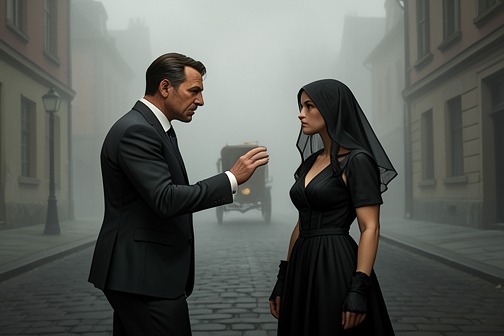
[Andrew Wright](entity:character-recall-character-andrew-wright-15e2c32beef5)’s arrival in [Buda](entity:location-recall-location-buda-89e5673736b2) turns a search for a missing sister into a reunion across the barrier of [Glynis Wright](entity:character-recall-character-glynis-wright-d6dbb6432ea3)’s new life as [Vlad Dracula](entity:character-recall-character-vlad-dracula-e0ec58b6d207)’s vampire bride. The encounter briefly restores the intimacy of their family bond, but it does not resolve the danger surrounding Glynis or establish that she can leave with Andrew.
## The Search in Buda
Andrew comes to Buda intending to find Glynis and take her home if she is well enough. The account he has received from Vlad has led him to expect that his sister is being moved from the country estate to the home of [Sir Stephen Sheridan](entity:character-recall-character-sir-stephen-sherida-ea5ff6fa0c5c), supposedly to be nearer good medical care. When Andrew asks after Glynis, [Maria Ramsay](entity:character-recall-character-maria-ramsay-2d054e2a5e48) tells him plainly that she is not there. Her answer overturns the picture he has been given and leaves him without the sister he has travelled to retrieve.
The next explanation is more startling: [Maria](entity:character-recall-character-maria-de0c38967fe7) tells Andrew that Glynis fell in love with Vlad, accepted his proposal, and has been his wife for nearly a month. The marriage is not merely a personal development. Glynis is living within the household of the man who controls her, while Andrew has understood the journey as a means of bringing a vulnerable sister home. He immediately insists on going to Vlad’s residence. His decision makes the reunion a confrontation with the consequences of Vlad’s concealment as well as a family encounter.
## A Reunion Behind the Veil
Vlad has prepared for Andrew’s arrival by ordering special veils to conceal Glynis’s altered beauty. He also instructs her not to take any dress, jewellery, or other possession that Andrew might recognize, because he has told Andrew that her belongings were lost in an accident. Instead, Glynis is to wear dresses her mother bought in [Paris](entity:location-recall-location-paris-c02b439ce220) and jewels belonging to [Erzsébet Dolingen](entity:character-recall-character-erzs-bet-dolingen-f5a83d46c8ab). The instructions turn clothing into part of the false account: what Glynis wears must support Vlad’s story and disguise the continuity between the sister Andrew remembers and the vampire standing before him.
The veil makes that concealment tangible. Glynis is irritated by the heavy lace and organza and understands that she will not truly see Andrew through it. Her frustration is not only about discomfort: the garment obstructs the reunion she has been anticipating and places Vlad’s orders between her and her family. When Andrew arrives, however, the encounter is immediate. He runs down the steps toward her, and she throws herself into his arms. He kisses her cheek through the veil and holds her so tightly that the embrace briefly becomes a shelter from the life enclosing her.
## The Family Bond Restored
Andrew repeats Glynis’s name as he clutches her, while she answers through tears. In her account, the embrace makes the surrounding world fall away. She feels her brother’s love warming her soul and, for an instant, experiences her father, mother, and May as present with them. The family that has been destroyed and dispersed seems briefly whole again. This is a powerful contrast with the vampire household: there, Glynis is called a bride and subordinated to Vlad’s commands; in Andrew’s arms, she is recognized as his sister and as someone still connected to her former family.
Andrew says that he has come to bring her home. Glynis responds that she wants to go home, making her longing explicit at the moment when reunion seems to offer a way out. But the exchange establishes their desire, not a completed escape. The veil remains between them, and Vlad’s control has shaped the circumstances of their meeting. The scene allows Glynis to speak the wish she has been forced to conceal without showing that the wish can yet be fulfilled.
## A Possible Home Beyond Buda
Andrew tells Glynis that Angeline is waiting for them, along with their baby, John. He says that the child has the same shade of red hair as Glynis and that he and Angeline named him John Andrew Glenn, using Glenn in honour of Glynis. The news extends the reunion beyond the recovered sibling bond: a new generation of the family has been given a place for her, although she has not seen the child and remains in Buda.
The encounter therefore gathers several forms of separation into one embrace. Glynis is separated from her former life by her transformation, from Andrew by Vlad’s managed accounts and enforced disguise, and from the home she longs to return to by her present confinement. Andrew’s arrival does not erase those divisions, but his embrace and the child named for her make the family connection unmistakable. The reunion’s emotional force lies in that brief restoration—and in the distance still separating the promise of home from its realization.
Event 25
Dracula’s England migration scheme

[Dracula’s England migration scheme](entity:event-recall-event-e6c87890f84d) turns [Andrew Wright](entity:character-recall-character-andrew-wright-15e2c32beef5)’s concern for his sister into a point of entry for [Vlad Dracula](entity:character-recall-character-vlad-dracula-e0ec58b6d207)’s plans. When Andrew learns that Vlad intends to leave [Hungary](entity:location-recall-location-hungary-b3ac7e0cfaee) for [England](entity:location-recall-location-england-b153c1f368ea), he offers his business contacts and knowledge of [London](entity:location-recall-location-london-420923d4a60a); what seems like an opportunity to protect [Glynis Wright](entity:character-recall-character-glynis-wright-d6dbb6432ea3) also gives Vlad the English connections he lacks. The episode moves from Andrew’s private suspicions, through a nervous interview with [Sir Stephen Sheridan](entity:character-recall-character-sir-stephen-sherida-ea5ff6fa0c5c), to a dinner at which Andrew’s offer is made directly to Vlad and its risks become clearer to Glynis.
## Discovery at [Sir Stephen](entity:character-recall-character-sir-stephen-ff95cbc47318)’s office
Andrew visits Sir Stephen at his modern offices without a settled purpose beyond curiosity about the solicitor’s business and Vlad’s dealings. He is already uneasy about his sister’s marriage and wants her kept away from a country he thinks could face political upheaval. When conversation turns to revolution, Sir Stephen dismisses the prospect: Hungary’s princes and barons, he argues, are powerful, and the people beneath them obey. Andrew uses this assurance to ask whether Vlad’s servants likewise respond without question.
Sir Stephen’s answer heightens rather than eases Andrew’s concern. He praises Vlad as a respected man who will treat Glynis generously, but his nervousness shows through his assurances. He then discloses that Vlad plans to move to England, explaining that Vlad sees instability in the countryside and fears what a possible collapse or revolution could mean for a landowner. Andrew notices that Sir Stephen’s hands tremble and that he seems almost panicked. The visit thus shifts from casual inquiry to an encounter in which the solicitor’s visible anxiety makes Vlad’s affairs appear more troubling.
## An offer that serves two purposes
Andrew responds to the disclosure by proposing that he discuss the move with Vlad. He says he has business contacts in England and might help Vlad establish himself there. Sir Stephen welcomes the offer with conspicuous relief, adding that Andrew could help Vlad socially as well as with the move. For Andrew, the proposal is a way to remain close to the matter and find out more about the man who has married his sister; for Sir Stephen, it supplies assistance that Vlad apparently needs.
After leaving the office, Andrew recognizes that Sir Stephen’s nervousness has strengthened his suspicions. He imagines that Vlad may have married Glynis in part to secure an established English contact, someone able to smooth his entry into English society. Andrew does not present this as a proven motive; it is his explanation for the circumstances and for the sense that Vlad has drawn him into something sinister. The episode’s irony lies in the double use of Andrew’s offer: he means to investigate and perhaps protect Glynis, while the help he volunteers can also advance Vlad’s designs.
## The offer reaches Vlad
The scheme becomes more concrete at dinner, where Andrew tells Vlad that he visited Sir Stephen and learned of the proposed move. Vlad responds coolly at first, then explains the practical problem behind his plans. His business has been concentrated in territories controlled by the [Habsburg Monarchy](entity:organization-recall-organization-habsburg-monarch-9e0348d33ad3), while he has no useful English connections. He needs a solicitor to handle his affairs, and Sir Stephen, despite being his friend, has not secured an English law firm capable of meeting his needs.
Andrew answers with a specific offer: he knows solicitors in London who might take on Vlad’s estate matters. Vlad accepts with marked courtesy, and Glynis reads his pleasure as evidence that Andrew’s willingness to help has brought him closer to Vlad’s control. She sees Sir Stephen’s deference as a warning of what that relationship could become, and fears her brother might one day submit in the same way. The proposed assistance is therefore more than general hospitality: it could give Vlad access to legal representation and a foothold in the English social and business world.
## Glynis’s view of the danger
Glynis’s account of the dinner makes Andrew’s offer feel precarious before he understands its full implications. Vlad watches Andrew throughout the meal, while Glynis is anxious and tries to conceal her trembling hands beneath her veil. She cannot eat the food laid before her; Vlad gives a public explanation for her private eating, and Andrew accepts it, leaving the deeper cause unexamined. These details place the business conversation inside a household where Glynis’s condition and Vlad’s control are already shaping what her brother can see.
As Andrew describes London and the English countryside, Vlad listens with intense interest. Glynis recognizes his desire to leave his homeland, but also wonders whether he is escaping other vampires who rule those lands, just as she longs to escape him. Her suspicion broadens the apparent motive for the migration: political instability and the need for a solicitor are Vlad’s stated concerns, while his attraction to England may also be bound up with dangers at home. Andrew, meanwhile, hopes that involvement will let him outwit Vlad; at the end of the episode, neither the move nor Andrew’s role has been resolved, and his attempt to help his sister has already ensnared him more deeply in Vlad’s plans.
Event 26
Glynis Confesses Her Captivity to Andrew

[Glynis Wright](entity:character-recall-character-glynis-wright-d6dbb6432ea3)’s confession to [Andrew Wright](entity:character-recall-character-andrew-wright-15e2c32beef5) is a turning point in their reunion: she names her marriage to [Vlad Dracula](entity:character-recall-character-vlad-dracula-e0ec58b6d207) as a bond she cannot escape, but conceals enough of the truth to enlist Andrew in Vlad’s plans. The conversation offers the siblings a moment of closeness while deepening the danger around Andrew. Told through Glynis’s journal, it distinguishes what she can say aloud from what she understands in private.
## The Walk and Andrew’s Suspicions
The conversation takes place in [Buda](entity:location-recall-location-buda-89e5673736b2) near midnight, after Andrew has excused himself from a long conversation and invited Glynis for a walk alone. His request gives the siblings privacy, but his unease has already been building. He sees her face concealed by a veil, notices that her manner has changed, and hears her speak of Vlad’s wish to move to [England](entity:location-recall-location-england-b153c1f368ea) in a tone he finds strange. He recognizes that her answers sound fearful and concludes that something is wrong with her, Vlad, and the circumstances surrounding their reunion.
Andrew’s questions bring together two mysteries he cannot reconcile: the deaths of his family in a supposed accident and the sister who has returned to him hidden from view. He asks what happened on the mountain and what became of everything they had held dear. The account Vlad sent Andrew claimed that the family carriage had been swept from [Bârgău Pass](entity:location-recall-location-35323b70a0e8) into a river during a storm, killing everyone except Glynis. Against that cover story, Andrew’s insistence that the circumstances are strange gives the scene its pressure: he senses a falsehood, even though Glynis does not give him a full account of the family’s fate.
## A Confession Shaped by Concealment
Glynis first tries to calm Andrew, then turns to the trust they shared as siblings. She recalls that he had protected her from trouble before, including after she met Lord Byron, and asks him to listen as someone who has long kept her confidences. The appeal is personal, but it is also strategic: she needs Andrew to believe her, and her journal makes clear that she intends to tell him the truth, or a close version of it.
What she tells him is emotionally candid but incomplete. She says their family died tragically in the [Carpathian Mountains](entity:location-recall-location-carpathian-mountains-af7281764e91), that she tried and failed to save them, and that grief drove her into a period of madness in which she could not accept that her father, mother, and [May Wright](entity:character-recall-character-may-wright-3d98d113a9e3) were dead. She describes loneliness, hatred of her own existence, and a wish for death. She does not explain the violence behind the family’s deaths or the full nature of her transformation. Instead, she gives Andrew a language for her suffering that can be heard as grief after catastrophe without exposing the supernatural circumstances he does not yet know.
Her description of Vlad is similarly divided. She calls him her husband and protector, but also, in some ways, her captor. She says she is bound to him by what has happened, and that he demands her devotion and loyalty. These terms expose the coercion within the marriage without telling Andrew everything that makes escape difficult. The confession is not a simple disclosure: Glynis makes the captivity legible while withholding its most dangerous particulars.
## The Promise and Its Cost
Andrew responds with affection and accepts her account. He admits that her changed appearance and marriage had made him fear she was unhappy; he had wanted to free her from Vlad. Once Glynis asks him instead to help them move to England, he promises to do so. The promise resolves the immediate confrontation, but not because Andrew has uncovered the truth. He agrees because he trusts his sister and believes that helping her means helping the move she says she wants.
For Glynis, England represents a hoped-for departure from the horrors she has suffered and a chance to see home again. Yet the request also serves Vlad’s stated plan to establish himself there. Glynis therefore uses the language of her own longing to secure Andrew’s assistance for a journey that may advance her captor’s designs. Her journal registers the contradiction as soon as Andrew embraces her: she is relieved that he believes her, but bitter because she knows she has drawn him into Vlad’s web. She privately vows that, whatever happens, she will not let Andrew endure the fate of the rest of their family—even if protecting him means killing herself and destroying Vlad’s plans.
## Narrative Significance
The scene turns on the difference between private truth and spoken testimony. Earlier, Glynis had written of her rape and of the rage that followed; here, she does not name that violation to Andrew. Her public account is shaped by the need to protect him, maintain his trust, and obtain his cooperation. The reader, given access to her journal, sees both the tenderness of the reunion and the moral cost of her concealment. Andrew’s embrace is genuine, but it seals an agreement made without his knowledge of the full danger.
The scene also reverses the siblings’ earlier pattern of mutual confidence. Andrew once protected Glynis by keeping her secrets; now she draws on that history to persuade him, while secretly bearing the knowledge that she has made him vulnerable. Her changed position is visible in the surrounding circumstances: in Buda, Vlad orders her to wear a veil so Andrew will not recognize her appearance, and the walk finally allows them to speak alone, but not freely of everything. Their reunion brings them close again, yet it cannot restore the uncomplicated trust of their former life. Glynis’s confession is at once an appeal for help, a partial witness to her captivity, and a deliberate concealment in the service of her brother’s safety.
Event 27
多扎宫歌剧晚会
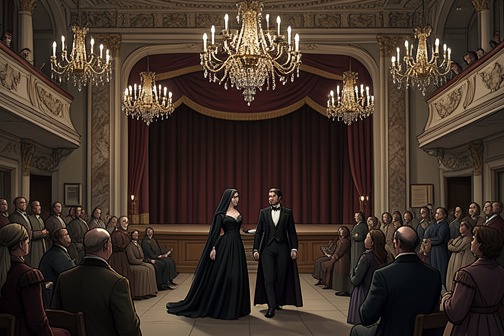
The [Dosza Palace](entity:location-recall-location-dosza-palace-acbe46d821a0) opera evening is a public performance of respectability that briefly lets [Glynis Wright](entity:character-recall-character-glynis-wright-d6dbb6432ea3) inhabit the aristocratic life she once knew, even as its invitation, costumes, introductions, and opera turn her marriage and [Vlad Dracula](entity:character-recall-character-vlad-dracula-e0ec58b6d207)’s past into objects of display. In [Buda](entity:location-recall-location-buda-89e5673736b2), Glynis can again move among the wealthy as a Countess, but she does so under a veil and within a story Vlad has carefully constructed for her brother, Andrew. The evening’s social brightness therefore rests on concealment; its central entertainment, an opera about Vlad Tepes, makes that tension impossible to ignore.
## Invitation and Preparation
The evening begins with a formal invitation for Count and Countess Dracula to attend an opera at Dosza Palace. Glynis is surprised by the card and by Vlad’s decision that they will go. He explains that [Baroness](entity:character-recall-character-baroness-aa85d1ccc76d) Dosza is a prominent, inquisitive figure in the city’s social circles and expects her to be pleased by the presence of foreign guests. At his direction, Glynis accepts and adds Andrew and his friend to the party. The performance is scheduled for five days later, giving her little time to prepare a suitable dress.
That preparation matters to Glynis because clothing has become a way to negotiate identities that others impose on her. Before the Buda visit, Vlad had ordered special veils so Andrew would not recognize her altered appearance. Glynis finds the organza and lace cumbersome and resents having to keep her face covered around her brother. At the palace, however, she descends the stairs in a fine black-and-gold gown Vlad has arranged for her. The dress restores, at least for the evening, the visible splendor of her former social world. Her veil remains part of the presentation: she is dressed to be admired, but her face and true condition are still withheld.
The scene recalls an earlier longing to live as a woman without the constraints imposed on women, and also the more immediate frustration of being trapped in a castle, compelled to obey Vlad and wear clothes she dislikes. The opera evening does not free Glynis from those constraints. Instead, it gives her a temporary, carefully managed place within the society she once experienced as familiar. The distinction between choosing a role and being dressed into one runs through the night.
## Arrival and Social Performance
Glynis arrives at the palace with Vlad and Andrew. Their carriage climbs a steep, tree-lined road toward the brightly illuminated building, where guests are being escorted up a red carpet. The sight delights her. She grabs Andrew’s hand in excitement, an uncomplicated gesture of sibling affection amid the elaborate setting. Andrew teases her enthusiasm, suggesting that the splendor has momentarily made her seem like someone encountering such a party for the first time.
At the entrance, the butler announces the party as Count and Countess Dracula of [Wallachia](entity:location-recall-location-cb08e74a4e51) and Earl [Andrew Wright](entity:character-recall-character-andrew-wright-15e2c32beef5) of [England](entity:location-recall-location-england-b153c1f368ea). The titles expose them to the foyer’s attention at once. Guests turn toward the newcomers, and some look startled or nervous. Glynis begins to feel unwelcome until the Baroness approaches in a bright red gown and a large gold-and-red turban. She recognizes Glynis from the family’s earlier visit to Buda and welcomes the party with conspicuous warmth.
The Baroness interprets Glynis’s veil through the cover story Vlad has supplied: the deaths of Glynis’s parents and sister. She recasts Glynis as a tragic figure in mourning, a compelling presence whose supposed loss will furnish conversation and dramatic interest. Linking arms with her, the Baroness leads Glynis through the marble hall and introduces her to influential guests, including Baron Bartok. Her introductions are lavish and poetic, drawing Andrew into the same performance of social welcome. Glynis enjoys being shown off. The role of bereaved aristocrat is false in its particulars, but the setting and its rituals are familiar enough to bring back the ease she once felt greeting wealthy strangers beside her mother.
For about an hour, Glynis is blissfully absorbed in the gathering. She recognizes the pleasures of finery, polished conversation, and being presented to society, even though her present life is that of an undead bride under Vlad’s authority. This is not a straightforward return to her former status: the Baroness’s attention depends on a tragedy invented to explain her veil, while the people around her see the title and appearance without knowing what they conceal. The evening gives Glynis a taste of the life she had once rejected and now finds herself craving.
## The Opera and Vlad’s Public Past
The opera house within the palace is modest beside the grand venues Glynis remembers from her European travels. Its velvet draperies and ornate architecture nevertheless suit the Baroness’s pride in her company. There are no elevated balconies dividing the elite from the rest of the audience. Instead, the Baroness has a section at the front for herself and her honored guests; Glynis sits between Andrew and Vlad, with the Baroness beside Vlad.
Before the performance, the Baroness tells Glynis that the opera concerns the life of Vlad Tepes. Glynis looks toward her husband, wondering how much the Baroness knows about him. Vlad offers no explanation. He covers Glynis’s hand with his own and smiles, leaving her question unanswered. The moment places private knowledge and public spectacle side by side: Glynis knows that the man beside her is not simply a historical subject, while the audience is about to encounter him through a crafted story.
The composer, Mihaly Mikszath, introduces the work haltingly. As he describes Vlad Tepes’s role in driving the Turks from Europe, Vlad appears openly proud. The composer then identifies Count Vlad Dracula as a descendant of that celebrated man. The Baroness interrupts to dedicate the opera to her friends, Count and Countess Dracula of Wallachia. The dedication turns their presence into part of the occasion and publicly connects Vlad’s title to the heroic historical name invoked onstage. The audience responds with polite applause; the Baroness beams, and Vlad returns her smile.
The performance itself tests Glynis’s patience. It lasts two hours, with overwrought music, a dark and brooding set, and a backdrop crowded with impaled Turks that she finds grotesque. The plot presents Vlad as a child sent by his father as a hostage to the Turks, subjected to suffering, and eventually returned to fight for his kingdom’s freedom. Betrayals harden him into a merciless enemy of his foes. A brief episode is shaped as a love story, but Glynis knows from [Cneajna](entity:character-recall-character-cneajna-cc5dab651a46) that Vlad’s mortal wife, [Ilona](entity:character-recall-character-ilona-d05c78b1e880), never possessed his passion. The stage version thus offers a sentimental simplification alongside a public heroic legend, while Glynis measures both against what she has privately learned.
The ending magnifies the distance between the opera and the reality she knows. The actor playing Vlad is supposedly beheaded offstage, then reappears dressed as a saint and ascends narrow stairs toward a theatrical heaven, where two angel figures receive him. Glynis is horrified by the spectacle; Vlad, by contrast, quietly chortles. His amusement punctures the opera’s attempt to grant its hero a conventional, sanctified ending. The performance has made his past visible, but only through a melodramatic version that cannot settle what he is or what his history means.
## Significance of the Evening
The gathering offers Glynis a temporary social identity without changing the power relations that govern her life. Earlier, Cneajna had insisted that attending to Vlad was Glynis’s duty, and Glynis had refused to let him touch her again. In Buda, Vlad offers the prospect of freedom to hunt and learn the powers of the night, but also binds that promise to the Beckoning and to her future as his first bride. At Dosza Palace she can move, converse, and enjoy society, yet the veil and the invented mourning keep her brother from seeing the truth.
The evening’s contrasting forms of intimacy sharpen that contradiction. Glynis has a secret relationship with Ignatius, whose assurance that women can exert power within men’s lives leads her to consider her place as Vlad’s wife and helpmate. The opera night does not resolve that conflict. Instead, it stages Glynis between Andrew’s living goodness and Vlad’s dark presence, between the remembered ease of her family’s social world and the supernatural marriage that now defines her public title. The Countess is a role she can inhabit with genuine pleasure, but it is also one framed by other people’s explanations and desires.
The opera becomes the evening’s most concentrated image of that divided life. It transforms Vlad’s history into entertainment, awards him a heroic ancestry, and finally dresses him as a saint; Glynis recognizes both the artifice and the fragments of truth that the spectacle cannot contain. In the palace, public ceremony makes identities legible through titles, clothes, and stories. Glynis’s own presence reveals their limits: beneath the mourning veil and magnificent gown stands someone who knows that the story being performed is not the whole story.
Event 28
Glynis and Ignatius Reunite at the Opera
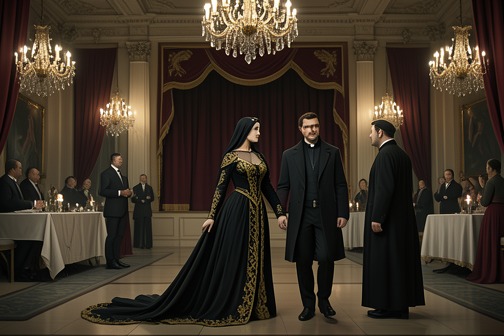
[Glynis Wright](entity:character-recall-character-glynis-wright-d6dbb6432ea3)’s reunion with Ignatius at the [Baroness](entity:character-recall-character-baroness-aa85d1ccc76d)’s opera gathering in [Buda](entity:location-recall-location-buda-89e5673736b2) turns a public encounter between a veiled countess and a priest into a private confession of murder, coercion, and enduring love. Their recognition restores a bond neither has forgotten, but it also reveals how completely [Vlad Dracula](entity:character-recall-character-vlad-dracula-e0ec58b6d207)’s power has narrowed Glynis’s choices: she must preserve the appearance of marriage to protect her surviving brother, [Andrew Wright](entity:character-recall-character-andrew-wright-15e2c32beef5), even as she admits that Vlad killed the rest of her family.
## The opera and the disguises
The reunion unfolds during an evening of performance and social display. Vlad has provided Glynis with a fine black-and-gold gown for the opera, and she descends the stairs between Andrew and the man who claims to be her husband. To her, the contrast between them is striking: Andrew seems alive with goodness, while Vlad’s presence is dark and menacing. The gown lets her feel radiant, almost alive, even though she knows herself to be undead; for the evening, she can inhabit the public grandeur of Countess Dracula while privately remaining a captive of Vlad’s will.
At the opera, the Baroness announces that the work concerns the life of Vlad Tepes. Glynis looks to Vlad for an explanation, but his composed silence gives her none. The performance’s subject shadows the gathering before Ignatius appears: the history of Vlad is already part of the spectacle, while the truth of Glynis’s own life remains concealed beneath her veil and title.
The veil is not merely an accessory. Vlad ordered it to cover Glynis’s changed beauty from Andrew and instructed her not to wear anything her brother would recognize from [England](entity:location-recall-location-england-b153c1f368ea). He had also told Andrew that the family’s belongings were lost in the carriage accident. At the gathering, Glynis wears the veil as part of this carefully maintained deception. The concealment makes recognition more fraught: Ignatius must face her as Countess Dracula before he can learn what lies behind the costume and the name.
## Recognition in the ballroom
As the party continues, Glynis senses a powerful presence near Andrew. Moving through the crowd toward her brother, she sees Ignatius seated apart, dressed entirely in black and wearing a priest’s long coat. Andrew introduces him as Father Ignatius, describing him as a traveler who has crossed Europe and even visited the town. The introduction makes their reunion a public performance: Glynis must greet the man she desires as though they are strangers meeting at a ball.
Ignatius addresses her as Countess Dracula and says he has heard much about her. Glynis recognizes the handsome face she remembers, his long raven hair and intense blue eyes, and feels the old desire return despite his clerical disguise. Their conversation initially stays within the gathering’s ordinary social rhythm, but Glynis is disconcerted by his presence and by the intensity she believes passes between them unnoticed by the other guests.
She excuses herself from Andrew and Dr. [Emil Baum](entity:character-recall-character-emil-baum-5dcf85569739) and follows the trace of Ignatius’s power through the room. Behind marble pillars, she finds a door and enters. Ignatius presents himself again as Father Ignatius, but Glynis calls him a liar; he answers that they are both liars. He catches her wrist and asks why she wears the veil. She challenges him in turn about the cassock. Their disguises make a compact expression of their situation: each appears under an identity that conceals a more dangerous truth.
Ignatius asks whether she is scarred, whether the [Vampire Hunters](entity:character-recall-character-vampire-hunters-27807346dce8) hurt her, whether her husband harmed her, and whether the veil means she is mourning her family. He reaches for it; Glynis resists, despite her desire to kiss him, and he draws it back. Seeing that her face is whole, he shows relief. He then kisses her passionately, and she responds. The reunion is at once an act of recognition and a break in the formal roles they have been forced to perform.
## The truth behind the marriage
Ignatius says he feared the worst when Glynis did not come to him on the night he expected. She explains that Andrew was in town and that cancelling his visit would have aroused Vlad’s suspicions. She does not trust her servants, whom she believes aligned with her master, and cannot speak freely without risking the fragile protection she has secured for her brother.
Glynis distinguishes the public marriage from the reality behind it: Vlad merely calls her his wife, while she despises him and plays along to keep Andrew alive. She confirms that her family did not die in the accident at [Bârgău Pass](entity:location-recall-location-35323b70a0e8). Vlad killed them. The staged accident story is therefore not simply a lie about the past; it is part of the present arrangement that keeps Andrew near Vlad and Glynis under his control. Of her family, only Andrew remains.
Her confession also makes clear that the coercion is supernatural as well as social. Glynis tells Ignatius that Vlad holds her through his blood and that both she and Andrew are pawns in his game. She fears Vlad may discover the extent of her betrayal, and recognizes that the danger now reaches Ignatius too. Her words explain why she cannot simply abandon the role of wife: maintaining it is a means of protecting her brother, even as it binds her to the man who murdered her family.
## A promise without an escape yet
Ignatius responds with sympathy and says that he wishes to save her. He admits that he does not know how to defeat Vlad’s power, and that in the moment he wants nothing more than to take Glynis away with him. He also acknowledges the complexity of her circumstances and his own feelings for her. Their reunion restores intimacy, but it does not instantly undo the [blood bond](entity:concept-recall-concept-b49931ffd664), the danger to Andrew, or the surveillance Glynis fears.
When Glynis says that she wants to be with Ignatius and free of Vlad, he promises that they will find a way. His vow gives their relationship a shared objective: not merely to resume a love affair, but to escape a system in which Vlad’s claim over Glynis threatens everyone she loves. The gathering thus changes what Ignatius knows about her and what they can hope to undertake together, while leaving the practical means of escape unresolved.
Event 29
Brice Reveals the Baroness and Dracula's Plot
[Brice](entity:character-recall-character-brice-92c46a4fb3ba)’s revelation turns [Glynis Wright](entity:character-recall-character-glynis-wright-d6dbb6432ea3)’s captivity in [Buda](entity:location-recall-location-buda-89e5673736b2) into a conspiracy she can finally name. The British servant tells her that the [Baroness](entity:character-recall-character-baroness-aa85d1ccc76d) helped bring about her family’s fate and shows her evidence of the arrangement: [Vlad Dracula](entity:character-recall-character-vlad-dracula-e0ec58b6d207) feeding in the Baroness’s bedroom, while the Baroness waits for the immortality she covets. From their conversation, Glynis learns that the Baroness helped direct Vlad toward her and persuade her parents to come to him, but that Vlad claims the choice as his own. He has chosen Glynis for a purpose: to help him establish a mortal life in [England](entity:location-recall-location-england-b153c1f368ea). The encounter also reveals a reversal in the household’s hierarchy: Vlad calls Glynis his first Bride and says the Baroness will serve her.
## The warning and its context
The disclosure comes after Glynis has been living under Vlad’s control in Buda, where her proximity to [Andrew Wright](entity:character-recall-character-andrew-wright-15e2c32beef5) is carefully managed. Vlad orders her to wear a veil around her brother, both to conceal her changed appearance and to keep Andrew from recognizing clothes and possessions from her former life. The veil is not a minor inconvenience: it makes even the anticipated reunion something Vlad regulates. When Glynis tries it on, she realizes that the layers of organza and lace will prevent her from truly seeing Andrew. Her public appearance, like her movements and relationships, has become subject to her husband’s commands.
The encounter follows a moment of separation from Ignatius. Brice approaches Glynis from behind and addresses her as Countess Dracula. She recognizes him as the British servant she had seen before, but not as someone who had tried to intervene in her family’s fate. He explains that he was present when the Baroness greeted her on the banks of the [Danube](entity:location-recall-location-danube-bac3554d019b) and that he attempted to speak with her father, but was thwarted. He had recognized Glynis as being in danger, yet at the time could not warn her. Now, he says, he can.
Brice is explicit about the danger. He calls Vlad evil and describes the Baroness as his faithful servant, then tells Glynis that her husband is not human and that she and Vlad possess what the Baroness desires: a life beyond mortality. He does not treat Glynis as simply another monster. Having seen her with Andrew that evening, he believes that she remains the spirited young woman he encountered the previous spring. His testimony offers a distinction the household’s power structure denies: Glynis has been changed, but, in Brice’s judgment, she is still herself. He also says the Baroness has conspired against others, placing the Wright family’s disaster within a wider pattern rather than presenting it as an isolated misfortune.
## What Glynis witnesses
Brice asks Glynis to follow him and look through a narrow opening into the Baroness’s bedroom. Inside, she sees a young woman lying pale and lifeless on a table, with bite marks on her throat and wrists. The Baroness reclines nearby while Vlad speaks with her. His teeth are still tinged with blood; he touches the Baroness’s cheek and tells her that good things come to those who wait. The scene makes the arrangement between them visible: the Baroness is close to Vlad and serves his desires, but she is not yet what she longs to become.
Their conversation clarifies both the Baroness’s involvement and the limits of her power. She admits that she directed Vlad’s attention toward Glynis, praising her beauty and identifying her as an ideal English noblewoman in Buda. She also helped [Sir Stephen Sheridan](entity:character-recall-character-sir-stephen-sherida-ea5ff6fa0c5c) persuade Glynis’s parents to bring their daughter to Vlad. Yet Vlad rejects the idea that the Baroness chose Glynis for him. He insists that the Baroness may have guided his attention, but that he alone decided he wanted her. The distinction does not absolve the Baroness: she helped make the approach possible, even as Vlad claims responsibility for his own predatory choice.
Vlad also explains why Glynis matters to his plans. He wants to move to England and needs her to establish a mortal life there. The revelation gives his earlier instructions a political and practical purpose: Glynis is not only a captive wife or a source of blood, but a necessary part of the identity he intends to construct abroad. The Baroness, by contrast, longs to become immortal herself. Watching the blood on the table, she says that she wants to take life as Vlad does and make it her own. Her desire turns her service into a bargain marked by envy and frustrated expectation.
## The Bride hierarchy and its reversal
The Baroness’s ambition makes Vlad’s treatment of her especially stark. He tells her that she will become Glynis’s sister and his Bride, but then throws her to the ground and orders her not to resent Glynis. He makes the rank explicit: Glynis is the first among his Brides, and the Baroness will serve her. Glynis is shocked. Vlad has called her his first Bride before, but she had taken the claim for flattery intended to win her devotion. Hearing him say it to the Baroness, in a conversation that exposes his plans, forces her to consider that the title carries real authority within the household.
The declaration also unsettles the existing order around [Cneajna](entity:character-recall-character-cneajna-cc5dab651a46). Glynis notes that Vlad has named her first rather than Cneajna, and the thought opens possibilities she had not allowed herself to take seriously. The exchange does not free her from Vlad’s control, but it reveals that his household has ranks and that he has placed Glynis above the Baroness, who helped secure her capture. The title of Bride thus carries two meanings at once: it marks Glynis as an object of possession and makes her, in Vlad’s announced hierarchy, a figure the Baroness must obey.
## Consequences and significance
Once she and Brice leave the hidden passage, he asks whether she understands that the Baroness has been obsessed with her since discovering she had come to Buda. Glynis understands the central accusation: the Baroness conspired against her and her family because she wanted the condition Glynis now bears. Her anger rises, and she curses the woman. Brice confirms that the Baroness yearns to become what Glynis is. The revelation therefore changes Glynis’s account of her past without making the past less violent: the Baroness helped draw the family into Vlad’s reach, while Vlad remains responsible for choosing and claiming Glynis.
The scene resonates with the freedom Glynis had wanted before her transformation. She once imagined living as a woman with the liberty men possess, without the restraints imposed on her because she was female. In Buda, those restraints have taken another form. Vlad controls her clothing, hides her behind a veil, and plans to use her to establish his English life. His promise to make her his first Bride can sound like elevation, but it remains part of the same system of ownership. Brice’s information gives Glynis grounds for anger and a clearer understanding of the forces that shaped her captivity; it does not yet give her an escape. What changes is her knowledge: the Baroness is not merely Vlad’s companion, and Glynis’s place beside him is not merely a private marriage. Both are bound into a plan of deception, ambition, and supernatural power.
Event 30
安德鲁离开布达
[Andrew Wright](entity:character-recall-character-andrew-wright-15e2c32beef5)’s departure from [Buda](entity:location-recall-location-buda-89e5673736b2) separates [Lady Glynis Wright](entity:character-recall-character-lady-glynis-wright-206a9887f2cd) from the brother whose companionship has briefly restored her hope, while sharpening her resolve to escape [Vlad Dracula](entity:character-recall-character-vlad-dracula-e0ec58b6d207)’s control. Recorded in Glynis’s journal on [20 April 1820](entity:time-recall-time-20-april-1820-1093041ab8f2), the farewell is outwardly framed as a temporary parting before a planned family reunion in [England](entity:location-recall-location-england-b153c1f368ea). Its private meaning is darker: Andrew leaves believing that Glynis will follow, while she decides that she must kill Vlad before that journey can happen.
## Background and Stakes
Glynis and Andrew had spent almost a month walking together each night beside the [Danube](entity:location-recall-location-danube-bac3554d019b), looking across the water toward [Pesth](entity:location-recall-location-pesth-28c7289e9b5f). Their conversations returned to the life they had shared and cautiously turned toward a future in which the family might be together again. The riverbank gives their reunion a recurring, intimate setting; on this last evening, the familiar walk becomes a farewell.
Andrew imagines the move to England as a practical route to restoration. He expects to help Glynis’s husband make arrangements, then to welcome her into the company of his wife, [Angeline Wright](entity:character-recall-character-angeline-wright-d62aa8808b47), and their infant son, Johnny. He assures Glynis that they will soon be together, and urges her not to grieve as though they will never meet again. His confidence rests on a future he believes can be organized through family affection and travel.
Glynis, however, inhabits a life Andrew does not understand. She is bound to Vlad as his bride, and his power over her makes the proposed relocation a threat as well as a promise of reunion. In her own account, Andrew has made her feel human again and restored her faith in life and God. That renewed attachment does not persuade her to accept the plan; it makes her see more clearly what Vlad could endanger. She resolves to kill him while he remains in Eastern Europe, because she fears his threats against Andrew would carry even greater force once they were on British soil. Her decision also fulfills a promise to her mother and defines freedom as something she must seize before the journey begins.
## The Last Evening Together
The farewell unfolds between private grief and Andrew’s reassurance. Glynis tries to conceal her tears as she tells him that their time together has meant the world to her. Andrew resists the finality in her words: he is only returning to England to clear the way for her, he says, and expects the family to be reunited. The same proposed future therefore carries opposite meanings. For Andrew, England is the place where separation will end; for Glynis, it is where Vlad’s leverage over her brother could become more dangerous.
They return to the house together, where Vlad waits with Doctor [Emil Baum](entity:character-recall-character-emil-baum-5dcf85569739) in the sitting room. Glynis notices Vlad’s tapping foot and bored expression and understands that he is eager to leave. [Sir Stephen](entity:character-recall-character-sir-stephen-ff95cbc47318) enters hesitantly and seeks his master’s gaze before Vlad motions him to sit. Against these signs of Vlad’s impatience, the siblings’ leave-taking remains affectionate: Andrew and Glynis exchange declarations of love, and Andrew asks Vlad to take care of his sister, calling her a handful.
Vlad answers with a reassuring manner, promising that Andrew can rest easy because Glynis will be well cared for. The assurance is undercut by the power imbalance already governing their lives. Glynis longs to remain with her brother, but Vlad’s eagerness to depart makes the end of the visit unmistakable. At the foyer, Vlad escorts her while Andrew takes her other hand; a servant opens the front door, and Vlad steps out into the night. Glynis turns to Andrew and throws her arms around him. They embrace again, kiss, and exchange wishes for a safe journey and future reunion. She asks him to give her love to Angeline and Johnny; Andrew promises to do so and urges Glynis to write until she comes home.
## Departure from Buda
The physical separation comes when Glynis must release Andrew’s hand and sit beside Vlad in their carriage. As it lurches forward and carries her away from her brother and his friend, she lowers her head and weeps. Vlad scolds her for behaving like a child and promises that they will see Andrew again. Glynis turns away and cries into the folds of her veil. The carriage makes the change in their circumstances concrete: the siblings’ shared walk and handclasp give way to Glynis’s return to the world controlled by her husband.
Andrew leaves Buda believing the separation will be temporary. Glynis shares the outward hope of reunion but cannot share his confidence in the means by which it will be achieved. Her journal places his thoughts of the journey home, his wife and infant son, and a future reunion beside her own thoughts of darkness and murder. The farewell’s emotional force comes from that divergence: the two siblings love one another, yet only Glynis knows that the future Andrew expects depends on a danger she has decided to confront.
## Immediate Aftermath and Significance
After Andrew has gone, Glynis asks Vlad whether he liked her brother. Vlad says that Andrew was much like her and calls him a worthy servant and ally. Glynis hears the words as a threat, whether or not Vlad intended them that way. The possibility that Andrew could be drawn into Vlad’s service turns her private fear into immediate action: she decides she cannot bear to let Vlad wield power over him.
Glynis changes out of her blue silk dress for a lightweight black gown that will allow her to move without restraint. She loosens her long hair, removes her ornate jewelry except for the ruby ring Vlad gave her, wraps herself in a long black cloak, and draws its hood over her head. Then she flees into the night, determined to save Andrew. The departure thus marks more than a separation between siblings: it is the trigger for Glynis’s attempt to act on her own decision. Andrew’s hopeful journey toward England and Glynis’s flight into danger begin from the same farewell, but move in opposite directions.
Event 31
Glynis Warns Andrew in a Dream
[Glynis Wright](entity:character-recall-character-glynis-wright-d6dbb6432ea3)’s dream warning to [Andrew Wright](entity:character-recall-character-andrew-wright-15e2c32beef5) turns a private nightmare into a clandestine appeal for resistance: she tells him that [Vlad Dracula](entity:character-recall-character-vlad-dracula-e0ec58b6d207) is evil, that he has killed their parents and [May Wright](entity:character-recall-character-may-wright-3d98d113a9e3), and that his arrival in [England](entity:location-recall-location-england-b153c1f368ea) would threaten Andrew’s family. The dream also makes visible what Glynis has concealed behind her veil—her transformation into a vampire—and asks Andrew to act without revealing why.
## Background and Frame
The encounter is recorded by Andrew in his journal on [20 April 1820](entity:time-recall-time-20-april-1820-1093041ab8f2), after he wakes from a nightmare and cannot return to sleep. Its dream begins in the fog beside the [Danube](entity:location-recall-location-danube-bac3554d019b), with a drunken butcher staggering through the night. The sequence shifts from this disturbing street scene to Andrew’s own bed: he sees himself stir and sink back into sleep before hearing a woman call him to open his eyes. The ordinary details of the nightmare give way to an intimate visitation, but the dream does not present itself as mere fantasy. Glynis insists that its words are true, and Andrew’s journal entry traces how that claim begins to alter his understanding of his sister and Vlad.
The approach is marked by mist and a strange heaviness that makes it difficult for Andrew to stay awake. When he opens his eyes within the dream, he finds himself in his own body, looking toward Glynis at the end of the bed. Wisps of mist seem to restrain him as he tries to sit up. The setting makes the warning feel both close and inaccessible: his sister is physically present in the dream, yet he cannot meet her under ordinary conditions or freely respond to her.
## The Revealed Sister
Andrew recognizes Glynis’s features, but the figure before him is unmistakably changed. Her skin is pale and almost translucent, her eyes shine like aquamarine, and her blood-red lips and sensual presence do not match the sister he remembers. Her face appears whole to him, prompting him to notice the contrast with the damaged appearance he expects. The encounter therefore exposes the supernatural secret that her veil has helped conceal, while preserving Andrew’s uncertainty about how much of the figure is truly his sister and how much belongs to the dream.
Glynis acknowledges that the setting is a dream but insists that its message is truthful. She confirms Andrew’s suspicion that something is wrong with Vlad and describes him as evil. Most consequentially, she tells Andrew that Vlad has already killed their parents and May. The dream thus gives Andrew knowledge he did not possess: the family’s apparent losses are not simply the result of the accident or circumstances he had been led to believe, but acts of Vlad’s violence. Glynis urges her brother not to fear for her, claiming that she has more power than he realizes, even as she admits that Vlad holds her under his control and that she cannot yet escape.
## The Appeal to Andrew
Glynis connects the danger in [Buda](entity:location-recall-location-buda-89e5673736b2) to Vlad’s intended move to England. If Vlad reaches England, she warns, Andrew and his family will be destroyed. She asks Andrew to proceed cautiously in assisting Vlad, to delay him and make excuses, and to give her time to find a way out. Her request turns Andrew’s suspicions into a practical responsibility: he is not to confront Vlad openly, but to obstruct the journey while concealing the reason for his resistance.
The appeal is especially difficult because Andrew remembers Glynis as having said that she loved Vlad. He raises that apparent contradiction, and she answers that she loathes him: Vlad’s power prevents her from escaping, but her apparent attachment is not consent. She also tells Andrew not to speak of the dream or explain the real motive behind any delay. If she escapes, she promises, she will come to him in England—but not with Vlad, whose arrival would endanger Andrew, [Angeline Wright](entity:character-recall-character-angeline-wright-d62aa8808b47), and their child. Andrew eventually accepts the instruction, though the dream leaves him frightened by the sister he recognizes and the inhuman being standing before him.
## Awakening and Consequences
The dream ends with a physical and emotional parting. Glynis leans over Andrew, presses her lips to his forehead, and calls herself a dream with truths woven within. Andrew then watches from outside his own body as she weeps tears tinged with blood. Mist rushes out through the window, and she disappears. The image binds the supernatural revelation to grief: Glynis has reached her brother, but she remains separated from him and still caught in Vlad’s power.
When Andrew truly wakes, he crawls to his desk and writes down what he has seen. He cannot fully accept that the visitor was his sister, yet he believes her warning despite recognizing how irrational that belief may appear. He resolves to delay Vlad’s move to England and give Glynis time to escape. At the same time, the dream changes how he interprets earlier evidence: he wonders whether Glynis’s veils hide more than scars, and recalls the strange paralysis that seized him during his first day at her residence.
Glynis’s journal entry of 21 April confirms that the visitation was her deliberate act. She went to Andrew while he slept and spoke into his dreams, hoping that he would obey without exposing her message to others. She felt his power resisting her attempt to reach him fully and feared that he had seen her true face. Although she cannot know what effect the warning will have, she believes it has at least placed Andrew beyond Vlad’s immediate manipulation and may help him protect Angeline and their child. The two accounts therefore frame the dream as both a revelation and a covert intervention: Andrew records it as a nightmare that he chooses to trust, while Glynis describes it as a risky attempt to enlist her brother in her escape.
Event 32
Vlad’s blood-memory revelation

[Vlad Dracula](entity:character-recall-character-vlad-dracula-e0ec58b6d207)’s blood-memory revelation turns an act of compelled intimacy into an encounter with his buried history: as [Glynis Wright](entity:character-recall-character-glynis-wright-d6dbb6432ea3) drinks from him, she experiences fragments of his wars, hatreds, and former relationships as though they were entering her own senses. The exchange gives her knowledge of who he was, but its final recognition is also a declaration of how thoroughly his identity and power have been joined to hers.
## The Blood Exchange and Its Immediate Stakes
The revelation begins when Vlad draws a wound across his own throat and orders Glynis to drink. She understands that the act carries a meaning she cannot yet fathom, but drinks anyway. His blood seems extraordinarily rich to her, perhaps because she was created from it; as she drinks, Vlad bites her neck and drinks from her in turn. The exchange is reciprocal in form, but not in freedom: it occurs within the coercive bond that has made Glynis his bride, and its physical intensity leaves her overcome by his power.
The blood alters what she can perceive. Drunk with Vlad’s power, Glynis senses his desires and thoughts, hears battles and the command of armies, and feels the heat of war alongside the screams of his victims. The scene therefore makes memory more than a spoken confession. Vlad’s past reaches Glynis as an embodied experience, in which the violence he has inflicted and the force of his will become part of what she knows from within.
## The Past Made Visible
The blood opens onto a succession of images rather than a tidy account. Shadows take the shape of thousands of impaled people before giving way to ghostly figures: a handsome man resembling Vlad Dracula, but more striking, rides into battle dressed as a Turkish prince. Through the vision, Glynis feels Vlad’s hatred of him and his desire to destroy him. His history arrives not as detached information but as emotion carried across the [blood bond](entity:concept-recall-concept-b49931ffd664), making hostility and ambition part of her own sensation.
The images also unsettle any simple division between Vlad’s past and his present attachments. Glynis sees [Cneajna](entity:character-recall-character-cneajna-cc5dab651a46) in sunlight, flowers in her hair, holding Vlad close as he speaks of his conquests. She sees [Erzsébet Dolingen](entity:character-recall-character-erzs-bet-dolingen-f5a83d46c8ab), beautiful and inhuman, come to him and hold him to her breast while he drinks her blood. These glimpses place former intimacy beside warfare and mass violence: the same blood that conveys Vlad’s capacity for conquest also bears the traces of women who had been close to him.
Only after experiencing these fragments does Glynis understand the identity they reveal. She recognizes Vlad as the Impaler and the Dragon, the Prince of [Wallachia](entity:location-recall-location-cb08e74a4e51) who fought both the Turkish invaders and his own brother. The revelation recasts the apparently supernatural husband before her as a historical ruler whose power was forged through war, and explains why his presence carries the weight of both personal domination and political violence.
## Recognition and the Marital Claim
After the visions, Vlad Dracula makes the knowledge explicit: “Now you know what I am, who I am.” He presses Glynis Wright to name him, and she answers through the mingling of his mortal past with her own consciousness: “Dracul! Dracul! Vlad Tepes! The Impaler! The Dracul!” The answer identifies not merely a supernatural master but a prince and conqueror whose history of war and bloodshed now lives within her through the exchange. Vlad then asks who she is. In agony, Glynis answers, “Yours,” and “Your wife.” The sequence turns revelation into a forced declaration of belonging: she can name his identity because she has taken his blood, but the intimacy of that knowledge is inseparable from his claim over her. The scene closes with his kiss and Glynis’s recognition that “we were both damned,” joining historical disclosure to the marriage and blood bond that bind them.
## Foreshadowing and the Limits of Public Knowledge
The revelation has an earlier, deliberately incomplete counterpart at the opera in [Buda](entity:location-recall-location-buda-89e5673736b2). Seated between [Andrew Wright](entity:character-recall-character-andrew-wright-15e2c32beef5) and Vlad Dracula, with her face hidden by a veil, Glynis hears the [Baroness](entity:character-recall-character-baroness-aa85d1ccc76d) announce that the performance concerns the life of Vlad Tepes. She narrows her eyes and reaches for Vlad’s hand, but his slight smile gives her no explanation. The public spectacle can name the historical figure without letting Glynis understand the man beside her; the later blood-memory scene reverses that distance, making history felt rather than merely performed. That shift matters because the knowledge arrives through the same intimate bond that restricts her: what had been withheld from her in conversation becomes accessible only through an exchange governed by Vlad’s power.
Event 33
Haven of the Fallen
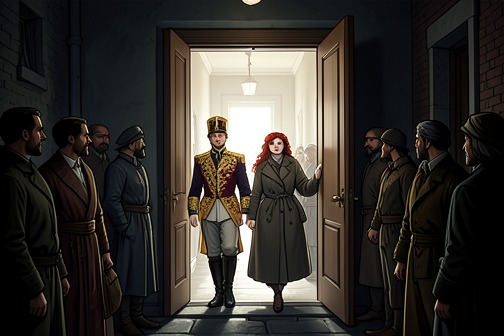
[Haven of the Fallen](entity:event-recall-event-c445de6fca30) is the name associated with the sanctuary [Glynis Wright](entity:character-recall-character-glynis-wright-d6dbb6432ea3) enters with Ignatius, a place whose owner calls it Purgatory and whose guests call it the Haven. The episode turns on a startling threshold: a battered little door in a Budapest alley opens not onto another cramped room but into a glittering interior and a gathering of mortals, vampires, and other beings. For Glynis, still bound to [Vlad Dracula](entity:character-recall-character-vlad-dracula-e0ec58b6d207) and newly involved with Ignatius, the Haven reveals a hidden social world in which the supernatural is not merely concealed but gathered into a community.
## Approach and Threshold
Glynis hurries to meet Ignatius at a fountain in the hotel gardens, choosing speed over a carriage. They walk together through a long, narrow side street, where Ignatius presses her hand and draws her close. He leads her into a dark alcove and knocks at a narrow, worn door. Glynis follows him through it because she trusts him, though the passage beyond initially seems like a dank void.
The crossing is abrupt and disorienting. Glynis is plunged into icy darkness and then finds herself in a brightly lit hallway, shielding her eyes from the sudden brilliance. A footman closes an enormous gilded door that opens onto the street, a door whose scale bears no resemblance to the tiny entrance they have just used. The mismatch makes the place feel less like an ordinary hidden building than a space governed by magic: the alley’s battered entrance conceals an interior of striking size and luxury.
The hallway establishes that contrast in material detail. A chandelier sparkles with gold and crystal above scarlet walls worked with intricate gold designs; a thick, richly patterned carpet covers the floor. Paintings show exotic lands and beautiful people. A butler and several maids receive the visitors, take their cloaks, and disappear behind another door concealed by scarlet curtains. What begins as a furtive passage through darkness becomes an escorted arrival into a polished, carefully staffed house.
## Purgatory and the Haven
When Glynis asks where they are, Ignatius identifies the place as Purgatory, explaining that Astir is the one who calls it that. The guests, by contrast, call it the Haven because it shelters things that are not human. The two names frame the sanctuary differently: Purgatory evokes a place between states, while Haven emphasizes the protection and fellowship its inhabitants seek there. The account presents both as names in use, not as a settled theological description of the place.
Astir’s appearance further unsettles ordinary categories. The figure glides rather than walks, tall and elegant, with a pale face, long flowing blond hair, and a white gown draped like a Greek statue. Glynis knows immediately that Astir is not human, but also not a vampire. The eyes burn like flames, while the voice is neither male nor female. Astir’s presence gives a visible form to the Haven’s broader claim: its community includes beings that cannot be reduced to the familiar distinction between human and vampire.
The venue is both uncanny and socially organized. A waiter serves wine in crystal goblets from a bottle bearing an ornate seal; he appears entirely ordinary to Glynis. Elsewhere, servants guide guests through the building, and doors and curtains separate its rooms. The supernatural character of the Haven does not erase the forms of hospitality found in a fine establishment. Instead, ordinary service and extraordinary inhabitants coexist within the same carefully ordered interior.
## The Gathering
Ignatius eventually leads Glynis from their small haven into a grand salon. A footman appears and opens two large doors she had not noticed before. Inside, people fill the room with conversation, music, and dancing. Some are mortal, some vampires, and others look mortal to Glynis even though she senses they are not. The gathering is not a meeting devoted to a stated purpose; it is a lively social scene that makes the hidden world perceptible through the mixture of its guests and their behavior.
The most consequential contrast for Glynis is how mortals meet vampires there. She watches humans willingly give themselves to small groups of vampires, accepting bites and kisses with languid, pleased expressions. Glynis compares their ease with her own hunting expeditions and wonders at how readily the people here offer themselves. The scene does not show that the danger of vampirism has disappeared; it shows that, within this gathering, feeding can take place through apparent consent and pleasure rather than through the helplessness that has shaped Glynis’s experience.
The salon is varied rather than solemn. Men gather to talk and laugh, women form close groups to gossip, and violinists play wild Hungarian music while some guests dance. In small alcoves, others pursue more scandalous entertainments. Dominique sits smoking a pipe and speaking loudly with a beautiful, radiant, long-red-haired man whom Glynis recognizes as a vampire. Oscar is slumped against Dominique’s chair, snoring. These details place the supernatural among the familiar rhythms of a party—conversation, music, flirtation, exhaustion—without making the gathering simply ordinary.
## Significance and Limits
The Haven’s importance lies in the alternative social world it discloses to Glynis. In Vlad’s castle, she has described herself as his slave, resented the rules of the place, and struggled to survive until she can escape. Her transformation has also made clothing and appearance instruments of control: she rejects the imposed outfit she considers degrading, and Vlad later orders her to wear a veil around Andrew so her altered beauty will not expose his deception. Against that background, the Haven’s gilded rooms and mixed company offer a striking change of setting, though they do not by themselves undo her captivity or [blood bond](entity:concept-recall-concept-b49931ffd664).
The episode also reframes Glynis’s connection with Ignatius. She has hurried to meet him, trusts him enough to follow him through the dark doorway, and is received by him into a place he knows well. Within the salon, mortals and vampires share space in a way that differs sharply from the predatory encounters that have informed her own feeding. Yet the Haven is presented as a refuge for nonhuman beings, not as a demonstrated route to freedom from Vlad. Its significance is therefore both expansive and limited: it reveals a community beyond Vlad’s household while leaving Glynis’s existing entanglements unresolved.
Event 34
Astir's prophecy of Glynis's impending choice
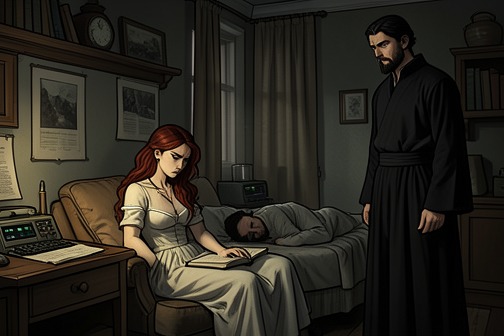
[Astir’s prophecy](entity:concept-recall-concept-astir-s-prophecy-4170cb8ef45c) of Glynis’s impending choice is a warning delivered in Astir’s haven after [Lady Glynis Wright](entity:character-recall-character-lady-glynis-wright-206a9887f2cd) awakens beside Ignatius. Astir foretells [Vlad Dracula](entity:character-recall-character-vlad-dracula-e0ec58b6d207)’s return, identifies Glynis as a danger to him, and says that her approaching victory will carry an intimate cost: she will destroy what she loves. The prophecy turns a moment of refuge into a threshold. It does not tell Glynis exactly what to choose or remove her responsibility for choosing; instead, it makes the coming decision feel both unavoidable and perilous.
## The warning in Astir’s haven
Glynis recounts the encounter in her journal from [Buda](entity:location-recall-location-buda-89e5673736b2), [Hungary](entity:location-recall-location-hungary-b3ac7e0cfaee), after awakening in the arms of Ignatius. The haven has given the lovers a brief interval together, but her account is already shadowed by concern. Ignatius sleeps while she watches over him, troubled by the pain she has seen when his past is mentioned and by the knowledge that he was once a priest. She recognizes his confinement in darkness as something that echoes her own struggle with her vampiric nature. Their closeness brings comfort, yet Glynis also fears Vlad will disrupt their affair and separate her from the man she loves.
Astir’s warning breaks into that private respite. The Fallen looks down at the sleeping Ignatius and explains that it came while he slept to warn Glynis. Its appearance carries the force of the message: Glynis notices the terrible scars on its back, while its eyes burn with white and gold fire. Astir lays a slender hand on Ignatius’s brow and announces that Vlad will return by sunrise, having turned back out of fear. The prediction is tied to Vlad’s disturbed dreams; he senses that something is wrong, though Astir does not give Glynis a complete explanation of what he senses.
Glynis immediately asks whether Vlad is returning for her. Astir answers with uncertainty, then insists that he is returning. She decides she should go home. The exchange makes the haven’s safety temporary: the threat is not an abstract danger somewhere beyond it, but a return already in motion, with a predicted time and a cause rooted in Vlad’s fear.
## The danger Astir sees in Glynis
Astir describes Vlad as loving Glynis and determined to keep her at his side. Yet the warning reverses the apparent balance of their bond: Glynis is not merely the captive or threatened party. Astir says that she weakens Vlad and is more dangerous to him than any weapon raised against him. Glynis rejects the thought that she could hurt him, insisting that she loves him. Her response reveals how sharply the warning conflicts with her own understanding of her feelings and of the danger she poses.
Astir then speaks of a man who truly knows Glynis, has seen what she is capable of, and recognizes her as formidable and clever. It warns that he does not understand that she will destroy him. Astir does not name this man in the prophecy. The surrounding warning about Vlad’s love and possessiveness makes Vlad a strong possible referent, while Glynis’s love for Ignatius keeps the emotional stakes from resolving into a simple prediction about one relationship. The ambiguity matters: Astir offers knowledge of the coming cost without making the choice legible in advance.
The prophecy’s urgency intensifies as Astir turns fully toward Glynis. Its eyes burn more brightly, and wings of fire erupt from its scarred back. Glynis recoils, then hastily pulls on her dress and tries to flee the bed. Astir tells her that she does not fully understand. The transformation makes the warning more than a private opinion: the scene gives it a terrible, supernatural authority, while Glynis’s frightened flight shows that she cannot yet absorb what it means.
## Choice, victory, and loss
Astir’s central pronouncement is that Glynis’s time for choice is drawing near. She must choose wisely, or all will be lost; even victory, however, will bring bitterness and loss. The final clause sharpens the warning beyond a prediction of danger: in the decisive moment, Glynis will know that she has destroyed what she loves. Success and grief are thus bound together before the choice itself has been disclosed. The prophecy offers no uncomplicated escape from Vlad’s control, because even a successful resistance may wound Glynis through the thing it costs her.
The warning also shifts the meaning of Glynis’s relationship with Vlad. At another point, Ignatius fears that when Glynis leaves him she will return to her Master. Astir’s prophecy gives that return a second meaning: Vlad’s hold on her is not simply a source of danger to Glynis; the relationship also gives her the power to endanger him. The prediction does not erase her attachment to Ignatius or settle whom she loves most. Instead, it places those attachments within a choice whose consequences may reach beyond the immediate escape from captivity.
The later confrontation with Vlad echoes Astir’s forecast without turning its language into a simple promise of permanent death. Glynis drives the Golden Stake through Vlad, and his blood and power drain as she holds him. He recognizes her role in his defeat, telling her, “I should have known it would be you.” Around them, the Brides burn his blood, an act intended to destroy his power and free them from him. Glynis’s victory arrives through intimate violence: she is physically holding the man whose power she is helping to extinguish. The scene gives concrete force to Astir’s warning that she is more dangerous to Vlad than a weapon, while leaving the prophecy’s language of love and loss painfully complex.
That complexity persists when Glynis later calls Vlad’s condition limbo rather than death. The prophecy’s language of destruction, therefore, does not mean that every consequence is settled by his fall. It foretells a choice and the bitterness attached to victory, not a clean ending in which all bonds and dangers disappear. Astir’s warning makes the eventual triumph inseparable from its cost, and leaves the reader to measure the difference between defeating Vlad and escaping everything his power has made of Glynis’s life.
Event 35
Astir’s prophecy revelation
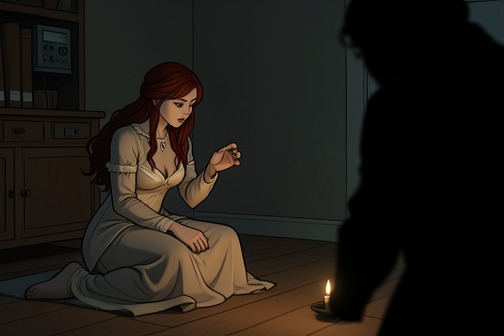
[Astir’s prophecy revelation](entity:event-recall-event-38eddd57a85e) turns Glynis’s love for Ignatius into a source of dread: Astir’s words are confirmed as truthful, but their meaning remains uncertain, and Glynis becomes convinced that she will destroy the person who loves her. Recounted through Glynis’s retrospective journal voice, the episode binds supernatural foreknowledge to an intimate conflict in which neither love nor certainty can protect the lovers from what may come.
## Background and the prophecy
The revelation follows Glynis’s encounter with Astir, whom the narrative identifies as one of the Fallen. After returning, Glynis sits trembling and remembers Astir’s words with terror. She had wanted to speak with Astir about God and Heaven, but feared learning that she was damned beyond absolution. The encounter does not give her the reassurance she sought: instead, she is afraid that she herself will become the cause of Ignatius’s downfall.
Glynis’s fear is already an interpretation, not a complete account of the prophecy. She does not explain exactly what Astir predicted or how the prediction is meant to unfold. The distinction matters: the scene establishes the prophecy’s force while withholding a clear, actionable explanation. What Glynis carries away is the prospect that her beloved may suffer because of her, and the knowledge that she cannot yet understand the terms of that danger.
## Testing Astir’s words
Glynis brings the question directly to Ignatius, asking whether Astir speaks truth or lies. His answer is unequivocal on the first point and qualified on the second: Astir always speaks truth, though not as clearly as one might wish. The exchange gives the prophecy authority without making it transparent. Ignatius’s assurance does not resolve Glynis’s fear; it makes the threat harder to dismiss while leaving its exact meaning obscure.
That combination of certainty and obscurity shapes the revelation. If Astir could simply be mistaken, Glynis might reject the warning. Instead, Ignatius confirms the speaker’s truthfulness but offers no interpretation that could free Glynis from uncertainty. The prophecy becomes a fact the lovers must reckon with, even though its fulfillment, timing, and precise consequences remain unstated.
## [Ignatius’s confession](entity:event-recall-event-28ec386303e7) and fear
Glynis responds with tears and dread at the thought that she may be the instrument of Ignatius’s destruction. She tells him that she loves him. Ignatius returns that love, but says he suddenly feels she is lost to him and cannot understand why. His reaction makes the prophecy present between them: before anything has happened, its threat has already entered their relationship as fear of separation.
Ignatius then recounts the conflict that Astir’s earlier words have created in his own life. He says that he continues to serve Astir and her husband, both of whom he loves. After hearing Astir’s words, he believed he had damned himself and vowed to do penance until God restored His presence and returned him to divine service. Yet after seeing Glynis, he fell in love with her as he had never loved before. He describes that love as a return to sin and insists that he will not lose her to Astir’s prophecies.
His confession reveals a struggle between two commitments: the penitential path he had chosen in pursuit of salvation and the love that has made him willing to abandon that discipline. The prophecy therefore threatens more than a future physical loss. It presses on Ignatius’s religious guilt and on his attempt to understand whether loving Glynis can coexist with the penance he had sworn to undertake.
## Glynis’s conclusion and the scene’s role
Ignatius’s defiance does not persuade Glynis that the prophecy can be escaped. She tells herself that Astir’s words are true, though she does not understand the context in which they will come to pass. She reaches the bleak conclusion that she will destroy the one who loves her. The scene thus ends not with an explanation of the prediction but with Glynis’s conviction that its danger is real and that Ignatius may be its victim.
The episode is framed as recollection: after the encounter, Glynis writes of the previous night and judges her own hopes with new fear. That diary perspective gives the revelation two emotional moments—the terror she experienced in the immediate aftermath and the retrospective recognition that her love may bring pain to them both. The prophecy’s ambiguity sustains suspense, while the lovers’ mutual declarations make its possible cost concrete. For Glynis, foreknowledge offers no control; for Ignatius, love becomes both the thing he refuses to surrender and the source of a danger he cannot explain away.
Event 36
Ignatius’s confession
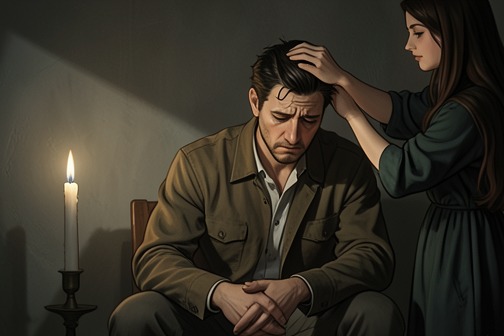
[Ignatius’s confession](entity:event-recall-event-28ec386303e7) is a retrospective tale of religious devotion, temptation, and a supernatural turning that left him separated from the faith that had defined his life. Told to Glynis in a moment of intimate distress, it explains not only how Ignatius became a vampire and entered another couple’s service, but why loving Glynis feels to him like a return to the very spiritual peril he has spent his life trying to atone for.
## The Confession and Its Frame
Ignatius tells his history while Glynis sits with him, combing her fingers through his hair and weeping as she listens. Her tenderness cannot soothe the memory: she senses what happened before he reaches it, and, when the account turns painful, covers her face. The scene makes the story an act of disclosure between lovers, not a detached chronicle. Ignatius speaks from a present in which he fears that he could become the cause of Glynis’s destruction; the history he recounts gives that fear its weight.
His story begins with a past in which his religious vocation was the organizing principle of his life. He says that, from childhood, he loved God and found solace in his village church, where he prayed daily after his chores. A priest recognized his calling while he was young, and his parents released him into the church’s care. Ignatius studied and worked diligently, taking vows of poverty and celibacy as more than formal obligations: he understood them as a pledge of love to God alone. He grew his hair long after the example of Samson, using it to remind himself not to love a woman or be weakened by the flesh. In that earlier life, he says, he heard God’s voice and knew peace.
## From Parish Priest to Vampire
After receiving a small chapel in a village, Ignatius served its people through ordinary acts of care. He sat with the elderly as they approached death, baptized newborns, and encouraged villagers enduring hard lives. This pastoral work gives the rupture that follows its particular force: the man who had guided others through the thresholds of life and death is himself drawn into a condition that cuts him off from the sacred world he served.
One night, a crowd dragged a young woman through the streets, accusing her of witchcraft. She had been found asleep in the home of an old woman who had died, and the neighbors believed she had stolen the woman’s soul. Ignatius saw her fear and intervened, ordering the villagers back before taking her to his cottage beside the chapel. She clung to him and wept, then huddled in a corner. He offered soup and bread, but she turned away from them.
As winter approached, the woman grew weaker rather than stronger. She scarcely spoke, would take only thin meat broth, and would not let Ignatius approach even to read to her from the Bible. Concerned that keeping her with him was unwise, and aware that he was attracted to her beauty despite his vows, he wrote to arrange her transfer to a nearby convent. He tried to keep his distance, sitting by the fire rather than looking at her as she lay curled on her cot. His efforts at restraint did not prevent the encounter that followed.
One night, while Ignatius washed by the fire, the woman came to him and asked for a kiss. He was half-naked; his robe and crucifix lay on a nearby table. He agreed to one kiss, but the kiss became the moment in which he forgot his vows and felt himself lost to her. She bit his throat and drank deeply, nearly extinguishing his heartbeat. Then she invited him to drink from her and know eternal life. Ignatius drank. The account presents his change as both a bodily assault and a surrender to desire: he is terrified by what is happening, yet says that lust keeps him bound to her.
## Loss, Service, and Penance
When Ignatius awoke, the signs of his former religious life had become inaccessible. He could no longer touch his crucifix or enter his church, and he no longer felt God’s presence. He describes himself as separated from everything he had held dear. Anger and lust followed the transformation, and he told himself that if his soul was lost to sin, at least he had taken pleasure in the woman. The thought did not resolve his spiritual crisis; it sharpened it.
The woman then asked him to help her return to her husband. Ignatius understood this request as proof that he had foolishly damned himself: after turning him, she directed him back into the service of her marriage. He says he still serves both her and her husband, and loves them dearly. At the same time, he undertook penance, hoping that God might one day let him feel the divine presence again and restore him to service. He describes that continuing effort as a personal quest for salvation, an attempt to endure the hell of his condition rather than mistake it for freedom.
## Glynis, Love, and the Prophecy
Ignatius’s account leads directly back to Glynis. He distinguishes his desire for the woman who made him from what he feels now: he says he lusted after his maker, but that he loves Glynis as he has never loved before. Her gaze, he says, has struck him to his core; being with her brings joy, but also makes him fear that he has abandoned his penance once more. His words turn from confession to protest when he insists that he will not lose her to [Astir’s prophecy](entity:concept-recall-concept-astir-s-prophecy-4170cb8ef45c).
Glynis weeps, but she believes Astir’s prediction will come true. She does not understand the precise circumstances in which it will be fulfilled; she does believe that she will destroy the one who loves her. The confession therefore supplies no resolution or reassurance. Instead, Ignatius’s history of forbidden desire and lost spiritual belonging becomes a warning threaded through their present love: the intimacy that consoles him may also place him in danger. His revelation deepens the bond between them even as it gives that bond a foreboding consequence.
Event 37
Revelation of Vlad and Ignatius’s shared blood
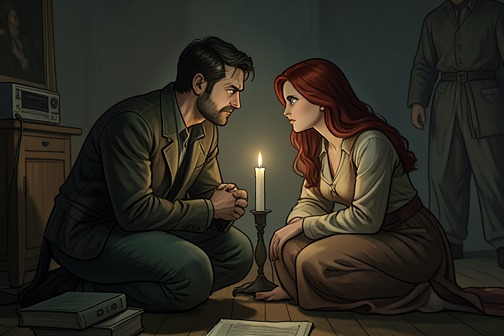
The revelation of Vlad and Ignatius’s shared blood changes the apparent balance of power around [Glynis Wright](entity:character-recall-character-glynis-wright-d6dbb6432ea3): Vlad is not an unconstrained master, but a creature whose creator can forbid his death and limit his reach. Ignatius discloses that the same Mistress created both Vlad and [Erzsébet Dolingen](entity:character-recall-character-erzs-bet-dolingen-f5a83d46c8ab), and that her influence keeps Vlad within his own country. His explanation turns the plan to move to [England](entity:location-recall-location-england-b153c1f368ea) into an effort to escape that influence, while his admission that everyone is caught in forces beyond their control makes the revelation a recognition of shared captivity as much as a secret about origins.
## The Question Behind the Disclosure
The exchange begins with a practical and dangerous question. Glynis presses Ignatius about why he cannot kill Vlad, distinguishing physical ability from permission: Ignatius has said he is strong enough, yet something prevents him from acting. His answer first identifies the restraint as an order from his Mistress. Glynis then tests the account she has understood so far, asking whether [Erzsébet](entity:character-recall-character-erzs-bet-0e6032bd790f) was Vlad’s creator. The correction—that Erzsébet, too, was made by the Mistress—expands the scale of the secret. Vlad’s origin is not explained by Erzsébet alone; both figures belong to a deeper structure of creation and authority.
The scene’s intimacy sharpens rather than softens its stakes. Ignatius kisses Glynis’s neck as he answers, and she continues questioning him instead of allowing affection to close the subject. His initial assurance that he is strong enough does not resolve the contradiction: strength is not freedom to act. The conversation therefore exposes a distinction central to the event. Ignatius may possess the force to challenge Vlad, but the command of his creator—and the power that sustains Vlad’s confinement—sets the limits of what he can do.
## The Mistress’s Authority and Vlad’s Exile
Ignatius’s explanation connects the prohibition against killing Vlad to the Mistress’s wider power. She created Vlad, and her strength keeps him subdued within his own country. His wish to reach England consequently acquires a strategic meaning: it is not simply a change of residence, but an attempt to get beyond the reach of the authority that controls him. The disclosure recasts a known ambition as evidence of Vlad’s own limitation. The figure who commands Glynis and appears to dominate those around him is also trying to escape a superior power.
The revelation also places Erzsébet within the same chain of creation. Ignatius corrects Glynis’s assumption that Erzsébet created Vlad by explaining that Erzsébet herself was created by the Mistress. The account does not make the characters’ exact origins interchangeable, but it does show that their relationships to power extend beyond the visible household and its immediate rivalries. The Mistress stands behind both Vlad and Erzsébet; through her, creation, obedience, and territorial constraint become connected. Ignatius’s refusal to kill Vlad is thus not presented as a matter of affection or lack of strength, but as a consequence of an explicit prohibition backed by greater authority.
## Glynis and Ignatius in a Shared Condition
For Glynis, the explanation resonates with her own experience of coercion. She has described herself as Vlad’s slave and life in the castle as a torment from which she is trying to escape. In [Buda](entity:location-recall-location-buda-89e5673736b2), Vlad’s orders dictate the veil she must wear around Andrew and the clothing and jewels she may use to conceal her identity. These circumstances are not the same as Ignatius’s bond to his creator, but they establish why his account matters to her: both are trying to act within systems in which another power can set the terms of their lives.
Ignatius gives that parallel its plainest expression when he tells her, “We are all trapped by intrigues beyond our control.” The statement enlarges the scene beyond the question of whether Vlad can be killed. It describes a world in which even powerful supernatural figures are subject to decisions and dependencies they did not make. For Glynis and Ignatius, the realization does not weaken their attachment. As she looks into his eyes, Glynis recognizes the depth of their mutual love and need, and understands that neither can willingly part from the other. Their closeness becomes a personal bond formed inside, not outside, the web of constraint.
## Consequences and Narrative Significance
The disclosure alters how Vlad’s English plan, Ignatius’s apparent restraint, and the characters’ shared vulnerability fit together. Vlad’s ambition now has a stated cause: escaping the Mistress’s influence and strength. Ignatius’s inability to kill him has a stated source: the Mistress forbids it. And the creation of both Vlad and Erzsébet places their stories beneath an authority whose full scope remains beyond the exchange. The event supplies a causal framework for conduct that might otherwise look like personal choice alone.
The moment also refuses a simple reversal in which Ignatius’s strength would automatically free Glynis by removing Vlad. The information he gives her instead reveals another limit on that possibility. Immediately after their intimate recognition, Glynis feels Vlad’s power trace down her back and gasps. That interruption makes the continuing force of Vlad’s presence tangible within the scene: knowledge and love have clarified the structure of control, but have not ended it. The revelation’s decisive consequence is therefore a more complicated map of power. Vlad is both controller and captive, Ignatius is strong but forbidden to strike, and Glynis understands that escape must contend with forces extending beyond the castle’s walls.
Event 38
Vlad Declares Glynis His Only Bride
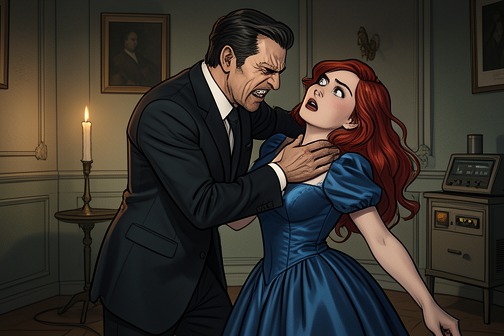
[Vlad Dracula](entity:character-recall-character-vlad-dracula-e0ec58b6d207)’s declaration that [Glynis Wright](entity:character-recall-character-glynis-wright-d6dbb6432ea3) is his only Bride is a reversal in the household’s hierarchy, but not a release from his control. He renounces his other Brides and names Glynis his sole wife, presenting exclusivity as proof of a bond that she has not freely chosen. The scene’s sharpest contradiction is that he declares her uniquely his while gripping her by the throat to enforce that claim.
## Causes and Background
Glynis’s response to the declaration grows out of a longer struggle over who may define her life. Before her transformation, she told [May Wright](entity:character-recall-character-may-wright-3d98d113a9e3) that she wanted to live as a woman with the freedom conventionally granted to men, without the constraints imposed on women. Her resistance to prescribed roles persists after she becomes a Vampire: she rejects the assumption that her new status obliges her to obey Vlad or accept his demands. The claim that she is his wife therefore lands against an established desire for self-determination, not in an emotional vacuum.
That conflict has already been made visible through clothing. In the castle, Glynis rejects an imposed outfit and changes into her own blue Italian silk gown, without a corset. Later, Vlad requires her to wear a veil around [Andrew Wright](entity:character-recall-character-andrew-wright-15e2c32beef5), explaining that Andrew must not recognize her clothes or discover that the family’s possessions were not lost as Vlad claimed. In [Buda](entity:location-recall-location-buda-89e5673736b2), the heavy layers of organza and lace frustrate Glynis so much that she tears the veil from her face. These garments mark the difference between what Glynis chooses and what Vlad orders her to wear; his declaration of exclusive marriage belongs to the same contest over the terms on which she will appear and live.
Her position as a Bride is also structured by command. When Vlad summons the new Bride, [Cneajna](entity:character-recall-character-cneajna-cc5dab651a46) insists that Glynis must go because it is her duty. Glynis refuses, saying that she will not let Vlad touch her again, but Cneajna physically pulls her toward the door and orders her not to defy either of them. The later declaration does not create this coercive system. It intensifies it by recasting Glynis’s place within that system as uniquely intimate and supposedly exclusive.
## The Declaration
The immediate exchange begins with Vlad’s account of a dream: he has imagined Glynis with another Vampire. Glynis points out that he has introduced her to no Vampires other than her sisters. His answer turns the dream into a demand. He says he will share her with no one, mortal or Vampire, and insists that she is his wife. Glynis corrects the description: she is the first among his Brides, not simply a wife. Vlad rejects even that distinction. He says she is his only Bride, denounces the others, and says they may be left to hunger.
The announcement changes the stated order among the Brides. Glynis is no longer merely first in a plural group: Vlad claims to remove the others from the status that binds them to him and to make her singular. Yet the exchange does not establish that Glynis has consented to this new arrangement. Her correction keeps the existing category of Bride in view, while Vlad answers by asserting a more absolute marital claim. The apparent elevation is therefore also a narrowing of her identity to the role he chooses for her.
Glynis challenges the sincerity of his professed attachment. She argues that he does not love her, that he has merely tired of her sisters, and that he may take further Brides, such as the [Baroness](entity:character-recall-character-baroness-aa85d1ccc76d). Vlad dismisses her prediction but does not answer her doubt with evidence of mutual trust. Instead, he returns to the claim that she will remain his first. When she tries to hide how frightened she is, he seizes her throat and warns her not to forget that she belongs to him. He then leaves, laughing. The physical gesture gives the declaration its force: the language of marriage and exclusivity is backed by the bodily power to restrain her.
## Other Bonds and Rival Claims
The declaration has particular weight because Glynis’s emotional attachments do not fit neatly within Vlad’s account of her as his wife. In an earlier exchange with Ignatius, he embraces her and tells her that she has taken his heart; Glynis promises to come to him again, despite the difficulty of slipping away. Vlad’s imagined rival is therefore not simply an abstract possibility. The dream makes his fear of another Vampire explicit, while his demand that she belong to no one extends beyond the mortal relationships he might already know about.
The household’s female bonds further complicate the language of exclusive possession. When [Erzsébet Dolingen](entity:character-recall-character-erzs-bet-dolingen-f5a83d46c8ab) is starving, [Ariana](entity:character-recall-character-ariana-3b400cd4e588) feeds her by transferring blood mouth to mouth. Glynis witnesses the act as intimate and emotionally powerful, and learns that the other Brides had previously fed [Erzsébet](entity:character-recall-character-erzs-bet-0e6032bd790f) every few days. Later, Cneajna draws Glynis close, kisses her lips and brow, and tells her that she loves her, even while recognizing that Glynis has become first in Vlad’s affections and household. These scenes show bonds of care and attachment among the women that coexist with their shared relation to Vlad. His declaration attempts to reorganize that community around a single favored Bride, but it cannot make those other attachments disappear.
## Consequences and Significance
The declaration does not resolve Glynis’s captivity or make her relationship with Vlad reciprocal. Its promise of singular status is joined to the threat of abandonment imposed on the other Brides, while its claim of marital intimacy is joined to a grip on Glynis’s throat. The scene thus makes the distinction between being chosen and being free especially clear: Vlad’s preference may alter her rank, but it does not give her authority over the terms of the relationship.
The moment also crystallizes the struggle between Glynis’s own account of herself and the names imposed on her. She has resisted restrictive expectations, resisted changing out of clothes she considers her own, and corrected Vlad when he tries to define her simply as his wife. He answers by replacing one category with another—only Bride, only wife—then insisting that she is his. Later, the bond she shares with her Master continues to anger her, even as it brings her comfort on a particular night. That later ambivalence does not undo the coercion of this confrontation; it shows why the declaration cannot be reduced either to affection or to rank. It is a possessive claim whose emotional force and threat remain entangled.
Event 39
Dosza Palace tribunal
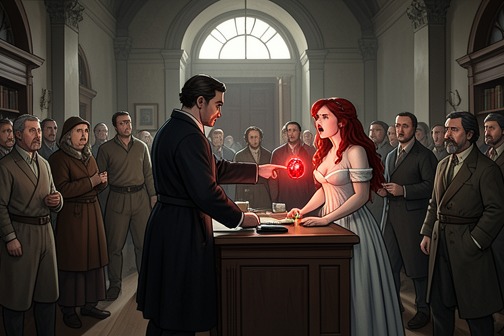
[Dosza Palace tribunal](entity:event-recall-event-dcab6fce0209) is the confrontation in which [Vlad Dracula](entity:character-recall-character-vlad-dracula-e0ec58b6d207) exposes to [Glynis Wright](entity:character-recall-character-glynis-wright-d6dbb6432ea3) how the [Baroness](entity:character-recall-character-baroness-aa85d1ccc76d) and [Sir Stephen](entity:character-recall-character-sir-stephen-ff95cbc47318) helped draw her family into his reach and advance his plans. What begins under the surface of a palace gathering becomes an account of calculated betrayal: the people who helped shape Glynis’s fate are named in front of her, then released from service. Vlad’s final permission for Glynis to deal with them as she pleases makes the scene both an accusation and a dangerous transfer of choice.
## The Gathering Turns into a Summons
The scene unfolds at [Dosza Palace](entity:location-recall-location-dosza-palace-acbe46d821a0) after Vlad Dracula brings Glynis there, telling her that she is to learn the truth about matters concerning her. As the carriage approaches, he touches the red stone in the ring he has given her and firmly reminds her that she is Countess Dracula. The title and the ring mark her place beside him, but the disclosure that follows shows how little control she has had over the events that made her his wife.
The human company’s unease gives away the change in the occasion before Vlad names it. Glynis recognizes that the guests are nervous and observes that the Baroness did not invite them. Vlad confirms that he summoned them. He settles into a chair as if it were a throne, and Sir Stephen immediately offers their service. The social scene has become an audience before a master: the mortals are present not as independent guests but as people required to answer for their usefulness to him.
Vlad states that the humans are his servants and insists that the truth be spoken openly in front of his wife. The Baroness, who had been behaving as hostess, turns and curtsies to him; Sir Stephen looks terrified, while [Maria](entity:character-recall-character-maria-de0c38967fe7) sits beside her husband and takes his hand. Glynis takes her place near Vlad’s chair. She already knows that Sir Stephen played a part in her family’s destruction, but she realizes that she must act surprised about the Baroness’s involvement. The scene therefore carries two kinds of performance at once: Vlad strips away the polite cover, while Glynis keeps her knowledge concealed as she listens.
## The Conspiracy Explained
Vlad tells Glynis that the humans helped bring her to him and ensure his safe passage to [England](entity:location-recall-location-england-b153c1f368ea). He begins with the Baroness’s role. She had urged him to pursue Glynis, making a point of meeting the young English women who were visiting and selecting Glynis from among them. She praised Glynis’s beauty and charms to Vlad, after which he sought her out at the opera. The Baroness confirms the account, describing Glynis as a fitting complement to Vlad’s imposing stature and praising her vivacity.
The revelation recasts Glynis’s earlier social world as part of a deliberate selection process. Her appearance and manner, ordinarily the currency of a young woman’s place in society, had been assessed and reported to Vlad as reasons to claim her. The opera encounter that might have seemed a personal meeting was preceded by the Baroness’s recommendation. The disclosure also sharpens the difference between Glynis’s public identity as a Countess and the coercive history underlying her marriage: the title Vlad invokes at the palace does not erase the fact that others helped deliver her into his power.
Sir Stephen’s part was both obedience and self-preservation. Vlad says that Sir Stephen acted because he feared him and was loyal to him. He also identifies a private anxiety behind that service: Sir Stephen’s daughter Laura was about to return from boarding school in Switzerland, and her father feared Vlad might choose her instead. The revelation makes the betrayal more particular than a simple act of allegiance. Sir Stephen helped expose Glynis and her family while trying to divert danger from his own household.
Glynis already knows that Sir Stephen’s actions were connected to her family’s death; what the tribunal adds is the Baroness’s role and the wider shape of the plan. Vlad says that Sir Stephen had summoned several families, not only Glynis’s, and that the assembled mortals had helped draw her to him as well as secure the journey to England. The conspiracy therefore joins the personal trap around Glynis to Vlad’s larger movement abroad. Her family’s catastrophe was not an isolated misfortune but part of a scheme that also served his passage and ambitions.
## Dismissal and Unresolved Anger
Vlad thanks the humans for their service and then announces that he releases them. He is transferring his business to a new solicitor and tells the Baroness that, although he and Glynis may attend any parties to which they are invited, their dealings are over. The sudden termination shocks the group. Sir Stephen insists that he has done everything requested and remains at Vlad’s service, but Vlad answers that his services are no longer required. The dismissal reveals the disposable nature of their loyalty: having served his purpose, they no longer possess a secure position beside him.
Glynis’s response is not gratitude for a chance at revenge but a surge of anger. She thinks she could kill them all, connecting their part in the plot to her family’s death and her own transformation into a vampire. Vlad takes her hand to calm her as they leave, then tells her she may do with them as she pleases, provided she acts discreetly. His permission does not amount to justice or protection. It places the decision in Glynis’s hands while leaving her inside the conditions of his authority, where even vengeance must be exercised with discretion.
The Baroness reaches toward Vlad and pleads with him. He knocks her hand away and slaps her; she falls to the floor weeping. Glynis watches without pity. Sir Stephen holds his wife as she cries, while Glynis feels her bloodlust rising. The contrast is stark: the Baroness and Sir Stephen, who once helped direct events from positions of social influence, are now reduced to frightened supplicants, but their exposure brings Glynis no relief from what they helped cause.
## Significance
The tribunal turns hidden patronage into an explicit record of complicity. The Baroness’s matchmaking, Sir Stephen’s obedience and fear, and Vlad Dracula’s plan for England are laid out in a single room before the woman whose life they helped determine. Yet disclosure does not restore the dead or free Glynis from Vlad. He controls the meeting, decides when the humans’ service ends, and controls the terms under which she may respond. The scene’s central reversal is therefore incomplete: Glynis learns who helped bring her to him, but the truth arrives through the same master who engineered the larger scheme.
Its diary narration gives the revelation the character of testimony as well as confrontation. Glynis distinguishes what she already knew about Sir Stephen from what she had to pretend not to know about the Baroness, recording both the public explanation and her private fury. The ceremony of the palace, the ring and the title of Countess Dracula cannot conceal the violence beneath the alliance. At the end, she is no longer merely the unwitting object of their arrangement; she is invited to judge its participants. But the rising bloodlust makes clear that the choice offered is not a clean path to justice: it is a perilous opening within Vlad Dracula’s continuing power.
Event 40
格雷戈尔袭击逃亡者
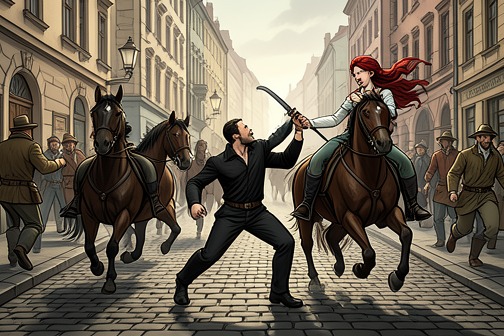
[Gregor](entity:character-recall-character-gregor-a21e0b388746)’s attack on the fugitives is a street ambush in [Buda](entity:location-recall-location-buda-89e5673736b2) that turns their flight into a desperate struggle over who will reach the haven alive. It exposes the danger of pursuing safety while weakened and forces Glynis to defend the people fleeing beside her.
## The Ambush in Buda
As the horses wound through Buda’s lanes, Gregor, a Dhampir vampire hunter dressed in black, suddenly appeared in the street before Ignatius’s horse. He accused the fugitives of killing his sister, then struck. The horse reared and fell, throwing Ignatius and [Magda](entity:character-recall-character-magda-04673b189ca0) to the road; Magda held on to the child and used her own body to cushion the fall. Gregor pressed toward Ignatius with daggers in both hands, apparently focused on his target and unaware that Glynis was approaching from behind. Glynis swept past on horseback, caught Gregor by the throat, and dragged him along the street with the reins looped around him. Remembering his earlier assault and fearing for Magda and the child, she tightened the reins in an attempt to strangle him. Gregor recognized her as she attacked. The confrontation had abruptly reversed: the hunter who had chosen the moment and target was now being hauled through the street by one of the fugitives.
## Flight to the Haven
After Glynis dragged Gregor from his feet, the hunter cut himself free and tried to rise. Her horse struck him with its hooves, knocking him back to the ground before it bolted. The reprieve was brief. Vlad ordered the fugitives to run for the haven, and Ignatius seized Glynis’s hand and led her through Buda’s streets, carrying Magda and her child across his shoulders. Their escape meant leaving Vlad behind to face Gregor alone. Ignatius did not know whether Vlad could win: the fugitives were weakened by lack of blood, while Gregor was glutted with it.
The haven received the fleeing group at its massive doorway. Once inside, Ignatius took a silver sword from a servant who was already waiting with it and immediately went back into the street. Vlad staggered toward the entrance, bleeding heavily; Glynis initially believed he had beaten Gregor, until the hunter appeared behind him and plunged both daggers into his back several times. Gregor vanished, but Vlad fell to his knees, and the attack had left him struggling to stand.
Ignatius then made a consequential choice. Rather than let Gregor finish Vlad, he darted across the street and raised his sword to block the hunter’s downward, decapitating blow. Gregor mocked him before launching a furious attack, and the two fought at the haven’s open doorway, their swords ringing together. Vlad, badly wounded by the daggers, slowly made his way to the threshold and demanded a sword. The refuge thus became the scene of a renewed confrontation: it had sheltered the fugitives, but Ignatius’s intervention brought the fight back to its entrance and placed him between Gregor and the wounded Vlad.
## Personal Stakes and Divided Loyalties
The attack unfolds through Glynis’s fear for the people around her, not from a detached view of the street. Before Gregor appears, she watches Ignatius as they ride, loving him but unable to touch or speak to him because Vlad’s anger presses close and she suspects he knows of their relationship. Tears escape her as the horses race through Buda. Gregor’s accusation that the fugitives killed his sister therefore turns their flight into more than a contest of speed: his pursuit is driven by vengeance, while Glynis’s intervention is sharpened by the memory of his earlier assault and by her belief that he would have killed Magda and the child.
The encounter also exposes a fracture in the fugitives’ alliances. Ignatius’s defense of Vlad is not presented as an uncomplicated decision: Glynis reflects that, had Ignatius allowed the blow to fall, they would have been free. She cannot determine whether loyalty or instinct moved him, but his action makes their escape inseparable from the survival of the wounded man who holds power over them. At the haven’s doorway, protection and danger occupy the same threshold: the refuge shelters the fugitives, yet Ignatius’s choice to intervene leaves him fighting Gregor while Vlad demands a weapon. The scene ends with that confrontation still unresolved, its immediate suspense resting on the divided loyalties and unequal physical condition of those caught in the street.
## The Haven’s Unstable Threshold
The fugitives reach Astir’s haven in a tumble rather than a composed retreat: Glynis leaps through the massive doorway, is blinded by the light, and falls onto the soft carpet, while Magda and her child slide from Ignatius’s shoulders beside her. The brief contrast between the street’s violence and the cushioned interior offers no lasting shelter. Ignatius takes the silver sword held ready by a servant and immediately returns outside; from within, Glynis sees Vlad stagger toward the entrance, covered in blood, and only then realizes Gregor is behind him. The doorway becomes a precarious boundary, crossed repeatedly as the fugitives seek safety and Ignatius re-enters danger. The account ends with Gregor and Ignatius still fighting and Vlad demanding a sword, leaving the outcome of the attack unresolved.
Event 41
Gregor’s banishment by Astir
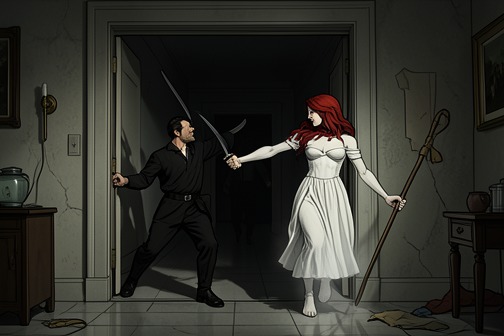
[Gregor’s banishment by Astir](entity:event-recall-event-a3568ee07118) is the moment an armed pursuit reaches the threshold of Astir’s haven and is answered not with a killing, but with supernatural punishment. As [Gregor](entity:character-recall-character-gregor-a21e0b388746) presses toward the hidden refuge, Astir’s power transforms the hall, strips the hunter of his ability to resist, and establishes that entry into the haven places an intruder under its master’s control. Gregor is expelled into the [Danube](entity:location-recall-location-danube-bac3554d019b), while the scene’s decisive rule is made explicit: Astir will not kill there.
## Causes and Approach
The confrontation begins beyond the haven’s doorway, where Ignatius and Gregor are still fighting with swords. Ignatius is stronger than the others present, but blessed daggers have wounded him; he is slower than he should be, and Gregor comes close several times to gaining the advantage. The danger is therefore immediate, not merely a threat at a distance. Astir orders Ignatius to fall back so that the haven can be protected. Ignatius hesitates, manages to shove Gregor off balance, then retreats over the threshold while still facing his opponent.
Gregor recovers quickly. He swings his sword before him, listens, and peers into the refuge with keen eyes. At first, Astir’s companions are concealed from his sight, though he senses that someone is there. His expression registers slight surprise, but his glittering eyes and feral smile turn that discovery into renewed aggression. He advances with confidence until he steps across the threshold. That crossing changes the balance of the encounter: the hunter who had nearly overcome a wounded opponent has entered the place where Astir can command the terms.
The narrator climbs to her feet as [Magda](entity:character-recall-character-magda-04673b189ca0) takes hold of her, and they cling together in the opulent hallway, watching Gregor approach. Magda’s son grips their legs in terror as the danger closes in. The vampires are not at full power, and Gregor seems glutted with strength; the narrator judges that a fully powerful group could have dealt with him, but that is not their present condition. The scene thus makes the refuge’s protection necessary precisely when its defenders are least able to rely on their own strength.
## Astir’s Intervention
Astir’s response begins with a startling change of scale and appearance. He grows until he seems as tall as the ceiling, and his wings of flame fill the hall. His scarlet robe becomes glowing white; his long golden hair floats around his head like a halo. His face cannot be seen, but the narrator understands his eyes to be pure white flame. He lifts one hand toward Gregor and speaks in a multitude of voices, turning the haven itself into the setting for an overwhelming display of authority.
Gregor’s confidence collapses. Terror crosses his face; he stumbles backward against the now-closed door, cries out, covers his face, and drops his sword as he falls to the floor. Astir approaches while Gregor sobs and draws his knees tightly to his chest, extending one hand as if he could ward off the glowing figure. The reversal is complete: the armed pursuer who had driven the encounter forward is reduced to helplessness, while Astir remains in control without needing to strike him.
[Vlad Dracula](entity:character-recall-character-vlad-dracula-e0ec58b6d207) orders Astir to kill Gregor. Astir refuses, stating that they do not kill in the haven. Vlad Dracula objects that Gregor now knows where it is, identifying the practical danger the intrusion has created. Astir answers that Gregor will not remember the location: having entered Astir’s domain, he is now subject to Astir’s power. The haven’s defense therefore rests not only on concealment or force. Astir can contain the consequences of the breach by controlling what the intruder will carry away from it.
## Punishment and Consequences
Astir’s punishment does not end with Gregor’s loss of his sword or his visible terror. Astir says that the hunter now knows fear, treating that experience as an important result in itself. He must then compel Gregor to look up. Gregor raises his eyes and emits a scream so terrible that the narrator flinches and looks away. Magda sobs against the narrator’s shoulder, and her son remains gripped by fear. The punishment is witnessed by those Astir has protected as well as suffered by the intruder; the terror in the hall belongs to the whole company, even though Gregor is its target.
The scream is cut off sharply. When the narrator looks again, Astir is calm, dressed once more in his red robes, and Gregor is gone. Vlad Dracula asks whether Astir has killed him, but Astir reports that Gregor is sputtering and wailing as he swims out of the Danube. This final detail clarifies the difference between expulsion and execution: Gregor survives, but Astir has removed him from the haven and cast him into the river in a state of panic. Ignatius then gently touches Magda’s cheek and kneels to ask her son how he is, returning attention from the supernatural display to the frightened people left in its wake.
## Significance
The encounter defines Astir’s authority through both a prohibition and an act of power. He refuses Vlad Dracula’s demand to kill, yet that refusal is not weakness: Astir can overwhelm Gregor, prevent him from retaining knowledge of the haven, and send him away without surrendering control of the situation. The difference between Vlad Dracula’s command and Astir’s response also marks the haven as a domain governed by its own rule, rather than simply another place where Vlad Dracula’s orders prevail.
The threshold gives that rule a visible shape. Gregor’s approach and crossing expose the haven to danger, but his entry also places him within Astir’s reach. Astir’s transformation fills the hallway, and the intruder’s collapse reverses the earlier sword fight in an instant. Yet the outcome is not a conventional victory secured by killing an enemy. Gregor leaves alive, terrified, and unable to remember where the refuge is; the protected group remains together, and Ignatius turns immediately to the shaken Magda and her son. The episode makes protection mean more than keeping an attacker outside: Astir can let the threat cross the boundary, master it there, and cast it back into the world without allowing it to expose the sanctuary.
Event 42
Vlad Returns to the Castle with Glynis
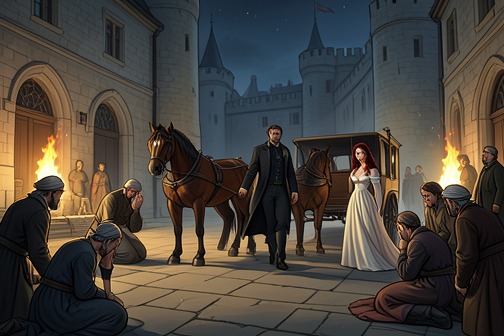
[Vlad Dracula](entity:character-recall-character-vlad-dracula-e0ec58b6d207)’s return to [Dracula’s Castle](entity:location-recall-location-dracula-s-castle-c64a3de1e334) with [Glynis Wright](entity:character-recall-character-glynis-wright-d6dbb6432ea3) turns a homecoming into a reckoning: the castle’s starving Brides of Vlad Dracula emerge in ruin, and their desperate restoration exposes the violence that sustains his household. Set against the fires and revelry of Walpurgis Night, the return reunites Glynis with the sisters she left behind while making clear that Vlad still determines who may feed, who may approach him, and who must leave.
## The Return on Walpurgis Night
The carriage reaches the castle after Vlad and Glynis ascend [Bârgău Pass](entity:location-recall-location-35323b70a0e8). Glynis feels the sisters’ waning power through the blood connecting them, their hunger reaching her before the castle comes into view. Vlad names the night as May first, Walpurgis Night, when the devil walks; his sardonic remark makes their arrival feel less like a journey’s end than a return to a place already marked by darkness.
Bonfires burn around the broken castle as the carriage enters the courtyard. Astir’s guards protect it while the gypsies rush forward, then fall to their knees in shock and relief when Vlad appears. He touches them one by one on the forehead; [Ilona](entity:character-recall-character-ilona-d05c78b1e880) kisses his hand and weeps at his return. Beyond the firelight, Glynis sees the castle door open and moves toward it, where [Cneajna](entity:character-recall-character-cneajna-cc5dab651a46), [Ariana](entity:character-recall-character-ariana-3b400cd4e588), and [Elina](entity:character-recall-character-elina-8b98166e303a) huddle out of reach of the flames: skeletal, gray, and shriveled by hunger. Ariana reaches toward the blood-filled crowd but is stopped by Vlad’s protective ward, and the power’s punishment sends her recoiling in pain.
## The Prisoner and the Brides’ Restoration
Vlad’s return also brings an immediate act of punishment. He orders a guard to bring forward a man hidden in a large trunk, whom the guards drag from the carriage in rags; the man reeks of fear, and Glynis has not known he was there. Vlad explains that the prisoner tried to steal one of their bags. Rather than deliver him to ordinary justice, Vlad throws him to the starving Brides as their justice, making a captive’s body the means by which he restores his household’s power.
Cneajna, Ariana, and Elina attack with a desperation that horrifies Glynis. They tear open great wounds to drink, consuming the man’s blood but not his flesh. Glynis watches blood spatter their bodies and the courtyard stones, then sees it seem to sink into their skin as life returns: their gray flesh flushes, their hair darkens into its former colors, and their milky eyes regain their jewel-like brilliance. The Brides are still gaunt, but they are no longer skeletal. Their recovery is both grotesque and unmistakably dependent on Vlad’s gift of a victim.
Restored only in part, the women reach for Vlad and beg his forgiveness. He draws away, orders them to feed, and says he cannot bear their sight. Cneajna, still visibly ruined, gathers Ariana and Elina and leads them out into the night after one last look over her shoulder. Vlad keeps Glynis at his side. The contrast between his rejection of the Brides and his possession of Glynis leaves their return framed as an assertion of hierarchy, not reconciliation. Inside the decrepit castle, Glynis remembers that her last arrival was as a mortal visitor with her family alive; Vlad, meanwhile, assures her they will stay only briefly and depart for [England](entity:location-recall-location-england-b153c1f368ea) once her brother has fulfilled his promise.
## A Changed Identity on the Road Back
The return also places the couple’s altered identities against the roles they had occupied before leaving the castle. Vlad looks more like the Prince of [Wallachia](entity:location-recall-location-cb08e74a4e51) than he has since their departure: his hair has grown out, his mustache is thick, and his countryside clothes reveal the old-world warrior beneath his [Buda](entity:location-recall-location-buda-89e5673736b2) presentation. He is quiet and guarded in the carriage, his green eyes carrying dark fires; Glynis is nervous beside him, uncertain what their return will demand of her.
Glynis travels in ordinary traveling clothes, but remembers the nights in Buda when she wore flowing, skimpy gowns and heavy jewelry. She wonders whether Vlad will again require her to dress as part of his harem, then suspects they have moved beyond that arrangement. The uncertainty makes the return more than a physical crossing back into the castle: the former household’s roles no longer seem secure, even as Vlad’s authority over the journey and their destination remains intact.
## The Return as a Reversed Homecoming
For Glynis, returning to [Castle Dracula](entity:location-recall-location-1140294d9f23) reverses the promise of a homecoming. Before she became a vampire, she had told May that she wanted to live as a woman without the constraints imposed on women. Later, she described the castle as a new confinement after the restrictive society she had hoped to escape. The return therefore brings her not back to safety but into a place where freedom remains conditional: even the newly restored Brides are ordered away to feed, while their restoration depends on a captive whom Vlad has chosen for them.
The scene also echoes the rituals through which Vlad has made and governed his household. He had described Glynis’s making as the work of a Master and ordered her Vampire Baptism; later, he brought her to a chapel where coffins served as the vampires’ daytime refuge. At the castle, blood again performs the work of renewal, but the rite is brutally social: a human victim is delivered to the Brides, whose bodies recover as they drink. Their feeding restores their appearance without restoring their standing with Vlad. The return thus joins transformation, nourishment, and obedience in a single household order, while exposing the human cost concealed by its rituals.
Walpurgis Night gives this return a charged threshold: bonfires and revelry surround the ruined castle, while the gathering brings together Vlad’s Gypsy followers, Astir’s guards, and the Brides. Yet the apparent reunion does not settle into reconciliation. The castle receives its master and its starving inhabitants, but the power that governs their reunion remains unequal; return means renewed possession and dependence, not restoration of the lives its inhabitants once had.
Event 43
Vlad Battles the Three Brides in the Throne Room
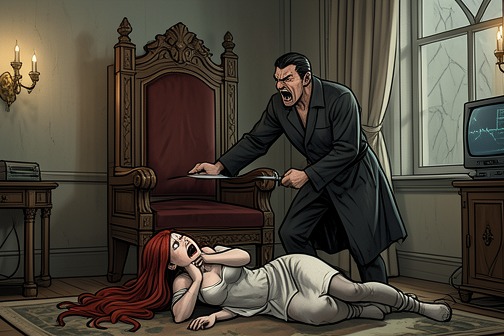
The throne-room battle between [Vlad Dracula](entity:character-recall-character-vlad-dracula-e0ec58b6d207) and his three brides marks the violent collapse of his old household order. When Vlad interrupts [Cneajna](entity:character-recall-character-cneajna-cc5dab651a46)’s attack on [Glynis Wright](entity:character-recall-character-glynis-wright-d6dbb6432ea3), he publicly names Glynis his wife and equal; the defense quickly becomes an assault on Cneajna and then a battle against all three brides.
## The Intervention and Claim of Marriage
Vlad bursts into the room as Cneajna is poised over the wounded Glynis. He knocks the dagger from Cneajna’s hand and seizes her by the throat. His first words frame the violence as protection of Glynis: “How dare you touch my wife!” Cneajna answers with her own claim, “I am your wife!” Their opposed declarations make explicit the conflict beneath the physical struggle: both women invoke marriage to define their place beside Vlad.
Vlad tears open Cneajna’s throat and throws her aside. As Glynis slowly heals from her injuries, Cneajna’s wound begins knitting together too; she reaches toward Vlad with desperate affection, but he rejects her. He insists that Glynis is his countess and the only woman with the strength and power to be his equal. In explaining his choice, he praises her independent thought and action, and says she could continue his work if the hunters killed him. The declaration recasts his protection as a judgment about power and succession: he wants a partner capable of standing beside him, not a servant who merely submits.
## The Brides' Counterattack
[Elina](entity:character-recall-character-elina-8b98166e303a) and [Ariana](entity:character-recall-character-ariana-3b400cd4e588) drop from above onto Vlad’s back, their assault fierce enough to drive him to his knees and make him release Cneajna. He rises into the air and flings them away, then turns back to Cneajna, tearing at her throat again. The intervention has become a struggle among all four members of the household: the sisters attack not to claim Vlad but to stop him from killing one of their own.
The fight breaks into repeated reversals. Vlad deflects Elina with one arm, hurling her into a column, while Ariana lands on his back and stabs him with her dagger. He grabs Ariana by the hair and throws her against a wall; she scrambles back up into the rafters. Neither woman’s attack makes him relent. He seizes Cneajna again and threatens to tear off her head, then do the same to her sisters. Glynis tells him to stop, but he orders her to stay back and continues trying to kill Cneajna as Elina and Ariana leap at him from above, clawing and biting. Cneajna’s blood splashes across Vlad, the attacking brides, and Glynis.
Glynis’s pleas arise from an attachment that survives Cneajna’s betrayal. She calls Cneajna her vampire mother and acknowledges that she still loves her; watching her suffer tears through Glynis even as the fight confirms that Vlad’s protection has become another form of violence. When Glynis grabs Vlad’s arm, he backhands her hard enough to crack her jaw. He then declares, “Do not defy me,” insisting that he is doing this for her. The words make his view of the struggle unmistakable: he treats his violence as rational and benevolent, while Glynis experiences it as the force destroying everyone she loves.
## Glynis’s Choice
Vlad’s insistence that he is acting for Glynis does not soften the scene; it clarifies the danger. He has already treated the destruction of her mortal family as a release from mortal bonds, and now his violence threatens the vampire family she still loves. Glynis understands that Cneajna may have betrayed her, but that betrayal has not erased their bond: she still regards Cneajna as her vampire mother, and cannot bear to watch Vlad kill her. Elina and Ariana’s attacks likewise reveal that the household’s old loyalties have given way to a desperate fight for survival.
Once her wounds have healed, Glynis makes her choice. She scrambles up, crosses the room, and snatches [The Golden Stake](entity:object-recall-object-the-golden-stake-3dd6a8c07c82) from behind Vlad’s throne while he remains focused on Cneajna. The weapon turns the throne room’s struggle from a battle over who may stand beside Vlad into a decision about whether he will be allowed to keep ruling through violence. Glynis sees him as a source of death to everyone she loves, including Ignatius, and takes up the stake as the means to stop him. The scene ends on this decisive turn toward resistance, before the outcome of her attack is shown.
## Recognition, Possession, and the Unfinished Outcome
Vlad’s praise of Glynis gives the battle a meaning beyond a contest of physical strength. He presents her independence as the reason she can be his equal: she is capable of acting and thinking for herself, and could preserve his power if he fell. That recognition answers an old desire in Glynis to live without the constraints imposed on women. Yet the scene refuses to make his praise a simple liberation. Vlad calls her his wife and countess while exercising control over her, orders her to stay back, and attacks Cneajna in her name. The equality he claims for Glynis exists inside a bond she has not freely chosen, and his violence leaves her with no authority over what he says he is doing for her.
Her choice to seize The Golden Stake breaks through that contradiction. Glynis is no longer only the person being defended, claimed, or ordered aside: she acts to stop the man whose violence threatens both her vampire family and Ignatius. Her attachment to Cneajna persists despite betrayal, while her understanding of Vlad as a source of death makes resistance unavoidable. The struggle therefore turns from a contest over which woman may stand beside Vlad into Glynis’s attempt to prevent him from destroying those she loves. The episode closes as she takes the stake and turns toward him; the attack’s outcome is not yet shown.
Event 44
Glynis Defeats Vlad and Inherits His Power
[Glynis Wright](entity:character-recall-character-glynis-wright-d6dbb6432ea3)’s staking of [Vlad Dracula](entity:character-recall-character-vlad-dracula-e0ec58b6d207) turns her rebellion against her maker into a decisive seizure of power: she drives a golden stake through him to save [Cneajna](entity:character-recall-character-cneajna-cc5dab651a46), then receives the strength Vlad wills to her as his blood and bond ebb away. The act breaks his immediate domination but leaves him suspended rather than dead, complicating the victory with a final, intimate transfer between captor and captive.
## Causes and Background
By the time Glynis reaches this choice, her bond with Vlad has been shaped by coercion disguised as elevation. He made her a vampire bride, repeatedly imposing the [vampire baptism](entity:concept-recall-concept-2d256e3b2ebd) and presenting her transformation as a place among his Brides. The language of belonging concealed the loss of her freedom: Glynis understood herself to be his slave, trapped in a castle whose rules she had to learn while searching for a way out.
Vlad’s power over her had also been sustained through blood and hunger. When Glynis resisted becoming a vampire, Cneajna held her as Vlad offered blood from a victim and ordered her to drink, insisting that she was his bride. The scene made the relation between them physical as well as hierarchical: hunger pressed against her resistance, while the title of bride was used as a command. Later, Vlad framed the slaughter of Glynis’s mortal family and her release from mortality as things for which she ought to be grateful. His violence was not, in his own view, a contradiction of love or protection; it belonged to the same claim of ownership.
That claim is exposed in the final confrontation when Vlad tells Glynis not to defy him and insists that he acts for her. She recognizes that he believes his violence to be entirely rational. The realization sharpens her choice: she is not merely escaping a cruel master, but confronting someone who interprets domination as care and expects the victim to accept that interpretation. As Vlad turns on Cneajna and the other sisters’ attacks fail, Glynis sees the threatened destruction extending beyond herself—to the vampire family she has come to love and to Ignatius. Saving them becomes inseparable from ending Vlad’s rule.
## The Attack and the Stake
The choice becomes action when Glynis sees that Vlad is about to destroy both Cneajna and the family she has found among the vampires. She scrambles to her feet, crosses to the space behind his throne, and seizes the golden stake. While Cneajna and the other Brides continue their futile assault, Glynis draws on her power and rises from the floor, carrying the stake toward Vlad. [Elina](entity:character-recall-character-elina-8b98166e303a) and [Ariana](entity:character-recall-character-ariana-3b400cd4e588) see her coming and take flight to cling to the ceiling; Cneajna can only gasp a single refusal. Glynis names the motive that has settled her decision: “For my family.”
Vlad looks over his shoulder too late. Glynis drives the stake up through his back and torso, its point bursting from his chest just left of his heart. He releases Cneajna, who falls in a bloody heap, and Glynis lifts the stake until Vlad is suspended above the floor. His blood pours over her as he struggles, then slides down the length of the stake and into her arms. Even as she weeps, Glynis orders the Brides to burn his blood. They seize torches from the walls; destroying the blood, she understands, will destroy the source of his power and free them from his rule.
The scene does not resolve into a simple execution. Impalement leaves Vlad gravely weakened, but not yet dead, and his defeat opens a final exchange between the two. His body withers as his blood and strength drain away; Glynis feels their bond growing faint, then experiences his power flowing into her. Vlad tells her that he wills this power to her, naming her his Countess. The transfer is at once a relinquishment of his force and the last act of a relationship built on his claim over her.
## Power, Bond, and the Unfinished Ending
The transfer does not arrive as a clean inheritance. As Vlad weakens in Glynis’s arms, she feels his blood and power draining from him; the bond that has held her to him grows faint in tandem. Yet he is still capable of reaching for her face, and Glynis rests her cheek against his cold fingers. He tells her that he wills his power to her and trusts she will go forth strong as his Countess. His words recast the title he had used to claim her: now it accompanies a grant of strength, though it comes from the same man whose rule she has just attacked to save her family.
The exchange remains intimate and disturbing rather than absolving. Glynis kisses Vlad’s forehead and weeps as his blood enters her body, its power piercing her flesh like hot needles and filling her until she feels she might burst. Their bond continues to fade while his force passes into her. Vlad tells her that he loves her; she answers that she knows, and buries her face in his hair. These gestures preserve tenderness at the moment of his defeat, but they do not erase the violence that has defined their relationship. Glynis’s choice was made because Vlad’s supposed care had become indistinguishable from domination, and his final affection cannot undo that history.
The physical result is not an ordinary death. Vlad’s hair turns silver and gray, his features sink and age, and his eyes become milky, but Glynis holds him until he is only a husk, still living in a deep sleep beyond the world of both the living and the undead. The distinction makes the victory provisional: the stake has weakened him, the burning of his blood is intended to destroy his power, and Glynis has inherited that power, yet Vlad has not been shown to die. The scene therefore separates the defeat of his immediate control from the completion of his destruction.
Around Glynis, the sisters take torches from the walls and burn Vlad’s blood. Cneajna, her neck terribly wounded, approaches with the others and urges that they take Vlad’s head to finish him. Glynis agrees that they should do so. Her decision to spare Cneajna from Vlad’s attack has thus opened onto a further question of how completely they must destroy him; the closing action leaves that final measure still to be carried out. The episode ends with Glynis holding the weakened ruler whose power now flows through her, while the sisters stand ready to decide whether his suspended existence can safely continue.
## Testimony and Self-Determination
The journal entry dated [15 August 1819](entity:time-recall-time-15-august-1819-266a93e5885e) frames Glynis’s later act of resistance against a history she has struggled to record. In [The Journal of Lady Glynis Wright](entity:object-recall-object-the-journal-of-lady-gl-02696bdefe47), she says that writing has become difficult because the others repeatedly interrupt her, and that describing her rape and the Brides’ first feast upon her filled her with rage. She hid for three days; when they found her, they beat her, an experience she describes as a strange release and another reason to hate Vlad. This account makes the staking more than a sudden reversal of power: it follows a pattern in which violence has been imposed on Glynis’s body and then treated as a reason for her obedience. Her journal preserves her own naming of that harm, while her eventual intervention turns her from its subject into an agent acting to protect others.
That struggle for agency reaches back to Glynis’s insistence that she wanted to live without the constraints imposed on women. Under Vlad’s rule, control is made visible in clothing as well as commands: she resists the prescribed outfit, retrieves her favorite blue Italian-silk gown, and feels better without a corset. At the opera, dressed in black and gold, she feels every inch the Countess Dracula, even as she contrasts Andrew’s light and goodness with Vlad’s dark menace. These shifts in dress and title do not themselves free her, but they show how she has tried to inhabit identities on her own terms. When she finally uses the golden stake, that claim to self-determination becomes consequential action: she chooses whom to defend and what danger to confront, rather than accepting the role Vlad has assigned her.
Event 45
Glynis Leaves Dracula's Castle as a Free Woman
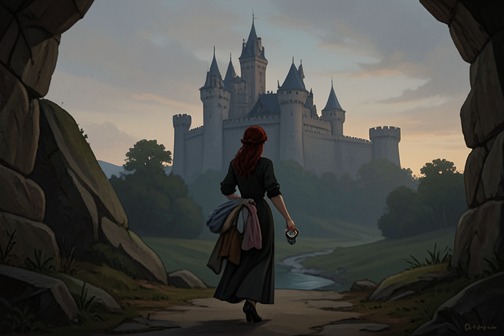
[Glynis Wright](entity:character-recall-character-glynis-wright-d6dbb6432ea3)’s departure from [Dracula’s Castle](entity:location-recall-location-dracula-s-castle-c64a3de1e334) turns victory over [Vlad Dracula](entity:character-recall-character-vlad-dracula-e0ec58b6d207) into a harder, more personal freedom: she has the power to rule the household, but chooses to leave it instead. She goes with her family’s remains, carrying the loss of her mortal relatives and vampire life alike, while the ring on her hand preserves a bond she cannot simply dismiss. The departure is not a clean escape from the past, but a choice about what she will no longer allow that past to command.
## Causes and Background
Glynis’s wish for an unconstrained life predates her transformation. As a young woman, she tells [May Wright](entity:character-recall-character-may-wright-3d98d113a9e3) that she wants to live as a man lives, free to do as she pleases. The wish makes her later captivity more than a change of location: she escapes one restrictive social world only to find herself enslaved to Vlad, trapped in his castle and required to perform the role he has chosen for her.
The household makes that control visible through dress and appearance. Glynis resents being made to change from her own clothes into an outfit she considers degrading. Later, Vlad selects what she may wear when she is to see [Andrew Wright](entity:character-recall-character-andrew-wright-15e2c32beef5), orders her to avoid recognizable English clothes, and has a veil made to conceal her altered appearance. In [Buda](entity:location-recall-location-buda-89e5673736b2), she tears the veil from her face in frustration. These episodes establish clothing as part of the struggle over who may define her identity; the final departure, by contrast, begins with Glynis changing into traveling clothes of her own choosing.
Vlad’s coercion has also shaped her transformation into a Bride. When he orders that she undergo the [vampire baptism](entity:concept-recall-concept-2d256e3b2ebd) again, he presents her joining his household as inevitable. Later, he presses blood on her and commands her to drink, while [Cneajna](entity:character-recall-character-cneajna-cc5dab651a46) holds the tormented Glynis. The power she inherits at the end therefore comes from the same system that had made her dependent on Vlad. Her departure tests whether possessing that power will mean repeating his rule or breaking with it.
## The Departure from the Castle
After Glynis drives the golden stake through Vlad’s back and chest, he releases Cneajna and falls. He does not die: Glynis holds him until he is a living husk, sunk into a deep sleep. Cneajna, wounded but determined, rejects Glynis’s suggestion that they take Vlad’s head. Instead, she carries him to the chapel and puts him in his coffin. The choice leaves the conflict unresolved in one sense—Vlad survives in suspended sleep—but his command over Glynis has ended.
Cneajna then tells Glynis to leave and not return. Glynis rises easily, feeling Vlad’s power within her. She recognizes that she could enslave all three of Vlad’s Brides, but refuses to make that power the foundation of her new life. [Ariana](entity:character-recall-character-ariana-3b400cd4e588) offers to love her as she loved Vlad; Glynis motions the Brides away, unable to endure their presence or voices. Her rejection is not a new decree of obedience but a refusal of the role of master itself.
She orders her trunks prepared and says she will leave within the hour. [Elina](entity:character-recall-character-elina-8b98166e303a) and Ariana watch her with awe and fear as the household’s women gather her things and a carriage is prepared. At her vanity, Glynis starts to draw off the ring on her finger, then stops. Rather than strip away every sign of her marriage, she leaves it in place. The hesitation makes her freedom complicated: she can reject Vlad’s authority without pretending that their connection has left no mark.
## Farewell and What She Carries
Before leaving, Glynis goes through the crumbling castle to the crypt beneath the name Dracula. Cneajna has dressed Vlad in his royal robes, folded his hands over his chest, and wrapped him in the wine-red cloak bearing the family crest. The stake has been removed. Glynis stands over him and cannot find the strong, cruel man she knew in the shriveled figure in the coffin; she touches the hand wearing a ring that matches her own.
Her farewell holds revenge and attachment together. Glynis says that her family has been avenged and that Vlad is no longer her master. She also acknowledges that he made her strong and that, in her understanding, he loved her. She cannot say that she loves him, yet tells him that another has her heart while Vlad has her soul. The distinction does not undo what he did to her; it gives the relationship a divided emotional legacy rather than a simple resolution. She kisses his parched lips, then leaves the crypt without looking back at the name above its entrance.
At the courtyard carriage, [Ilona](entity:character-recall-character-ilona-d05c78b1e880) explains that a large trunk contains the bodies of Glynis’s family. Glynis touches it and decides that they will leave together. The remains make the carriage more than a means of escape: she refuses to leave her dead relatives behind in the place where her family was destroyed. As she is helped aboard, two pale faces dart away from a darkened window. Inside, she is physically alone for a moment and whispers a prayer for her family’s souls.
## Consequences and Significance
The carriage begins its journey toward [Bistrița](entity:location-recall-location-bistri-a-9536cf4b4288), and Glynis looks back at the castle through tears. She names what she has lost: her mortal family, her vampire family, and her master. That inventory prevents the departure from reading as uncomplicated triumph. She has escaped captivity, but the act does not restore her former life or erase her attachments; it leaves her moving forward with grief and power together.
Her new authority is real. The household’s servants understand that she is now the master, and she could command the Brides as Vlad did. Yet the first use she makes of that authority is to leave rather than secure their submission. This choice completes the event’s reversal: the captive who was repeatedly told where to go, what to wear, and whom she must become now determines her own departure.
The ring remains on her finger as the carriage carries her away. Glynis’s mother’s whispered assurance that she is free accompanies her recognition that freedom has finally become fully hers. The castle recedes, and the departing woman begins to smile—not because the losses have been repaired, but because she has chosen a life beyond the place that held her. The ending makes departure both an escape from a system of possession and a passage into an uncertain independence.